161+ Rainy Days? Inspect First for West Vancouver Box Gutter Leaks
161+ Rainy Days? Inspect First for West Vancouver Box Gutter Leaks

If water is showing up on your soffits, fascia, or ceiling after a heavy rain, the cause is almost always debris overflow or a failed lining seam, and rot behind the fascia is common enough that it complicates the fix. Do a safe external check first. If you see interior staining or an active drip, book a professional inspection before patching anything, because DIY sealant on a box gutter is rarely more than a stopgap.
TL;DR:
- Most box gutter leaks in West Vancouver stem from seam failures, structural rot, or improper sizing, not just debris or clogs, requiring thorough inspection.
- External checks during dry weather and during rain help identify whether overflow is due to capacity issues, blockages, or lining deterioration.
- Repair options vary from patch sealants for small pinholes to full membrane relining or complete replacement, with substrate condition guiding the choice.
- Proper inspection must include checking the fascia and decking for rot before relining, as a failing substrate leads to quick repair failure.
- Ongoing maintenance under dense evergreen canopies should include regular professional cleanings, debris removal, and inspection, especially before heavy rain seasons.
Table of Contents
- What causes box gutter leaks in West Vancouver
- How do you inspect a box gutter safely?
- Repair options for box gutter leaks in West Vancouver
- How often should West Vancouver gutters be maintained?
- When should you call a roofing professional?
- A West Vancouver box gutter repair, from diagnosis to fix
- What this North Shore climate teaches about box gutter repair
- How Paragon Roofing BC Handles West Vancouver box gutter leaks
- Sources
- FAQ
What causes box gutter leaks in West Vancouver
Box gutters fail for one of several reasons, and figuring out which one you’re dealing with changes the entire repair plan. West Vancouver’s mix of coastal storms, dense cedar and Douglas fir canopy, and salty marine air stacks the deck against these systems in ways that flatland suburbs never see.
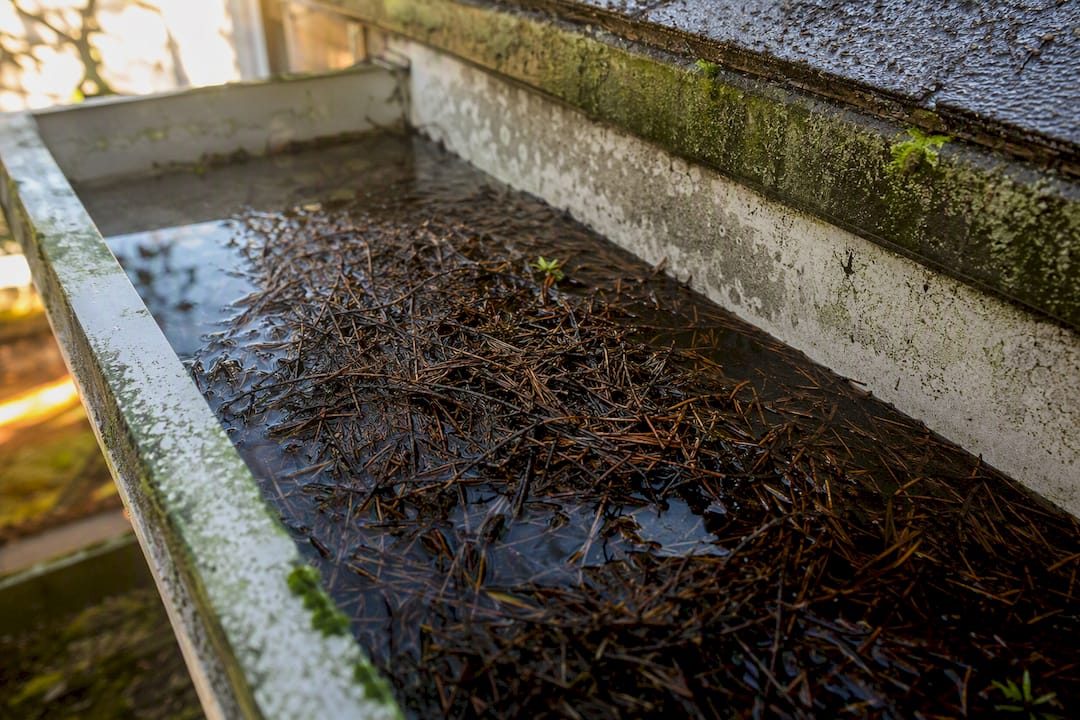
Debris accumulation and blocked outlets. Needles and cedar fronds pack into the low points of a box gutter and dam the outlet before you’d ever notice from the ground. Once the outlet is choked, even a moderate rain backs up over the gutter wall.
Capacity and outlet design limits. Some box gutters were sized for an older roof or a smaller catchment area. During a short, intense downpour, the outlet simply can’t drain fast enough, and overflow can happen even when the gutter looks clean because the real problem is design, not debris.
Seam and joint failure. Box gutters are built from soldered or sealed sections, and salt air off the Burrard Inlet and English Bay accelerates the breakdown of those joints. Add the thermal expansion and contraction that comes with our freeze thaw swings, and seams that were fine five years ago start opening hairline gaps.
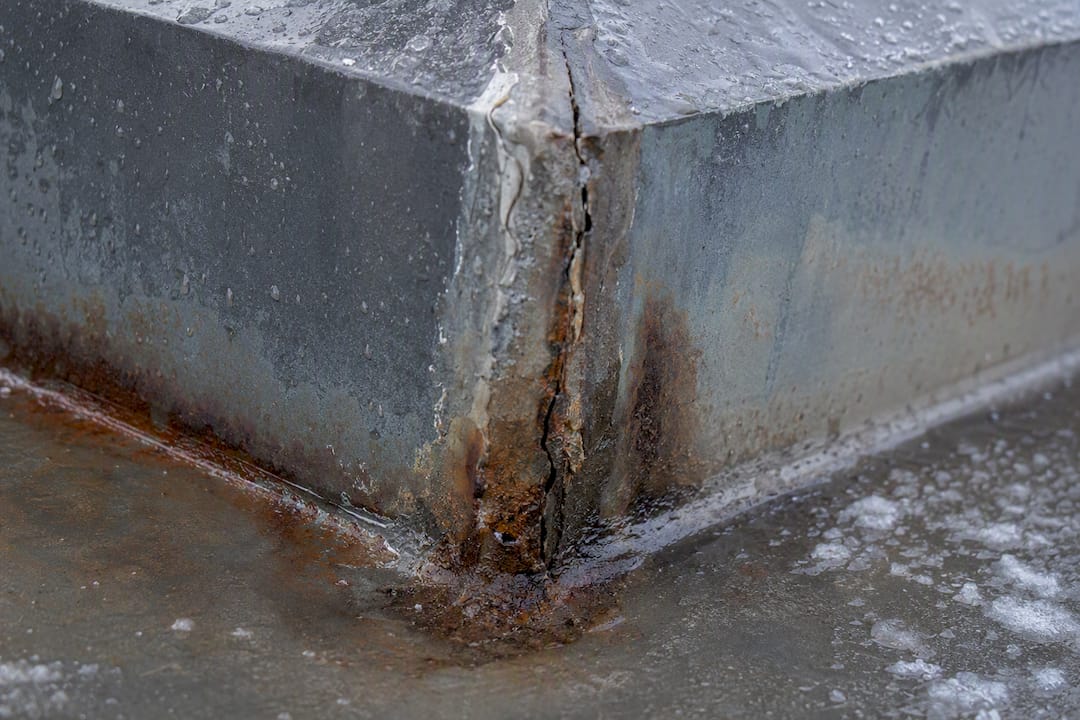
Corroded linings and rotten substrate. Metal linings pit and thin with age, particularly under standing water. Once rot sets into the wood decking beneath the lining, no amount of resealing will hold.
A few patterns help sort out which cause you’re facing:
- Water appearing only during the heaviest storms points to a capacity issue, not blockage.
- Staining that follows leaf drop season in October and November usually means debris buildup.
- A slow, steady drip regardless of rain intensity often signals a pinhole or seam failure.
- Soft, discoloured fascia boards mean rot has already started, and trapped water behind fascia accelerates that rot further.
How do you inspect a box gutter safely?
Box gutters hide their real problems. What you see inside your house rarely lines up with where the water is actually getting in, because leaks travel along internal rafters before they show up as a stain. That’s why the inspection has to work from the outside in, not the other way around.
Start with the ground rules, because a two storey West Vancouver roof in the rain is not the place to improvise:
- Never inspect a wet or steep roof section alone. Use a second person to hold and stabilize the ladder at all times.
- Check soffits and fascia boards from the ground first, looking for streaking, dark patches, or peeling paint below the gutter line.
- Watch downpipe discharge during a rain event. A weak trickle where you’d expect a steady flow suggests a partial blockage upstream.
- Look for puddling at the base of downpipes, which often means the pipe itself is clogged, not the gutter.
- If you can safely reach an accessible section from a stable ladder, clear visible debris by hand and note whether water then flows freely to the outlet.
- Run a flush test with a garden hose at the high end of the gutter and time how long it takes to reach the outlet. A slow or stalled flow confirms a blockage; a fast flow with no leak means you’re likely dealing with a lining or seam failure instead.
None of these checks require you to walk the roof deck itself, which is exactly the point. Our roofing safety guidance exists because most fall injuries on residential roofs happen during exactly this kind of “quick look.”
Pro Tip: Photograph every stain, drip point, and puddle with a timestamp. If you end up calling a contractor, those photos let them start diagnosing before they even climb a ladder.
Some signs mean you’re past the DIY stage. A stain that appears well away from any visible gutter section, a drip pattern that shifts location after rain, or water damage that keeps returning after you’ve cleared debris. These usually mean the leak path runs internally, and only a proper inspection with the lining exposed will find it.
Repair options for box gutter leaks in West Vancouver
Not every leak needs the same fix, and choosing the wrong one is how a $400 problem turns into a $4,000 problem. Here’s how the realistic options stack up.
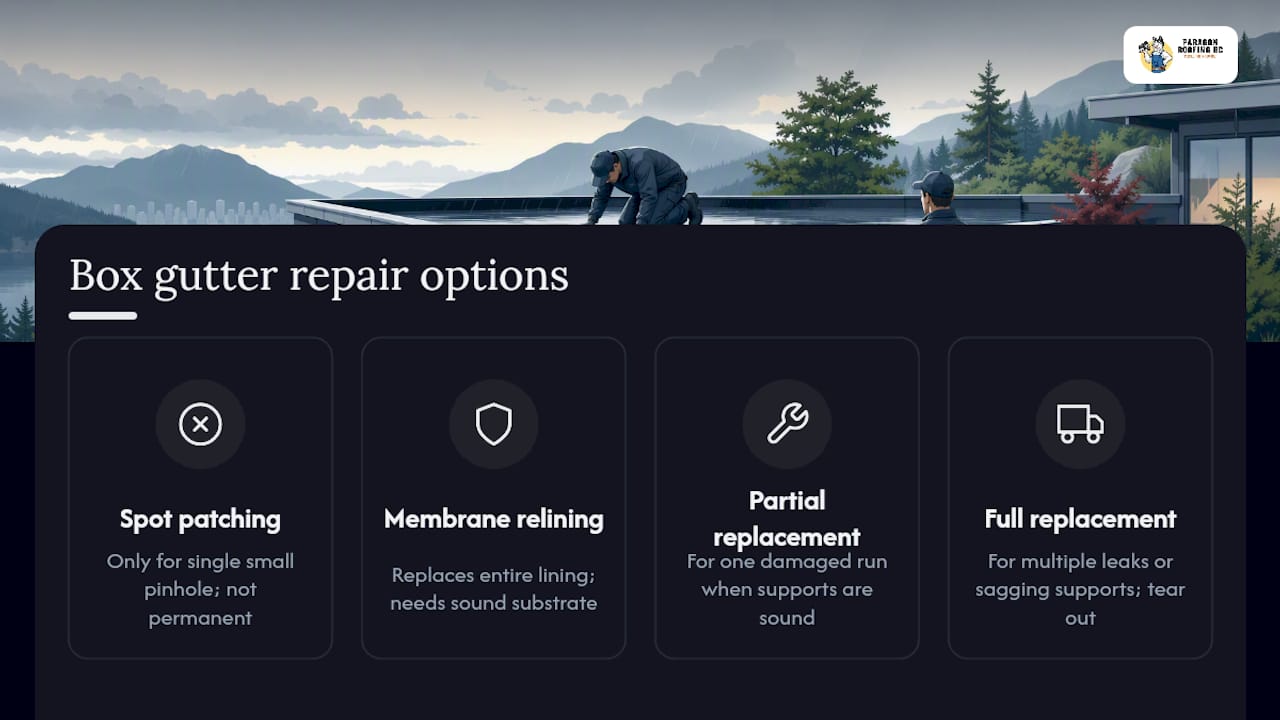
Spot patching and sealant. This works when you have a single, small, confirmed pinhole in an otherwise sound lining with no rot underneath. It does not work as a permanent fix on a coastal roof. Standard sealants and tar based products crack under West Vancouver’s freeze thaw cycles and salt exposure within a season or two, which is why contractors here increasingly favour higher grade membranes over cheap patch jobs for anything beyond a truly minor repair.
Membrane relining. EPDM, PMMA, and TPO or PVC membranes replace the entire lining rather than patching around a failure point. These systems handle thermal movement far better than old style built-up roofing cement, but they only perform as promised when the substrate underneath is sound. Installing a premium membrane over softened plywood or rotten decking is a guaranteed callback.
Partial replacement. This applies when damage is contained to one run or section, supports are still structurally sound, and the rest of the gutter tested well during inspection. It’s a reasonable middle ground when full replacement isn’t justified yet.
Full replacement. Multiple active leak points, sagging or deflected supports, or a repair estimate running past roughly half the cost of full replacement all point toward tearing the whole system out. At that stage, patching individual failures becomes a losing game of whack a mole.
Structural repairs come first, always. If there’s rot in the fascia or the decking underneath the gutter, that gets fixed before anything waterproof goes back in. Most reline failures in the Lower Mainland trace back to skipping this step, not to a bad membrane.
Once a repair is complete, a professional performs a controlled water test to confirm water reaches the outlet cleanly and no leak points remain. Skipping this step is how “repaired” gutters end up leaking again the following winter.
Vancouver averages 161+ rainy days a year, which means a poorly executed box gutter repair gets tested constantly rather than occasionally. There’s very little margin for a repair that only mostly works.
For issues tied to flashing detail rather than the gutter body itself, our flashing repair guide covers the related failure points that often show up alongside box gutter problems.
How often should West Vancouver gutters be maintained?
Homes tucked under cedar and fir canopy need a different maintenance rhythm than a typical suburban bungalow, and pretending otherwise is how slow leaks turn into rotten fascia.
- Schedule professional cleaning regularly if your property sits under or near evergreen tree cover, which describes a large share of West Vancouver’s British Properties, Caulfeild, and Deep Cove adjacent neighbourhoods.
- Book one cleaning in late October or early November , right before the heaviest fall rain arrives, to clear the season’s leaf and needle drop.
- Book a second cleaning in late winter or early spring to remove anything that accumulated during storm season.
- Add a mid-summer check for properties with unusually dense canopy overhead, since dry needles shed year round from Douglas fir.
- Keep dated photos and a short written record of each cleaning and any repairs. Insurers and strata councils both want this paper trail if a water damage claim ever comes up.
Professional maintenance visits should include full debris removal, outlet and downpipe clearance, a fall and slope check to confirm water is still draining the way it was designed to, and a written report with photos. That last part matters more than it sounds. Gutter guards can reduce debris load somewhat, but in a Pacific Northwest canopy environment they clog with fine needle debris just like open gutters do. Treat them as a way to extend the interval between cleanings, not a way to eliminate cleaning altogether. Trimming overhanging branches back a few feet and adjusting drip edge details during any roof work also cuts down on how much debris lands in the gutter in the first place. Our maintenance program folds these visits into a standing schedule so nobody has to remember to book it every October.
When should you call a roofing professional?
Some signs mean stop troubleshooting and pick up the phone. Active interior leaks during rain, a ceiling that’s started to sag or discolour, overflow that returns within weeks of a cleaning, or any visible soft or rotten wood around the gutter line all qualify.
When you do call someone in, ask these questions before you sign anything:
- Will you check the substrate and framing condition before proposing a lining repair, not after?
- What’s the proposed repair staged as, spot patch, reline, partial replacement, or full replacement, and why that option specifically?
- What warranty applies to the workmanship versus the materials?
- Will I get a photo report documenting what was found and what was done?
- Does the quote include scaffolding or lift access charges, or is that a separate line item?
A rushed quote that promises sealant as the fix for a gutter with visible sagging or multiple stain points is a red flag. So is any contractor who won’t commit to checking the wood underneath before they reline over it. Our leak detection guide walks through more of what a thorough inspection should turn up before repair work starts.
Pro Tip: Ask specifically whether the quote separates “diagnosis” from “repair.” Contractors who quote a flat repair price without first inspecting the substrate are usually guessing, not diagnosing.
A West Vancouver box gutter repair, from diagnosis to fix
A West Vancouver homeowner near the British Properties called us about a ceiling stain that kept returning every time it rained hard, even after two attempts at DIY sealant. The visible drip was on an interior wall nowhere near an obvious gutter section, which was the first clue this wasn’t a simple surface leak.
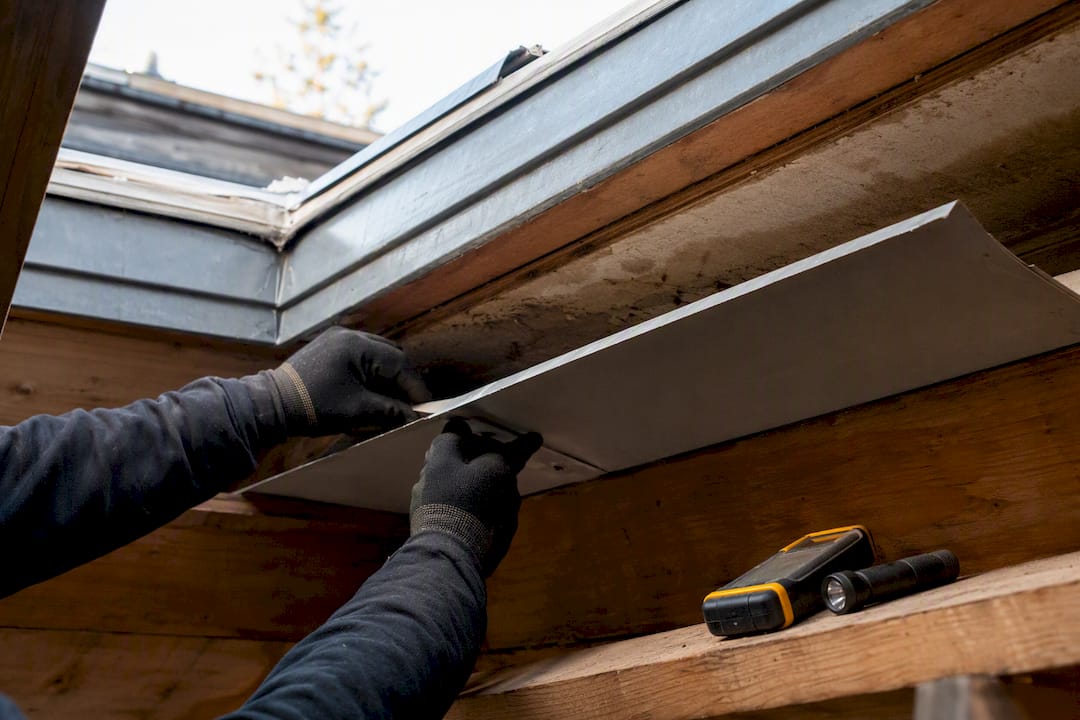
Our inspection found the real story: a section of fascia had softened from years of trapped moisture, and the lining above it had a handful of pinhole failures at a seam joint, likely from years of thermal cycling and salt exposure. Relining over that fascia without fixing it first would have failed within a season, membrane or not.
We replaced the rotten decking section, let it fully dry and confirmed with moisture readings, then installed a new membrane lining across the repaired run. A water test confirmed clean flow to the outlet with zero leak points before we called the job done.
Two takeaways worth remembering: an interior stain rarely sits directly under the actual leak, and any contractor who skips checking what’s under the lining is setting you up for a repeat call next winter.
What this North Shore climate teaches about box gutter repair
Most generic gutter advice treats every leak the same way, sealant first, worry about the rest later. That approach falls apart on the North Shore, where salt air, dense canopy, and genuinely heavy rainfall combine to punish shortcuts faster than almost anywhere else in the Lower Mainland.
The evidence here points to one clear priority: structural condition before waterproofing, every time. A membrane is only as good as what it’s sitting on, and West Vancouver’s climate hides rot behind fascia longer than drier regions would, because moisture never really has a season off. Homeowners who skip the substrate check and go straight for a reline are gambling with a job that looks finished but isn’t.
What should change in how people approach this? Stop treating a clean external gutter as proof of a healthy system, and stop treating sealant as anything more than a short bridge to a proper fix. The inspection is the part that actually protects your investment. The patch is just the part you notice.
— Harman
How Paragon Roofing BC Handles West Vancouver box gutter leaks
Paragon Roofing BC runs an inspection-first process for exactly the reasons this article lays out: a box gutter that looks fine from the ground can be hiding rot, a failed seam, or an outlet that’s simply too small for the rain West Vancouver gets. Instead of quoting a patch job sight unseen, we check substrate condition first, then propose the repair, whether that’s a spot fix, a full membrane reline, or a staged partial replacement, based on what we actually find.

Every inspection includes safe access, a photo report, and a written plan before any work starts, so you know exactly what you’re paying for and why. Our gutter cleaning and repair services cover West Vancouver properties directly, and for owners dealing with an active leak right now, our leak detection and repair service is built to diagnose before it quotes. If you’re seeing staining, overflow, or a drip that keeps coming back, request an inspection through our residential roofing page and we’ll get a technician out to look at it properly.
Sources
FAQ
Is it normal for gutters to drip in heavy rain?
A little overflow during an unusually intense downpour can happen even on a healthy system, but a persistent drip or steady leak during normal rain is not normal and points to a blockage, undersized outlet, or lining failure.
What is the best gutter sealant in Canada?
There’s no single best sealant for a coastal climate like West Vancouver’s, because standard sealants tend to crack under salt exposure and freeze thaw cycling. A high-performance membrane like EPDM or PMMA, installed over sound substrate, holds up far longer than tar-based patch products.
My rain gutter is leaking between the gutter and the house. What could be causing this and how can I fix it?
A leak at that junction usually means a failed seam, a flashing gap, or rotten fascia behind the gutter, and box gutters often carry that water internally before it appears as a stain. The fix depends on what’s causing it, so a professional inspection to check the substrate before resealing is the right first step.
What is the best stuff to fix a leaky gutter?
For a genuinely minor, confirmed pinhole with sound material around it, a quality sealant can buy time. For anything more than that, especially in West Vancouver’s salt air and rain volume, a proper membrane reline over repaired substrate is the durable fix, not a tube of caulking.
Recommended
Our Roofing Blog



Have more questions about roofing?
Check out our FAQs or give us a call today to speak to an expert roofer in Vancouver Lower Mainland, BC. We're here to help our neighbours make educated decisions about their roof. For our team, we value helping clients save money while making their roofs last.