
Managing roof repairs around business hours: a 2026 guide
Managing roof repairs around business hours: a 2026 guide
TL;DR:
- Proper planning and zone-based scheduling allow commercial roof repairs to proceed with minimal disruption to business operations.
- Using hybrid timing and clear communication strategies help maintain productivity and stakeholder cooperation during roofing projects.
Commercial roof repair scheduling is the practice of coordinating roofing work around a building’s operational hours to protect productivity, occupant safety, and revenue. For business owners and property managers in Metro Vancouver, managing roof repairs around business hours is not optional. It is a standard part of any well-run commercial roofing contract. Metro Vancouver’s extended rainy season, coastal moisture, and freeze-thaw cycles mean roof problems rarely wait for a convenient moment. Non-emergency inspections typically happen within 24–48 hours, and simple localized leaks can resolve in as little as 2–6 hours when scheduling is handled correctly from the start.
What do you need in place before managing roof repairs around business hours?
Good repair scheduling starts before a single roofer sets foot on your building. You need a clear picture of your building’s daily rhythm, your roof’s condition, and who is responsible for what.
Start with these prerequisites:
- Map your critical hours. Identify peak activity periods by floor and zone. A call centre on the third floor has different noise tolerances than a warehouse loading bay.
- Assess Metro Vancouver weather windows. The Lower Mainland averages over 160 rain days per year. Schedule inspections and dry-in work during forecast dry spells, typically between june and september.
- Appoint a single project contact. A dedicated project manager prevents miscommunication and lets the crew adjust around your calendar, not the other way around.
- Segment the roof into zones. A phased construction approach divides the roof into sections so work on one zone does not shut down the whole building.
- Pull permits early. Metro Vancouver municipalities require building permits for most commercial re-roofing projects. Delays at the permit stage push your entire schedule back.
- Prepare tenant and employee notices. Draft communication templates before work begins, not after the first complaint arrives.
Pro Tip: Ask your roofing contractor for a zone map of your roof before signing any contract. If they cannot produce one, that tells you something important about how they plan to manage your project.
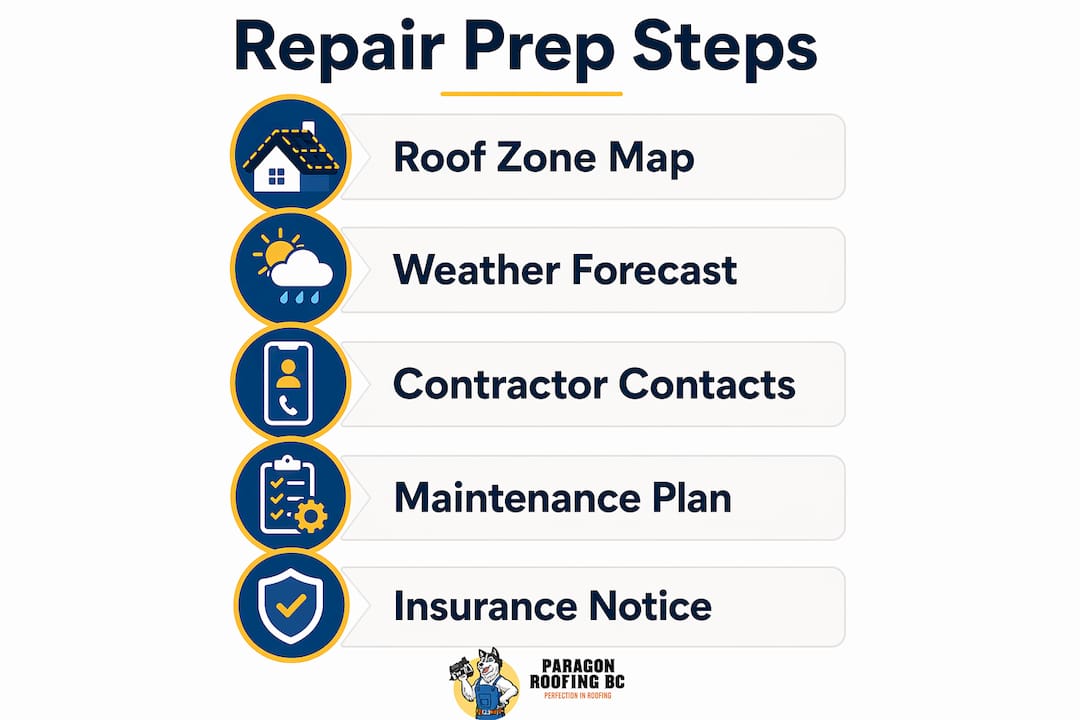
The table below outlines the key tools and documents you should have ready before repairs begin.
| Item | Purpose |
|---|---|
| Roof zone map | Identifies active and inactive work areas by day |
| Weather forecast calendar | Guides scheduling of wet-sensitive tasks |
| Permit documentation | Required for most Metro Vancouver commercial projects |
| Stakeholder contact list | Enables fast notification when plans change |
| Communication templates | Reduces response time when issues arise |
How do you schedule and phase roof repairs to protect operations?
Phased scheduling is the single most effective method for keeping your business running during a roofing project. The concept is straightforward: divide the roof into sections, complete one zone before moving to the next, and sequence noisy or disruptive tasks outside your peak hours.
Here is a practical sequence that works well for Metro Vancouver commercial buildings:
- Zone mapping and material staging (Week 1, business hours). Roofers survey the roof, mark zones, and stage materials. This phase is quiet and causes minimal disruption.
- Tear-off and substrate prep (evenings and weekends). Tear-off generates noise and debris. Schedule this work after 6:00 PM or on Saturdays to protect daytime operations.
- Dry-in installation (business hours). Once the substrate is prepped, installing underlayment and temporary waterproofing is relatively quiet. This work can proceed during the day.
- Membrane or cap sheet installation (flexible timing). Depending on the system, this phase may require heat welding or adhesives. Coordinate with your project manager to schedule around ventilation-sensitive areas.
- Flashing, drainage, and finishing (business hours). Detail work around drains, parapets, and penetrations is precise and low-noise. Daytime scheduling works well here.
- Final inspection and clean-up (business hours). The last phase causes no disruption and can happen during normal hours.
Hybrid scheduling reserves loud tasks for off-hours while keeping preparatory and finishing work within the business day. This approach balances safety, noise, and productivity better than any all-day or all-night alternative.
Pro Tip: Coordinate your roofing project with HVAC servicing. Scheduling roof work 2–4 weeks after HVAC maintenance prevents hidden membrane punctures from service technicians and reduces redundant access to the roof.

Synchronising these two maintenance cycles also gives your building a cleaner maintenance record, which matters for warranty compliance and insurance renewals.
What communication strategies keep stakeholders on side during repairs?
Transparency is the primary tool for reducing employee and tenant anxiety during a roofing project. A well-informed occupant is a cooperative one. An uninformed occupant files complaints.
Effective communication during repairs follows a simple structure:
- Send advance notice at least five business days before work begins. Include the project scope, expected duration, and which areas will be affected.
- Identify noise windows clearly. Tell occupants exactly when loud work will happen, not just that it might happen.
- Designate one contact person for the building. A single project contact handles real-time questions and prevents conflicting information from reaching tenants.
- Send weekly status updates. A brief email or posted notice keeps everyone aligned without creating information overload.
- Notify stakeholders immediately when the schedule changes. Weather delays and unexpected repairs happen. Silence during a change is worse than the change itself.
“Clear, timely communication about noisy activities and access restrictions significantly reduces stakeholder complaints and increases cooperation throughout the project. Simple memos outlining scope and timing are often all that is needed.”
The goal is to make occupants feel included in the process, not subjected to it. Property managers who treat communication as a core project task, not an afterthought, consistently report fewer complaints and smoother project completions. For a deeper look at how this fits into the broader repair process, the commercial roof repair guide for BC buildings covers local specifics in detail.
What are the common challenges when coordinating repairs around business hours?
Even the best plan hits obstacles. Metro Vancouver’s climate and the regional demand for roofing services create predictable pressure points that every property manager should anticipate.
Weather delays are the biggest disruptor. After a severe weather event, contractor backlogs can stretch from the standard 2–3 day response to 2–4 weeks. That delay compounds if your roof is already leaking. The practical fix is a maintenance agreement with an emergency prioritisation clause, which moves your building to the front of the queue.
Emergency repairs break phased schedules. A sudden membrane failure or blocked roof drain during a rainstorm requires immediate action. Keep a contingency budget of roughly 10–15% of the project cost for unplanned work. Have your contractor’s emergency line saved before the project starts, not during a crisis.
Other common challenges include:
- Scheduling conflicts with building events. A board meeting, product launch, or high-traffic retail day can make even quiet roofing work unacceptable. Build a shared calendar with your contractor that flags these dates weeks in advance.
- Unexpected structural issues. Rotted decking or failed insulation discovered during tear-off adds time and cost. A thorough pre-project inspection reduces surprises, but never eliminates them entirely.
- Contractor availability during peak season. Metro Vancouver’s brief dry season means every commercial building owner wants work done between june and september. Book early, ideally in march or april.
Pro Tip: Review your building’s insurance policy before repairs begin. Some policies require written notice to the insurer before major roofing work starts. Missing this step can affect coverage for any damage that occurs during the project.
For property managers handling multiple buildings, the roof replacement workflow guide offers a practical framework for tracking these variables across a portfolio.
How do maintenance agreements reduce disruption during future repairs?
Proactive maintenance is the most underused tool in commercial property management. Business owners who wait for a leak to call a roofer always pay more, in time, money, and disruption, than those who schedule regular inspections.
Commercial roof maintenance programmes in 2026 typically range from $0.08 to $0.18 per square foot annually. Proactive maintenance can extend roof life by up to 25%. For a 10,000-square-foot flat roof in Burnaby or Surrey, that translates to a predictable annual cost and a significantly longer replacement cycle.
Key benefits of a maintenance agreement include:
- Priority scheduling during storm season. Contractors service agreement clients first when demand spikes after a weather event.
- Smaller, faster repairs. Catching a failing lap seam or a blocked drain during a routine inspection takes hours, not days. Catching it after it has caused interior damage takes weeks.
- Warranty compliance. Most commercial roofing warranties require documented annual inspections. A maintenance agreement satisfies this requirement automatically.
- Coordinated access planning. Your contractor learns your building’s schedule over time and plans visits around your operations, not around their convenience.
| Maintenance type | Typical cost | Disruption level |
|---|---|---|
| Bi-annual inspection | $800–$2,000 | Minimal, 2–4 hours |
| Minor repair (lap seam, flashing) | $500–$1,500 | Low, same day |
| Emergency repair (active leak) | $1,500–$4,000+ | High, immediate access required |
| Full re-roofing project | Project-based | Phased over days or weeks |
Paragonroofingbc recommends pairing your maintenance agreement with Burnaby roof maintenance scheduling if your building sits in the Burnaby area, where freeze-thaw cycles and heavy rainfall create specific stress points on flat and low-slope roofs.
Key takeaways
Effective commercial roof repair scheduling combines phased zone work, hybrid timing, and proactive communication to keep Metro Vancouver businesses running without interruption.
| Point | Details |
|---|---|
| Phase the work by zone | Divide the roof into sections so non-active areas remain accessible during repairs. |
| Use hybrid scheduling | Reserve noisy tasks for evenings and weekends; keep quiet work within business hours. |
| Appoint one project contact | A single point of contact prevents miscommunication and speeds up issue resolution. |
| Communicate early and often | Send advance notices and weekly updates to reduce occupant complaints and build cooperation. |
| Invest in a maintenance agreement | Proactive inspections reduce emergency repairs, extend roof life, and secure priority scheduling. |
What I have learned from years of scheduling repairs around live operations
Hey, it’s Harman here. The biggest misconception I run into with business owners is the belief that a commercial roof repair means shutting down for a week. That is almost never true. Non-disruptive scheduling is a standard part of commercial roofing contracts, not a premium add-on you have to negotiate for.
What actually causes disruption is poor planning, not the roofing work itself. I have seen projects where the contractor showed up without a zone map, started tear-off at 9:00 AM on a Monday, and had the property manager fielding angry calls by 9:30. That is entirely avoidable.
The hybrid scheduling approach works because it respects the reality of how buildings operate. Quiet prep work during the day, loud work in the evening. It takes a bit more coordination, but the payoff is a project that finishes on time without costing you a single day of business. Metro Vancouver’s weather adds pressure to every timeline, so the planning has to be tighter here than in drier markets.
My honest advice: get a maintenance agreement in place before you need emergency repairs. The property managers I work with who have agreements in place sleep better during storm season. They know their building is on the priority list, and they know small problems get caught before they become expensive ones. That peace of mind is worth every dollar of the annual cost.
— Harman
Paragonroofingbc’s approach to repairs that work around your schedule
Paragonroofingbc serves commercial property owners and managers across Metro Vancouver, including Surrey, Burnaby, North Vancouver, and Coquitlam. Every project starts with a zone map, a phased schedule, and a dedicated project contact who keeps you informed from start to finish.

If your building needs repairs now or you want to get ahead of the next storm season, the team at Paragonroofingbc is ready to build a schedule that fits your operations. Explore commercial roofing in Vancouver or get in touch directly to discuss a maintenance plan. For urgent situations, the roof leak detection and repair service provides fast response with minimal disruption to your tenants and staff.
FAQ
How long does a commercial roof repair typically take?
Simple localized repairs resolve in 2–6 hours, while larger phased projects run 2–5 days depending on roof size and complexity. Scheduling and zone planning determine the actual impact on your operations.
Can roof repairs happen during regular business hours?
Yes. Quiet tasks such as inspections, material staging, dry-in work, and flashing details all happen during business hours. Loud work like tear-off is scheduled for evenings or weekends using a hybrid scheduling approach.
What causes the biggest delays in Metro Vancouver roofing projects?
Severe weather events are the primary cause. Contractor backlogs after storms can extend response times to 2–4 weeks. A maintenance agreement with priority scheduling protects your building from the back of that queue.
Do I need to notify my insurer before roofing work begins?
Most commercial property insurance policies require written notice before major roofing work starts. Check your policy terms before signing a roofing contract to avoid gaps in coverage during the project.
How do maintenance agreements help with business hour scheduling?
Maintenance agreements give contractors advance knowledge of your building’s schedule and operational priorities. That familiarity means inspections and minor repairs are planned around your calendar, not around contractor convenience.
Recommended
Our Roofing Blog

Have more questions about roofing?
Check out our FAQs or give us a call today to speak to an expert roofer in Vancouver Lower Mainland, BC. We're here to help our neighbours make educated decisions about their roof. For our team, we value helping clients save money while making their roofs last.