
Cost factors for new roofs: your 2026 BC guide
Cost factors for new roofs: your 2026 BC guide
TL;DR:
- Planning a new roof in British Columbia involves considering material, size, pitch, and local weather factors that impact costs and durability. Labour represents over half the project expense, with seasonal timing and hidden repairs significantly influencing the budget. Proper planning, detailed estimates, and off-season scheduling can help manage expenses and ensure a resilient roof suited to BC’s climate.
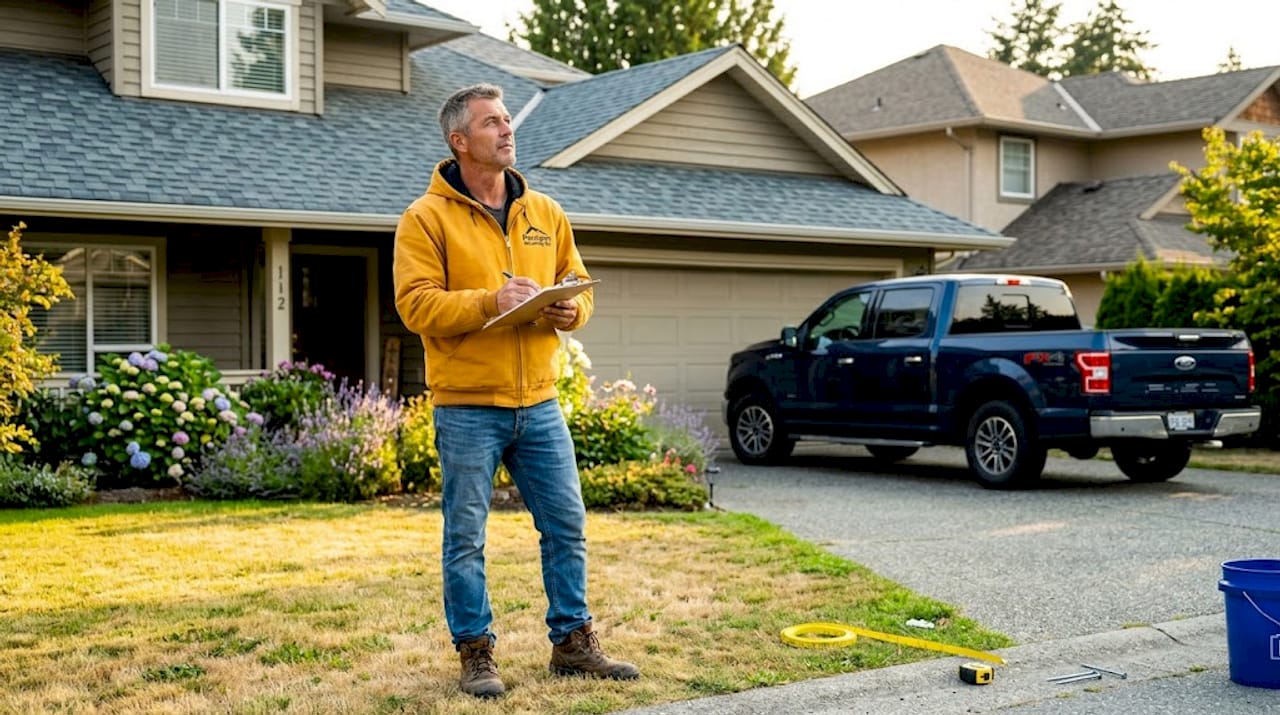
Planning a new roof in British Columbia is one of the bigger financial decisions you will make as a homeowner or property manager. The cost factors for new roofs go well beyond simply picking a shingle colour and calling it done. In Metro Vancouver and the surrounding Lower Mainland, you are dealing with heavy rainfall, coastal moisture, freeze-thaw cycles, and occasionally serious snow loads. Those conditions shape every decision from material selection to labour scheduling. This guide walks you through exactly what drives roofing costs so you can plan your budget with confidence.
Table of Contents
- Key takeaways
- 1. How roof size and pitch affect your installation costs
- 2. Material choices and what they actually cost in BC
- 3. Labour and local market conditions in Metro Vancouver
- 4. Tear-off requirements, decking condition, and permit costs
- 5. Timing and budgeting strategies to keep costs manageable
- What I have learned about roofing costs after years on BC rooftops
- Get an accurate roofing estimate from Paragonroofingbc
- FAQ
Key takeaways
| Point | Details |
|---|---|
| Size and pitch drive material volume | Steeper and larger roofs require significantly more materials and labour, raising total costs substantially. |
| Material choice sets the price range | Asphalt shingles start affordable, while metal and tile cost more upfront but last considerably longer in BC’s wet climate. |
| Labour is the dominant expense | Labour accounts for 55–65% of total roofing project cost, especially in Metro Vancouver’s tight trades market. |
| Hidden costs are common | Decking rot, permit fees, and flashing replacements routinely add $1,500 to $5,000 to a project budget. |
| Timing can save real money | Booking your project outside peak season (November through February) can reduce labour costs by 10–15%. |
1. How roof size and pitch affect your installation costs
The most fundamental cost factors for new roofs start with the physical shape of your home. Roofers measure area in “squares,” where one square equals 100 square feet of roof surface. A modest Burnaby bungalow might have 18 squares, while a two-storey home in Surrey with a complex roofline can easily exceed 35 squares. More squares mean more materials, more labour hours, and a higher final invoice.
Pitch adds another layer of complexity. A low-slope roof (think a 4:12 pitch, meaning four inches of rise for every 12 inches of run) is relatively straightforward to walk and work on. A steep 12:12 pitch is essentially a 45-degree slope. Steep pitches add 41% more surface area than the footprint of the home suggests, which means more materials right away. On top of that, crews need harnesses, anchor systems, and additional staging, which takes time to set up and adds to the labour bill.
Here is how pitch and size drive your overall roofing price:
- A low-pitch roof on a 2,000 sq ft home typically requires 20 to 22 squares of material.
- A steeper roof on the same home can require 26 to 30 squares once the actual slope surface is calculated.
- Safety equipment and slower working pace on steep roofs can add $1,000 to $3,000 to labour costs alone.
- Complex rooflines with multiple valleys, hips, and dormers increase cut waste and install time significantly.
- Accessibility challenges, such as trees close to the roofline or a home on a slope, also add staging costs.
Pro Tip: Ask your contractor to provide a material take-off showing the exact number of squares calculated, not just a total price. This lets you verify the measurement and spot any significant discrepancies.
2. Material choices and what they actually cost in BC
Picking a roofing material is a bit like choosing between a basic sedan and a fully loaded SUV. Both will get you where you need to go, but they perform very differently over time, especially in a coastal climate like Metro Vancouver’s. The cost of roofing materials varies enormously depending on what you choose, and BC’s weather makes certain materials perform far better than others.
Here is a practical comparison of the most common options installed across the Lower Mainland:
| Material | Installed cost per sq ft | Lifespan | BC climate suitability |
|---|---|---|---|
| 3-tab asphalt shingles | $3.50 to $5.50 | 15 to 20 years | Adequate; limited wind resistance |
| Architectural asphalt shingles | $5.00 to $8.00 | 25 to 30 years | Good; better moisture and wind performance |
| Metal roofing (steel/aluminum) | $9.00 to $16.00 | 40 to 70 years | Excellent; sheds rain and snow efficiently |
| Cedar shakes | $8.00 to $14.00 | 20 to 30 years | Good if maintained; prone to moss in wet climates |
| Concrete or clay tile | $12.00 to $20.00 | 40 to 50+ years | Excellent durability; needs adequate structural support |
| Synthetic (composite) shingles | $7.00 to $12.00 | 30 to 50 years | Excellent; designed to handle freeze-thaw cycles |
For a 2,000 square foot home, material costs alone range from roughly $7,000 for basic 3-tab shingles up to $40,000 for premium tile or high-end metal systems. That spread makes material selection the single biggest budget lever you have.
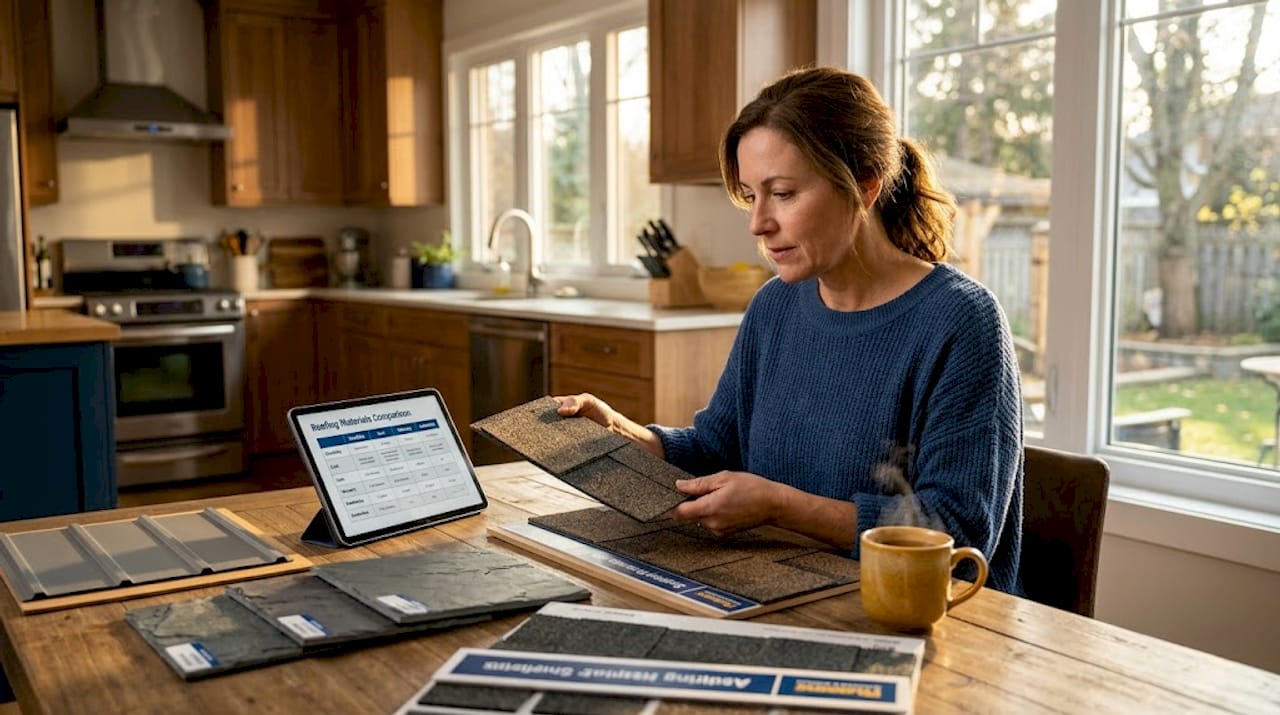
Lifespan matters more than many homeowners realise. If an architectural shingle roof lasts 28 years and a 3-tab lasts 18, the cost per year difference is often minimal. Metal roofing, while expensive upfront, regularly lasts 50 years in BC’s wet climate without major maintenance. For a property manager thinking in terms of lifecycle costs rather than upfront budget, metal can be the most economical choice over time.
Pro Tip: Always check whether a material’s warranty covers coastal or high-humidity environments. Some manufacturers void warranties if certain underlayment specifications are not met, which is especially relevant in the Lower Mainland.
3. Labour and local market conditions in Metro Vancouver
Labour is not a line item you can negotiate down without consequences. In 2026, labour represents 55 to 65% of total roofing project cost, and in Metro Vancouver, that percentage skews toward the higher end. Wage rates in the Lower Mainland reflect the overall cost of living, and skilled roofers are genuinely in short supply during the busy spring and summer season.
BC’s climate adds additional labour cost that homeowners in drier provinces simply do not encounter. Coastal moisture means crews often cannot work consecutive days without weather delays. Freeze-thaw cycles in spring require careful planning around temperature windows for adhesive products. Snow loads on the North Shore and in Fraser Valley foothills sometimes require structural inspections before any roofing work can begin. These realities translate directly into longer project timelines and higher billable hours.
Factors that push labour costs up in BC include:
- Metropolitan labour premiums that raise roofing costs by 20 to 40% compared to rural BC markets.
- Weather delays that extend project duration and require crews to return multiple times.
- Safety staging and harness anchor requirements on steep or tall structures.
- Local municipal permit requirements that sometimes require a site visit from an inspector, adding scheduling complexity.
- Specialist trades needed for skylights, chimneys, or complex flashing details.
Pro Tip: Scheduling your roof for late September through November often hits a sweet spot. Contractors are wrapping up their peak season backlog, the weather is still workable, and off-season bookings can save 10 to 15% on labour compared to peak months.
4. Tear-off requirements, decking condition, and permit costs
This is the section that catches most homeowners off guard. The visible shingles on your roof are just the surface. What lives underneath, the decking, the underlayment, the flashing around every penetration, can add thousands to your budget once a contractor tears off the old material and gets a look at what is actually there.
A full tear-off, meaning removing all existing shingles before installing the new roof, typically adds $1,000 to $3,000 to the project compared to an overlay. An overlay means laying new shingles directly over the existing layer. Overlays cost less upfront, but they hide potential decking problems, add weight to the structure, and most manufacturers will not honour warranties on overlaid roofs. In BC’s wet climate, trapping moisture between two shingle layers is asking for trouble.
Common surprise costs to budget for:
- Decking rot or water damage found during tear-off, which typically adds $500 to $3,000 and affects roughly 15 to 20% of projects.
- Permit fees in most Lower Mainland municipalities range from $150 to $500 depending on the scope of work.
- Gutter removal and reinstallation when gutters are attached directly to the fascia boards.
- Chimney reflashing, which is almost always needed on older homes and runs $300 to $800 per chimney.
- Skylight flashing upgrades, which are non-negotiable in BC’s rainfall totals.
Property managers overseeing multiple units should also be aware that deferred roof repairs create a compounding problem. Water that has been getting behind flashing for two seasons will have migrated into the decking and possibly the insulation by the time the roof gets replaced, and every wet sheet of plywood found during tear-off is another $85 to $130 in added cost.
5. Timing and budgeting strategies to keep costs manageable
Getting the timing right is one of the few genuine cost controls available to you as a homeowner or property manager. Emergency repairs after a storm carry a premium because demand spikes and crews are stretched thin. Avoiding peak season and planning ahead is the single most effective budget strategy outside of material selection.
Contractors in Vancouver Metro are typically booked solid from April through September. If you want the best combination of price, crew availability, and project attention, book outside that window. The late fall and early winter months are workable for roofing in the Lower Mainland far more often than people assume, provided temperatures stay above 5°C for adhesive application.
Smart budgeting practices to follow:
- Get at minimum three itemised quotes that break down materials, labour, disposal, and permit costs separately.
- Build a contingency of 10 to 15% into your budget specifically for decking repairs and hidden surprises.
- Ask each contractor whether they are offering manufacturer rebates on specific shingle lines, as some programmes can offset material costs by several hundred dollars.
- Clarify what the workmanship warranty covers and for how long, separate from the material warranty.
- Confirm the contractor pulls the permit. If they suggest skipping it, that is a red flag with real consequences on resale.
Pro Tip: A new roof can recoup 48 to 57% of its cost on resale, so think of this investment in terms of total property value, not just today’s invoice. The roofing impacts on your property value are real and measurable.
What I have learned about roofing costs after years on BC rooftops
Hey, it is Harman here. I want to share something I have seen play out too many times to count. Homeowners get a quote, round it down in their heads, and assume the project will come in near that number. Then tear-off happens, and suddenly there are three sheets of rotten decking, one chimney that needs full reflashing, and a permit fee nobody accounted for. The budget surprise is not bad luck. It is the predictable result of not planning for what is almost always under there.
In my experience, the homeowners who come out of a roofing project feeling good are the ones who built a realistic contingency from the start and chose materials suited to what BC weather actually does to a roof. Coastal moisture is relentless. I have seen cedar shakes on a north-facing slope turn into a moss garden within five years because nobody budgeted for annual maintenance. I have seen 3-tab shingles blow off in a Coquitlam windstorm because they were the cheapest option and not rated for the exposure zone.
The labour shortage in Metro Vancouver is real and it is not getting easier. Qualified roofers are busy, and the ones who are available at short notice during peak season are sometimes available for a reason. Investing in a scheduled, planned replacement with a vetted contractor beats a panicked call after the first serious fall rain by a considerable margin. I have also found that the off-season booking discount is genuinely there if you ask for it directly. Contractors want to keep crews busy through the slower months, and that creates real flexibility on price.
— Harman
Get an accurate roofing estimate from Paragonroofingbc
If you have read through this and you are realising your roof is overdue for a proper look, that is exactly the right instinct. Paragonroofingbc works throughout Metro Vancouver and the surrounding Lower Mainland, handling everything from straightforward asphalt shingle replacements to complex metal and tile installations on steep-pitch homes.
Whether you are in Coquitlam, Delta, Maple Ridge, or central Vancouver, Paragonroofingbc provides detailed, itemised quotes that break down every cost factor before any work begins. That means no surprises at tear-off. Paragonroofingbc also offers roof installation in Vancouver with drone inspection options so you know exactly what condition your decking and flashing are in before committing to a scope of work. If you are in the Coquitlam area, the team also provides dedicated Coquitlam roof installation services built around BC’s specific climate demands. Reach out today for a no-pressure consultation and a quote you can actually budget against.
FAQ
How much does a new roof cost in BC in 2026?
Roof replacement costs in 2026 range from $7,000 to $35,000 nationally, with Metro Vancouver projects typically landing at the higher end due to labour premiums and material costs. Most residential replacements in the Lower Mainland fall between $12,000 and $22,000 depending on size, pitch, and material choice.
What is the most affordable roofing material for BC homes?
3-tab asphalt shingles are the lowest upfront option at roughly $3.50 to $5.50 per square foot installed, but architectural shingles offer significantly better wind and moisture resistance for only a modest cost increase, making them the better value in BC’s climate.
Why is labour such a large part of roof installation costs?
Labour is the dominant cost in any roofing project because the work is physically demanding, weather-dependent, and requires skilled trades. In Metro Vancouver specifically, labour shortages and local wages push labour to 55 to 65% of total project cost.
Should I choose a full tear-off or an overlay to save money?
A full tear-off is almost always the better choice, even though it costs more upfront. Overlays hide decking damage, add structural weight, and typically void manufacturer warranties, which creates bigger expenses down the road, especially in BC’s wet environment.
When is the best time to book a roof replacement in Metro Vancouver?
Late September through November is the ideal booking window. Contractor availability is better, off-season labour discounts of 10 to 15% are often available, and Lower Mainland weather is still workable for most roofing systems well into autumn.
Recommended
Our Roofing Blog
Have more questions about roofing?
Check out our FAQs or give us a call today to speak to an expert roofer in Vancouver Lower Mainland, BC. We're here to help our neighbours make educated decisions about their roof. For our team, we value helping clients save money while making their roofs last.