
Delta BC soffit rot from gutter overflow: stop it fast
Delta BC soffit rot from gutter overflow: stop it fast

If your gutters are overflowing in Delta, BC, the most likely cause of soffit rot is water running behind the gutter and soaking into the fascia and soffit boards. Stop the flow first, then assess the damage. That is the order that saves you money.
Delta sits low and flat, close to sea level, which means water that should run off your roof and away from the house often has nowhere fast to go once a gutter clogs or overflows. Add in heavy local rainfall and the cedar and evergreen tree cover common across the municipality, and you get gutters that fill with needles and moss faster than most homeowners expect. Paragon Roofing BC crews see this pattern constantly on inspections across Delta, particularly on homes near ditches, sloughs, and older subdivisions with mature trees.
Here’s what to do today if you’re watching water spill over your gutters or you’ve spotted staining under the eaves:
- Stop the active overflow. If it’s safe to do so from the ground, clear any visible debris jammed at the downspout inlet or gutter outlet.
- Clear obvious downspout blockages. A garden hose run from the top can flush minor clogs without you touching a ladder.
- Redirect water away from the foundation. A cheap downspout extension keeps pooling water from undermining your slab or crawlspace.
- Arrange a visual inspection. Look for soft spots, staining, or sagging from the ground, then book a professional check if anything looks off.
Three quick facts worth knowing before you climb anything: Delta gets enough rain in a wet season to overwhelm a half clogged gutter system within days, evergreen debris builds up faster here than in drier Metro Vancouver pockets, and a local roofer can usually confirm whether you’re dealing with surface staining or structural rot in under an hour.
Key Takeaways
Gutter overflow rots Delta soffits by running behind the trough and soaking the fascia, and stopping that flow immediately is the single highest-impact action a homeowner can take.
| Point | Details |
|---|---|
| Stop the flow first | Clear visible blockages and redirect discharge away from the foundation before assessing damage. |
| Inspect both fascia and soffit | Damage in one area very often signals hidden damage in the other, so check both together. |
| Clean gutters 2 to 3 times a year | Delta’s tree cover and rainfall mean most homes need this cadence to avoid recurring overflow. |
| Call a pro for soft wood or spreading stains | Flexing fascia boards and staining beyond the visible edge both signal damage a ground check will miss. |
| Book Paragon Roofing BC for a full diagnosis | Their inspections pair moisture readings and a photo report with a scoped repair plan for Delta properties. |
Table of Contents
- How does gutter overflow cause soffit rot in Delta homes?
- What causes gutters to overflow in Delta, BC?
- How do you inspect your roofline for early soffit damage?
- Preventing soffit rot: maintenance and upgrades that actually work
- What short-term fixes stop water entry right now?
- What repair level does your soffit damage actually need?
- How do roofers diagnose hidden rot behind your gutters?
- Which materials hold up best against Delta’s rain?
- A Delta roofer’s take on why inspection comes first
- When should you call Paragon Roofing BC for a Delta inspection?
- Sources
- FAQ
How does gutter overflow cause soffit rot in Delta homes?
Gutter overflow rots soffits through a slow, mostly invisible pathway. Water that should flow through the trough instead spills over the back edge, behind the gutter itself, and runs straight down the face of the fascia board.
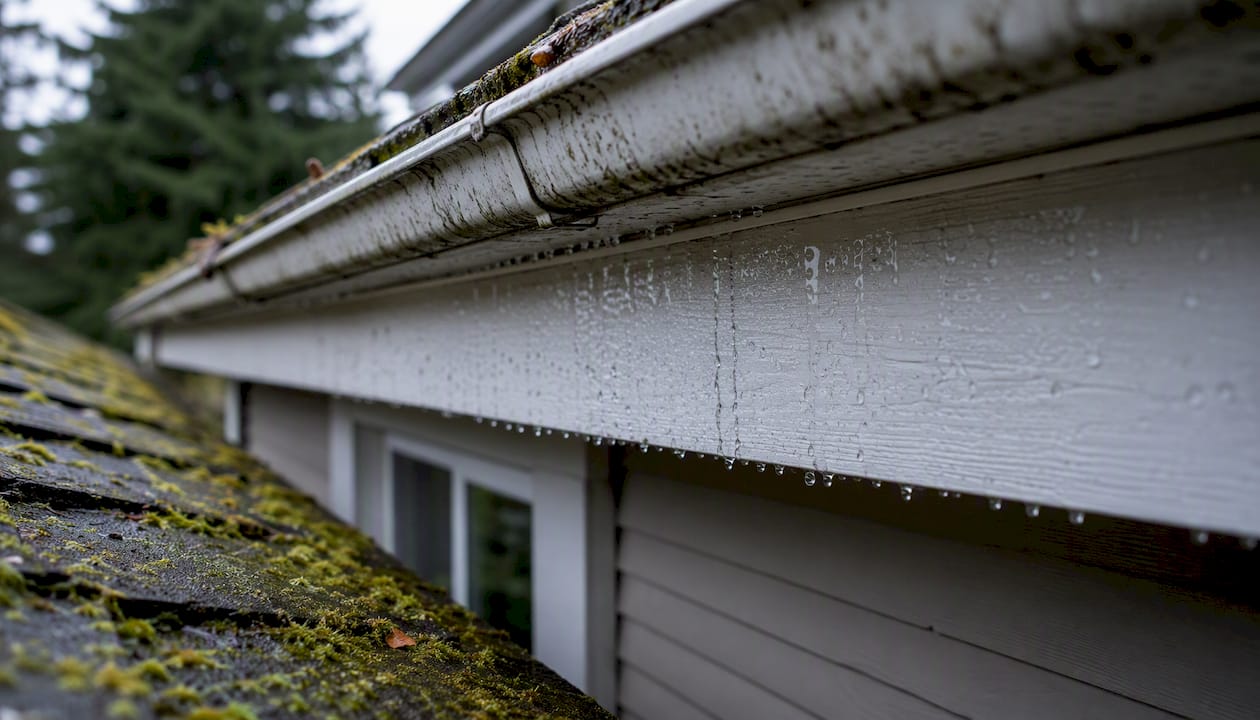
Fascia boards on most Delta homes, especially anything built before the last couple of decades, are unfinished or lightly painted softwood. Softwood absorbs water fast and dries slowly, particularly under a soffit where airflow is already limited. Once that fascia stays damp through repeated rainy seasons, it swells, the paint or caulking seals start failing, and a gap opens between the fascia and the gutter hanger. Water finds that gap and starts running behind the fascia into the soffit and the wall cavity behind it. This kind of slow saturation typically takes one to three wet seasons to show up as visible rot, which is exactly why so many homeowners are caught off guard.
Picture the flow like this: rain hits the roof, sheets down into the trough, overflows the back lip because the trough is clogged or pitched wrong, soaks the fascia’s back face where nobody ever looks, and finally works its way into the soffit board and the framing behind it. By the time you see a stain on the soffit itself, the fascia has usually been wet for months.
Soffit and fascia damage rarely shows up in isolation. If one is compromised, the other is very often already affected too, which is why a partial patch on just the visible spot often misses the real problem underneath.
Pro Tip: Paint bubbling along the underside of a fascia board, or a gutter section that has pulled away from the fascia by even a few millimetres, is often the first sign of trouble. Most homeowners miss both because they’re looking for a leak, not a subtle shift.
What causes gutters to overflow in Delta, BC?
Overflow rarely comes from one single problem. It’s usually a combination of a clog, a slope issue, and a missing flashing detail working together.
- Clogged troughs from organic debris. Needles, moss, and leaf litter build up fast under Delta’s evergreen canopy, and a trough packed with debris holds water instead of channelling it.
- Blocked downspouts. Even a clear trough backs up if the downspout outlet is jammed, which shows up as puddling right at the base of the wall or foundation.
- Incorrect gutter pitch. Gutters need a slight, consistent slope toward the downspout; a flat or reverse-pitched section holds standing water that overflows during any real downpour. A properly designed slope is one of the most overlooked fixes on older Delta homes.
- Missing or failed drip edge and flashing. Without proper flashing at the roofline, water runs behind the gutter no matter how clean the trough is, feeding rot directly into the fascia.
- Concentrated roof runoff. Steep roof sections or valleys can dump more water into one gutter run than it was ever sized to handle, especially during a heavy Pacific storm.
Delta’s own geography multiplies every one of these problems. High annual rainfall combined with mostly flat, low-lying lots means water has less natural fall to drain away, so any inefficiency in the gutter system shows up faster and worse than it would on a sloped North Shore lot.
How do you inspect your roofline for early soffit damage?
Catching soffit rot early is almost entirely about looking in the right places before you climb anything. Start on the ground.
- Walk the perimeter and look up at the fascia line for dark streaks, peeling paint, or discoloured wood.
- Check for sagging gutter sections, which usually means a hanger has failed or the trough is holding standing water.
- Look for plant growth or visible moss sitting inside the gutter trough itself.
- Check the ground near your foundation for puddling or erosion patterns after a rain event.
- Note any soffit panels that look stained, warped, or discoloured from underneath.
If everything from the ground looks reasonably clean, a careful ladder inspection can confirm the details, but only if conditions are safe. Skip the ladder entirely if the roof is steeply pitched, if it’s wet or windy, or if you’re inspecting anything above a single storey. That’s a job for a roofer with proper fall protection, not a Saturday afternoon project.
For the ladder-safe sections, work through this checklist:
- Inspect the front and back edge of the gutter for gaps or separation from the fascia.
- Press gently on the fascia board itself; sound wood shouldn’t flex or feel soft.
- Check soffit vents for staining, rust, or blockage.
- Look at the downspout outlet for cracks or disconnection at the elbow.
- Check caulking and flashing seams for cracking or gaps.
- Look inside the attic, if accessible, for damp insulation or dark staining on the underside of the roof deck near the eaves.
- Note any daylight visible through soffit vent panels that shouldn’t be there.
- Check for insect activity, a common secondary sign of long-term wood moisture.
Pro Tip: A basic moisture meter, the kind you can rent from most hardware stores for under a day’s cost, gives you a real number instead of a guess. Anything reading consistently wet on a fascia board that’s been dry for a week of good weather means the water source is active, not historical, and that’s when it’s time to call a professional rather than wait for spring.
Preventing soffit rot: maintenance and upgrades that actually work
Prevention in Delta comes down to two things: keeping water moving through the system, and giving your attic somewhere for moisture to escape. Skip either one and you’re just delaying the next repair.
Most Delta homes need gutters cleaned multiple times per year, and homes with heavy cedar or fir canopy overhead should lean toward more frequent cleanings or add a fall cleaning before the wet season really sets in. That maintenance cadence lines up with what contractors across the Vancouver area recommend for anywhere with dense tree cover and consistent coastal rainfall. Ground-level clearing with a hose and a scoop is a reasonable DIY task; anything requiring a ladder above one storey is worth handing to a professional.
Here’s a priority order for reducing overflow long term:
- Flush downspouts and install extenders so discharge lands well clear of the foundation.
- Correct gutter pitch on any section that holds standing water after a rain.
- Add or repair drip edge and flashing at the roofline, since proper flashing keeps water from running behind the gutter in the first place.
- Install vented soffits where solid panels currently trap moisture against the roof deck.
- Consider gutter guards if tree debris is a constant issue, though they need occasional cleaning too and aren’t a set-and-forget fix.
Cost planning: routine cleaning sits at the low end of the spectrum, pitch corrections and flashing repairs land in the mid range, and a full soffit or fascia replacement with vented upgrades sits at the higher end. Treat these as planning bands, not quotes; every roofline is different once a contractor gets eyes on the actual damage.
Vented soffits do double duty. They stop water from pooling against solid panels, and they give your attic the balanced intake and exhaust airflow it needs to keep moisture from condensing on the underside of your roof deck. A dry attic and a dry soffit usually go hand in hand, and our own soffit and ventilation work across Metro Vancouver almost always pairs the two.
What short-term fixes stop water entry right now?
If water is actively getting into your soffit today, these steps buy you time until a proper repair happens. None of them are permanent, and all of them assume you can work safely from the ground or a low, stable ladder.
- Extend the downspout discharge temporarily with a flexible extension to move water further from the foundation while the real fix waits.
- Wedge a temporary drip board or flashing strip behind the gutter at the worst overflow point to redirect water away from the fascia’s back face.
- Clear visible downspout blockages from ground level using a hose or a plumber’s snake designed for gutters.
- Tarp small entry gaps at soffit vents or fascia joints if water is actively dripping into the attic or wall cavity.
None of these fixes belong on a wet roof, and none of them are a reason to skip a professional follow-up. Never stand on a wet roof deck to make an adjustment, never use a pressure washer near shingles or old flashing, since the high-pressure spray can lift shingle edges and force water under them, and skip any repair above a single storey or on a steep pitch entirely. Each of these fixes is a stopgap. Expect it to hold for a few weeks of normal rain, not through an entire wet season.
What repair level does your soffit damage actually need?
Not every case of soffit rot needs a full roofline replacement, but figuring out which level you’re dealing with changes both your timeline and your budget.
- Spot repair. Small paint bubbles, minor surface staining, or one soft section of fascia usually means a contractor can patch or replace a short run of board without touching the gutter system.
- Partial fascia or soffit replacement. Extensive back-face rot along one section, sagging gutter hangers, or soffit panels that flex when pressed typically call for replacing a full run of fascia and soffit, often alongside a section of gutter.
- Full roofline replacement. Rot that’s spread across multiple sections, structural softening at the roof edge, or repeated overflow damage year after year usually means replacing the entire roofline, including new gutters and vented soffit panels.
Timelines vary with the scope. A spot repair can often be inspected and completed within a single visit. Partial replacement usually needs a scheduled follow-up once material is ordered. Full roofline work depends heavily on what’s found once panels come off, since hidden rot in the framing behind the soffit can extend the job. The biggest cost factors are material choice, how accessible your roofline is, how much hidden damage turns up once boards are opened, and whether any attic insulation or framing needs attention too.
If you’re planning to file an insurance claim or just want an accurate contractor estimate, take dated photos of the staining, sagging, or soft spots before any work starts, and keep a note of when you first noticed the issue. That timeline matters more than most homeowners realize when a claims adjuster gets involved.
How do roofers diagnose hidden rot behind your gutters?
A ground inspection tells you something is wrong. It rarely tells you how bad it is, because most of the actual damage happens behind the gutter where you can’t see it.
- Remove sections of gutter at the suspected problem area to expose the full back face of the fascia.
- Probe the fascia and soffit boards with an awl or screwdriver to find soft, compromised wood versus sound material.
- Take moisture meter readings across several points to map how far the saturation extends beyond the visible stain.
- Inspect the attic from inside , checking insulation and roof decking near the eaves for dampness or dark staining.
- Remove small soffit panels if attic access is limited, to check the underside of the roof edge directly.
- Document everything with photos at each stage, building a clear before-and-after record of the damage found.
Each step exists because ground-level and even ladder inspections miss what’s happening behind the gutter itself. A moisture reading taken three feet from the visible stain often shows the damage extends much further than expected, and an attic check can reveal dampness that hasn’t reached the soffit’s outer face yet at all. Ask any contractor you hire for a written scope that separates immediate stabilization work from the full repair plan, along with the photo report from the inspection itself. That combination is what a proper leak diagnosis should always include.
Pro Tip: If a contractor quotes a full roofline replacement without ever removing a gutter section or taking a moisture reading, ask why. A real diagnosis needs to see behind the gutter, not just guess from the stain pattern on the soffit.
Which materials hold up best against Delta’s rain?
Once you’re replacing soffit and fascia, material choice determines how long you’ll go before dealing with this again. Painted wood is cheaper upfront but needs recoating and stays vulnerable to the exact moisture problem that caused the original rot.
| Material | Upfront cost | Wet-climate durability | Maintenance needs |
|---|---|---|---|
| Painted wood fascia/soffit | Low | Moderate; needs repainting and sealing | Recoat every few years, inspect after each wet season |
| Fibre cement soffit/fascia | Medium | High; resists moisture absorption well | Minimal, occasional repainting |
| PVC soffit panels | Medium | High; does not absorb water | Very low, occasional cleaning |
| Older steel gutter profiles | Low to medium | Moderate; prone to rust at seams | Regular inspection for rust and seam separation |
| Aluminum or K-style gutters | Medium | High; resists corrosion, sheds debris better | Low, periodic cleaning |
Fibre cement and PVC soffit panels pair especially well with vented designs, since neither material swells or warps the way wood does when moisture gets past the paint layer. Aluminum and K-style gutter profiles also hold their pitch better over time than older steel systems, which matters directly for preventing the overflow that starts this whole problem. Stainless or coated fasteners are worth the small upcharge too, since rusted fasteners loosen fascia boards and create the exact gap where water starts working its way in.
A Delta roofer’s take on why inspection comes first
The pattern our crews see across Delta is almost always the same: a flat lot, a gutter system that was fine ten years ago, and a decade of accumulated needle build-up nobody got around to clearing consistently. Add the low grades common through older Delta subdivisions, and you get water sitting where it shouldn’t for longer than it would on a sloped North Shore property.
The sequence that actually works is simple, and it’s the same one this whole article has walked through: stop the active flow first, apply a short-term stabilizer if water’s still getting in, get a real inspection before assuming the worst or the best, and only then plan the permanent repair. Skipping straight to a full replacement quote without an inspection wastes money on jobs that only needed a spot repair, and patching a spot repair on a system with three seasons of hidden rot behind it just delays the inevitable.
When you call for an inspection, have a rough timeline of when you first noticed staining or overflow, and any photos you’ve already taken. That’s usually enough for a crew to give you an honest read on whether you’re looking at a quick fix or a bigger job, and it’s exactly the kind of documented history that makes an inspection faster and more accurate.
When should you call Paragon Roofing BC for a Delta inspection?
If you’ve worked through the checklist above and you’re still seeing staining, soft fascia, or repeated overflow after a good cleaning, that’s the point where a professional inspection pays for itself.
Paragon Roofing BC covers the full diagnostic and repair range for Delta properties, from a first look at your gutter system through to a complete roofline rebuild. Here’s what’s typically included when we come out for a soffit or fascia concern:
- Full gutter clearing check, confirming pitch, hanger condition, and downspout flow.
- Fascia and soffit diagnostics, including moisture readings and probing at suspected soft spots.
- Vented soffit upgrades where solid panels are trapping moisture against the roof deck.
- Full roofline replacement, including new gutters, fascia, and soffit systems when the damage warrants it.
- Downspout routing and extension work to keep water clear of your foundation going forward.
Every inspection includes a photo report and a written scope, similar to what’s standard across our residential roofing services, so you know exactly what’s stabilization work versus full repair before anything gets scheduled. Work comes with a workmanship warranty, and our crews cover Delta alongside Surrey, Burnaby, Coquitlam, and both North and West Vancouver. If your gutters have been overflowing and you’re not sure how far the damage has spread, book a roofline inspection and get a straight answer before the next wet season sets in.
Sources
FAQ
Why does water leak from soffits behind gutters?
Water leaks behind soffits when overflow runs behind the gutter trough and down the back face of the fascia, eventually soaking into the soffit board and wall cavity behind it. This usually happens gradually over one to three wet seasons before it becomes visible from the ground.
How do I stop water from overshooting my gutters?
Clear organic debris and downspout blockages first, since clogged troughs are the most common cause of overflow in Delta. If the gutter still overflows after cleaning, check the pitch and flashing, since incorrect slope or missing drip edge will cause overshoot even in a clean system.
What could be causing water to drip between my gutter and fascia?
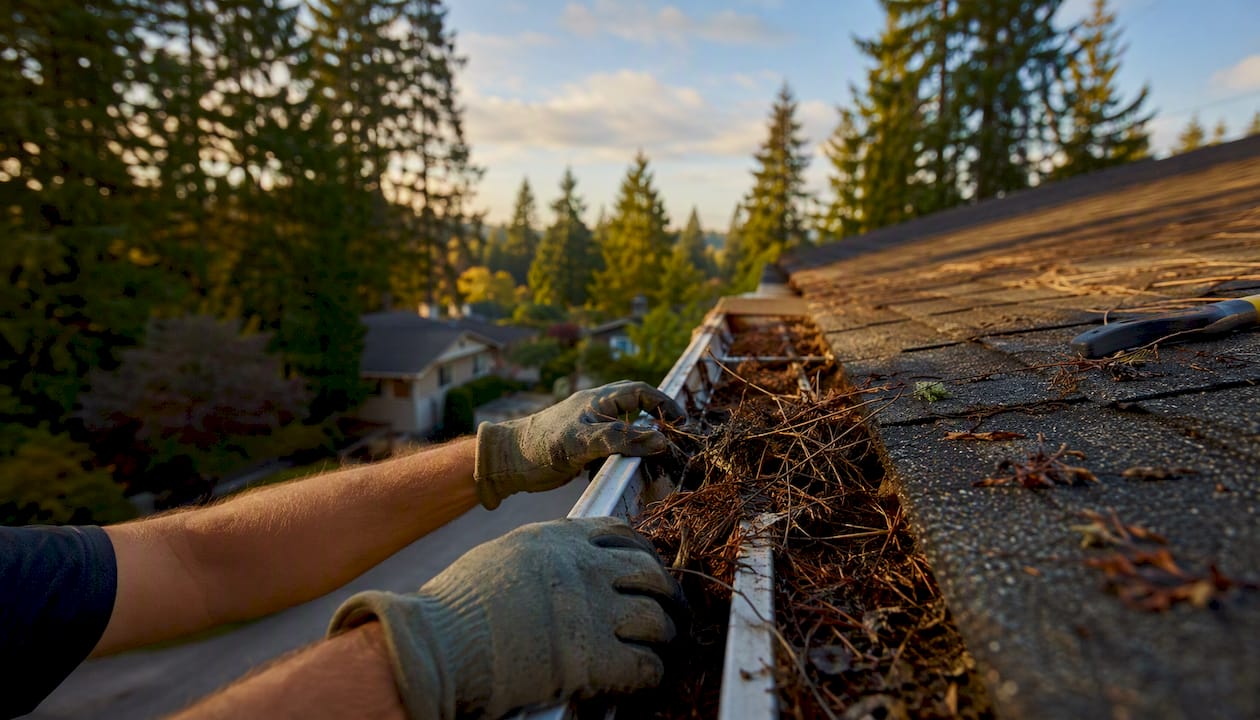
A gap between the gutter and fascia usually means the gutter hanger has loosened, often because repeated moisture has swollen or softened the fascia board underneath it. This is one of the clearer signs that rot has already started and a professional inspection is worth arranging soon.
How often should Delta homeowners clean their gutters?
Most Delta properties need gutters cleaned two to three times a year, with homes under heavy cedar or fir canopy leaning toward the higher end of that range.
When should I call Paragon Roofing BC instead of doing a DIY fix?
Call a professional when you find soft or flexing fascia, staining that extends beyond the visible edge, or overflow that returns shortly after cleaning, since these signs point to hidden rot that a ground inspection can’t fully assess.
Recommended
Our Roofing Blog



Have more questions about roofing?
Check out our FAQs or give us a call today to speak to an expert roofer in Vancouver Lower Mainland, BC. We're here to help our neighbours make educated decisions about their roof. For our team, we value helping clients save money while making their roofs last.