
Surrey skylight condensation: fixes that actually stop it
Surrey skylight condensation: fixes that actually stop it

If your skylight is dripping or fogging up every cold morning, that’s almost always condensation , not a leak, and it’s fixable. Warm, moist indoor air is meeting a cold surface it shouldn’t be touching. Start here today:
- Turn on your bathroom and kitchen extract fans and confirm they vent outside, not into the attic.
- Run a portable dehumidifier and aim for 40 to 50% relative humidity.
- Get air moving near the skylight well with a ceiling fan or by cracking a trickle vent.
If you see daily condensation no matter what you do, staining that keeps spreading, mould around the frame, or fogging trapped between the panes, stop troubleshooting and book an inspection. That last one, moisture between the glass, means the seal on the unit has already failed.
Key Takeaways
Skylight condensation in Surrey is almost always solved by fixing indoor humidity first and the shaft’s insulation second, with glazing replacement reserved for failed seals.
| Point | Details |
|---|---|
| Diagnose before you spend | Condensation forms on the room side of the glass; leaks track in from an edge, usually after wind-driven rain. |
| Target 40 to 50% RH | Run extract fans and a dehumidifier, and check your actual humidity with a hygrometer rather than guessing. |
| Insulate the shaft first | Roughly 1 inch of XPS foam on the shaft interior removes the cold bridge behind most recurring fog. |
| Between-pane fog means IGU failure | Resealing won’t fix it; the insulated glass unit itself needs replacing. |
| Call Paragon Roofing BC for a full check | Their Surrey team inspects shaft insulation, flashing, and glazing together to confirm the real cause. |
Table of Contents
- What causes surrey skylight condensation
- What can you do about skylight condensation today?
- How do you permanently stop skylight condensation?
- When should you call a roofer for skylight condensation?
- Signs your skylight condensation has turned into damage
- What Surrey homeowners get wrong about skylight condensation
- Book a skylight inspection with Paragon Roofing BC in Surrey
- Sources
- FAQ
What causes surrey skylight condensation
Skylight condensation comes down to physics, not bad luck. Warm, moist indoor air rises and meets a colder surface than its dew point, and it condenses right there on the glass or the frame. Skylights catch this worse than windows because heat and humidity naturally collect at the ceiling.
Three things usually drive it in Surrey homes:
- A cold shaft or kerb. The tunnel connecting your skylight to the ceiling is often poorly insulated, so it acts as a cold bridge that chills the surrounding drywall and frame.
- Old or failed glazing. Single-pane units and insulated glass units (IGUs) with a broken seal lose their thermal performance fast, and condensation is often the first sign.
- Local climate. Surrey’s winters run cool and damp for months at a stretch, with indoor heating pushing humidity up while outdoor temperatures keep the glass cold. That combination is exactly what drives condensation.
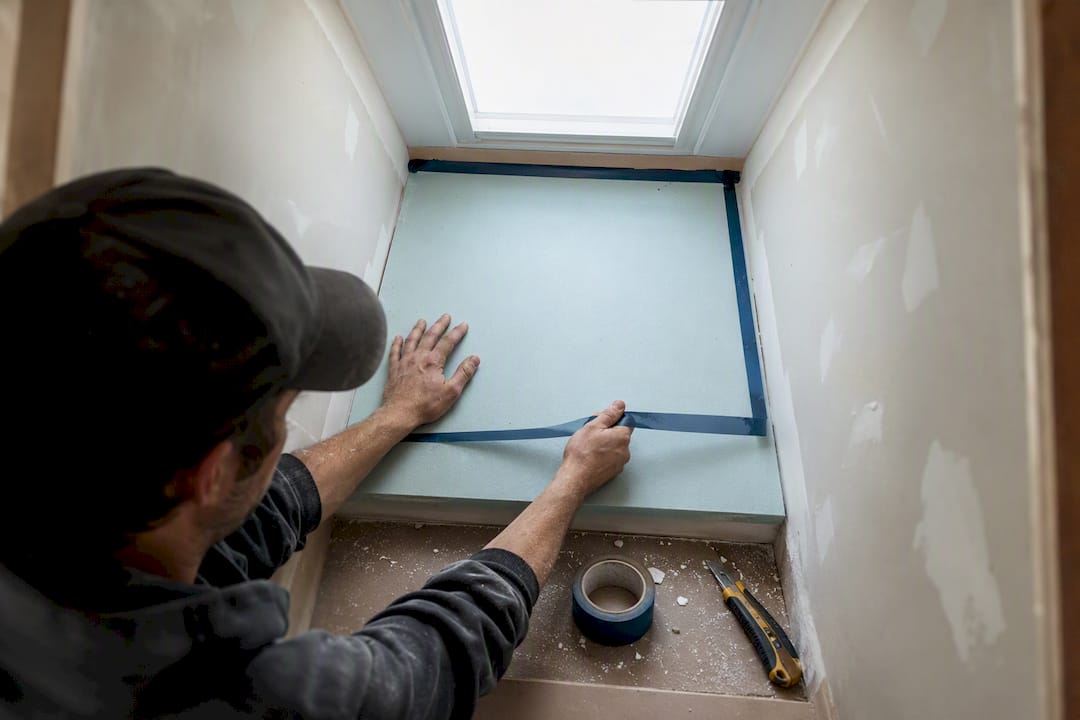
On repair calls, insulating that shaft is the fix most homeowners have never touched. Contractors regularly recommend around 1 inch of rigid XPS foam board on the inside of the shaft as a practical way to knock out the cold bridge without tearing the roof open.
What can you do about skylight condensation today?
Before you spend money on anything, run through the free and cheap fixes first. Most Surrey homes see real improvement within a week just from behaviour changes.
- Run your extract fans properly. Bathroom and kitchen fans need to run 10 to 15 minutes after you shower or cook, not just during. If your fan vents into the attic instead of outside, that’s a bigger problem worth fixing before anything else.
- Cut moisture at the source. Drying laundry indoors, boiling pasta without a lid, and long hot showers with no fan running all dump moisture straight into your air.
- Keep air moving. A ceiling fan on low, or simply not blocking the skylight well with drapes or furniture, stops that pocket of still, cold air from forming right at the glass.
Pro Tip: Check condensation location before you panic. Fog on the room-side of the glass usually means indoor humidity. Moisture pooling on the frame or drywall around the shaft points to a cold bridge. Water tracking in from an edge after rain, especially wind-driven rain, is a leak, not condensation, and needs a different fix entirely.
For a deeper technical breakdown of humidity-control routines, ClimatePro’s home dehumidification guide walks through target ranges room by room.
How do you permanently stop skylight condensation?
Behaviour changes buy you time. They don’t fix a cold shaft or a failed seal, and if you’re dealing with either, condensation keeps coming back every winter until you address the building itself.
Insulate and air-seal the shaft. This is the fix most Surrey retrofits skip because it means opening up drywall, but it’s usually the single highest-impact repair. The practical compromise contractors use, especially when a full warm-roof rebuild isn’t in the budget, is about 1 inch of XPS foam board lining the inside of the light well from the curb down to the ceiling, taped airtight with continuous vapour control. Our roofing insulation guide covers R-value targets for the broader roof assembly if you’re planning this alongside other upgrades.
Upgrade the glazing. If your IGU seal has failed, replacement of the whole unit is typically required, resealing alone rarely holds. When shopping for a replacement, ask for the condensation-resistance rating. AAMA/FGIA, NFRC, and CSA all publish rating systems for this, and a higher number means better resistance, though no rating guarantees zero condensation in a humid house.
Consider a venting skylight. In kitchens and bathrooms specifically, an operable unit that opens to release humid air on demand often outperforms a fixed skylight paired with a bigger dehumidifier.
Check the flashing and upstand height too. Condensation is often blamed for what’s actually a flashing detail that doesn’t match the roof covering, so a full fix usually means checking both the thermal side and the waterproofing side together.
Fix attic and whole-house ventilation. A poorly vented attic traps humidity that eventually finds its way to every cold surface in the house, skylights included.
| Fix | What it addresses |
|---|---|
| Shaft insulation (1" XPS) | Removes the cold bridge causing frame and drywall condensation |
| IGU replacement | Fixes failed seals causing between-pane fogging |
| Venting skylight | Clears humid air directly at the source in kitchens/baths |
| Attic/whole-house ventilation | Reduces the overall moisture load reaching the roof |
When should you call a roofer for skylight condensation?
Some condensation problems are a five-dollar dehumidifier away from being solved. Others need a roof opened up. Here’s how to tell which one you’re dealing with:
- Condensation shows up daily despite humidity control. If you’ve run fans, hit your 40 to 50% RH target, and it’s still fogging every morning, the shaft is likely under insulated.
- Fog or moisture sits between the panes. That’s a failed IGU seal, and no amount of ventilation fixes glass that’s already lost its argon fill.
- You see mould, soft trim, or stains that keep spreading. That’s no longer a comfort issue, it’s a building-envelope issue.
A proper inspection checks the flashing and upstand height, tests the shaft for insulation gaps and air leaks, examines the IGU for seal failure, and traces vapour control continuity from the ceiling drywall up to the roof deck.
A skylight that’s fogging every winter morning isn’t broken glass, it’s usually a cold shaft doing exactly what an uninsulated cavity does in a wet coastal climate. Fix the tunnel, not just the window.
Paragon Roofing BC’s Surrey skylight repair and installation team runs this exact checklist on every condensation call, and most jobs land in one of three outcomes: shaft insulation and air sealing, an IGU swap, or a flashing correction where water was mimicking condensation all along.
Signs your skylight condensation has turned into damage
Condensation that sits unaddressed for a season or two stops being a nuisance and starts being a repair bill. Watch for mould or mildew spots forming on the drywall around the shaft, paint that’s peeling or bubbling near the frame, and timber trim that’s gone soft or visibly discoloured. A sagging patch of plaster or a stain that keeps getting bigger between visits both mean water is accumulating somewhere it can’t dry out.
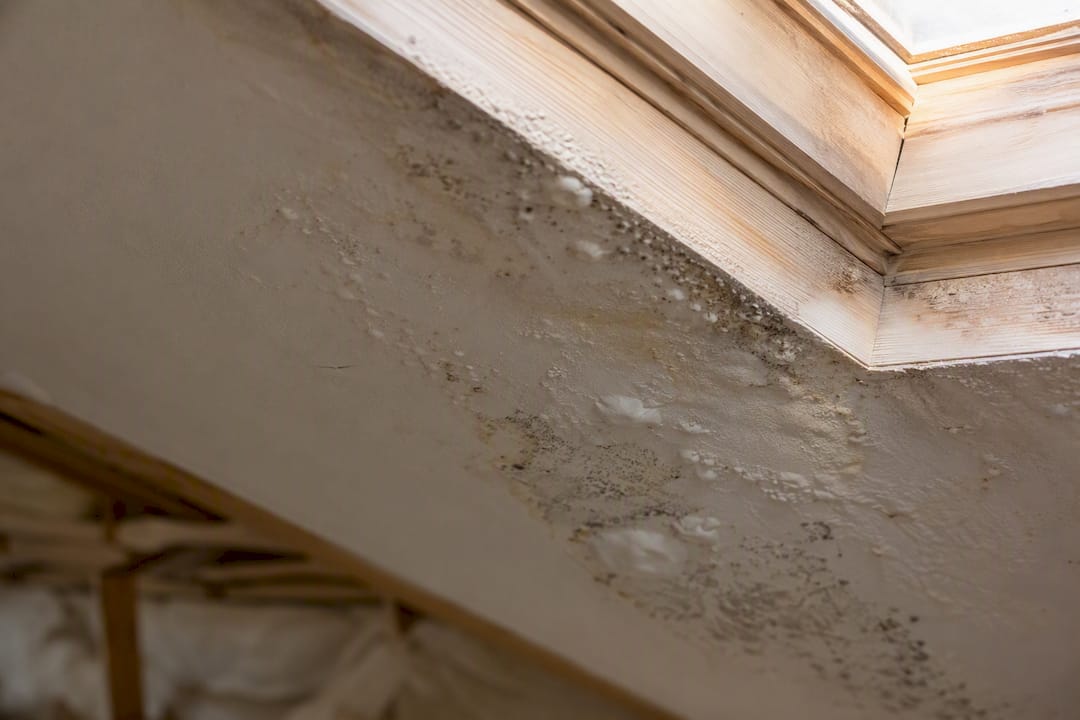
A musty smell that won’t go away, or a quick paint touch-up that fails again within weeks, usually means there’s hidden rot behind the surface rather than a cosmetic problem. A simple press test on soft-feeling trim, a moisture meter reading, or a thermal imaging scan during a professional visit will confirm what’s happening behind the drywall before it gets worse.
What Surrey homeowners get wrong about skylight condensation
Most advice online treats skylight condensation like a humidity problem you solve with a dehumidifier and call it done. That’s half right. Humidity control is the fastest, cheapest lever, and it genuinely solves a good chunk of cases. But I’d argue the bigger miss is how often the shaft itself gets ignored entirely. Homeowners will replace a skylight twice before anyone opens up the light well to check if it’s insulated.
The uncomfortable truth is that a brand new, high-rated IGU dropped into an uninsulated shaft will still fog. The glazing rating matters, but it’s not the whole story, and I think too many product pages sell it that way. What actually moves the needle in Surrey’s damp winters is treating the shaft, the flashing, and the glazing as one connected system rather than three separate purchases.
If you’re only going to do one thing this year, insulate that shaft before you spend money on new glass. It’s the part nobody sees and the part doing the most damage.
— Harman
Book a skylight inspection with Paragon Roofing BC in Surrey
Paragon Roofing BC is the direct route to a fixed skylight instead of another winter of guessing whether it’s condensation or a leak. We inspect the shaft insulation, flashing and upstand height, IGU condition, and airflow around every skylight we’re called out to in Surrey, and we tell you plainly which of those is actually causing your fogging or staining before any work starts.

Our crews serve Surrey and the wider Lower Mainland, and a typical visit means a full look at the shaft, glazing, and flashing details together rather than a quick glance from the ground. If you’re preparing for a visit, jot down when the condensation happens (morning, after showers, all day), whether it’s on the glass or the frame, and whether you’ve noticed it between the panes. That alone speeds up the diagnosis.
If you suspect the issue might be water intrusion rather than condensation, our roof leak detection and repair service covers that side too. For a full roof health check alongside the skylight, our Surrey residential roofing team can bundle both into one visit. Request an inspection and we’ll give you a clear estimate before any work begins.
FAQ
Is my skylight condensation or a leak?
Condensation forms on the room side of the glass or frame, usually worse in the morning. A leak tracks in from an edge or corner, often right after wind driven rain.
What humidity level stops skylight condensation?
Keep indoor relative humidity between 40 and 50% in winter, checked with a basic hygrometer, since higher levels almost always trigger condensation on cold glazing.
Does fog between the panes mean I need a new skylight?
Fog trapped between panes means the IGU seal has failed, and the glass unit needs replacing rather than resealing.
Should I get a venting skylight to fix condensation?
An operable skylight helps a lot in kitchens and bathrooms where humidity spikes fast, though it won’t fix an uninsulated shaft on its own.
When is skylight condensation urgent enough to call Paragon Roofing BC?
Call for an inspection if condensation persists daily despite humidity control, appears between the panes, or you notice mould, soft trim, or spreading stains, since Paragon Roofing BC’s Surrey team can confirm whether the shaft, glazing, or flashing is the real cause.
Recommended
Our Roofing Blog



Have more questions about roofing?
Check out our FAQs or give us a call today to speak to an expert roofer in Vancouver Lower Mainland, BC. We're here to help our neighbours make educated decisions about their roof. For our team, we value helping clients save money while making their roofs last.