North Vancouver tree debris: rules, disposal, and safe cleanup
North Vancouver tree debris: rules, disposal, and safe cleanup
If you need to clear tree debris in North Vancouver, check first whether the tree is protected. Any tree measuring 20 cm or more in diameter at 1.4 m above ground typically needs a removal permit from the City of North Vancouver, unless you’re in a low-density zone outside a streamside area. Once you know your legal footing, the rest is logistics.
- Hazard first : if a limb is hanging over your roof, driveway, or a neighbour’s fence, treat it as urgent and don’t wait on paperwork to secure the area.
- Sort before you haul : separate branches, logs, and leaf litter, and strip out soil, plastic, and nails.
- Pick your disposal route : Green Can and curbside yard-trimmings pickup for small loads, the North Shore Recycling & Waste Centre for bulk material, seasonal chip-up events for holiday trees, or a licensed contractor for anything involving a chainsaw and a ladder.
Key Takeaways
Compliant tree debris removal in North Vancouver depends on checking the 20 cm protected-tree threshold first, then sorting material correctly before disposal.
| Point | Details |
|---|---|
| Check the threshold | Trees 20 cm or more in diameter at 1.4 m generally need a city permit before removal. |
| Sort before hauling | Separate branches, logs, and leaves, and strip out plastic and soil to avoid rejected loads. |
| Match debris to the right facility | Use Green Can for small loads and the North Shore Recycling & Waste Centre for bulk material. |
| Respect nesting season | Removals between March 1 and August 31 may require a qualified bird-nesting survey. |
| Protect your roof | Paragon Roofing BC coordinates debris clearance and roof inspections so branches don’t damage flashing or gutters. |
Table of Contents
- Do you need a permit for tree removal in North Vancouver?
- How to sort tree debris before disposal
- Where to take tree debris on the North Shore
- Should you hire a professional or handle it yourself?
- Bird nesting season limits when trees can come down
- Applying for a tree removal permit: what to expect
- Why tree debris matters for your roof
- Sources
- FAQ
Do you need a permit for tree removal in North Vancouver?
The City of North Vancouver defines a protected tree as one measuring 20 cm or more in diameter, measured at 1.4 m above the ground. Cross that threshold and you generally need a tree removal permit before a single cut is made, unless your property sits in a low-density residential zone such as RS-1 or RS-2. 8888]( https://www.cnv.org/-/media/City-of-North-Vancouver/Documents/Bylaws/Consolidated/8888-C.pdf).
Quick permit checklist:
- Measure trunk diameter at 1.4 m, not at the base.
- Check your zoning designation on the city’s CityMap before assuming an exemption applies.
- Confirm there’s no streamside protection designation on the parcel.
- If a tree straddles a property line, get written consent from your neighbour before removal.
Hazardous trees get a different track. If a tree is actively failing (split trunk, root heave, storm damage) the city allows removal first and permit paperwork after, provided you document the hazard with photos and, ideally, an arborist’s written opinion before the chainsaw starts. That retroactive process protects you if the city ever questions the removal.
Quick fact: protected status kicks in at a trunk diameter that is just over the width of a typical coffee can, which catches far more mid-size trees than most homeowners expect.
How to sort tree debris before disposal
Loads get rejected at transfer stations more often for contamination than for size. A pile of branches with a garbage bag mixed in, or a stump with a chunk of concrete footing still attached, will get turned away.
- Separate by material : branches and brush in one pile, logs and stumps in another, leaves and grass clippings separate from woody debris.
- Strip contaminants : pull out nails, wire, plastic tree ties, and any soil clumped on root balls.
- Cut to size : most facilities want branches under about 1.2 m long and logs manageable enough for two people to lift; check current limits with Metro Vancouver before loading the truck.
- Bundle loose material : tie smaller branches into bundles rather than tossing them loose, which speeds up both curbside pickup and transfer station drop-off.
Pro Tip: Keep a dedicated tarp in the truck bed for yard debris only. Mixing tree waste with renovation debris even once is usually enough to get an entire load flagged as contaminated.
Where to take tree debris on the North Shore
For small volumes, municipal Green Can and curbside yard-trimmings pickup handle leaves, grass, and small prunings on a regular collection schedule. Anything bulkier, stumps, large branch piles, storm cleanup, needs a trip to the North Shore Recycling & Waste Centre in North Vancouver, which accepts yard trimmings under specific size and contamination rules and charges tipping fees by weight or volume.
- Green Can/curbside : best for routine leaf drop and small prunings, no fee beyond your regular utility bill.
- North Shore Recycling & Waste Centre : best for post-storm cleanup, large branch piles, and stump sections, pay-per-load tipping fees apply.
- Chip-up and holiday-tree events : seasonal programs typically require Christmas trees cut to a specified length and tied with natural twine for curbside collection, as outlined by North Shore News.
Quick fact: contamination, not volume, is the top reason loads get turned away at the transfer station, according to facility guidance from Metro Vancouver. A few pieces of plastic mulch cover or a bag of soil mixed into brush is often enough to trigger a rejection.
Should you hire a professional or handle it yourself?
Small stuff, fallen twigs, a few metres of hedge trimming, is fine to handle solo. Anything bigger deserves a second look before you grab a chainsaw.
Call a professional when you see:
- A tree or major limb overhanging your roof, driveway, or a neighbour’s yard.
- Visible cracks, cavities, or fungal growth at the base or trunk.
- Branches within reach of overhead power lines.
- A trunk diameter that clearly crosses the 20 cm protected threshold.
Before hiring, ask for proof of insurance, ISA certification, and references from recent North Vancouver jobs. Cost depends heavily on access (a backyard tree behind a fence costs more to remove than a boulevard tree), canopy complexity, and hazard level, so get a site visit rather than a phone quote.
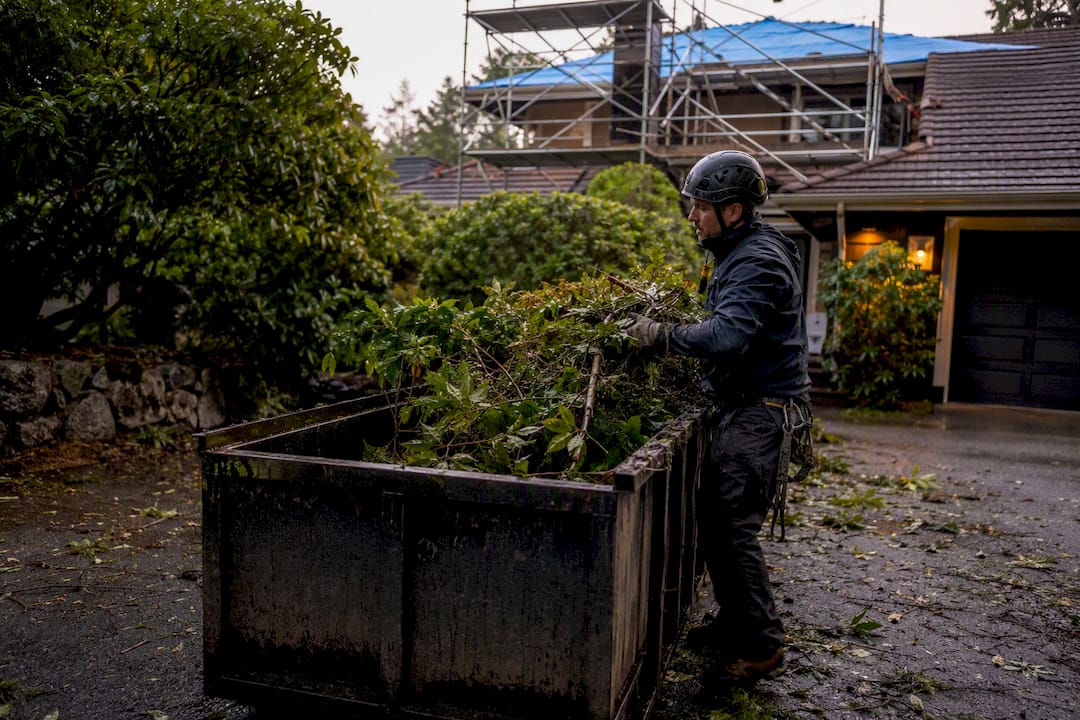
Pro Tip: If you’re planning roof work in the same season, tell your arborist and your roofer about each other. Scheduling debris removal before scaffold goes up saves both crews time and avoids damage to fresh roofing material.
Bird nesting season limits when trees can come down
Nesting season on the coast runs roughly from March 1 to August 31, with raptor nests sometimes protected outside that window too. Federal and provincial legislation protects active nests, and the city expects that protection to be respected during any tree work, per City of North Vancouver guidance.
- If your permit application falls inside nesting season, expect the city to require a nesting survey by a qualified environmental professional.
- Scheduling removal for September through February avoids the survey requirement entirely in most cases.
- If work can’t wait, a documented survey showing no active nests is your best route to staying compliant.
Applying for a tree removal permit: what to expect
The permit process follows a fairly predictable sequence: submit your application with supporting documents, pay the fee, wait for staff review, sign the permit, post public notice on the property, then schedule any required inspections.
- Commission an arborist report identifying the tree, its condition, and the reason for removal.
- Submit a site plan and tree protection plan for any trees remaining nearby.
- Include a tree replacement plan, since the permit form requires one for most applications.
- Post notice once approved and complete any inspections before or after removal.
| Removal type | Replacement ratio |
|---|---|
| Protected tree (non-hazard) | 3 replacement trees per tree removed |
| Hazardous tree | 1 replacement tree per tree removed |
Where planting three new trees isn’t practical on a small lot, the city typically allows security or cash-in-lieu arrangements to satisfy the replacement requirement.
Why tree debris matters for your roof
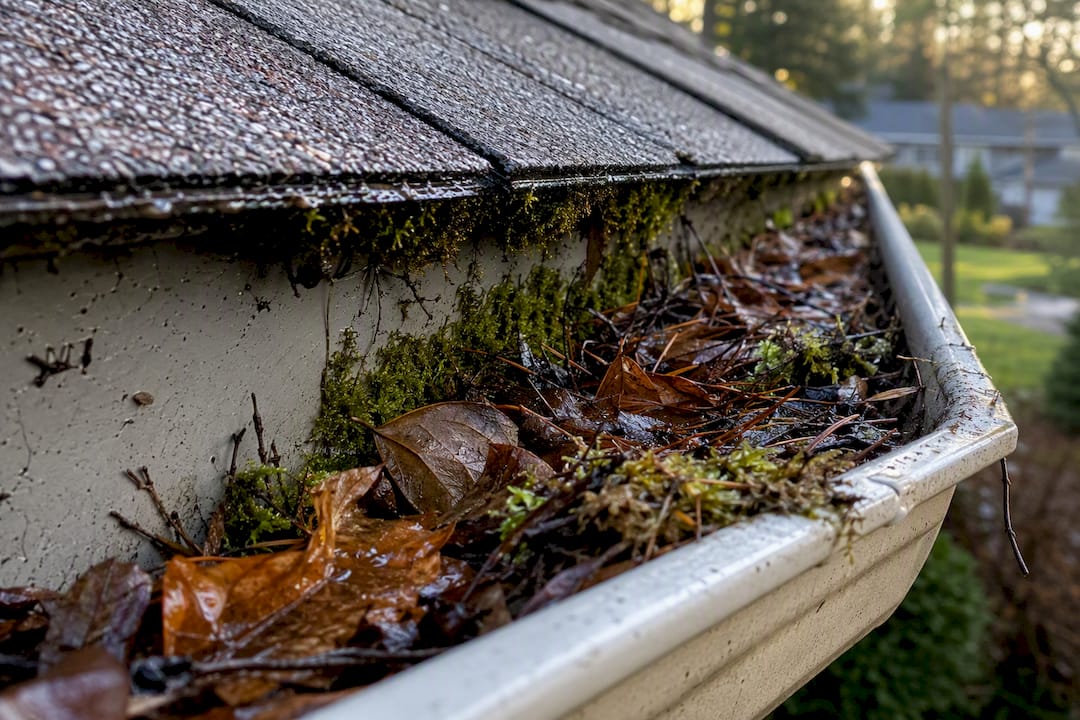
Overhanging branches drop needles and leaves straight into your gutters, and damp organic debris is exactly what moss needs to take hold on a North Vancouver roof. Left alone through a wet winter, that buildup traps moisture against shingles and accelerates flashing corrosion around chimneys and vents.
- Clear loose debris from the roof and gutters before any roofing crew accesses the property.
- Time pruning or removal a few weeks ahead of a scheduled roof inspection, not the same day.
- Strata managers should line up tree permits and roof maintenance on the same calendar, since scaffold access and branch clearance often conflict if scheduled separately.
Pro Tip: If moss is already established, dealing with the overhanging branches first makes any moss treatment last considerably longer.
A local roofer’s take on tree debris and roof timing
Every fall we get calls about gutters overflowing under a pile of wet leaves that’s been building since August. Coordinate the arborist and the roofer on the same visit, not two separate ones, and you’ll save both a callback.
When tree debris turns into a roof problem, call Paragon Roofing BC
Paragon Roofing BC is the practical next step once the branches are down and you’re wondering what they’ve been doing to your shingles all along. Unlike a general cleanup crew, we inspect the roof itself, flag moss growth, blocked gutters, and flashing wear caused by overhanging limbs, and coordinate timing with your arborist so debris clearance and roof access happen in the right order instead of working against each other.
If you’re in North Vancouver and just cleared a hazardous limb or you’re planning a larger removal near the house, book a roof inspection before the next rain finds the weak spot the tree left behind. For homes with visible leaks or stained ceilings after storm cleanup, our roof leak detection and repair service gets a technician on-site to find the source before it spreads. Reach out and we’ll walk the roof with you.
Sources
FAQ
What trees are protected under North Vancouver’s tree bylaw?
Any tree measuring 20 cm or more in diameter at 1.4 m above ground is protected under Tree Bylaw No. 8888, unless it’s in a low-density zone outside a streamside area.
Can I just cut down a tree in my garden without a permit?
Not if it meets the protected-tree diameter and your property doesn’t qualify for a zoning exemption. Verify your zoning and check for streamside protection before cutting.
What happens if my tree debris load gets rejected at the recycling centre?
Rejections at the North Shore Recycling & Waste Centre almost always come down to contamination, so remove plastic, soil, and non-organic material before your visit.
Why does tree debris matter for my roof, not just my yard?
Debris trapped in gutters and on shingles holds moisture that accelerates moss growth and flashing deterioration, which is why Paragon Roofing BC recommends inspecting the roof whenever significant tree work happens nearby.
When can I remove a tree during bird nesting season?
Nesting season runs roughly March 1 to August 31, and removals during that window often require a qualified bird-nesting survey before the city will approve the permit.
Recommended
Our Roofing Blog
Have more questions about roofing?
Check out our FAQs or give us a call today to speak to an expert roofer in Vancouver Lower Mainland, BC. We're here to help our neighbours make educated decisions about their roof. For our team, we value helping clients save money while making their roofs last.