
Fix Slope and Discharge First: North Vancouver Box Gutters
Fix Slope and Discharge First: North Vancouver Box Gutters

If your North Vancouver home has a box gutter showing stains, sagging fascia, or standing water, act now, not next season. Clear the outlets yourself if it’s safe to reach them, but book a professional inspection immediately for any active leak or soft wood. With over 1,200 mm of rain hitting this city annually, a delay of even one wet month can turn a small liner crack into a rotted roof deck.
TL;DR:
- Most box gutters in North Vancouver can be repaired if the liner shows minor seam separation or is less than 25 years old, but full replacements are needed for extensive rot or widespread cracks.
- Regular maintenance should include cleaning twice yearly, checking liner seams for cracks, and ensuring outlets drain within minutes, especially after heavy cedar needle fall or storms.
- Oversized channels and properly extended downspouts are essential to handle North Vancouver’s over 1,200 mm of annual rainfall, preventing overflow and foundation moisture issues.
- Coastal humidity favors aluminum liners over galvanized steel, but copper offers improved longevity and heritage compatibility at a higher cost when properly installed with slope correction.
- Hiring experienced local contractors is critical, with attention to slope correction and liner quality; a typical repair takes one to two days, but delays during fall and winter are common due to demand.
Table of Contents
- What are box gutters and why does North Vancouver have so many?
- What are the warning signs of a failing box gutter?
- Should you repair or replace a box gutter?
- How often should North Vancouver homeowners maintain box gutters?
- What does box gutter repair cost in North Vancouver?
- How does Paragon Roofing BC inspect and repair box gutters?
- How does North Vancouver’s rainfall affect box gutter sizing?
- Does North Vancouver’s marine climate change which gutter materials last?
- How do you choose a contractor for North Vancouver box gutters?
- How long does a box gutter project take in North Vancouver?
- Why North Vancouver’s box gutter advice needs to be more specific
- Ready to get your box gutter inspected in North Vancouver?
- FAQ
What are box gutters and why does North Vancouver have so many?
A box gutter is built directly into the roofline rather than hung off the fascia like a standard aluminum trough. It’s a channel formed between the roof edge and a raised curb, usually lined with metal or torch-on membrane, and hidden from street view. Many older North Vancouver homes, along with heritage properties near Deep Cove and Lynn Valley, were built with them because low-slope roof sections and traditional cedar or asphalt designs made a built-in channel the practical choice at the time.
The trouble is that a box gutter is essentially a mini flat roof. It relies on a liner rather than gravity and open air to shed water, so any seam failure sends water straight into the wall assembly instead of onto the lawn. That difference matters enormously once you’re troubleshooting a leak, because the symptoms show up inside the house long before they’re visible outside.
What are the warning signs of a failing box gutter?
Box gutters fail quietly at first. By the time you see obvious damage, water has usually been working behind the scenes for a season or two.
Watch for these signs during a walk-around inspection:
- Brown or grey staining streaking down the fascia board or exterior siding below the gutter line
- Peeling or bubbling exterior paint near the roofline, a classic sign of trapped moisture
- Soft, spongy, or visibly rotted fascia and soffit boards when pressed with a screwdriver handle
- Standing water pooling in the channel more than a day after rain stops
- Water overflowing at the outlets during moderate rain rather than only in a downpour
- Musty smells, water spots, or visible mould in the attic directly under the gutter run
Foundation moisture is the secondary hazard people miss. If a downspout discharges too close to the wall, that overflow eventually shows up as a damp basement corner, not a roof problem at all.
Pro Tip: Grab a flashlight and check your attic after the next heavy rain, not on a dry day. Active leaks are often invisible until water is actually moving through the assembly.
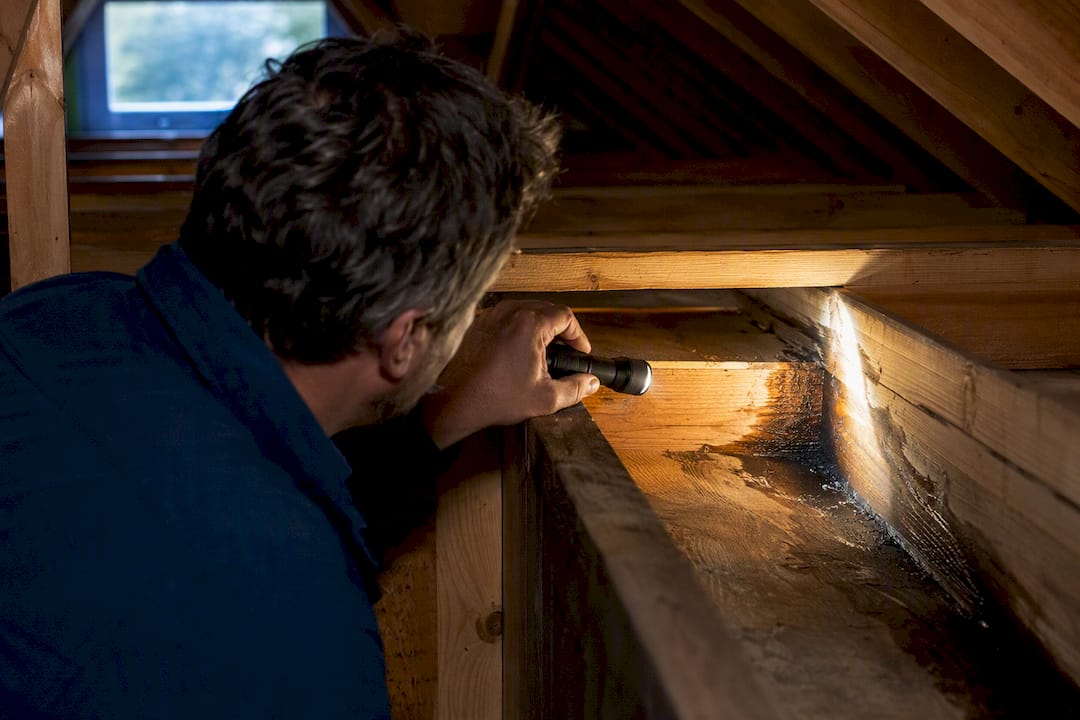
If you see active dripping indoors, rot you can push a finger through, or staining that’s spread since last season, that’s a same-week call to a contractor, not a spring project.
Should you repair or replace a box gutter?
Most box gutters don’t need a full rebuild. They need attention before the liner fails completely, and knowing which situation you’re in changes the whole scope of the job.
Run through this checklist before calling anyone out:
- Liner condition. A liner with isolated seam separation or minor punctures is repairable. Widespread cracking or a liner past 20 to 25 years old usually isn’t worth patching.
- Extent of rot. Localized soft spots in fascia can be cut out and replaced. Rot running the full length of the gutter run points toward a rebuild.
- Leak frequency. One leak after an unusually heavy storm is different from recurring leaks every wet month, which signals a systemic slope or liner problem.
- Heritage value. Character homes with original box gutter profiles are often worth preserving through careful re-lining rather than converting to hung gutters.
A typical repair involves clearing the outlets completely, cutting out and replacing any rotted decking or fascia, installing a new liner or patching the existing one, resealing all seams, and correcting the slope so water actually reaches the outlet instead of pooling mid-run. Straightforward repairs usually wrap up in one to two days. A full rebuild, or a conversion to fascia rot repair work paired with external gutters, can run three to five days depending on roof access and how much decking needs replacing.
How often should North Vancouver homeowners maintain box gutters?
North Vancouver’s rain volume means box gutters need more attention than the “clean it once a year” advice you’ll see in generic guides. Professional guidance for the region recommends cleaning gutters at least twice yearly, spring and fall, with an added inspection after any major storm.
Build your seasonal routine around these tasks:
- Clear leaves, cedar needles, and moss debris from the entire channel, not just the outlets
- Check liner seams for cracking, lifting, or separation at joints
- Run water through outlets to confirm they drain fully within a few minutes
- Extend downspouts so discharge lands at least one metre from the foundation
- Add leaf guards if your property sits under cedar or fir canopy
Homes near mature cedars on the North Shore see needle buildup that compresses into a dense mat, unlike loose leaf litter, which is why box gutters often need cleaning beyond the twice-yearly minimum when heavy canopy is involved. Check again right after autumn leaf drop, since that’s when channels clog fastest.
Pro Tip: If you can’t safely see into the channel from a ladder, don’t guess. A five-minute professional look after a big storm costs far less than repairing rotted decking discovered in February.
Hire a professional for any cleaning that requires roof access on a steep or wet surface, or whenever you spot standing water that a simple debris clear doesn’t fix.
What does box gutter repair cost in North Vancouver?
Costs vary more with access and liner type than with the length of the run itself, so treat any flat per-foot quote with some skepticism.
The main factors that move the price:
- Access and scaffolding. Steep roofs or tight lot lines add rigging costs before any repair work starts.
- Liner material. Metal liners generally cost more upfront than membrane systems but last longer in coastal conditions.
- Wood repair scope. Every metre of rotted fascia or decking adds labour and material cost.
- Metal choice. Copper outlasts aluminum but carries a meaningfully higher price tag.
- Outlet count and strata coordination. Multi-unit buildings need scheduling around shared access and often more outlets per run.
Straightforward per-foot repairs on accessible single-family homes tend to run in the low-to-mid hundreds of dollars per section once liner and fascia work are included, while full box gutter reconstruction on a longer run climbs well beyond that. Full eavestrough installation costs across Canada vary widely by material and access, which is worth keeping in mind when a quote seems unusually low.
Watch for hidden costs before signing anything: fascia repair scope that isn’t itemized separately, scaffolding fees added after the quote, and strata approval requirements for shared roof sections. A bid that’s dramatically below every other quote you’ve collected usually means shortcuts on liner material or skipped fascia repair, not a better deal.
How does Paragon Roofing BC inspect and repair box gutters?
Every inspection starts the same way regardless of the home’s age: check the liner seams for separation, test each outlet for flow capacity, confirm the slope actually moves water toward the drains, and examine fascia and soffit for soft spots. Attic checks for moisture staining round out the visual assessment, since that’s often where a problem shows up first.
For North Vancouver specifically, that inspection also weighs the property’s exposure. Homes under heavy cedar canopy or on steep lots typically need oversized channels, downspout extensions well clear of the foundation, and leaf screens sized for needle debris rather than standard leaf guards, because drainage systems here need to handle real rainfall volume, not just an average storm.
| Before your estimate | Why it matters |
|---|---|
| Note when leaks or staining first appeared | Helps date the failure and narrow the cause |
| Clear ladder access to the roofline | Speeds up the visual inspection |
| List any recent interior water stains | Flags attic or wall moisture for the inspector |
| Ask about liner warranty length | Separates a quick patch from a durable fix |
Ask any contractor how they’ll handle slope correction, not just liner replacement. That’s the detail that separates a fix that lasts five years from one that lasts fifteen.
How does North Vancouver’s rainfall affect box gutter sizing?
North Vancouver receives more than 1,200 mm of rain annually, which is meaningfully higher than most of the Lower Mainland thanks to the North Shore mountains pushing moisture-heavy air upward. A box gutter sized for a drier climate simply can’t move that volume fast enough, which is why undersized channels on older homes overflow even when they’re clean.
Sizing a box gutter correctly means matching channel width and depth to the roof’s total catchment area, not just its length. A larger roof plane funnels more water into the same channel, so a gutter that handled a smaller addition decades ago may be undersized after a renovation added roof area. This is especially common on strata buildings and townhouse complexes, where larger roof catchments need oversized channels and multiple outlets working together rather than a single long run relying on one downspout.
Discharge matters just as much as capacity. Even a well-sized channel causes problems if the downspout dumps water against the foundation instead of carrying it away. Extensions that push discharge at least a metre clear of the wall are a small, inexpensive fix that prevents a much costlier foundation moisture problem down the line. Treating the gutter, slope, screens, and downspout as one connected system, rather than fixing pieces in isolation, is the difference between a repair that holds for years and one that fails again during the next atmospheric river event.
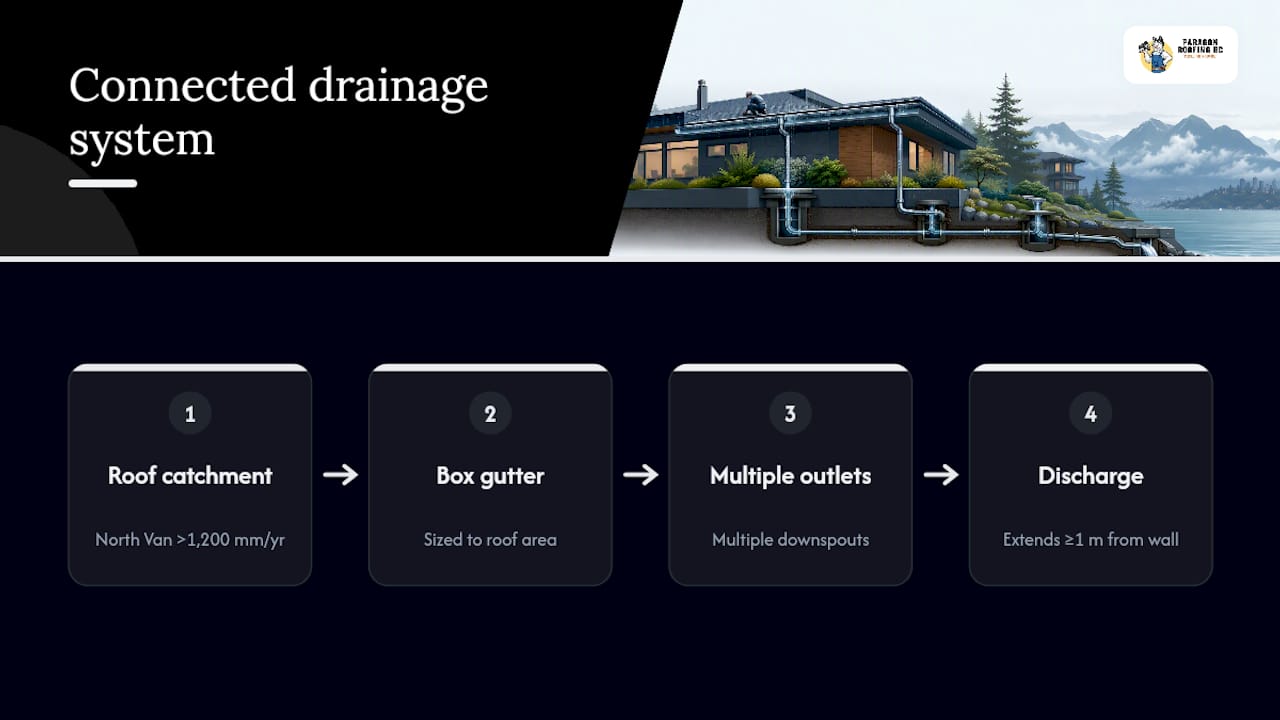
If your home has had a recent addition, deck cover, or garage extension, it’s worth confirming the original box gutter sizing still matches the current roof area. That’s an easy detail to overlook and a common cause of “sudden” overflow on a gutter that never leaked before.
Does North Vancouver’s marine climate change which gutter materials last?
Coastal humidity and salt-tinged air off Burrard Inlet accelerate corrosion on some metals faster than inland Fraser Valley conditions do, which changes the calculus on what’s worth paying more for.
Aluminum remains the practical default for most homes: it resists rust, costs less than copper, and holds up well when properly coated. Copper performs beautifully in coastal conditions and develops a protective patina over time, but the upfront cost is substantially higher, and it’s usually reserved for heritage homes in West Vancouver or character properties where the look and longevity justify the price. Galvanized steel liners, once common in older box gutters, corrode faster in this marine environment than either alternative and are increasingly being phased out during rebuilds.
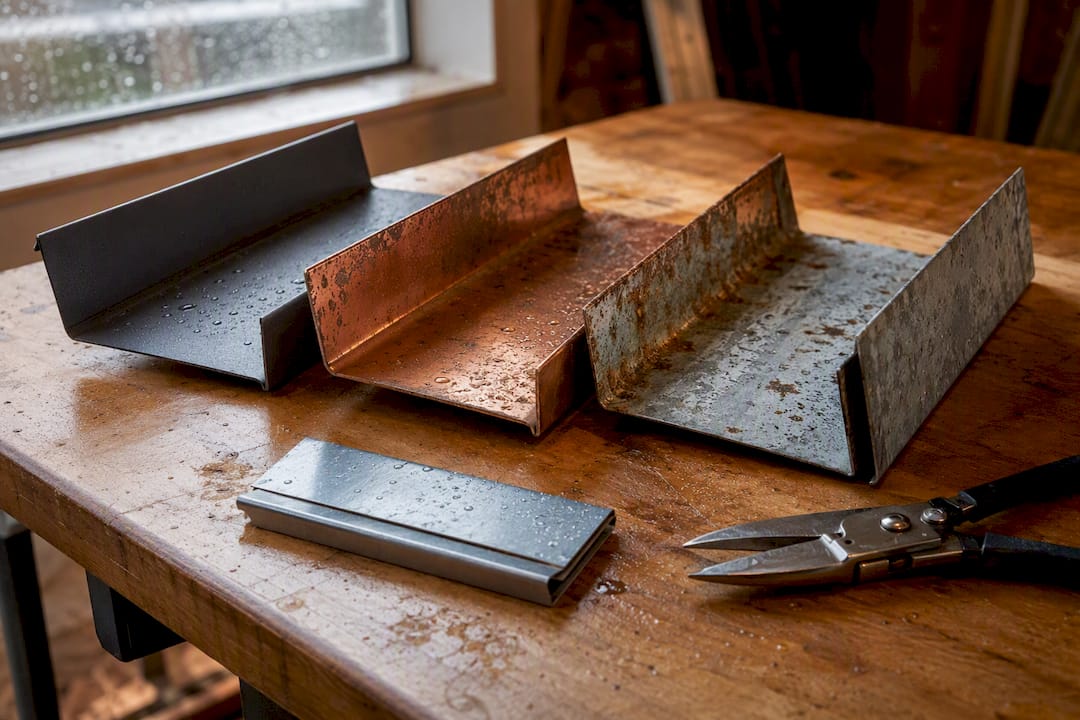
Liner choice inside the box gutter itself matters just as much as the visible metal. Seamless, correctly sloped installation reduces leak points that would otherwise become entry points for the moisture this climate throws at every seam and joint. A liner installed with poor slope will trap standing water regardless of material quality, and standing water is what breaks down any liner faster, coastal humidity or not.
The practical takeaway: don’t choose a material based on inland climate advice you find online. What lasts 25 years in Kamloops can fail in half that time here if it’s not rated for constant moisture exposure and installed with attention to slope and seam sealing.
How do you choose a contractor for North Vancouver box gutters?
Box gutters aren’t a generalist repair. The liner work, slope correction, and fascia integration require someone who’s actually diagnosed these systems on North Shore roofs, not just installed hung aluminum troughs.
Ask these questions before signing anything:
- “Can you show me a recent box gutter repair or replacement you completed in North Vancouver?” Local case examples matter more than a generic portfolio.
- “What liner material are you recommending, and why for my roof specifically?” A contractor who suggests the same liner for every home isn’t tailoring the fix.
- “How will you correct the slope, not just patch the leak?” Slope correction is the step that gets skipped on cheap quotes.
- “What’s included in the warranty, and does it cover the liner separately from labour?”
Red flags worth walking away from: a quote with no itemized breakdown between liner, fascia, and labour; a contractor who won’t discuss slope at all; and pricing dramatically below every other bid you’ve collected, which usually means corners get cut on liner quality or fascia replacement. Ask, too, whether they carry liability coverage for roof work, since box gutter repair often involves working directly on the roof deck rather than from a ladder.
A contractor who asks to see your attic before quoting is paying attention. That’s often the detail that separates a real assessment from a drive-by estimate.
How long does a box gutter project take in North Vancouver?
Scheduling and weather windows matter more here than almost anywhere else in the Lower Mainland, simply because dry stretches are shorter and less predictable.
A straightforward liner repair or reseal, once a contractor is on site, typically takes one to two days. That includes outlet clearing, minor fascia touch ups, resealing seams, and correcting slope where the channel isn’t draining properly. A full box gutter rebuild, especially one involving extensive fascia and decking replacement, usually runs three to five days depending on roof access and how much rotted material needs to be removed and rebuilt.
The bigger variable is booking lead time, not job duration. Late fall and winter are peak demand months across the North Shore because that’s when homeowners discover leaks after the season’s first heavy storms. Booking an inspection in late summer or early fall, before the rain really sets in, means you’re working from a maintenance schedule rather than an emergency call list. Strata properties should add extra lead time for owner notifications and shared access coordination, which can add several days to the front end of any project regardless of how quickly the actual repair goes.
Why North Vancouver’s box gutter advice needs to be more specific
Most gutter content treats box gutters as a footnote to standard eavestrough advice, and that’s backwards for a city with this rainfall profile. The volume of water moving through a North Vancouver roof in a wet November isn’t comparable to what most generic maintenance guides assume, and a channel that handles that volume differently than a hung gutter deserves guidance built around that difference, not borrowed from it.
The conventional wisdom that “gutters just need an annual clean” falls apart here. Twice-yearly cleaning is a floor, not a target, for any home under cedar canopy or with a low-slope roof section. What I’d tell any North Vancouver homeowner to prioritize first isn’t cost, it’s slope. A liner replaced without correcting the slope underneath it will fail again within a couple of seasons, and that’s money spent twice on a problem that should have been solved once.
The other overlooked piece is discharge. Homeowners fixate on the gutter itself and forget the downspout is doing half the job. If it dumps water against the foundation, you’ve traded a roof problem for a basement problem, and basement moisture is a much harder fix. Get the slope right, get the discharge point right, and most box gutters on the North Shore will give you another decade or more of quiet service.
— Harman
Ready to get your box gutter inspected in North Vancouver?
Professional roofing contractors handle box gutter inspection and repair by checking liner seams, slope, outlet capacity, and fascia condition together, not as separate line items on a quote. That matters here because a channel sized or sloped for average rainfall simply won’t hold up against 1,200 mm a year, and a patch job that ignores slope correction is money you’ll spend again within a few seasons.
A typical inspection covers the full channel run, every outlet, the fascia and soffit beneath, and a quick attic check for moisture staining, usually scheduled within a week during spring and summer, with earlier booking recommended heading into fall storm season. If you’ve noticed staining, standing water, or a musty smell in the attic, don’t wait for it to worsen over another wet winter. Visit the residential roofing services page to request an inspection, or check the gutter cleaning, repair, and installation page for details on what’s included before you book.
FAQ
How much does it cost per foot to install eavestrough in Canada?
Costs vary widely by material and access, but aluminum eavestrough installation typically runs in the low double digits per foot, while box gutter repair on an existing built-in channel depends more on liner type and fascia condition than length alone.
How much is 100 feet of gutter?
For a standard hung aluminum gutter, typical costs fall in the low thousands of dollars once installation labour is included, though access difficulty and material choice push that range higher.
How much does 40 feet of gutter cost?
A shorter run costs proportionally less than a longer job, but expect the per-foot rate to be slightly higher on shorter runs since setup and access costs don’t scale down as much as material does.
How often should I clean my North Vancouver box gutter?
Clean it at least twice yearly, in spring and fall, with an added inspection after any major storm, and more often if your roof sits under heavy cedar or fir canopy.
When should I call a professional instead of doing it myself?
Call a contractor immediately for active indoor leaks, visibly rotted fascia or decking, or recurring overflow, and whenever cleaning requires roof access you can’t safely manage from a ladder.
Can a box gutter be converted to a standard hung gutter?
Yes, when roofline geometry and heritage constraints allow it, converting a failing box gutter to an external seamless gutter can reduce long-term maintenance, though it’s a bigger project than a liner repair.
Recommended
Our Roofing Blog



Have more questions about roofing?
Check out our FAQs or give us a call today to speak to an expert roofer in Vancouver Lower Mainland, BC. We're here to help our neighbours make educated decisions about their roof. For our team, we value helping clients save money while making their roofs last.