
What is roofing maintenance scheduling in BC?
What is roofing maintenance scheduling in BC?
TL;DR:
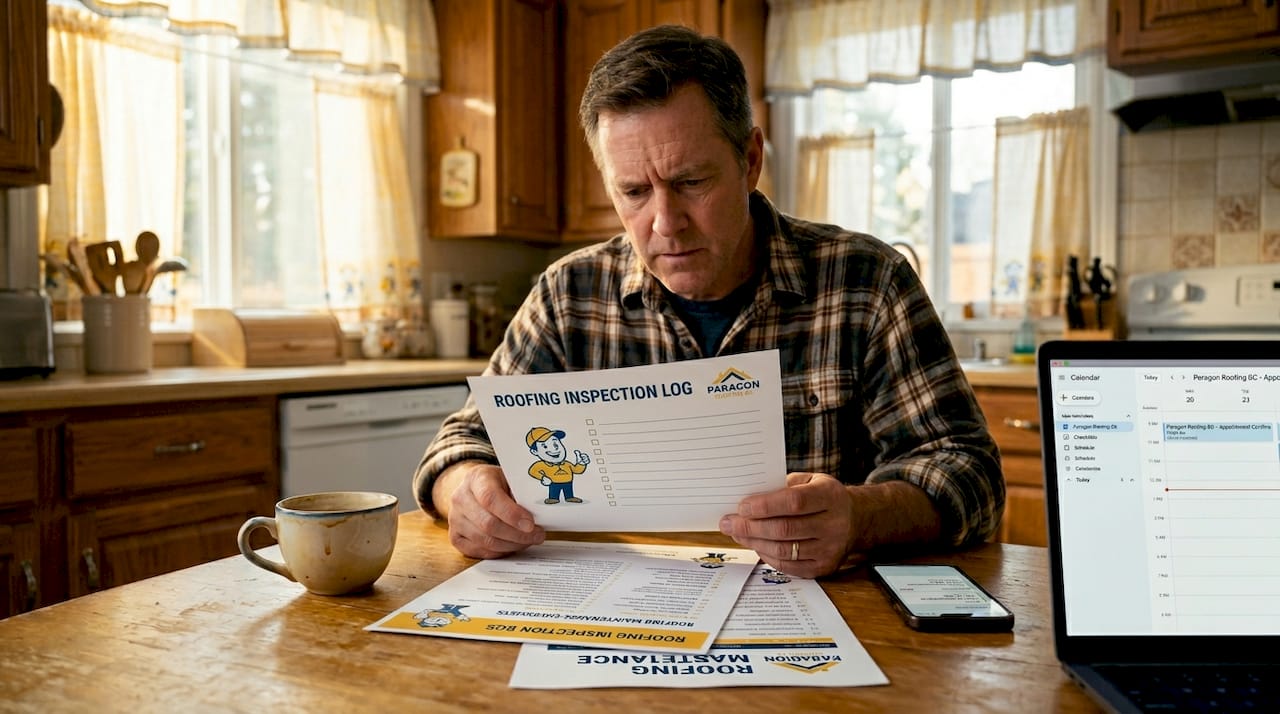
- Consistent roofing maintenance scheduling, including biannual inspections and post-storm assessments, is essential for extending roof lifespan in BC’s challenging climate. Proper documentation of routine and event-triggered inspections supports warranty claims and prevents costly damage. Tailoring inspection frequency to roof type and conditions ensures proactive care, saving property owners significant repair costs over time.
Roofing maintenance scheduling is defined as the planned calendar of inspections, preventive upkeep tasks, and event-triggered assessments that govern when and how a roof is serviced throughout its entire service life. In British Columbia, where heavy rainfall, freeze-thaw cycles, and coastal moisture put roofs under constant stress, this kind of structured roof upkeep planning is not optional. It is the difference between a roof that lasts 25 years and one that fails at 15. The schedule integrates routine and reactive work across four lifecycle phases: inspection, preventive maintenance, corrective repair, and eventual replacement. Whether you manage a single-family home in Burnaby or a strata complex in Surrey, understanding this framework is the first step toward protecting one of your most expensive assets.
What is roofing maintenance scheduling and what does it include?
Roofing maintenance scheduling is the structured programme that determines the timing, type, and frequency of every roofing service event over a roof’s lifespan. Think of it like a vehicle service schedule. You do not wait for the engine to seize before changing the oil. The same logic applies to your roof, except the consequences of neglect are far more expensive and far less predictable.
The four core phases of any solid maintenance schedule are:
- Routine inspection — a thorough visual and physical assessment of the roof surface, flashings, gutters, soffits, and attic space
- Preventive maintenance — tasks like clearing debris, resealing penetrations, treating moss, and cleaning gutters before problems develop
- Corrective repair — addressing identified defects such as cracked sealant, lifted shingles, or membrane blisters before they worsen
- Replacement planning — tracking roof age and condition data to forecast and budget for full replacement
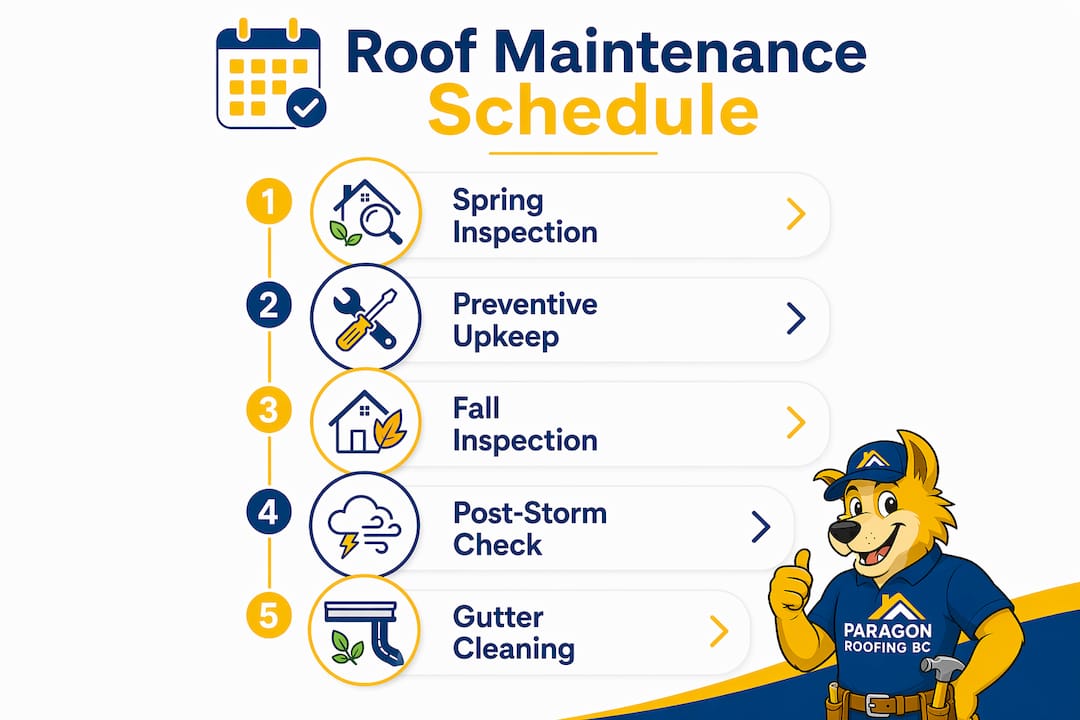
Biannual inspections in spring and fall form the backbone of any residential or commercial schedule. Spring inspections follow the winter freeze-thaw period and catch damage before the wet season intensifies. Fall inspections prepare the roof for cold exposure and heavy rain. Between these two anchor points, event-triggered inspections fill the gaps after storms, high winds, or heavy snowfall.
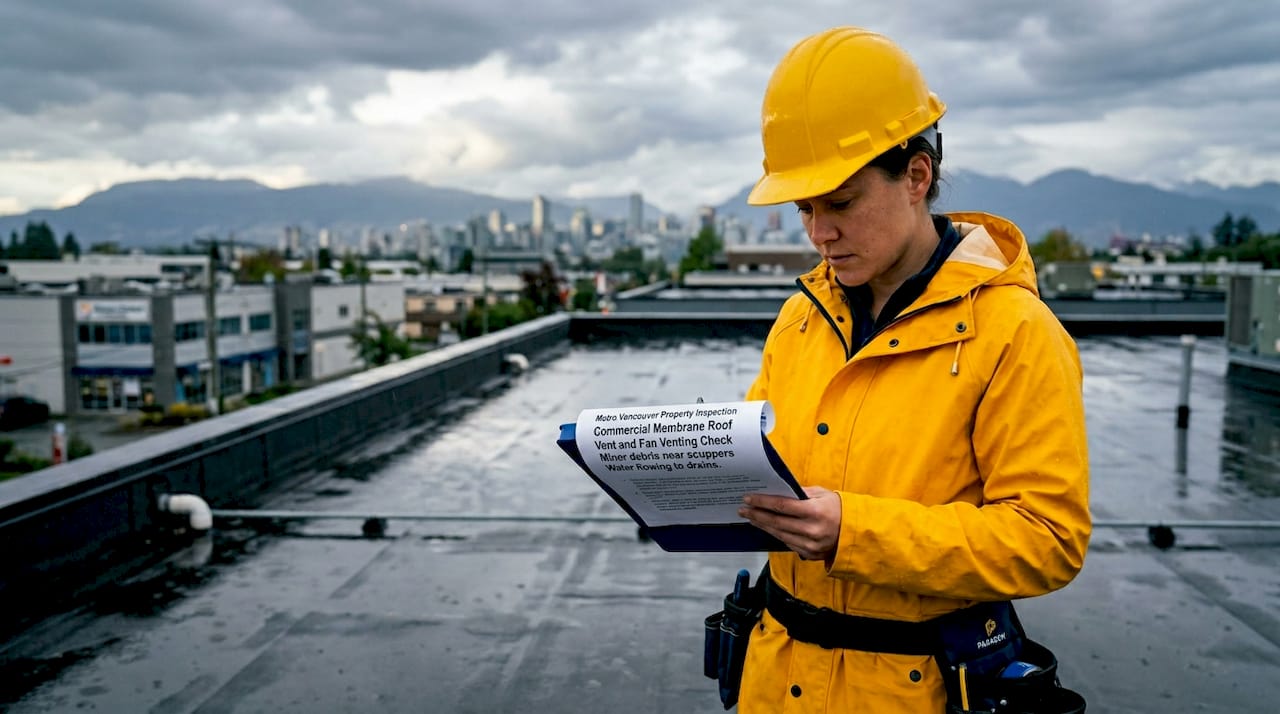
The distinction between residential and commercial scheduling matters. A flat commercial membrane roof in Vancouver needs more frequent seam and drainage checks than an asphalt shingle roof on a Coquitlam bungalow. The materials differ, the drainage geometry differs, and the consequences of a missed inspection differ significantly when you have tenants or commercial operations underneath.
How does BC’s climate shape your roof maintenance schedule?
British Columbia’s Lower Mainland does not give roofs an easy life. Metro Vancouver averages well over 1,100 millimetres of rain annually, and coastal communities like Richmond and Delta deal with near-constant moisture exposure from October through April. That sustained wetness accelerates moss and algae growth, degrades sealants faster than in drier climates, and keeps gutters clogged with organic debris year-round.
Freeze-thaw cycles are the other major factor. When temperatures drop overnight and rise during the day, water trapped in small cracks expands and contracts repeatedly. This freeze-thaw degradation cracks sealants around flashings and pipe boots, lifts shingle edges, and opens seams on flat roofs. A spring inspection is not just a nice idea in BC. It is the only way to catch what winter actually did to your roof before the next rainy season compounds the damage.
| Climate factor | Primary roof impact | Scheduling response |
|---|---|---|
| Heavy rainfall | Debris accumulation, gutter overflow, moss growth | Gutter cleaning 2 to 3 times per year; moss treatment in spring |
| Freeze-thaw cycles | Sealant cracking, shingle lifting, seam separation | Spring inspection mandatory; sealant check each fall |
| Coastal moisture | Corrosion on metal components, algae staining | Annual corrosion check on flashings and fasteners |
| Snow load | Structural stress, ice damming at eaves | Early fall prep; post-winter structural check |
Older roofs need more frequent attention. A roof that is 15 years or older in BC should be inspected at least twice per year with additional checks after any significant weather event. The spring maintenance window typically runs from late March through early May, prioritising debris removal, gutter clearing, and visual surveys before summer storm season arrives.
Pro Tip: If your roof is more than 15 years old and sits under mature trees, add a third gutter cleaning in mid-winter. The combination of leaf fall and BC rain creates blockages that back water up under your shingles faster than most people realise.
What are best practices for scheduling roof inspections and maintenance?
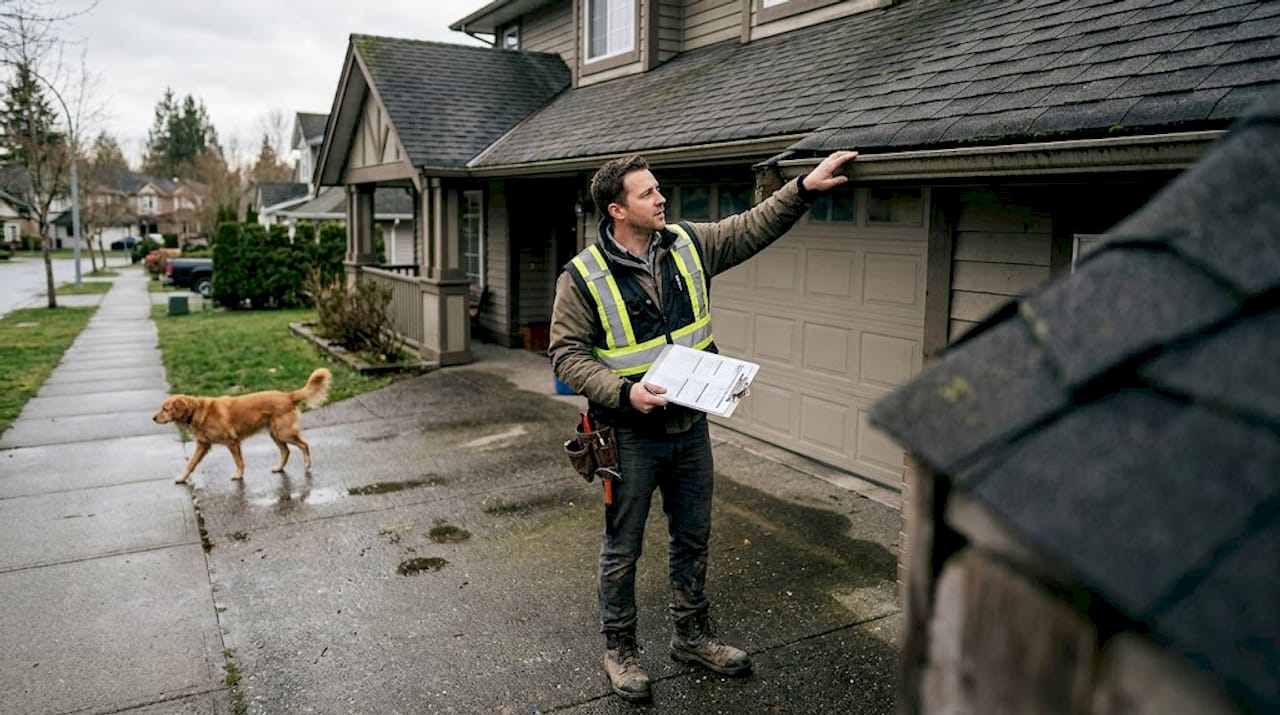
The most effective approach to roof inspection scheduling is anchoring your calendar to two fixed windows and building everything else around them. Set your spring inspection for early April and your fall inspection for late September or early October. These dates give you enough time to act on findings before the worst weather arrives in either direction.
Here is what a well-organised maintenance programme looks like in practice:
- Spring (April): Full inspection covering shingles or membrane, flashings, gutters, soffits, and attic ventilation. Address any winter damage. Treat moss. Clear all debris.
- Summer (June to August): Visual check after any significant wind event. Clear gutters after heavy leaf fall if applicable.
- Fall (late September to October): Pre-winter inspection. Reseal penetrations. Clear gutters. Check drainage flow. Confirm flashings are tight.
- Post-storm: Inspection within 48 to 72 hours of any hail, high wind, or heavy snow event.
Maintaining a written maintenance history is not just good practice. It is a financial tool. Clear maintenance records help property managers prioritise capital expenditures, demonstrate warranty compliance, and support insurance claims when damage occurs. Without documentation, you are guessing at your roof’s condition and potentially voiding your warranty at the same time.
For property managers overseeing multiple buildings, a shared scheduling spreadsheet or a maintenance tracking app keeps inspections from falling through the cracks. Stagger your inspection dates across properties so you are not trying to coordinate five roofs in the same week.
Pro Tip: Hire a professional for your biannual inspections even if you do your own visual checks in between. Professional inspections typically cost $150 to $400 per visit and are often required to keep manufacturer warranties valid. That cost is trivial compared to a $15,000 repair bill from a missed flashing failure.
How do you integrate post-storm inspections into your schedule?
Post-storm inspections are a distinct category of roofing maintenance, and treating them as such is what separates a well-managed roof from a reactive one. These are not the same as your scheduled biannual checks. They serve a specific purpose: documenting acute damage quickly enough to support insurance claims and prevent further deterioration.
Here is how to handle a post-storm inspection properly:
- Wait for safe conditions — do not access the roof during or immediately after a storm. Give it a few hours for wind and rain to subside.
- Conduct a ground-level visual first — look for missing shingles, displaced flashing, or debris on the roof surface before going up.
- Access the roof within 48 to 72 hours — rapid post-storm documentation with photos, GPS data, and written notes is the standard for commercial insurance claims. Residential claims benefit from the same rigour.
- Check the attic — water staining on rafters or insulation often appears before a ceiling leak becomes visible from inside.
- File documentation immediately — submit photos and a written report to your insurer as soon as possible. Delays can complicate claims.
Separating scheduled routine inspections from event-driven corrective work clarifies roofing maintenance and improves lifecycle management. Property managers who conflate the two often find their warranty records incomplete and their insurance claims underdocumented.
The practical impact on your schedule is straightforward. A post-storm inspection does not replace your next scheduled visit. It supplements it. If a windstorm hits in November and you conduct an emergency inspection, your fall scheduled inspection should still have occurred in late September. The two serve different purposes and both belong in your maintenance log.
Roof type comparison: how scheduling differs by material
Not every roof in BC follows the same maintenance rhythm. The material and geometry of your roof directly determine how often you need to inspect it and what you are looking for when you do. Here is how the most common BC roof types compare:
| Roof type | Inspection frequency | Key maintenance priorities |
|---|---|---|
| Asphalt shingles | Twice per year plus post-storm | Moss treatment, sealant renewal around flashings, granule loss check |
| Flat membrane (TPO, EPDM) | Twice per year minimum | Seam integrity, ponding water, drain clearance, membrane blistering |
| Metal roofing | Once per year plus post-storm | Corrosion on fasteners and flashings, sealant at penetrations, debris clearance |
| Cedar shake | Twice per year | Moss and rot treatment, split shake replacement, gutter clearing |
| Tile or synthetic | Once per year | Cracked tile inspection, underlayment condition, flashing integrity |
Shingle roofs are the most common in Metro Vancouver residential neighbourhoods, and they need consistent attention to moss and sealant. Left untreated, moss lifts shingle edges and allows water to wick underneath, which is a slow but destructive process that accelerates dramatically in BC’s wet climate. You can find a detailed seasonal maintenance checklist for shingle roofs specific to the Lower Mainland on the Paragonroofingbc blog.
Flat commercial roofs are the most demanding from a scheduling standpoint. Ponding water on a flat membrane is one of the fastest ways to shorten roof life, and it only takes a partially blocked drain to create the problem. Property managers responsible for commercial buildings should review the commercial roof inspection guide to understand what a thorough membrane inspection actually covers.
Preventive maintenance combined with biannual inspections reduces repair costs by 30 to 50% and can add 10 to 15 years to a roof’s service life. That figure applies across all roof types, which means the scheduling discipline pays off regardless of what material is over your head.
Key takeaways
Roofing maintenance scheduling requires biannual inspections, event-triggered post-storm assessments, and documented preventive maintenance to extend roof life and control repair costs in BC’s demanding climate.
| Point | Details |
|---|---|
| Schedule two fixed inspections per year | Anchor spring and fall inspections to April and late September for maximum effectiveness. |
| Post-storm checks are separate events | Conduct inspections within 48 to 72 hours of storms; document with photos for insurance compliance. |
| Maintenance records protect your warranty | Written histories support warranty claims and help property managers plan capital expenditures. |
| Roof type determines scheduling priorities | Flat membranes, shingles, and metal roofs each have distinct inspection frequencies and maintenance tasks. |
| Preventive maintenance pays for itself | Every dollar spent on scheduled maintenance saves approximately four dollars in future repair costs. |
Why disciplined scheduling is the one thing I keep coming back to
Hey, it’s Harman here. After years of inspecting roofs across Metro Vancouver, Burnaby, Surrey, and the rest of the Lower Mainland, the pattern I see most often is not bad roofing materials or poor installation. It is neglect that compounds quietly until the damage is impossible to ignore.
I have walked onto roofs where the owner had not done a single documented inspection in seven years. The moss was thick enough to hold moisture like a sponge, the sealant around every penetration had cracked and pulled away, and the gutters were so blocked they had started to pull away from the fascia. Every one of those problems was preventable with a twice-yearly visit and a few hours of maintenance. Instead, the repair bill ran into the tens of thousands.
What I have found actually works is treating your maintenance schedule like a non-negotiable appointment, the same way you would treat a furnace service or a fire suppression test. The roof maintenance checklist for property managers we put together covers the specifics, but the mindset matters more than the checklist. Roofs do not fail dramatically. They fail gradually, and the schedule is what catches the gradual before it becomes catastrophic.
One thing property managers often overlook is the value of keeping post-storm inspections completely separate in their records from scheduled visits. When a warranty claim or insurance dispute arises, the documentation trail needs to show both. Mixing them up creates gaps that adjusters and manufacturers are quick to exploit.
— Harman
How Paragonroofingbc supports your maintenance scheduling

At Paragonroofingbc, we work with property managers and homeowners across Metro Vancouver, Burnaby, Surrey, Coquitlam, and the broader Lower Mainland to build maintenance schedules that actually fit their roofs and their budgets. Our drone roof inspection service gives us a precise, documented view of your entire roof surface without the safety risks of traditional access, making it especially useful for post-storm assessments and hard-to-reach commercial rooftops. We also offer coordinated maintenance programmes that keep your inspection history organised and your warranty conditions met. If you are managing multiple properties or simply want a professional set of eyes on your roof before the next rainy season hits, reach out to us. We make it straightforward to get on a schedule that protects your investment for the long term.
FAQ
What is roofing maintenance scheduling?
Roofing maintenance scheduling is the planned calendar of inspections, preventive tasks, and event-triggered assessments that govern how a roof is serviced over its lifespan. It includes biannual inspections, post-storm checks, and corrective repairs organised to prevent deterioration and extend roof life.
How often should I schedule a roof inspection in BC?
Roof inspections should be scheduled at least twice per year, typically in spring and fall, with additional inspections within 48 to 72 hours of any significant storm event. Roofs older than 15 years or those under heavy tree cover may benefit from a third annual check.
Why does roof maintenance scheduling matter for warranties?
Failure to document regular inspections and maintenance is a leading cause of warranty denial in both residential and commercial roofing. Keeping a written maintenance history with dated inspection reports demonstrates compliance and protects your coverage when you need it most.
What is the difference between a routine and a post-storm inspection?
A routine inspection follows a fixed seasonal calendar and assesses overall roof condition. A post-storm inspection is an event-triggered response conducted within 48 to 72 hours of a weather event to document acute damage for insurance purposes. Both are necessary and should be recorded separately.
How much does a professional roof inspection cost in BC?
Professional roof inspections typically range from $150 to $400 per visit depending on roof size and complexity. This cost is often required to maintain manufacturer warranties and is a fraction of what reactive repairs cost when problems go undetected.
Recommended
Our Roofing Blog


Have more questions about roofing?
Check out our FAQs or give us a call today to speak to an expert roofer in Vancouver Lower Mainland, BC. We're here to help our neighbours make educated decisions about their roof. For our team, we value helping clients save money while making their roofs last.