Your guide to reliable roofing in langley: tips, materials, experts
Your guide to reliable roofing in langley: tips, materials, experts
TL;DR:
- Reliable roofing in Fraser Valley requires proper contractor selection, inspections, and climate-specific materials.
- SBS-modified asphalt shingles and metal roofing offer optimal durability in wet, freeze-thaw conditions.
- Proper installation according to standards and regular inspections extend roof lifespan and prevent costly repairs.
Many homeowners in the Fraser Valley assume that one roofing company is as good as the next. That’s a costly misconception. In a region where rainfall averages over 1,500 mm per year and freeze-thaw cycles can crack poorly installed shingles within a single season, the gap between a skilled roofer and a cut-rate one shows up fast. This guide walks you through how to find trustworthy contractors in the area, when to repair versus replace, which materials hold up best in our wet climate, and what installation standards you should expect. Whether you manage a commercial property or own a family home, this is the practical roadmap you need.
Table of Contents
- How to find top-rated roofing companies in langley
- evaluating your roof: inspection, repair, or replacement?
- choosing the right roofing materials for langley’s climate
- essential installation standards and code compliance for langley roofs
- Our experience: Why langley roofing success is all about planning and inspection
- Connect with langley roofing specialists for installation, repair and maintenance
- frequently asked questions
Key Takeaways
| Point | Details |
|---|---|
| Choose certified contractors | RCABC and GAF certifications ensure code-compliant installations and unbiased inspections. |
| Inspect regularly in wet climate | Frequent inspections prevent costly repairs and extend roof life, especially in Langley’s rainy conditions. |
| Pick SBS-modified or metal | SBS-modified asphalt shingles and metal roofs perform best against freeze-thaw and moss in Fraser Valley. |
| Follow BC installation codes | Proper nailing, eave protection, and minimum slope are critical for avoiding warranty issues and leaks. |
How to find top-rated roofing companies in langley
Finding a reliable roofer in the area is a bit like hiring a good mechanic. You want someone with a proven track record, proper credentials, and no shortage of satisfied clients willing to vouch for them. The good news is that you have solid tools at your disposal.
Start with review platforms. Top-rated roofing companies in the area include names like adanac roofing (with over 668 reviews and a 5-star average on HomeStars), northwood roofing , surlang roofing , and aquadome home improvement . These reviews reflect real client experiences and give you a useful starting point.
Beyond reviews, look for professional certifications. rcabc certified contractors are held to strict installation and safety standards set by the roofing contractors association of British Columbia. GAF Master Elite status is another strong signal, as fewer than 2% of roofing contractors in North America earn that designation. Both credentials tell you a contractor has passed rigorous training and follows industry best practices.
Here is a quick comparison of what to look for when evaluating companies side by side:
| Factor | What to look for | Why it matters |
|---|---|---|
| Online reviews | 4.5 stars or higher, 50+ reviews | Shows consistent quality |
| certifications | rcabc member, GAF Master Elite | confirms training standards |
| Insurance | wCB and liability coverage | protects you if something goes wrong |
| warranty | manufacturer + workmanship | covers both materials and labour |
| Local experience | projects in the Fraser Valley | shows climate-specific knowledge |
When you contact companies, always get at least three quotes. This is not just about price. It helps you compare scope of work, materials proposed, and how each contractor communicates. A roofer who explains things clearly and answers your questions without rushing is usually one who will treat your project with the same care.
For a closer look at what quality work looks like locally, check out this langley roofing project to see a real example of professional installation in the area. You can also explore the full range of langley roofing services available to homeowners and property managers.
Quick vetting tips:
- Ask for proof of insurance before any work begins
- Request references from jobs completed in the last 12 months
- Check if the company pulls the required permits
- confirm the warranty covers both materials and installation
evaluating your roof: inspection, repair, or replacement?
Once you have a shortlist of contractors, the next step is figuring out what your roof actually needs. This is where a lot of homeowners get tripped up, often spending money on repairs when a replacement would have been more economical, or replacing a roof that had years of life left.
A proper inspection is your starting point. The rcabc consumer guide recommends professional assessments to determine whether repair or replacement is the right call, noting that repairs are viable as long as the roof has not reached the end of its serviceable life. That distinction matters enormously.
Here is a step-by-step checklist for evaluating your roof condition:
- Check the age of the roof. Most asphalt shingle roofs last 20 to 30 years. If yours is past the 20-year mark, replacement may be more cost-effective.
- Look for granule loss. If you are finding shingle granules in your gutters, the protective coating is wearing off.
- inspect the attic. Water stains, mould, or daylight coming through the boards signal serious problems.
- examine flashings. corroded or loose flashings around chimneys, skylights, and vents are a common source of leaks.
- Check for sagging. Any visible sagging in the roof deck is a structural concern that needs immediate attention.
“A professional inspection report gives you documented evidence of your roof’s condition, which is invaluable when making repair-versus-replace decisions or filing an insurance claim.”
Pro tip: In the Fraser Valley, schedule your roof inspection services in early spring, after the heavy rains and before summer heat sets in. This timing catches winter damage early and gives you the full season to plan and budget for any work needed.
Common signs of roof failure in our wet climate include persistent moss growth, bubbling or blistering shingles, and water stains on interior ceilings. These are not cosmetic issues. They are early warnings that deserve prompt attention.
choosing the right roofing materials for langley’s climate
Langley sits in the heart of the Fraser Valley, where rainfall is heavy, winters bring freeze-thaw cycles, and moss grows aggressively on anything organic. Not every roofing material handles these conditions equally well.

The rcabc roofing guide is clear on this: SBS-modified shingles outperform standard asphalt in freeze-thaw conditions, metal roofing is preferred for low-maintenance, moss-free longevity, and cedar or wood shakes require frequent moss treatment to stay serviceable. SBS stands for styrene-butadiene-styrene, a rubber-like modifier that makes shingles more flexible and crack-resistant in cold weather.
Here is how the main material options stack up for our local conditions:
| Material | lifespan | maintenance | moss resistance | approximate cost |
|---|---|---|---|---|
| Standard asphalt | 15-20 years | Low | moderate | $ |
| SBS-modified asphalt | 25-30 years | Low | Good | $$ to $$$ |
| Metal roofing | 40-70 years | Very low | excellent | $$$$ to $$$$$ |
| cedar shake | 20-30 years | High | Poor | $$$ |
| synthetic shingle | 30-50 years | Low | Good | $$$ |
For most homeowners in the area, SBS-modified asphalt shingles offer the best balance of cost and performance. If your budget allows, metal is the gold standard for longevity. You can read more about best roofing materials and explore a detailed roofing materials comparison for homes in the broader Lower mainland.
Key considerations for material selection:
- SBS-modified shingles resist cracking in temperatures below zero
- Metal panels shed moss and debris naturally, reducing maintenance costs
- Cedar shakes require zinc or copper strips and annual moss treatments to prevent rapid decay
- synthetic options mimic the look of cedar or slate without the upkeep
Pro tip: If you are leaning toward metal, review the specifics of metal roofing options for low-slope applications, which are common on commercial and multi-family buildings in the area.
essential installation standards and code compliance for langley roofs
Choosing the right material is only half the equation. How that material gets installed determines whether it performs as promised or fails prematurely. In British Columbia, roofing installations must meet specific standards, and cutting corners here is where many homeowners end up with expensive problems.
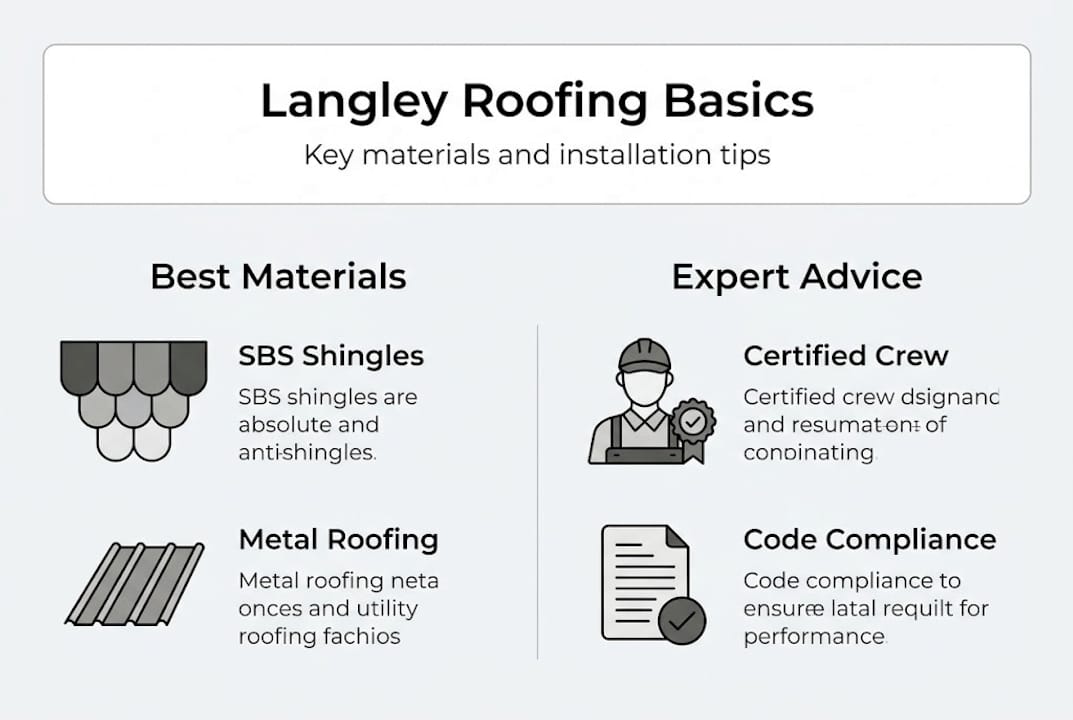
The rcabc installation standards are explicit: asphalt shingles require a minimum of four nails per shingle, proper eave protection (also called ice and water shield), and a minimum roof slope of 1:3. These are not suggestions. They are baseline requirements for a code-compliant installation.
Here is what a proper installation process looks like, step by step:
- Remove old roofing material down to the deck to inspect for rot or damage.
- repair or replace the deck where needed before any new material goes on.
- install eave protection (ice and water shield) along all eaves and in valleys.
- apply underlayment over the full deck surface for a secondary moisture barrier.
- install drip edge along eaves and rakes to direct water away from the fascia.
- lay shingles from the bottom up , ensuring proper nailing and staggered joints.
- flash all penetrations including chimneys, vents, and skylights with metal flashings.
- complete a final inspection to verify all fasteners, flashings, and edges are secure.
Common code violations to watch for:
- fewer than four nails per shingle
- Missing or improperly installed ice and water shield
- inadequate overlap on underlayment
- flashings sealed with caulk only, without proper metal flashing
- insufficient ventilation in the attic space
Pro tip: Always ask your contractor if they will pull the required building permit. For asphalt shingles in Surrey and across the Lower mainland, permitted work means a municipal inspector signs off on the installation, giving you an extra layer of protection and documentation for future resale.
Our experience: Why langley roofing success is all about planning and inspection
Hey, it’s the team at paragon roofing BC here. After working on roofs across the Fraser Valley for years, the pattern we see most often is this: the projects that go sideways almost always come down to skipped inspections and rushed material decisions, not bad luck.
We have seen homeowners choose the cheapest shingle available, skip the pre-installation deck inspection, and then call us two winters later with full-on water intrusion in their attic. The original savings vanished quickly once we factored in mould remediation and deck repairs.
The homeowners who fare best are the ones who treat their roof like a long-term investment. They get inspected every two years, they ask questions about material performance in our specific climate, and they hire langley roofing services providers who are certified and accountable. That approach is not glamorous, but it is what separates a 30-year roof from a 15-year headache.
Our honest take: the upfront cost of doing it right is almost always less than the downstream cost of doing it twice.
Connect with langley roofing specialists for installation, repair and maintenance
If this guide has made one thing clear, it is that reliable roofing in the area comes down to the right contractor, the right material, and the right installation process. You do not have to figure that out alone.
At paragon roofing BC, we offer roof installation, roof repair services, roof replacement, and expert roof materials selection tailored to the Fraser Valley’s demanding climate. Whether you need a quick repair after a storm or a full replacement with SBS-modified shingles or metal panels, our certified team is ready to help. Contact us today to request a free inspection or get a no-obligation quote for your property.
frequently asked questions
How often should a langley roof be professionally inspected?
Roofs should be professionally inspected at least every two years or after any major storm, in line with rcabc inspection guidelines for assessing roof condition before any repair or replacement decisions are made.
What roofing material lasts longest in langley’s wet climate?
Metal roofing offers the best longevity in the area’s wet Fraser Valley conditions, with a lifespan of 40 to 70 years and natural moss-free performance that reduces ongoing maintenance costs significantly.
Does my roof need replacement if it has a minor leak?
Not necessarily. A minor leak may only need a targeted repair if the roof is still within its serviceable life, but a certified professional should inspect it first to confirm the extent of the damage, as outlined in the rcabc consumer guide.
Are there installation requirements for asphalt shingles in BC?
Yes. Per rcabc standards, asphalt shingles require a minimum of four nails per shingle, proper eave protection such as ice and water shield, and a minimum roof slope of 1:3 for code-compliant installation across British Columbia.
Recommended
Our Roofing Blog

Have more questions about roofing?
Check out our FAQs or give us a call today to speak to an expert roofer in Vancouver Lower Mainland, BC. We're here to help our neighbours make educated decisions about their roof. For our team, we value helping clients save money while making their roofs last.