
Ice dam formation conditions in BC: a Surrey homeowner's guide
Ice dam formation conditions in BC: a Surrey homeowner’s guide
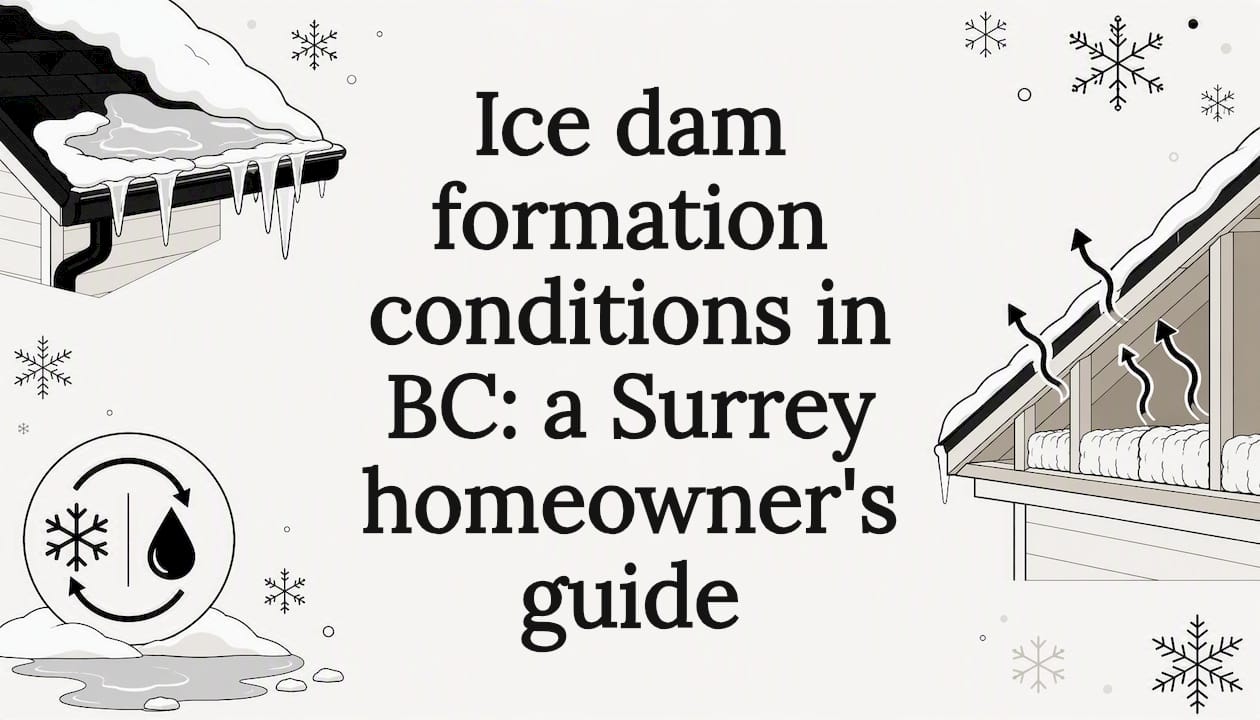
Ice dams form when two conditions coincide: the upper roof surface warms above 0°C while the air at the eaves stays below freezing, and there is snow sitting on the roof to melt. That temperature mismatch, documented in CNRC field research by Latta, is the core mechanism behind every ice dam you will ever see in BC. In Surrey and across the Lower Mainland, the single biggest driver is attic heat loss combined with air exfiltration, made worse by the region’s freeze–thaw cycles: a wet coastal snowfall, a sunny afternoon, then a hard overnight freeze. That sequence is all it takes.
The Insurance Bureau of Canada classifies ice-dam water intrusion as a recognised source of property damage and recommends ventilation, insulation, and eave protection as the primary prevention measures.
Before you do anything else:
- Pull snow off the lower part of your roof using a roof rake from the ground. Do not climb up.
- Clear debris from gutters if you can reach them safely from a ladder on solid ground.
- Do not chip at bonded ice on the roof surface or at walking height on the eaves.
- If you see active water dripping inside, call a roofer promptly.
Pro Tip: If you can see large icicles hanging from your eaves after a snowfall, an ice dam is likely already forming or fully formed behind them. That is your cue to act.
Key takeaways
Ice dams in BC form when attic heat loss warms the roof surface above 0°C while eave temperatures stay below freezing, and the only lasting fix is sealing the building envelope, not chipping ice or adding heat cables.
| Point | Details |
|---|---|
| Two conditions must coincide | Roof surface above 0°C, eave air below 0°C, and snow present — all three together cause ice dams. |
| Attic air leakage is the root cause | Frost bands and inverted ice patties in the attic confirm warm air bypasses, not just poor insulation. |
| Safe immediate steps | Use a roof rake from the ground and calcium chloride in a sock; never climb an icy roof. |
| Envelope fixes prevent recurrence | Air sealing, baffles, and soffit-to-ridge ventilation stop dams; heat cables are a last resort only. |
| Paragonroofingbc | Offers attic inspections, air sealing, ventilation upgrades, and ice and water shield installation across Surrey and the Lower Mainland. |
Table of Contents
- How do ice dams actually form on a BC roof?
- What BC and Surrey conditions raise your ice dam risk?
- How do you spot an ice dam before serious damage sets in?
- What can you safely do right now to reduce the risk?
- What are the long-term fixes that actually stop ice dams?
- When should you call a roofer, and what should you ask?
- A local perspective on what we actually see in Surrey
- Paragonroofingbc can help you protect your Surrey roof
- Sources
- FAQ
How do ice dams actually form on a BC roof?
The melt-refreeze cycle is straightforward once you picture the roof in cross-section. Warm air from your living space rises into the attic, heats the roof sheathing, and warms the snowpack above it. That snow melts and runs down the slope toward the eaves. The eaves, however, overhang the exterior wall and receive no heat from below. They stay at or below the outdoor air temperature. When meltwater hits that cold zone, it refreezes and builds a ridge of ice. The next wave of meltwater backs up behind that ridge, sits as a pool on the sheathing, and eventually works under the shingles and into the ceiling below.
Three variables control how fast this happens:
- Attic heat loss: Bypasses through ceiling penetrations (pot lights, attic hatches, plumbing stacks) push warm air directly into the attic space.
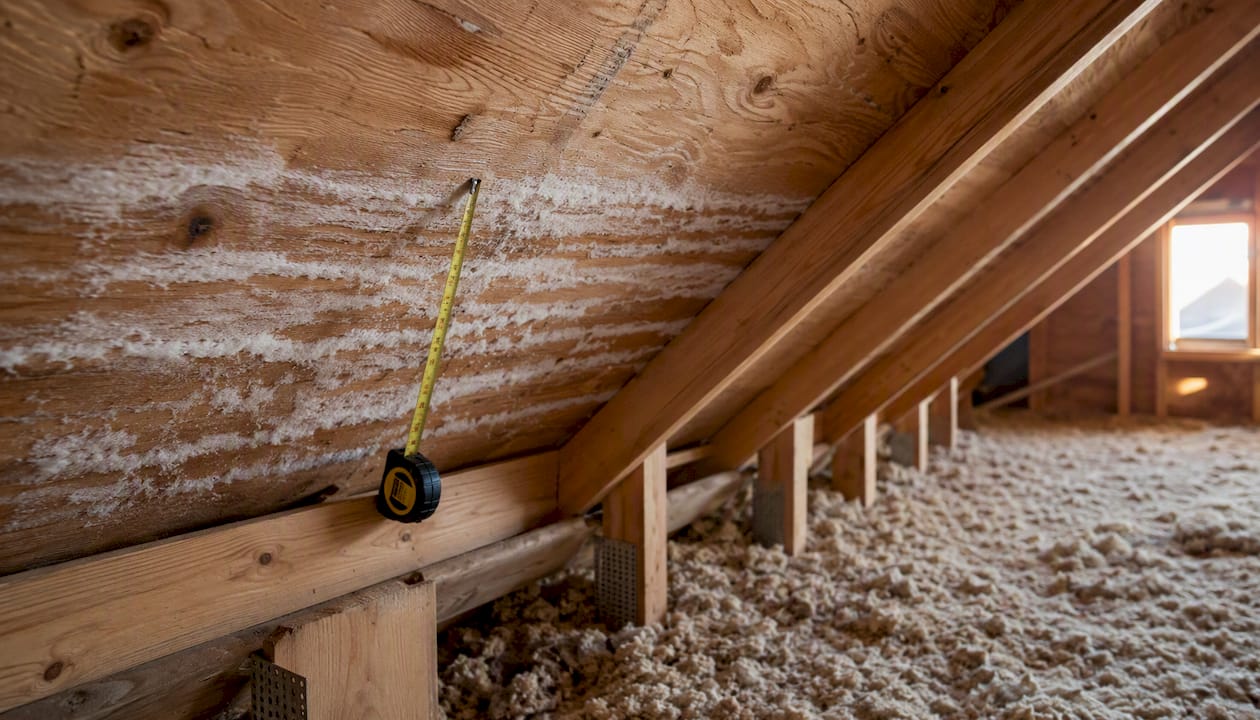
- Air exfiltration: Warm, moist indoor air leaking through gaps in the vapour barrier or ceiling creates frost bands on the underside of the sheathing. Quirouette’s investigation of a 48-unit cooperative documented inverted ice patties on the insulation surface that later melted and caused recurring ceiling leaks, even after multiple repair attempts.
- Solar gain and snow depth: A sunny afternoon in January can warm a dark shingle surface well above 0°C even when the air temperature is -5°C. Deeper snow acts as insulation, keeping the sheathing warmer longer.
Roof geometry matters too. Complex roof shapes with valleys, dormers, and intersecting planes concentrate meltwater into narrow channels, accelerating ice ridge formation even on well-insulated homes.
Pro Tip: Go into your attic after a cold snap and look for frost bands — white or icy streaks running across the underside of the sheathing. If you find them near a pot light or attic hatch, that is your air leak. Mark it with tape so a contractor can find it quickly.
What BC and Surrey conditions raise your ice dam risk?
Surrey sits in a climate band that is genuinely awkward for roofs. The Lower Mainland rarely gets the sustained cold of Kelowna or Prince George, but it gets something arguably worse: wet, heavy coastal snow followed by mild sunny days and then a hard overnight freeze. That sequence can build a serious ice ridge in 48 hours on a roof that would handle a Kamloops winter without a problem.
Coastal BC freeze–thaw cycles are uniquely punishing because the snow arrives wet and dense, bonds quickly to the shingle surface, and then refreezes into a solid mass before most homeowners realise what is happening. One or two bad weeks per winter is all it takes to cause thousands of dollars in ceiling damage.
Building characteristics common in Surrey compound the risk:
- Warm attics: Older character homes and 1970s–1990s tract houses often have minimal ceiling insulation and no air barrier, turning the attic into a heat radiator.
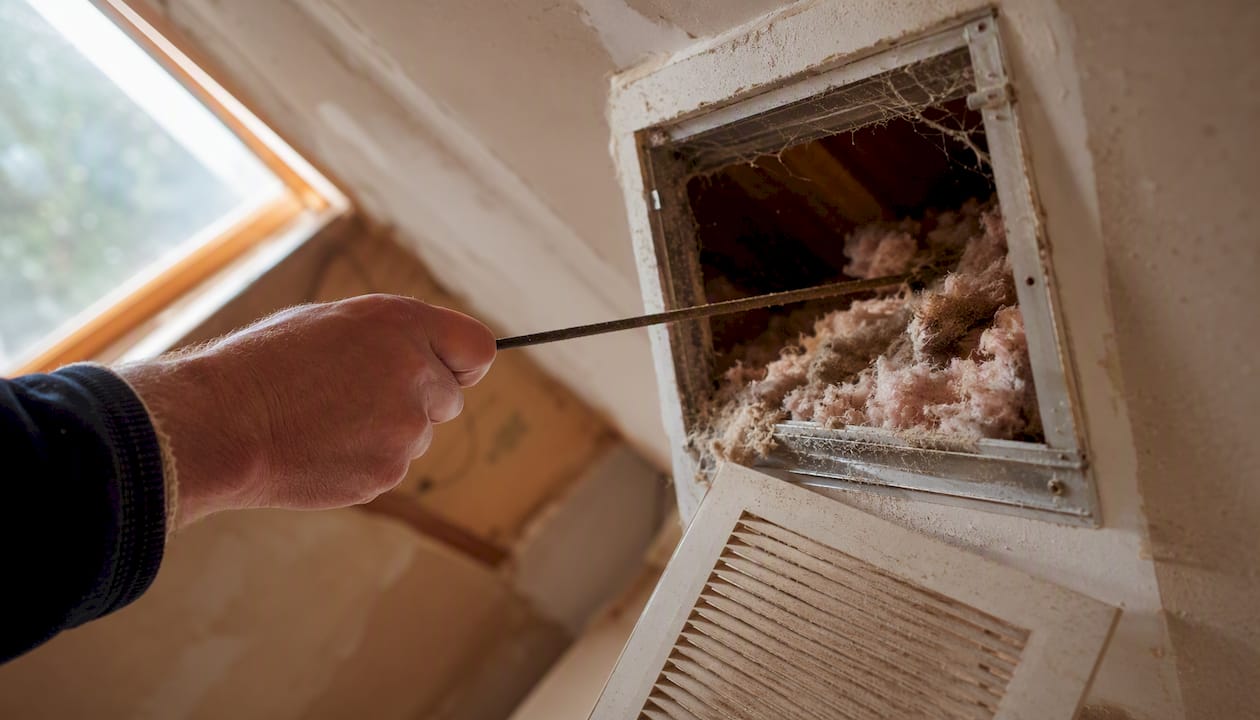
- Blocked soffit vents: Insulation blown in without baffles routinely covers soffit openings, cutting off the cold air supply that keeps eaves cold.
- Low and complex roof pitches: Low-slope additions, attached garages, and dormer roofs hold snow longer and drain meltwater more slowly.
- Strata townhouses: Shared roof planes with party walls create thermal bridges and complicate ventilation paths, leaving cold spots at eaves and warm spots mid-span.
Clogged gutters and frozen downspouts do not cause ice dams, but they make the backup significantly worse. When meltwater has nowhere to drain, it pools deeper behind the ice ridge and increases the pressure on the shingle laps and flashing.
Pro Tip: Check your soffit vents in autumn. Slide a thin rod or wire through each vent opening. If it hits resistance within 10–15 cm, insulation is blocking the airflow and you need baffles installed before the first snowfall.
How do you spot an ice dam before serious damage sets in?
Catching an ice dam early is the difference between a $300 repair and a $15,000 ceiling replacement. Here is what to look for from the ground and inside the attic.
Exterior signs:
- A continuous, uneven ridge of ice along the eave line, thicker in some spots than others
- Large icicles, especially ones that are wide at the base rather than tapered
- Uneven snowmelt on the roof surface (bare patches above, snow still present at the eaves)
- Sagging or bowed gutters pulling away from the fascia under ice weight
Interior and attic signs:
- Ceiling stains or wet drywall near exterior walls, appearing during or just after a thaw
- Damp or compressed insulation in the attic, particularly near the eave line
- Frost bands or inverted ice patties on the underside of the roof sheathing
- Recurring condensation on upper-floor windows or walls after cold snaps
Wet insulation is a serious concern beyond the immediate leak. Fibreglass and cellulose batts lose a significant portion of their R-value when saturated, and that loss persists even after drying. Mould can establish within 48–72 hours in damp attic cavities, particularly in Surrey’s mild, humid climate.
Call a roofer the same day if you see: active dripping inside the house, visible sagging of the roof deck or gutters, or staining that reappears after each thaw despite no other obvious leak source.
Pro Tip: Take photos of every interior stain with a timestamp before you clean it up. That documentation is exactly what your insurer and your roofer need to assess the damage scope and support a claim.
What can you safely do right now to reduce the risk?
Short-term measures buy time. They do not fix the root cause, but they can prevent a bad situation from becoming a structural one.
Safe actions, in order:
- Use a roof rake with an extension handle to pull snow off the lower 1–1.5 metres of the roof slope. Work from the ground. Never lean the rake against the roof and pull toward yourself while standing on a ladder.
- Clear gutters of ice and debris from a stable ladder on solid, level ground only. Do not lean out over the eave.
- Fill a nylon stocking or mesh tube with calcium chloride ice-melt pellets and lay it perpendicular to the ice ridge, running from the ridge down to the eave. This cuts a drainage channel through the dam without damaging shingles. Do not use rock salt — it corrodes metal and kills vegetation.
- If meltwater is actively entering the house, place buckets and call a roofer for emergency leak response.
Do not do any of the following:
- Climb onto an icy or snow-covered roof. WorkSafeBC is explicit: working on roofs in hazardous conditions is a leading cause of serious fall injuries, and ground-based mitigation is the safe alternative for homeowners.
- Chip or hammer at bonded ice on the shingles. You will damage the shingle surface and the granule layer, shortening the roof’s service life.
- Use a heat gun or open flame near the roof surface.
These steps are temporary. Once the weather stabilises, the conversation needs to shift to what is actually causing the warm roof surface in the first place.
What are the long-term fixes that actually stop ice dams?
The envelope-first approach is the only strategy that works long term. Repeated repairs that ignore air leakage fail repeatedly, as Quirouette’s investigation confirmed. Heat cables and extra insulation alone are not solutions; they are patches.
Long-term prevention checklist:
- Attic air sealing: Seal all ceiling penetrations — pot lights, plumbing stacks, attic hatches, and partition top plates — with spray foam or rigid foam board before adding any insulation. This is the highest-impact single step.
- Correct insulation levels and layout: Insulation must be continuous from the interior ceiling to the outer edge of the top plate, with no gaps. Adding insulation without baffles will block soffit airflow and worsen the problem.
- Continuous soffit-to-ridge ventilation: Install ventilation baffles in every rafter bay to maintain a clear airway from the soffit to the ridge vent. A blocked soffit is as bad as no soffit at all.
- Ice and water shield at eaves and valleys: Ice and water shield installed over the eave zone and in all valleys prevents meltwater that does back up behind a dam from entering the deck. It does not stop the dam forming, but it stops the leak.
- Gutter and drainage upgrades: Clean gutters, properly sloped downspouts, and extended downspout outlets keep meltwater moving away from the foundation.
Inspection methodology a roofer will use:
- Visual attic walk to check insulation continuity and vapour barrier condition
- Probe for frost bands and inverted ice patties on the sheathing underside
- Inspect the ventilation path at soffit and ridge for blockages
- Thermal imaging or infrared scan to locate hidden air leaks and wet insulation
- Blower-door test if available, to quantify overall air leakage
On heat cables: They are a last-resort option for specific problem areas, such as a valley above a flat-roof addition, where an envelope fix is not practical. They consume electricity continuously through winter and do nothing for the underlying heat loss. Use them only where targeted and necessary.
Pro Tip for strata councils and property managers: Phase the work over two budget cycles if needed. Prioritise attic air sealing in year one — it delivers the biggest reduction in risk for the lowest cost. Add insulation upgrades and ventilation baffles in year two. Schedule ice and water shield installation at the next re-roofing cycle.
| Prevention measure | What it addresses | Priority |
|---|---|---|
| Attic air sealing | Stops warm air reaching sheathing | Highest |
| Insulation with baffles | Reduces heat loss, maintains soffit airflow | High |
| Soffit-to-ridge ventilation | Keeps eave zone cold | High |
| Ice and water shield | Stops backed-up meltwater entering deck | Medium (at re-roof) |
| Gutter and drainage upgrades | Reduces backup severity | Medium |
| Heat cables | Targeted melt channel in problem spots | Last resort |
When should you call a roofer, and what should you ask?
Some situations are beyond safe homeowner action. Call a professional roofer if you see any of these:
- Active water dripping or staining inside the house during or after a freeze–thaw event
- Visible sagging of the roof deck or gutters pulling away from the fascia
- Widespread wet or compressed insulation across the attic floor
- Ice dams returning every winter despite previous repairs or temporary fixes
- Valleys, dormers, or skylights showing repeated leak patterns
Questions to ask during a roofing inspection:
- Will you do a full attic walk, including a probe for frost bands and inverted ice patties?
- Do you carry thermal imaging or infrared scanning equipment?
- What specific air sealing work do you recommend, and where are the primary bypasses?
- What eave protection detail do you propose, and does it include ice and water shield in the valleys?
- What is your experience with ice dam repairs in Surrey and the Lower Mainland?
- Will I receive a written report with photos of the attic findings and a prioritised scope of work?
Expected deliverables from a professional inspection:
- Written report with photos of frost bands, blocked vents, and any wet insulation
- Identified air leak locations with recommended sealing method
- Prioritised scope: what to fix first, what can wait, and what to address at the next re-roof
- Clear explanation of whether the issue is insulation, ventilation, air sealing, or a combination
Pro Tip: Ask specifically whether the inspector will check the soffit-to-ridge ventilation path, not just look at the ridge vent from outside. A blocked soffit with a clear ridge vent is a common finding that gets missed in a quick visual inspection.
A local perspective on what we actually see in Surrey
Hey, it’s Harman here. Most of the ice dam calls we get in Surrey follow the same pattern: a wet snowfall on a Thursday, a clear sunny Saturday that warms the roof surface, and then a hard freeze Sunday night. By Monday morning, there is a solid ice ridge at the eave and water dripping through a pot light in the master bedroom.
When we get into the attic, the story is almost always the same. The soffit vents are packed with blown-in insulation, there are no baffles, and the attic hatch has no weatherstripping or insulation lid. The warm air from the house has been washing over the sheathing all winter. The fix is not a new roof. It is air sealing, baffles, and a proper ventilation path from soffit to ridge.
We have seen this on older character homes in Cloverdale, on 1990s tract houses in Newton, and on strata townhouses in Fleetwood. The roof pitch and the shingle type barely matter. The attic envelope is what determines whether you get ice dams or not.
Paragonroofingbc can help you protect your Surrey roof
Ice dams are a building envelope problem, and that is exactly where Paragonroofingbc focuses. For Surrey homeowners and property managers dealing with recurring freeze–thaw damage, the team offers attic air sealing, insulation upgrades with proper baffles, soffit-to-ridge ventilation installation, and ice and water shield at eaves and valleys. Gutter and drainage upgrades and emergency leak response are also part of the service scope.

Paragonroofingbc serves Surrey and the surrounding Lower Mainland, including Burnaby, Coquitlam, North Vancouver, West Vancouver, and Delta. If you have had a leak this winter or you want an attic inspection before the next cold snap, the right next step is a residential roofing inspection in Surrey. For an active leak, call for emergency leak detection and repair today.
Sources
These are the primary references used in this article. Each one is worth bookmarking if you want to go deeper or need documentation for an insurance claim.
The Quirouette investigation is particularly worth reading if you manage a strata or multi-unit property. It documents exactly how repeated, expensive repairs fail when air leakage is not addressed — and what a proper diagnostic sequence looks like.
FAQ
What are the two main conditions for ice dam formation in BC?
An ice dam requires the upper roof surface to be above 0°C while the air at the eave stays below freezing, with snow present to melt and refreeze. In BC, attic heat loss and air exfiltration are the most common reasons the roof surface warms above freezing.
Does homeowners insurance cover roof leaks from ice dams?
Coverage depends on your specific policy, but the Insurance Bureau of Canada recognises ice-dam water intrusion as a source of property damage. Document all interior staining with timestamped photos and contact your insurer promptly; prevention measures like ventilation and eave protection may also be required to maintain coverage.
How do you get rid of an ice dam quickly?
The safest quick method is to use a roof rake from the ground to remove snow from the lower roof, then lay a calcium chloride-filled mesh tube across the ice ridge to cut a drainage channel. Never chip at bonded ice or climb onto an icy roof surface.
Why do ice dams keep coming back every winter?
Recurring ice dams almost always mean the attic air leakage has not been addressed. Temporary fixes like raking snow or heat cables do not stop warm air from reaching the sheathing. A full attic inspection to locate and seal air bypasses, combined with proper ventilation baffles, is what breaks the cycle.
Are low-pitch roofs in Surrey at higher risk for ice dams?
Yes. Low-slope roofs drain meltwater more slowly, giving it more time to refreeze at the eave. Valleys, dormers, and flat-roof additions are particularly vulnerable because meltwater concentrates in those areas even when the main roof slope is well-insulated.
Recommended
Our Roofing Blog

Have more questions about roofing?
Check out our FAQs or give us a call today to speak to an expert roofer in Vancouver Lower Mainland, BC. We're here to help our neighbours make educated decisions about their roof. For our team, we value helping clients save money while making their roofs last.