Industrial roofing types in BC: 5 systems compared
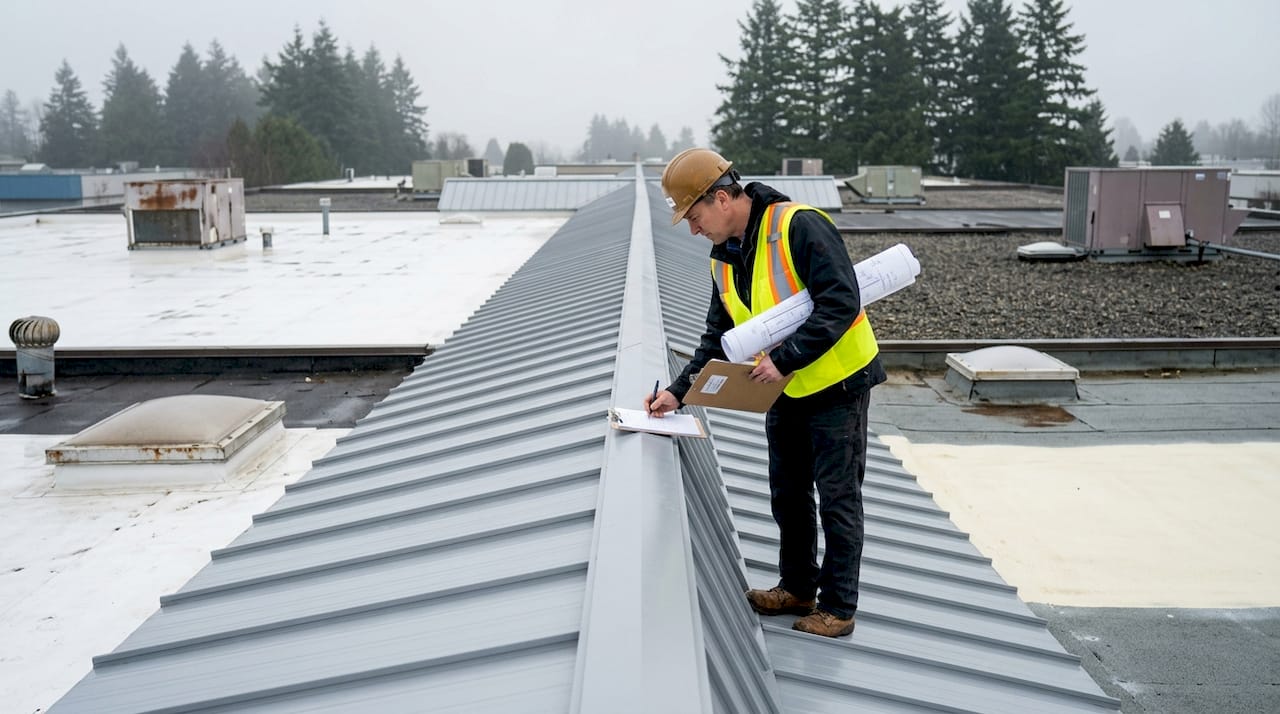
Choosing the wrong roof for your industrial facility in BC isn’t just a budget headache. It can mean failed inspections, voided warranties, and repair bills that dwarf the original installation cost. With BC’s heavy rainfall, seismic activity, and strict building codes, the stakes are genuinely high. Whether you manage a food processing plant, a warehouse, or a manufacturing facility, the roofing system you select will shape your maintenance costs, energy bills, and compliance standing for decades. This guide walks you through the most common industrial roofing systems, what sets them apart, and how to match the right one to your facility’s needs.
Table of Contents
- What to consider when evaluating industrial roofs in BC
- Single-ply membrane roofs: TPO, PVC, and EPDM
- Built-up roofing (BUR): Classic toughness for heavy use
- Modified bitumen: Flexible performance for BC’s climates
- Metal roofing: Long-term resilience and efficiency
- Spray polyurethane foam (SPF): Seamless insulation and waterproofing
- Comparing major industrial roofing types
- Situational recommendations and expert tips for BC projects
- Expert help for industrial roofs in BC
- Frequently asked questions
Key Takeaways
| Point | Details |
|---|---|
| Choose for BC climate | Roofing choices must handle snow, seismic, and rain unique to BC’s code requirements. |
| Balance cost and lifecycle | Weigh upfront cost, expected lifespan, and maintenance needs to get the best value. |
| Proper install matters most | Expert installation and yearly maintenance are more critical than the material itself. |
| Match to facility needs | Select the roof type based on your building’s traffic, exposure, and energy performance goals. |
What to consider when evaluating industrial roofs in BC
Before you compare materials, you need to understand what BC specifically demands from an industrial roof. This isn’t a one-size-fits-all decision, and the local context matters more than most property managers realise.
The 2024 BC Building Code sets mandatory standards for snow load, seismic resistance, drainage, and energy efficiency. Every roofing system you consider must meet these benchmarks, not just perform well on paper. Skipping this step is one of the most common and costly mistakes we see.
Here are the key factors to weigh before selecting a system:
- Code compliance: Snow load ratings, seismic performance, drainage slope, and energy efficiency targets under BC’s 2026 standards
- Budget vs. lifespan: A cheaper upfront system may cost far more over 20 years in repairs and replacements
- Maintenance requirements: Some systems need annual inspections and recoating; others are largely hands-off
- Facility-specific demands: Chemical exposure, rooftop equipment, foot traffic, and ventilation all affect material suitability
- Warranty coverage: Manufacturer warranties often require certified installers and documented maintenance
One insight that surprises many clients: proper installation and maintenance matter more for long-term durability than the material itself. A premium membrane installed poorly will fail faster than a mid-range system installed by an experienced crew. Understanding industrial roofing standards and roofing types in construction gives you a solid foundation before you start getting quotes.
Single-ply membrane roofs: TPO, PVC, and EPDM
Single-ply membranes are the workhorses of modern industrial roofing. They’re lightweight, relatively quick to install, and well-suited to the low-slope roofs common on BC warehouses and processing facilities.
Single-ply membranes include three main types: TPO (thermoplastic polyolefin), PVC (polyvinyl chloride), and EPDM (ethylene propylene diene monomer, a synthetic rubber). Each has a typical service life of 20 to 30 years at medium cost. Here’s how they differ:
- TPO: Highly reflective, heat-welded seams, excellent for energy efficiency and general industrial use
- PVC: Superior chemical and grease resistance, ideal for food processing or facilities with rooftop exhaust
- EPDM: Outstanding flexibility in cold temperatures, great for ozone-heavy environments and large flat roofs
The main risks with single-ply systems are seam failures and ponding water. Seams are the weakest point in any membrane roof, and poor installation or thermal stress can cause them to open over time. Proper drainage design and regular inspections catch these issues early.
Pro Tip: If your facility handles cooking oils, solvents, or industrial chemicals, PVC is worth the slight premium over TPO. Chemical degradation of the wrong membrane can shorten its life by a decade. For a detailed breakdown, see our comparison of torch-on vs TPO vs EPDM and our roofing solutions overview.
Built-up roofing (BUR): Classic toughness for heavy use
Built-up roofing has been around for over a century, and it’s still one of the best choices for facilities with heavy rooftop traffic or equipment.
BUR systems are constructed from multiple alternating layers of bitumen (tar) and reinforcing fabric, topped with gravel or a mineral cap sheet. This multi-layer approach creates exceptional redundancy. If one layer is compromised, the others hold. Service life runs 20 to 30 years, and the system is particularly well-suited to high-traffic areas like service decks and mechanical equipment platforms.
“Built-up roofing’s layered construction means a single puncture or seam issue rarely becomes an emergency. That redundancy is its greatest strength on a busy industrial roof.”
Key advantages and trade-offs:
- Strengths: Excellent impact and chemical resistance, proven track record, handles foot traffic better than most membranes
- Drawbacks: Heavier than single-ply (structural load must be confirmed), longer installation time, higher labour cost
- Best for: Facilities with rooftop HVAC units, service walkways, or regular maintenance crew access
For roofing types for heavy traffic environments, BUR remains a top recommendation from expert sources across the industry.
Modified bitumen: Flexible performance for BC’s climates
Modified bitumen is essentially BUR’s modern cousin. It takes the proven bitumen base and adds polymers to improve flexibility and temperature tolerance, which makes it a strong fit for BC’s variable climate.
Modified bitumen sheets come in two main polymer types: APP (atactic polypropylene, better for heat resistance) and SBS (styrene-butadiene-styrene, better for cold flexibility). Both offer a 20 to 30 year lifespan. Application methods include:
- Torch-applied: Heat-welded for a strong bond, common on commercial and industrial projects
- Self-adhered: Peel-and-stick installation, faster and safer where open flame is restricted
- Cold-applied: Adhesive-based, useful for occupied buildings or sensitive environments
Modified bitumen handles temperature swings well, which matters in BC where a facility might see freezing nights and warm afternoons in the same week. It also allows for easier spot repairs compared to BUR, since damaged sections can be patched without disturbing the whole system. For facilities considering asphalt-based options, modified bitumen is often the most practical upgrade path.
Metal roofing: Long-term resilience and efficiency
If you’re planning for the long haul, metal roofing is hard to beat. It’s the highest upfront investment, but the lifecycle economics often make it the most cost-effective choice over 30 to 50 years.
Metal roofs require precise seaming and careful thermal expansion design to perform correctly. Common industrial options include standing seam panels, through-fastened panels, and structural metal decking. Key benefits:
- Lifespan: 30 to 50 years with minimal maintenance
- Fire and impact resistance: Excellent ratings for BC’s wildfire interface zones and hail events
- Energy efficiency: High reflectivity reduces cooling loads; compatible with rooftop solar installations
- Low maintenance: No recoating cycles, no membrane seam monitoring
The critical installation detail is thermal movement. Metal expands and contracts with temperature changes, and a roof that isn’t designed with proper floating clips and seam allowances will develop leaks or fastener failures within a few years. Review mechanical seaming best practices before specifying a system.
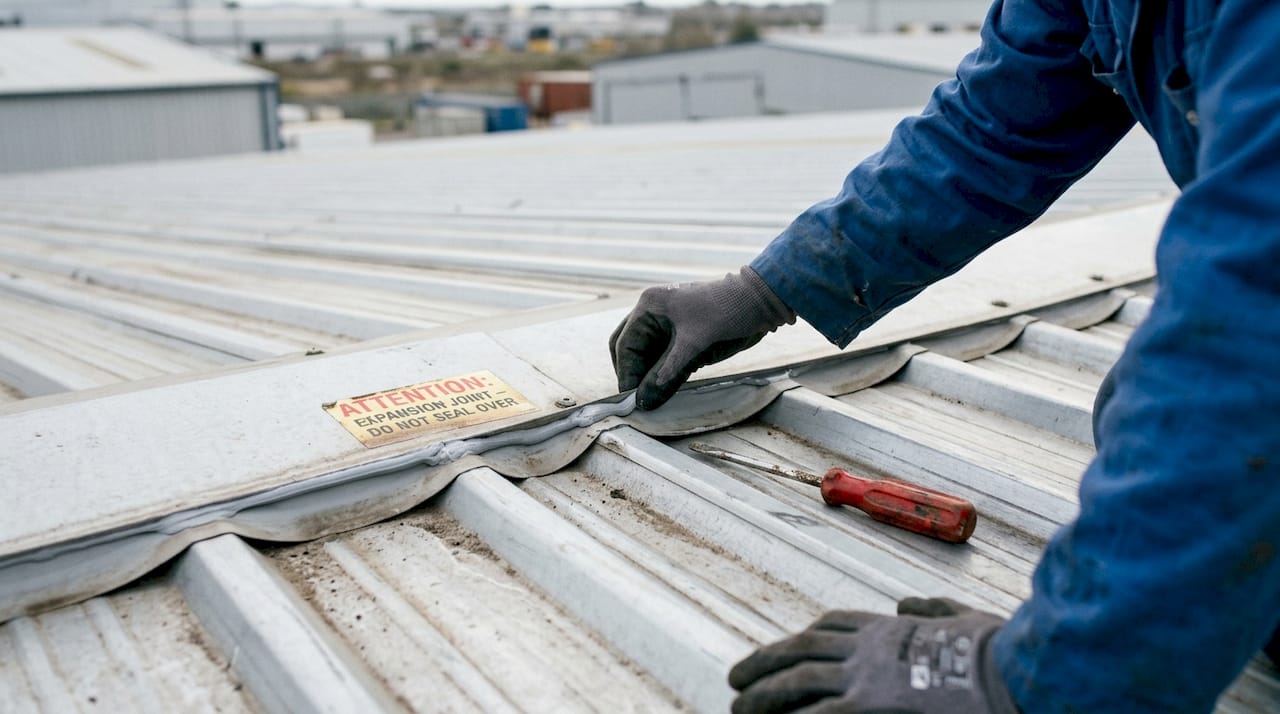
Pro Tip: Ask your contractor specifically how they handle thermal expansion on standing seam panels. If they can’t explain their clip system clearly, that’s a red flag. Explore Vancouver metal roofing options to see what’s available for BC industrial facilities.
Spray polyurethane foam (SPF): Seamless insulation and waterproofing
SPF is the option most property managers overlook, and that’s a mistake for facilities with complex roof layouts or serious insulation needs.
SPF systems are applied as a liquid that foams and hardens into a single seamless piece, delivering both insulation and waterproofing in one application. Because there are no laps or seams, there are far fewer potential leak points compared to membrane systems. Benefits include:
- Seamless coverage: Conforms to irregular shapes, curbs, and penetrations without cutting and patching
- Insulation value: High R-value per inch, reducing heating and cooling costs significantly
- Lightweight: Adds minimal structural load, ideal for older buildings
- Renewability: A fresh UV-protective topcoat every 10 to 15 years can extend the system indefinitely
The trade-off is that SPF requires expert application. Improper mixing ratios or application in the wrong weather conditions can result in a foam layer that degrades quickly. UV exposure without a protective coating will also break down the foam surface within a few years.
| Feature | SPF | Single-ply | Metal |
|---|---|---|---|
| Seams | None | Heat-welded | Mechanically seamed |
| Insulation | Built-in | Separate layer needed | Separate layer needed |
| Lifespan | Indefinite with recoat | 20 to 30 years | 30 to 50 years |
| Best for | Complex layouts | Large flat roofs | Long-term investment |
For more on how SPF fits into the broader picture, see our section on SPF industrial roofing.
Comparing major industrial roofing types
Here’s a side-by-side look at how all five systems stack up on the factors that matter most to BC facility managers.
| Roofing type | Typical lifespan | Relative cost | Maintenance level | Best use case |
|---|---|---|---|---|
| Single-ply (TPO/PVC/EPDM) | 20 to 30 years | Medium | Low to moderate | Large flat roofs, food processing |
| Built-up roofing (BUR) | 20 to 30 years | Medium to high | Moderate | High-traffic service decks |
| Modified bitumen | 20 to 30 years | Medium | Low to moderate | Variable climate, easy repairs |
| Metal roofing | 30 to 50 years | High | Low | Long-term, energy-efficient facilities |
| Spray polyurethane foam | Indefinite (with recoat) | Medium | Low (recoat cycle) | Complex layouts, insulation priority |
Situational recommendations and expert tips for BC projects
Now that you’ve seen the full comparison, here are situation-based recommendations to guide your final decision.
- Best for lifecycle value: Metal roofing. The 30 to 50 year lifespan and low maintenance offset the higher upfront cost for most facilities.
- Best for speed of installation: Single-ply membranes. TPO and PVC can be installed quickly with minimal disruption to operations.
- Best for heavy service environments: BUR. Multiple layers and gravel topping handle foot traffic and equipment loads better than any membrane.
- Best for BC code compliance: All systems can comply, but metal and single-ply are most commonly specified for new builds under current energy efficiency requirements.
- Best for challenging layouts: SPF. Its seamless application handles penetrations, curbs, and irregular geometry that would require complex detailing with other systems.
Pro Tip: Code compliance and maintenance are the two factors most likely to affect your insurance eligibility and warranty coverage. Document every inspection and repair, and keep your contractor’s certification records on file.
For a full breakdown of regulatory requirements for BC roofs, consult with a certified roofing professional before finalising your specification. Routine inspections twice a year, combined with prompt minor repairs, can genuinely double the effective lifespan of most industrial roofing systems.
Expert help for industrial roofs in BC
When you’re ready to move ahead, working with a roofing team that knows BC’s code requirements and has hands-on experience with all five system types makes a real difference. The wrong specification can cost you far more than the price difference between materials.
At Paragon Roofing BC, we assess your facility’s specific needs, including load requirements, chemical exposure, traffic patterns, and energy targets, before recommending a system. We’ve completed industrial roof installation in Coquitlam and across the Lower Mainland, working with single-ply, BUR, modified bitumen, SPF, and industrial metal roofing in Vancouver. We also offer industrial roof maintenance in Vancouver to keep your system performing at its best year after year. Reach out for a facility roof audit and let’s find the right fit for your building.
Frequently asked questions
How long do industrial metal and single-ply roofs typically last in BC’s climate?
Metal roofs last 30 to 50 years, while single-ply systems average 20 to 30 years when properly installed and maintained in BC conditions.
Are some industrial roofs better for energy efficiency in BC?
Yes. Single-ply cool roofs and metal roofs with reflective coatings offer excellent energy savings by reducing heat gain through the roof assembly.
How does the BC Building Code affect industrial roofing choices?
The BC Building Code requires specific snow load, drainage, seismic, and energy efficiency standards that every roofing system must meet before installation is approved.
What’s the risk of choosing the wrong roofing material for my facility?
An incorrect choice can void manufacturer warranties, increase long-term repair costs, and jeopardise code compliance and insurance eligibility for your facility.
Can I prolong the life of my industrial roof after installation?
Absolutely. Regular inspections and maintenance can effectively double the lifespan of most industrial roofing systems, making them one of the best investments you can make after installation.