Commercial Re-Roofing: What Vancouver Property Managers Need
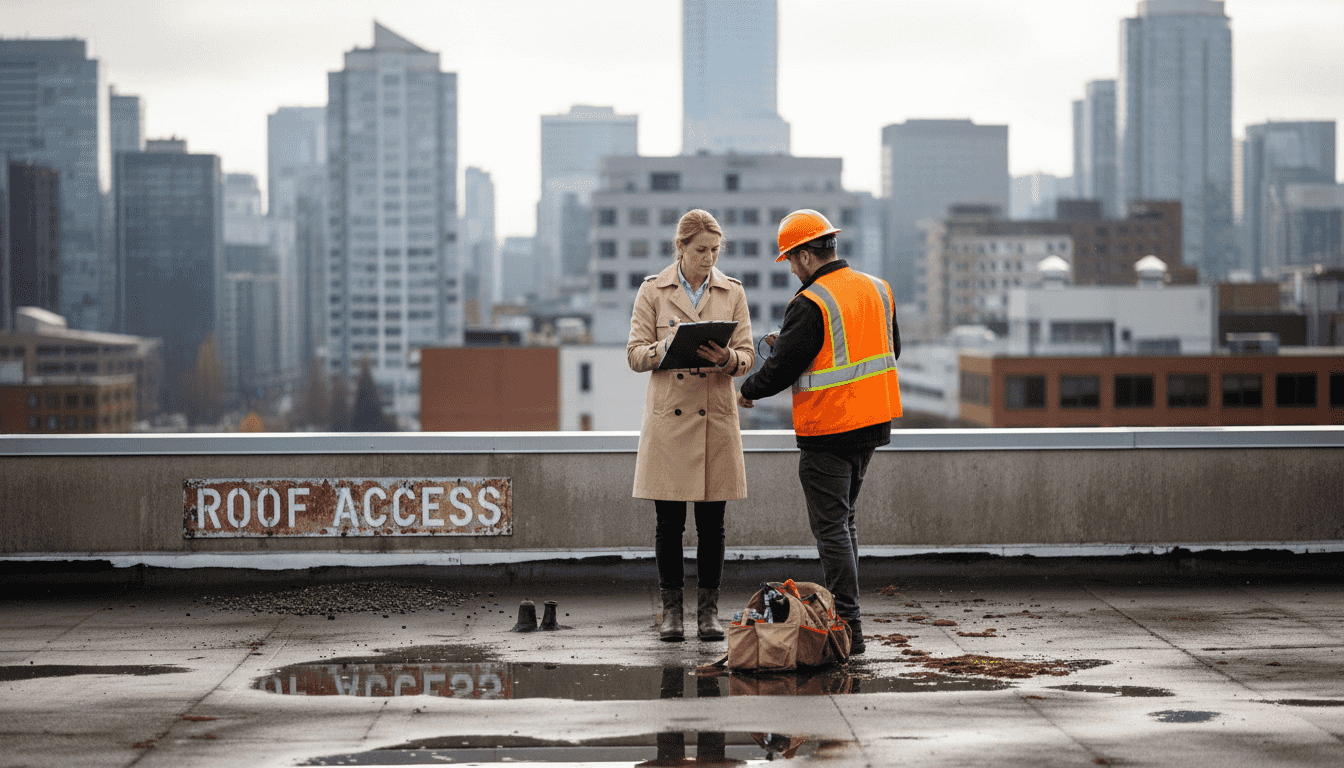
Watch: Commercial Re Roofing in Vancouver
Commercial re-roofing in Vancouver takes careful planning, the right roofing system, and an approach that fits the building’s condition and long-term needs. This video gives property owners and managers a helpful overview of commercial re-roofing considerations in Metro Vancouver, including performance, durability, and practical project planning.
For Vancouver commercial roofing projects, understanding your re-roofing options can help reduce disruption, improve system performance, and support a better long-term investment.
Managing a commercial building in Vancouver means facing the reality of coastal weather and strict local bylaws when it’s time to replace your roof. Every commercial re-roofing project in British Columbia requires permits to meet the BC Building Code and municipal regulations, making compliance just as important as material selection. This guide breaks down what commercial re-roofing really involves, the choices that matter for local conditions, and how to minimize disruptions while keeping tenants and your investment protected.
Table of Contents
- What Is Commercial Re-Roofing in B.C.?
- Common Commercial Re-Roofing Methods
- Project Planning and Disruption Minimization
- Cost Factors and Long-Term Value
- Legal Compliance and Safety Standards
Key Takeaways
| Point | Details |
|---|---|
| Commercial Re-Roofing Approaches | Choose between complete tear-off and overlay installations based on building condition and local regulations to ensure compliance and address structural issues. |
| Material Selection | Choosing durable materials like EPDM or PVC is crucial for longevity; cheaper options may lead to more frequent replacements and higher lifecycle costs. |
| Permits and Compliance | Obtaining necessary permits is essential to meet the BC Building Code standards, preventing liability and project delays. |
| Effective Project Planning | Early planning and clear communication with tenants can minimise disruptions and protect operations during re-roofing projects. |
What Is Commercial Re-Roofing in B.C.?
Commercial re-roofing is a complete or partial roof replacement on existing commercial buildings. Unlike residential roofing, it involves larger surface areas, industrial materials, and strict regulatory compliance tailored to British Columbia’s climate and building standards.
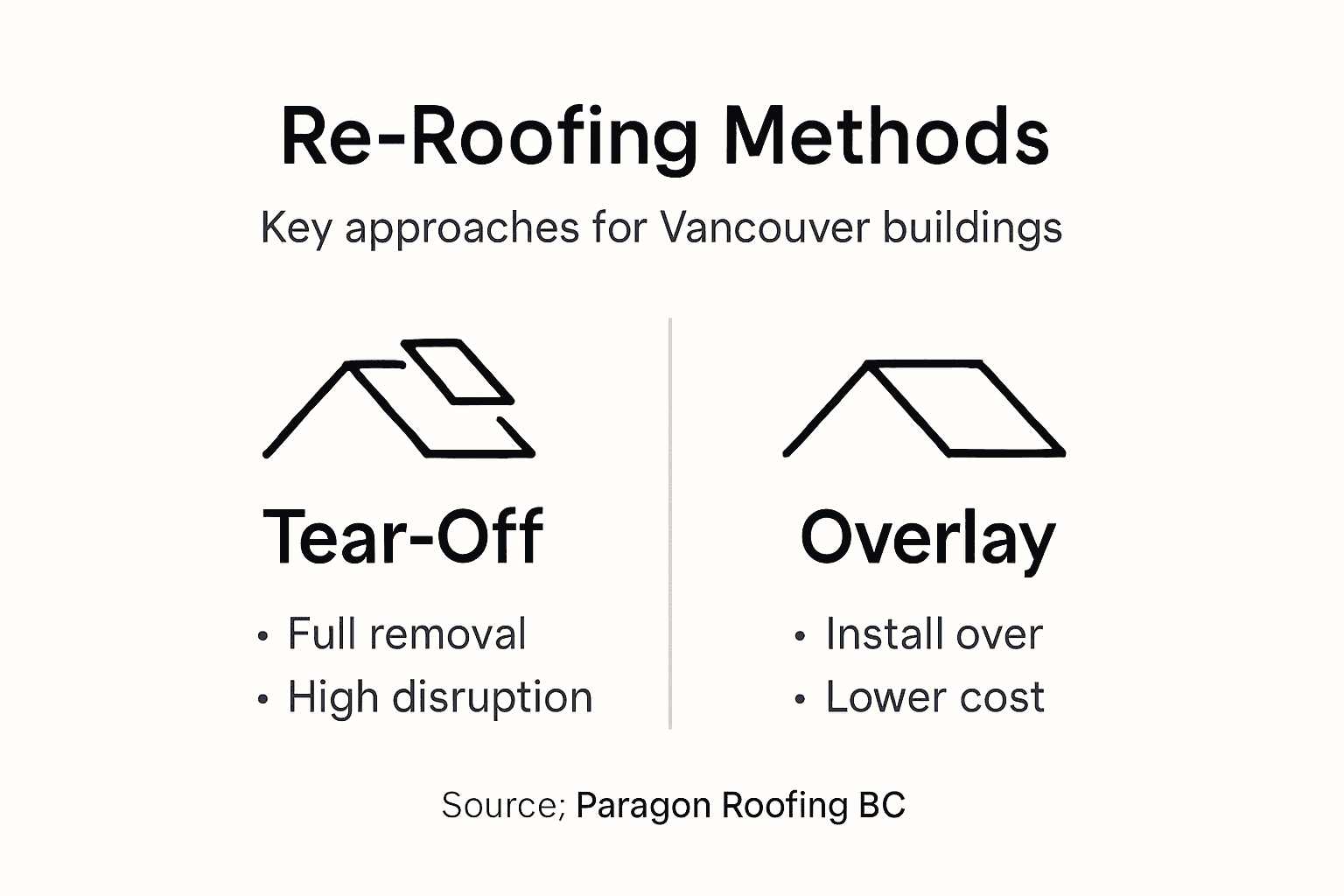
When we talk about re-roofing in B.C., we’re typically referring to one of two approaches: complete tear-off or overlay installation. The choice depends on your building’s condition, budget, and local bylaw requirements.
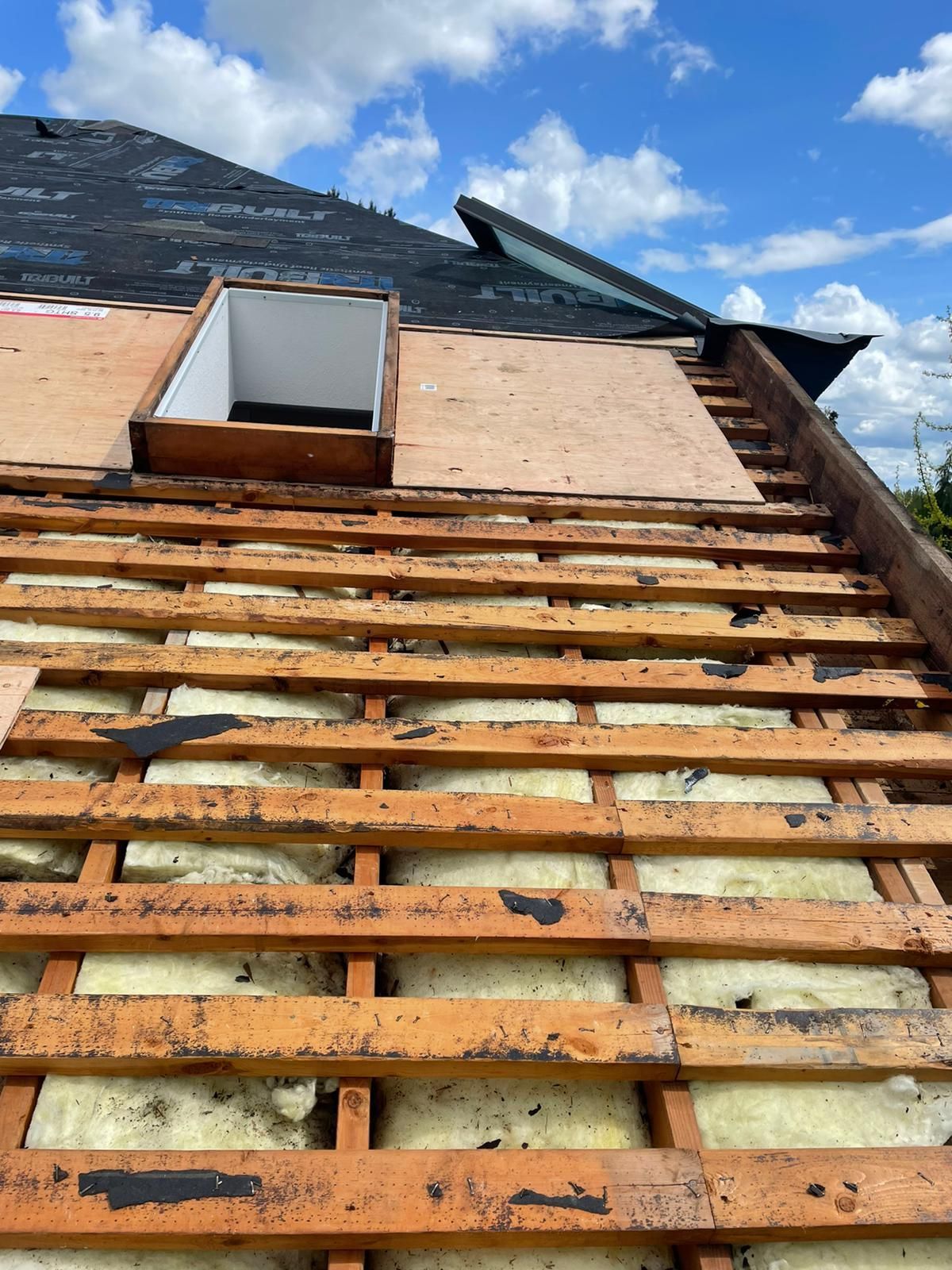
Complete tear-off removal involves stripping the entire roof system to bare deck, inspecting structural integrity, and installing fresh underlayment and roofing material. This approach is common when existing damage has compromised multiple layers or when the building code demands it.
Overlay installation (often called “re-roofing over”) places new roofing directly over the existing system. This method saves time and cost, but isn’t always permitted depending on your municipality and the condition of your current roof.
Why B.C. Requires Specific Attention
Vancouver and the Lower Mainland present unique challenges for commercial roofs:
- Heavy rainfall: Drainage failures are a top failure point we see regularly.
- Freeze-thaw cycles: Winter conditions create stress on materials and seams.
- Coastal moisture: Salt air accelerates corrosion, especially on metal components.
- Wind exposure: High winds on taller buildings demand wind-resistant installation techniques.
- Snow load: Some regions require roofs rated for specific snow-load capacities.
These local conditions directly shape material selection, installation methods, and maintenance schedules.
Permits and Compliance Matter
All commercial re-roofing projects in B.C. require permits to ensure compliance with the BC Building Code and local bylaws. The permitting process validates that your project meets structural, health, and safety standards. Your property manager or contractor must secure these before work begins—skipping this step creates liability and can delay project completion.
Each municipality has slightly different requirements. Some require structural inspections before re-roofing; others mandate specific material ratings based on building use or location.
The Scope Varies Widely
A small commercial building might need a straightforward membrane replacement. A larger industrial facility could involve roofing solutions tailored to commercial buildings with mechanical systems, skylights, HVAC penetrations, and multiple roof sections at different levels.
The scope determines timeline, labour, material costs, and disruption to your operations.
Commercial re-roofing isn’t just about installing new material—it’s about addressing drainage, ventilation, and structural issues that directly affect your building’s longevity and safety.
Pro tip: Request a pre-project walkthrough with your roofing contractor to identify all penetrations, drainage issues, and potential problem areas before permits are submitted; this prevents costly surprises during installation.
Common Commercial Re-Roofing Methods
Commercial re-roofing in BC typically uses several proven approaches, each suited to different building types, budgets, and climate conditions. The method you choose directly impacts durability, maintenance costs, and how long your roof will perform in our challenging Lower Mainland weather.
The two main installation strategies are complete tear-off and overlay. Both are widely used in Vancouver, but they serve different purposes and come with distinct trade-offs.
Complete Tear-Off Installation
Complete tear-off involves removing the entire existing roof system down to the structural deck. We then inspect the deck for damage, repair any issues, and install a fresh underlayment before laying new roofing material.
This method is preferred when:
- The existing roof has multiple layers that trap moisture.
- Structural damage or deterioration is visible.
- Local bylaws prohibit overlay installation.
- You want a completely fresh start with no hidden problems.
The downside is cost and time. Tear-offs generate significant waste and require temporary weatherproofing if the project spans multiple days. Labour costs run higher because crews must remove, haul, and dispose of the old system.
Overlay (Re-Roofing Over)
Overlay installation places new roofing directly over the existing system, avoiding the tear-off process entirely. This cuts labour time and disposal costs by roughly 30 to 40 percent.
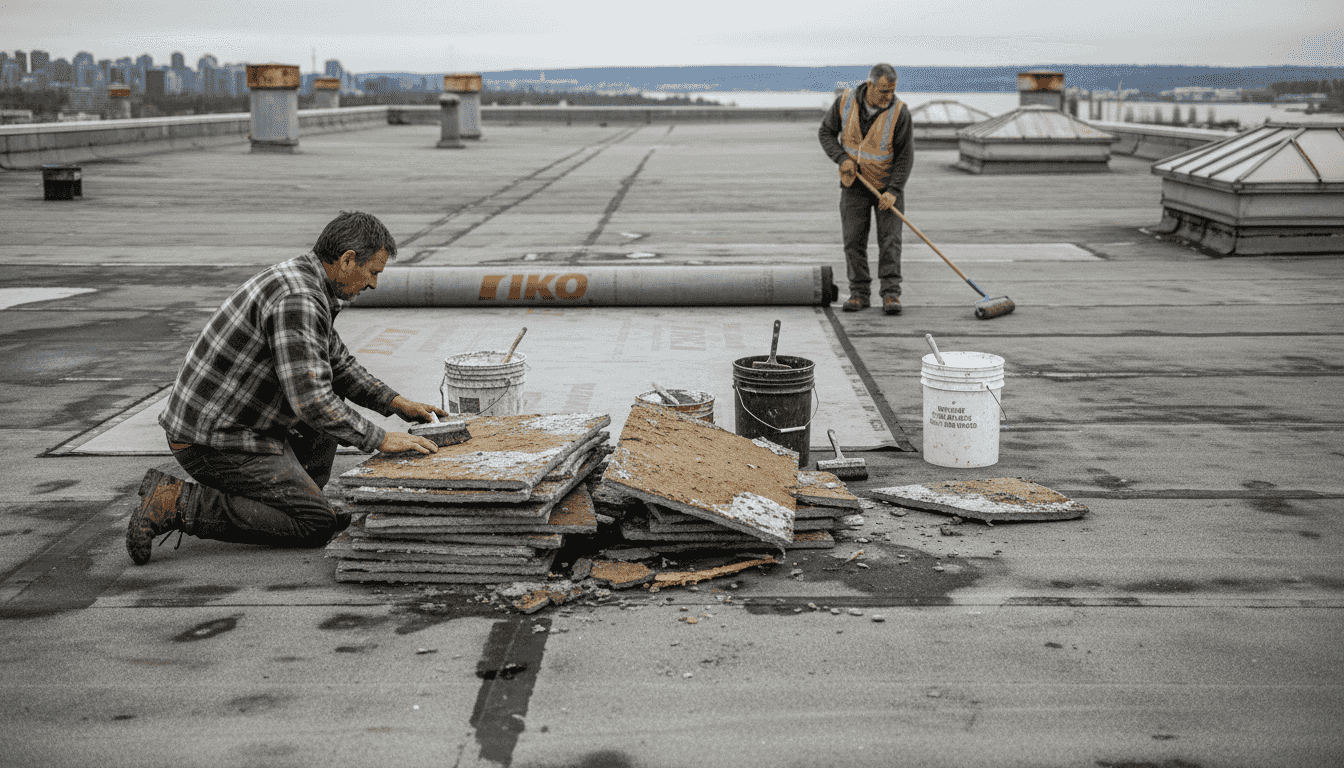
However, overlay has strict limitations. Your existing roof must be in reasonable condition with no active leaks or structural issues. Some municipalities restrict overlays based on roof type or building classification. Once you add a second layer, future overlays become difficult or impossible.
Material Selection Matters
TPO, EPDM, SBS modified bitumen, and PVC membranes are the standard choices for commercial buildings in BC. Each has distinct properties:
- TPO: Cost-effective, UV-resistant, lightweight. Common on budget-conscious projects.
- EPDM: Durable, flexible, handles freeze-thaw cycles well. Popular in Vancouver.
- SBS Modified Bitumen: Traditional, proven, strong adhesion. Often used on older buildings.
- PVC: Premium option, excellent chemical resistance, longest lifespan. Higher upfront cost.
Climate factors influence choice heavily. Our coastal moisture and freeze-thaw cycles favour EPDM and PVC over cheaper alternatives.
Here’s a helpful comparison of popular commercial roofing materials used in B.C. and their business impacts:
| Material | Lifespan Estimate | Climate Suitability | Business Impact |
|---|---|---|---|
| TPO | 15 years | Best in mild climates | Lower initial cost, frequent replacement |
| EPDM | 25-30 years | Handles freeze-thaw well | Reduced maintenance, long-term savings |
| SBS Modified Bitumen | 20-25 years | Strong moisture resistance | Reliable for older buildings, moderate cost |
| PVC | 30+ years | Excels in coastal zones | Highest durability, maximises ROI |
The cheapest material isn’t always the wisest choice for BC commercial buildings—local weather conditions and long-term maintenance costs should guide your material decision.
Pro tip: Request samples of each material option in your climate zone and ask your contractor which performs best on similar buildings in Vancouver; this reduces future warranty issues and emergency repairs.
Project Planning and Disruption Minimization
A commercial re-roofing project can disrupt tenant operations, parking access, and building systems if not planned carefully. Solid project planning is the difference between a smooth project and one that creates friction with occupants and drains your budget.
Start by securing permits early in the planning process. Permit delays are one of the most common project killers we see. Submit applications 6 to 8 weeks before your target start date to account for review times and potential follow-ups from the municipality.
Scheduling Around Weather and Operations
Timing matters heavily in Vancouver. Spring and early autumn offer the best window—dry conditions and mild temperatures. Avoid winter when heavy rainfall and freeze-thaw cycles can delay work and compromise material installation quality.
Consider your building’s occupancy pattern:
- Office buildings: Schedule during off-peak hours or weekends if possible.
- Retail or service centres: Plan around slower business periods.
- Multi-tenant facilities: Coordinate with individual tenants to minimise foot traffic disruption.
- Industrial buildings: Work around production schedules or shift changes.
Staggered installation across multiple phases can reduce daily disruption on larger roofs.
Communication and Safety Barriers
Tenant communication prevents complaints and safety issues. Send notices at least two weeks ahead, outlining dates, noise levels, and access restrictions. Update occupants if weather delays the schedule.
Safety barriers, restricted zones, and coordinated scheduling between trades maintain building operations while protecting workers. Your contractor should establish clear pathways for emergency vehicles and limit equipment staging areas to avoid blocking exits.
Noise typically peaks during tear-off and debris hauling. Schedule these loudest phases for daytime hours when occupants expect construction activity.
Budget for Contingencies
Weather delays, hidden deck damage, and supply chain hiccups happen. Build a 10 to 15 percent contingency into your timeline and budget. This prevents a minor setback from derailing the entire project.
Effective planning reduces costs, protects your building’s operations, and builds goodwill with tenants—it’s not an administrative burden, it’s smart risk management.
Pro tip: Create a shared project calendar with your contractor, facility manager, and key tenants showing daily work hours, equipment staging zones, and emergency contact information; this transparency prevents surprises and builds trust throughout the project.
Cost Factors and Long-Term Value
Commercial re-roofing costs vary widely depending on material choice, roof complexity, labour availability, and local factors. Understanding what drives these costs helps you make decisions that balance upfront expenses with long-term performance and savings.
A typical commercial re-roofing project in Vancouver ranges from $8 to $15 per square foot for materials and installation on straightforward flat roofs. Complex roofs with multiple penetrations, mechanical systems, or steep slopes cost more. Add 15 to 25 percent if structural repairs are needed.
What Shapes Your Final Bill
Several factors directly influence pricing:
- Material choice: TPO runs cheaper than EPDM or PVC; quality differences matter for lifespan.
- Labour complexity: Tear-offs cost more than overlays; steep slopes add labour time.
- Permit and inspection fees: Municipal costs vary by location and project scope.
- Climate considerations: Wind-resistant installation and drainage systems add cost but prevent future damage.
- Timeline: Rush projects or off-season work incurs premium labour rates.
The Case for Durable Materials
Choosing a cheaper material to save upfront often backfires. A budget TPO membrane might last 15 years; a quality EPDM or PVC system lasts 25 to 30 years. Over that span, the lifecycle cost strongly favours durability.
Consider maintenance too. Poorly installed budget roofs need repairs every 3 to 5 years. A compliant installation with proper drainage and underlayment reduces emergency repairs and extends intervals between maintenance.
Energy Efficiency and Incentives
Energy-efficient roofing materials and reflective coatings lower operating costs by reducing heat absorption and cooling demand. Many buildings see utility savings of 5 to 10 percent annually with upgraded roofing systems.
BC offers incentive programs for sustainable upgrades. Check Better Buildings BC for rebates that offset initial investment in high-performance roofing.
Calculate True Cost of Ownership
Don’t compare materials based on price per square foot alone. Factor in expected lifespan, maintenance frequency, warranty coverage, and energy savings. A higher upfront cost often yields lower total cost over 20 to 30 years.
The lowest bid isn’t always the best value—durability, warranty, and contractor reputation directly impact your long-term financial outcome.
Pro tip: Request lifecycle cost analyses from your contractor showing material lifespan, projected maintenance costs, and energy savings; this document justifies the investment to ownership and helps you choose the material that truly minimises expenses over time.
Legal Compliance and Safety Standards
Commercial re-roofing projects in BC must meet strict legal and safety requirements. Non-compliance creates liability exposure, delays project timelines, and puts occupants and workers at risk. Understanding these obligations is a core responsibility for any property manager.
The British Columbia Building Code governs all commercial re-roofing work. This code ensures buildings are safe, accessible, energy-efficient, and weather-protective. Your contractor must design and install roofing systems to meet these standards. Inspectors verify compliance before project sign-off.
Key Compliance Areas
Several regulations shape your re-roofing project:
The following table summarises core compliance requirements for commercial re-roofing projects in British Columbia:
| Compliance Area | Requirement | Impact if Neglected |
|---|---|---|
| Structural Integrity | Must support snow, wind, seismic forces | Safety risk, insurance issues |
| Fire Protection | Fire-rated materials required | Increased liability, denied claims |
| Drainage/Moisture | Proper slope and ventilation needed | Mould growth, costly repairs |
| Worker Safety | Fall protection and site planning | Work stoppages, legal penalties |
- Structural integrity: The roof system must support snow loads, wind pressure, and seismic forces specific to your location.
- Fire protection: BC Fire Code requirements mandate fire-rated materials and assembly details depending on building use.
- Drainage and moisture control: Proper slope, underlayment, and ventilation prevent water intrusion and mould growth.
- Worker safety: Fall protection, equipment anchoring, and site safety plans protect installation crews.
- Energy efficiency: New roofing must meet insulation and air-sealing requirements to reduce operating costs.
Contractor Licensing and Credentials
Hire contractors licensed by the Roofing Contractors Association of British Columbia (RCABC) or equivalent body. Verify that roofing industry standards and BC compliance requirements are met throughout the project.
Your contractor should carry liability insurance, workers’ compensation coverage, and a warranty that covers both materials and workmanship. Request proof before work begins.
Permits and Third-Party Inspections
All commercial re-roofing requires building permits. The permitting process includes design review and field inspections at key stages: after tear-off, after underlayment installation, and at final completion. These inspections catch problems early and create a compliance record for your building file.
Neglecting permits creates serious risk. If a fire occurs or water damage develops, insurance claims may be denied if work wasn’t permitted and inspected.
Documentation and Warranties
Keep all permits, inspection reports, material certifications, and installation warranties in your building records. These documents protect you in disputes with contractors and provide proof of compliance if future issues arise.
Compliance isn’t bureaucratic overhead—it protects your building, reduces liability, and preserves insurance coverage when problems occur.
Pro tip: Request a compliance summary document from your contractor listing all permits, inspections completed, materials used, and warranty coverage; this becomes your proof of legal compliance and simplifies future maintenance or re-roofing decisions.
Ensure Your Commercial Roof Meets Vancouver’s Unique Challenges
Managing commercial re-roofing in Vancouver means facing specific challenges like heavy rainfall, freeze-thaw cycles, and strict permit requirements as outlined in the article “Commercial Re-Roofing: What Vancouver Property Managers Need”. These issues can cause costly damage if overlooked and disrupt your building’s operations. Property managers and business owners deserve roofing solutions that address drainage, structural integrity, and long-term durability while complying with BC Building Code and local bylaws.
Paragon Roofing BC specializes in commercial roofing services tailored to British Columbia’s climate and regulations. With expertise in complete tear-off and overlay methods, along with material options like EPDM and PVC that resist coastal moisture and freeze-thaw damage, we provide peace of mind and protect your investment. Our team guides you through permit acquisition, inspection processes, and detailed project planning to avoid costly delays and tenant disruptions.
Ready to protect your commercial property with reliable, code-compliant roofing? Contact Paragon Roofing BC today for a free inspection and consultation. Learn more about our comprehensive commercial roofing solutions designed for Vancouver’s toughest weather and municipal requirements. Don’t wait until leaks or failures happen; act now to secure your building’s future.
Frequently Asked Questions
What is commercial re-roofing?
Commercial re-roofing is the process of replacing either the entire or a portion of the roof system on commercial buildings. This can involve complete tear-off or overlay installation, tailored to the specific conditions of the building and local regulatory requirements.
What are the different methods for commercial re-roofing?
The two main methods for commercial re-roofing are complete tear-off, where the entire existing roof is removed, and overlay installation, where new roofing is placed over the existing system. Each method has its own advantages and potential limitations based on the condition of the current roofing.
How does Vancouver’s climate affect roofing material choices?
Vancouver’s unique climate, characterized by heavy rainfall, freeze-thaw cycles, and coastal moisture, necessitates careful selection of roofing materials. Materials like EPDM and PVC are preferred due to their durability and ability to withstand these local climate challenges.
Why are permits important for commercial re-roofing projects?
Permits ensure compliance with the BC Building Code and local bylaws, validating that the project meets structural, health, and safety standards. Failing to secure permits can result in liabilities and complications during the project, potentially delaying its completion.