BC Industrial Roof Compliance: 30% Safety Violation Drop
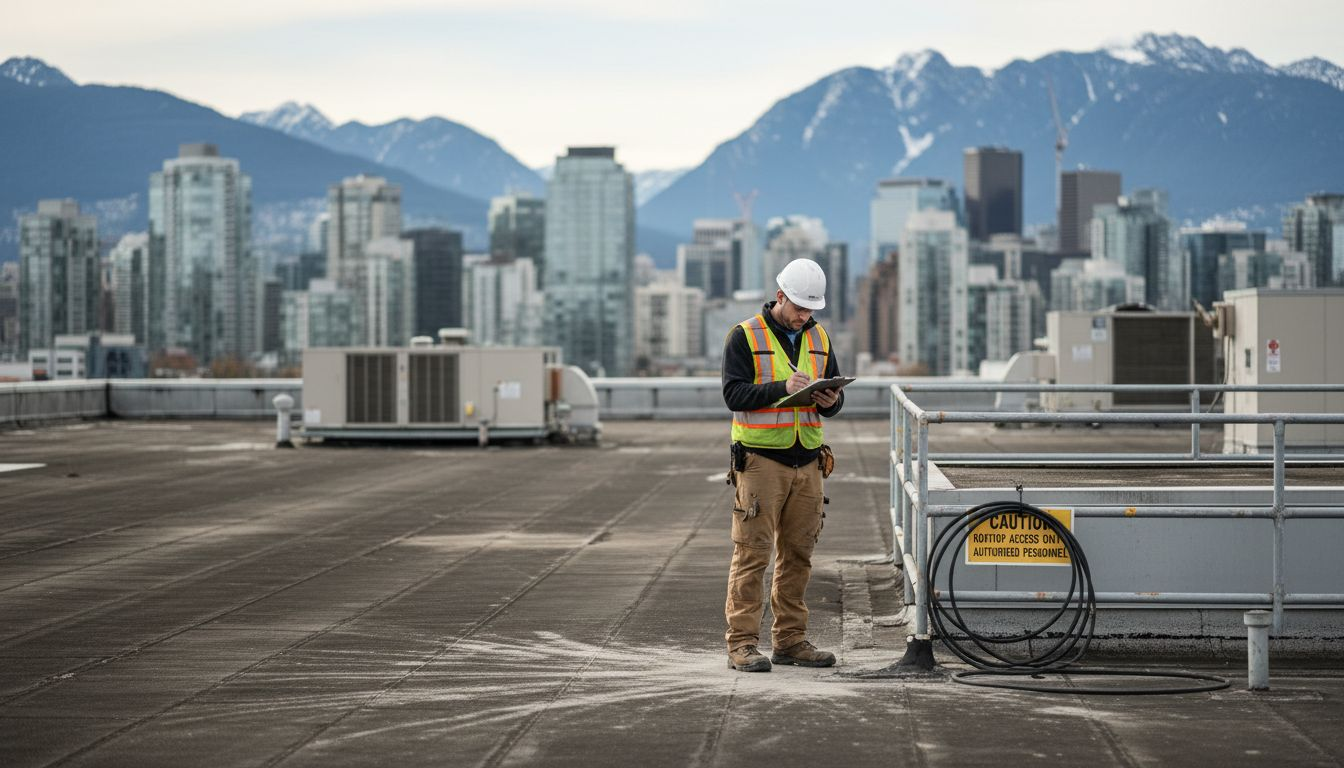
Many property managers treat industrial roof compliance as a checkbox activity, signing off once and moving on. That mindset creates dangerous gaps. WorkSafeBC data confirms falls cause roughly 30% of workplace fatalities in BC construction including roofing. BC’s regulatory landscape demands continuous attention, strategic material choices, and thorough documentation. This guide equips you with actionable steps to navigate BC-specific roofing regulations, protect your workers, and avoid costly penalties.
Watch: BC Industrial Roof Compliance
Industrial roof compliance in British Columbia requires more than a basic checklist. Building owners, facility managers, and property teams need to think about worker safety, documentation, code alignment, inspection practices, and long-term roof performance. This video gives a practical overview of industrial roof compliance considerations in BC.
For industrial and commercial properties in BC, proactive roof compliance can help reduce risk, support safer operations, and improve long-term decision-making. When paired with relevant written content, a video like this can also strengthen topical depth and make the page more useful for visitors.
Table of Contents
- Understanding Industrial Roof Compliance In BC
- Key BC Regulations And Standards Governing Industrial Roof Compliance
- Common Misconceptions About Industrial Roof Compliance
- Inspection Protocols And Documentation For Compliance Maintenance
- Material And Installation Standards For Industrial Roofs
- Common Compliance Violations And How To Avoid Them
- Impacts Of Non-Compliance On Insurance And Liability
- Choosing A Professional For BC Industrial Roof Compliance
- Ensure Industrial Roof Compliance With Paragon Roofing BC
- Frequently Asked Questions
Key Takeaways
| Point | Details |
|---|---|
| Ongoing inspections and maintenance | Mandatory under BC regulations to sustain compliance and prevent violations. |
| BC Building Code and WorkSafeBC standards | Both establish critical safety and structural requirements for industrial roofs. |
| Non-compliance penalties | Insurance premiums can increase by up to 25% and legal liabilities escalate. |
| Compliant material selection | Vital to meet BC legal standards for fire resistance, durability, and climate performance. |
| Documentation protection | Thorough inspection records protect liability and demonstrate regulation adherence. |
Understanding Industrial Roof Compliance in BC
Industrial roof compliance in BC means meeting specific safety regulations and building codes designed to protect workers and maintain structural integrity. Industrial roofing in BC involves adhering to provincial safety regulations and building codes specific to these facilities. The BC Building Code establishes structural and material standards that your roof must satisfy. Provincial safety regulations aim to protect workers and preserve facility integrity under demanding industrial conditions.
Compliance reduces your liability risk significantly and supports insurance eligibility. Think of it as preventive medicine for your building. When you meet standards proactively, you avoid emergency repairs, regulatory fines, and potential lawsuits. Compliance also demonstrates responsible management to insurers, regulators, and employees.
Key compliance components include:
- Adhering to BC Building Code structural requirements
- Meeting WorkSafeBC safety protocols during installation and maintenance
- Selecting materials that satisfy fire resistance and insulation standards
- Maintaining inspection records and engineer certifications
- Implementing fall protection and site safety measures
Property managers often underestimate the complexity involved. Regulations evolve, inspection requirements change, and materials must perform in BC’s unique climate. Understanding these elements forms your foundation for sustained compliance.
Key BC Regulations and Standards Governing Industrial Roof Compliance
BC’s regulatory framework combines building codes with workplace safety mandates. The BC Building Code specifies structural and material requirements for industrial roofing, covering load bearing capacity, insulation values, and fire resistance ratings. These standards ensure your roof handles snow loads, wind pressure, and temperature fluctuations common in BC.
WorksafeBC mandates strict fall protection measures and safety protocols for roofing projects. Every site must have guardrails, personal fall arrest systems, and safety training for workers. WorkSafeBC compliance guidelines outline enforcement procedures and inspection criteria.
Mandatory regular inspections keep your roof compliant over time. Engineers must certify structural integrity annually or biannually depending on roof age and condition. Municipal authorities require documentation filed correctly and promptly.
Material performance thresholds matter enormously. Your roofing materials must meet:
- Fire resistance ratings appropriate for industrial classifications
- Minimum insulation R-values for energy compliance
- Durability standards for expected service life
- Wind uplift resistance for BC coastal conditions
| Regulation | Key Requirements | Inspection Frequency |
|---|---|---|
| BC Building Code | Structural integrity, material standards, insulation | Annual or biannual |
| WorkSafeBC | Fall protection, site safety, worker training | Per project and annual audits |
| Municipal bylaws | Permit compliance, engineer certifications | As required by jurisdiction |
| Fire code | Fire resistance ratings, egress safety | Annual fire safety inspections |
You need to coordinate between these different regulatory bodies. Missing one requirement can trigger violations across multiple areas. Property managers who treat compliance as integrated rather than fragmented save time and avoid gaps.
Common Misconceptions About Industrial Roof Compliance
Many facility managers believe compliance ends at installation. Wrong. Compliance certification requires regular inspections and maintenance per BC regulations. Your roof’s compliance status changes with weather damage, material degradation, and evolving code updates.
Another myth suggests all industrial roofing materials automatically meet BC standards. Reality check: materials vary widely in performance characteristics. What works in Alberta may fail BC’s coastal moisture and temperature cycling. You must verify each material against BC Building Code specifications before installation.
Some managers assume certifications guarantee ongoing compliance without documentation and upkeep. Certifications represent a moment in time. Without maintenance records, inspection logs, and repair documentation, you cannot prove compliance during audits or insurance claims. Think of documentation as your compliance insurance policy.
Here are critical compliance truths:
- Compliance requires continuous monitoring and adaptation, not installation and forgetting
- Material selection must reference BC-specific climate and code requirements explicitly
- Regular professional inspections identify issues before they become violations
- Documentation protects you legally and financially in disputes or incidents
- Staff training on safety protocols must be refreshed regularly to maintain WorkSafeBC compliance
Pro Tip: Schedule compliance reviews quarterly, not just when problems surface. Proactive reviews catch small issues before they escalate into expensive violations or safety incidents.
Certifications from manufacturers mean little if installation doesn’t follow BC protocols. A fire-rated material installed incorrectly loses its certification value. Your compliance depends on both proper materials and proper methods.
Inspection Protocols and Documentation for Compliance Maintenance
Annual or biannual inspections, including engineer-signed certifications , are recommended for BC industrial roofs. Inspection frequency depends on roof age, material type, and exposure conditions. Older roofs or those in harsh coastal zones need more frequent attention.
Inspection protocols should cover:
- Structural integrity including decking, supports, and load-bearing elements
- Material condition checking for cracks, corrosion, or deterioration
- Drainage system function to prevent water accumulation
- Safety equipment status including fall protection anchor points
- Penetration seals around vents, skylights, and mechanical equipment
Documentation requirements include engineer certifications filed with municipal authorities and insurance providers. Keep copies of every inspection report, repair invoice, and material specification sheet. When regulators or insurers ask questions, comprehensive records provide immediate answers.
Using inspections proactively means fixing small problems before they become violations. A minor membrane crack discovered in May gets repaired for hundreds of dollars. The same crack ignored until a WorkSafeBC inspection in October costs thousands in fines plus emergency repairs.
Pro Tip: Create a digital compliance folder with scanned copies of all certifications, inspection reports, and correspondence with regulatory bodies. Cloud storage ensures you never lose critical documentation in office moves or system failures.
Maintaining thorough records supports insurance and legal requirements. After workplace incidents, documentation proves you maintained safety standards. Insurance adjusters reviewing claims scrutinize maintenance records to determine coverage eligibility. Gaps in documentation often lead to denied claims regardless of actual roof condition.
Material and Installation Standards for Industrial Roofs
Metal roofing offers higher durability and better snow load resistance compared to asphalt shingles, complying well with BC standards. Metal systems typically last 40 to 60 years with minimal maintenance. They excel in fire resistance and reflect solar heat, reducing cooling costs.
Asphalt shingles for industrial applications have lower upfront cost but require more frequent inspections to maintain compliance. Quality architectural shingles last 20 to 30 years in BC conditions. They work well for lower-slope industrial buildings where aesthetics matter alongside function.
Installation best practices align with BC’s climate and code requirements. Proper underlayment installation prevents moisture infiltration during heavy rain periods. Ventilation systems must account for BC’s humidity levels to prevent condensation damage. Flashing details around penetrations require extra attention in coastal zones where wind-driven rain tests every seal.
Climate-specific considerations include snow load calculations for interior regions and wind uplift resistance for coastal facilities. Industrial roofing durability depends on matching material properties to local conditions.
| Material | Lifespan | Fire Resistance | Snow Load Capacity | Upfront Cost | Maintenance Frequency |
|---|---|---|---|---|---|
| Metal | 40-60 years | Excellent | High | High | Low |
| Asphalt Shingles | 20-30 years | Good | Moderate | Low | Moderate |
| TPO Membrane | 25-35 years | Excellent | Moderate | Moderate | Low |
| Modified Bitumen | 20-25 years | Good | High | Moderate | Moderate |
Pros and cons summarized help material selection. Metal excels in longevity and fire safety but costs more initially. Asphalt provides budget-friendly entry but demands vigilant maintenance. TPO membranes balance performance and cost for flat or low-slope applications. Modified bitumen handles foot traffic well for roofs with frequent equipment access.
Installation quality matters as much as material choice. Certified installers familiar with BC codes prevent compliance issues from day one. Cutting corners during installation creates problems that persist for decades.
Common Compliance Violations and How to Avoid Them
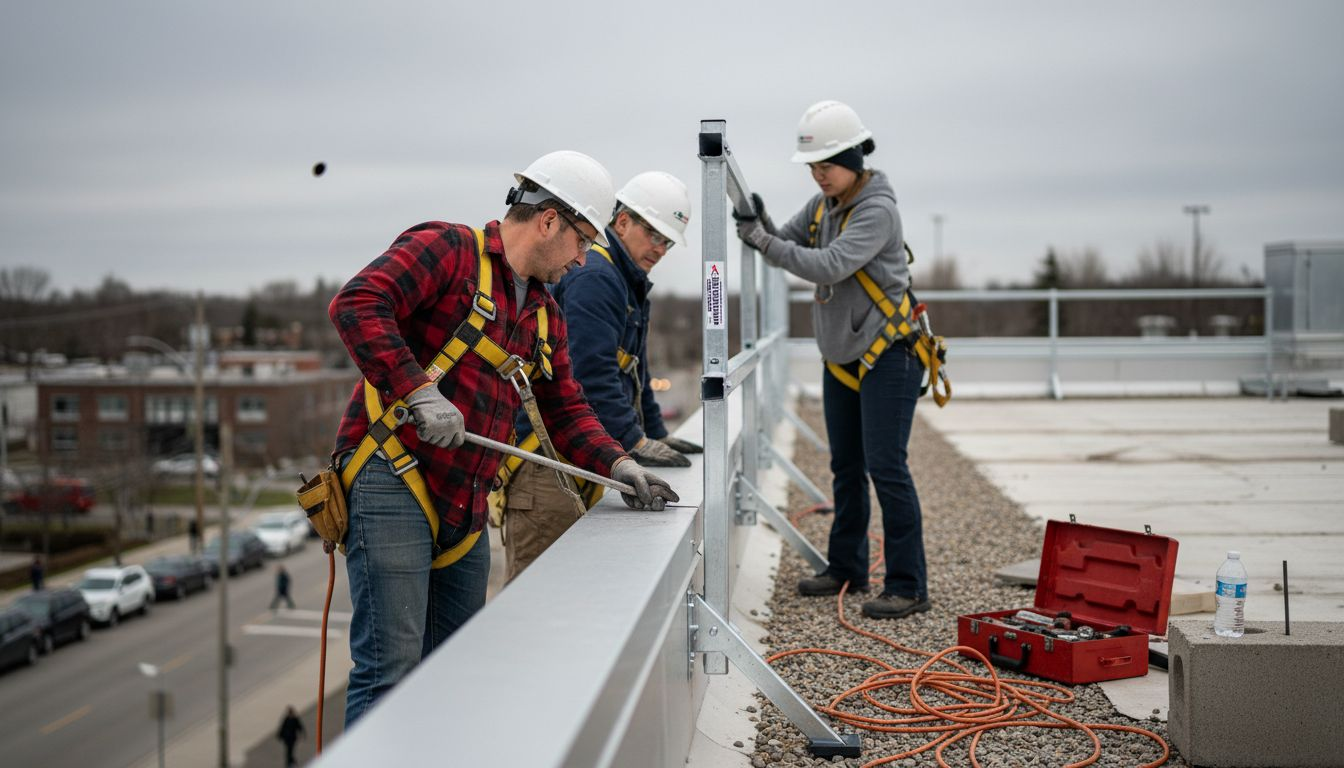
Fall protection failures are among the top industrial roofing compliance violations in BC. Missing guardrails, inadequate anchor points, or untrained workers accessing roofs trigger immediate work stoppages and fines. Install permanent fall protection systems during construction, not as afterthoughts.
Insulation and fire resistance lapses occur when materials degrade or renovations compromise original specifications. A roof that met codes at installation may fall short after additions or modifications. Regular testing ensures continued compliance.
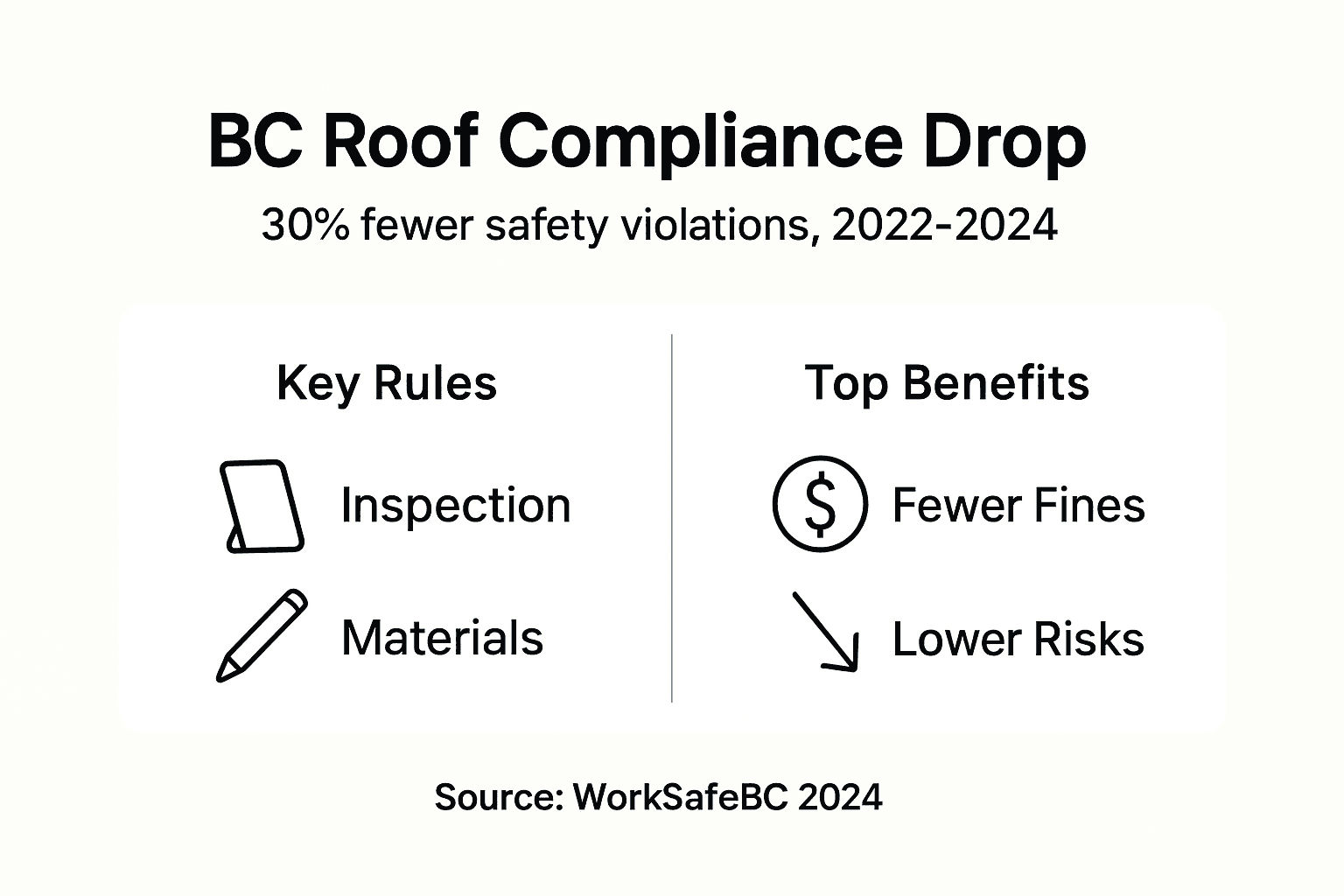
Missing safety signage seems minor but indicates broader safety culture problems to inspectors. Roof access points need clear warnings. Restricted areas require proper barriers and signs. These details demonstrate management commitment to safety.
Practical prevention measures:
- Install and maintain fall protection equipment meeting WorkSafeBC standards
- Train all personnel who access roofs on safety protocols annually
- Conduct internal safety audits quarterly to identify gaps
- Update signage immediately when access conditions change
- Document all safety equipment inspections and training sessions
Regular audits correct potential violations before official inspections. Hiring third-party safety consultants provides objective assessments. They spot issues your internal team might overlook through familiarity.
Cost and legal consequences of non-compliance include fines ranging from thousands to tens of thousands of dollars per violation. Work stoppages halt operations, costing revenue and damaging client relationships. Serious violations can result in criminal charges against managers if injuries or fatalities occur.
Impacts of Non-Compliance on Insurance and Liability
Non-compliant roofs can increase insurance premiums by up to 25% in BC and jeopardize coverage entirely. Insurers conduct their own inspections and review compliance documentation before renewing policies. Discovered violations trigger premium increases or policy cancellations.
Insurance claim denials follow non-compliance discoveries. When a roof fails and investigations reveal code violations, insurers deny coverage for resulting damages. You pay repair costs out of pocket plus liability for any injuries or property damage.
Legal liability risks multiply with non-compliant roofs. Workplace injuries on non-compliant sites expose you to lawsuits from injured workers and regulatory penalties from WorkSafeBC. Property damage to neighboring buildings from structural failures creates additional liability. Criminal negligence charges become possible in severe cases.
“Property managers face personal liability alongside corporate liability when willful neglect of safety standards causes injuries. Compliance protects not just the building but your professional reputation and personal assets.”
Risk mitigation through proactive compliance and maintenance costs far less than violation consequences. Annual inspection and maintenance expenses typically run 1% to 2% of roof replacement cost. Compare that to 25% insurance premium increases, denied claims worth hundreds of thousands, and potential lawsuit settlements.
Financial consequences compound over time. Insurance markets tighten for properties with violation histories. Future coverage costs more and provides less protection. Selling properties with compliance problems reduces value and complicates transactions. Buyers demand price reductions or walk away entirely.
Choosing a Professional for BC Industrial Roof Compliance
Certified and licensed contractors with BC expertise ensure roofing projects meet all compliance requirements and reduce risk. Verify certifications specific to industrial roofing, not just general contractor licenses. BC industrial work demands specialized knowledge of codes, materials, and safety protocols.
Ask about experience with compliance-focused roofing projects in BC specifically. Contractors familiar with WorkSafeBC inspection processes and BC Building Code nuances save you headaches. They know which materials local inspectors prefer and which installation details require extra documentation.
Check references from similar industrial facilities. Contact past clients about inspection outcomes, violation issues, and post-installation support. Strong contractors provide references readily and welcome due diligence calls.
Collaborate with contractors who understand BC codes and WorkSafeBC safety measures deeply. During initial consultations, ask specific questions:
- How do you ensure fall protection compliance during installation?
- What documentation do you provide for municipal and insurance requirements?
- How do you handle code updates that occur mid-project?
- What warranty coverage do you provide for compliance-related issues?
- Can you provide engineer certifications for structural modifications?
Pro Tip: Request a compliance checklist from prospective contractors showing how they verify code adherence at each project stage. Detailed checklists indicate systematic approaches rather than reactive problem-solving.
Contractors should communicate clearly about compliance responsibilities. Who files permits? Who coordinates inspections? Who maintains documentation? Clarify these roles before signing contracts to avoid gaps.
Ensure Industrial Roof Compliance with Paragon Roofing BC
Paragon Roofing BC provides expert industrial roof installation meeting all BC compliance standards. Our licensed contractors bring deep local expertise in BC Building Code requirements and WorkSafeBC safety protocols. We handle permitting, inspections, and documentation so you focus on facility operations.
We offer professional inspection and maintenance services to maintain compliance throughout your roof’s lifespan. Our systematic approach identifies potential violations before they escalate. Trust our experience selecting contractors who understand compliance demands for safe, durable roofing solutions.
Frequently Asked Questions
What are the most common industrial roofing compliance challenges in BC?
Common challenges include keeping up with inspection schedules, selecting compliant materials, and understanding evolving regulations. Many managers struggle with coordinating between BC Building Code, WorkSafeBC, and municipal requirements. Proactive planning and partnering with knowledgeable contractors help overcome these obstacles.
How often should industrial roofs be inspected to maintain BC compliance?
Annual or biannual inspections are recommended per BC regulations. Older roofs or those in harsh coastal conditions may need more frequent professional assessments. Regular inspections help identify issues before they lead to violations or structural damage.
What penalties can BC property managers face for industrial roof non-compliance?
Penalties include significant fines ranging from thousands to tens of thousands per violation, increased insurance premiums up to 25%, and potential legal liabilities. Non-compliance may also cause work stoppages that halt operations and damage business relationships. Serious violations can lead to criminal charges if injuries occur.
How do I verify if roofing materials comply with BC industrial standards?
Check manufacturer certifications against BC Building Code requirements for fire resistance, insulation values, and durability ratings. Consult with licensed roofing contractors experienced in BC industrial standards who can confirm material suitability for your specific facility and climate zone.