Synthetic Slate Roofing in Vancouver: Appearance, Weight & Performance

Natural slate roofing offers timeless elegance and a 100+ year lifespan, but two significant obstacles limit its use in Vancouver: weight (800-1,500 lbs per square) and cost ($40,000-100,000+ for typical homes). Most Vancouver residential structures weren't designed for slate's massive dead load, requiring $5,000-25,000 in structural reinforcement before installation.
Synthetic slate roofing solves these problems. Modern polymer-based products weigh just 150-250 lbs per square (similar to asphalt shingles) while replicating natural slate's appearance convincingly. The material costs $9-15 per square foot installed versus $20-40 for natural slate, making premium aesthetics accessible to more homeowners.
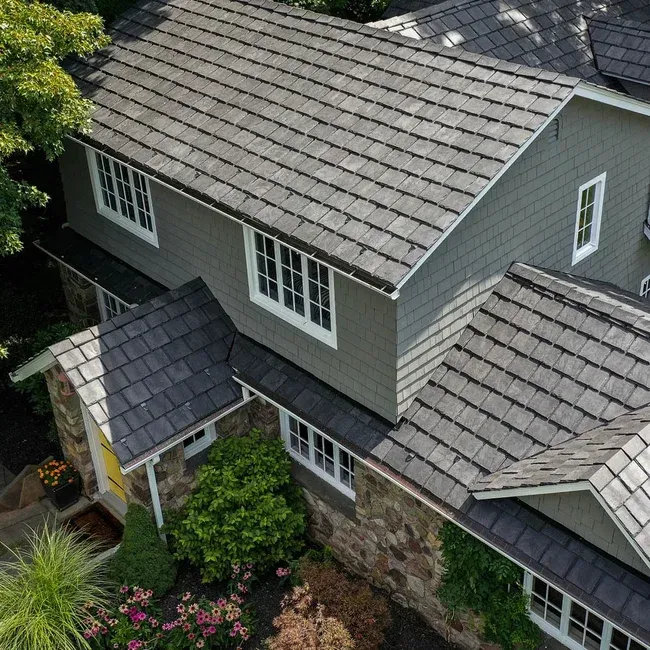
Vancouver's wet climate actually favors synthetic materials. Unlike natural slate with potential porosity variations, synthetic products are uniformly non-porous. The engineered polymers resist moisture absorption, organic growth, and the freeze-thaw cycles that occasionally occur during our winter months. Properties throughout Metro Vancouver, from heritage character homes in Mount Pleasant and Kitsilano to contemporary designs in West Vancouver, increasingly choose synthetic slate for its balance of traditional appearance and modern performance.
This guide explains how synthetic slate performs in coastal climates, the weight advantages for Vancouver housing stock, costs, and whether it suits your property.
Why Synthetic Slate Is Growing in Popularity in Vancouver
How Synthetic Slate Performs in Vancouver's Coastal Climate
Understanding performance in our specific weather helps evaluate practical suitability.
Rain & Moisture Resistance
Non-porous materials: Synthetic slate manufactured from polymer blends (virgin or recycled plastics) that absorb essentially zero water. This eliminates the moisture-related degradation that affects organic materials and ensures consistent performance in Vancouver's 1,189mm annual rainfall.
Interlocking systems: Many synthetic products feature integrated locking mechanisms where each tile connects to adjacent pieces. This creates unified coverage with secure water-shedding capability even during wind-driven rain.
Underlayment integration: Like all quality roofing, synthetic slate requires proper underlayment. The tiles protect the underlayment from UV and impact, while the waterproof membrane provides a primary weather barrier. Together, they create reliable protection for Vancouver's persistent dampness.
Moss & Organic Growth Resistance
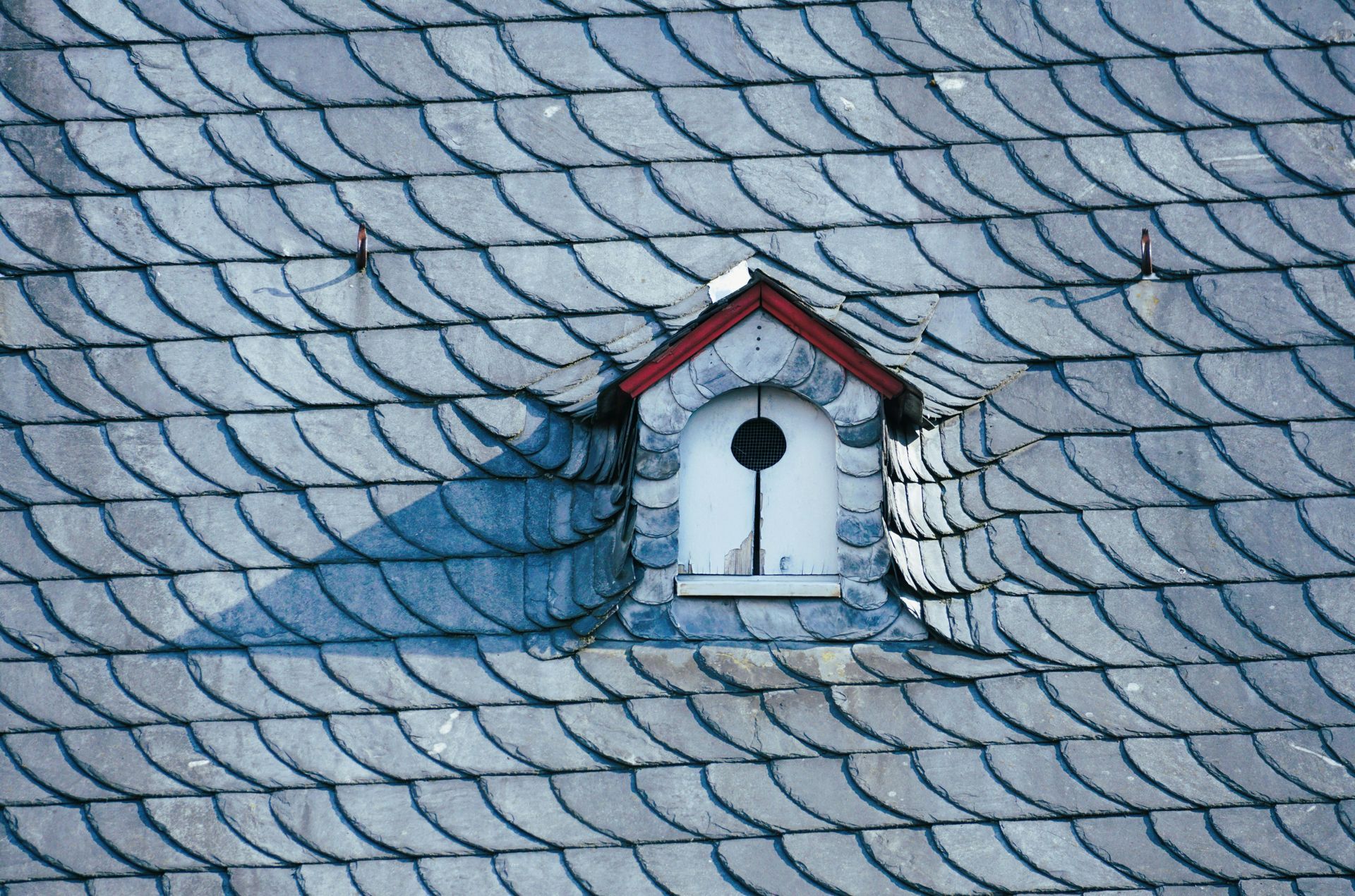
Surface properties: The smooth polymer surface resists moss establishment better than porous natural slate or organic materials like cedar. However, heavily shaded properties in forested areas (Dunbar, West Vancouver, areas near Pacific Spirit Park) can still experience moss growth in texture grooves.
Maintenance realities: Properties with clear solar exposure see minimal biological growth. Shaded north-facing roofs require periodic cleaning every 3-5 years. Use gentle methods (soft brushes, low-pressure water) rather than aggressive pressure washing that can damage surface texture.
Comparison advantage: Synthetic slate requires less moss maintenance than cedar shake (which rots from organic growth) and asphalt shingles (granular texture traps debris). It matches or exceeds natural slate in resisting colonization.
Wind & Storm Performance
Fastening systems: Synthetic tiles attach to deck sheathing using nails or screws through dedicated fastening zones. Many systems include interlocking features that add wind resistance beyond fastener strength alone.
Wind ratings: Quality products withstand 110-130 mph winds when properly installed. Vancouver's occasional winter storms (80-90 km/h gusts) are well within performance limits.
Impact resistance: Polymer flexibility allows synthetic slate to absorb impacts from falling branches or hail without cracking. This contrasts with brittle natural slate that fractures under similar conditions, requiring individual tile replacement.
Understanding Synthetic Slate Roofing Systems
Before evaluating whether synthetic slate suits your property, understanding the material provides context.
What Synthetic Slate Is Made From
Polymer blends: Manufacturers use various engineered plastics, including virgin polymers, recycled plastics (often from post-consumer waste), rubber compounds, and cellulose fibers. The specific blend varies by brand, but all create durable, weather-resistant material.
Manufacturing process: Injection molding uses forms cast from authentic natural slate. This captures texture, thickness variations, and surface irregularities that make synthetic products visually convincing. Pigments mix throughout the material (not surface-coated) for long-lasting color.
Recycled content: Many brands incorporate 80-95% recycled materials. This environmental benefit appeals to sustainability-focused Vancouver homeowners while maintaining performance that matches virgin material products.
How Synthetic Slate Mimics Natural Slate
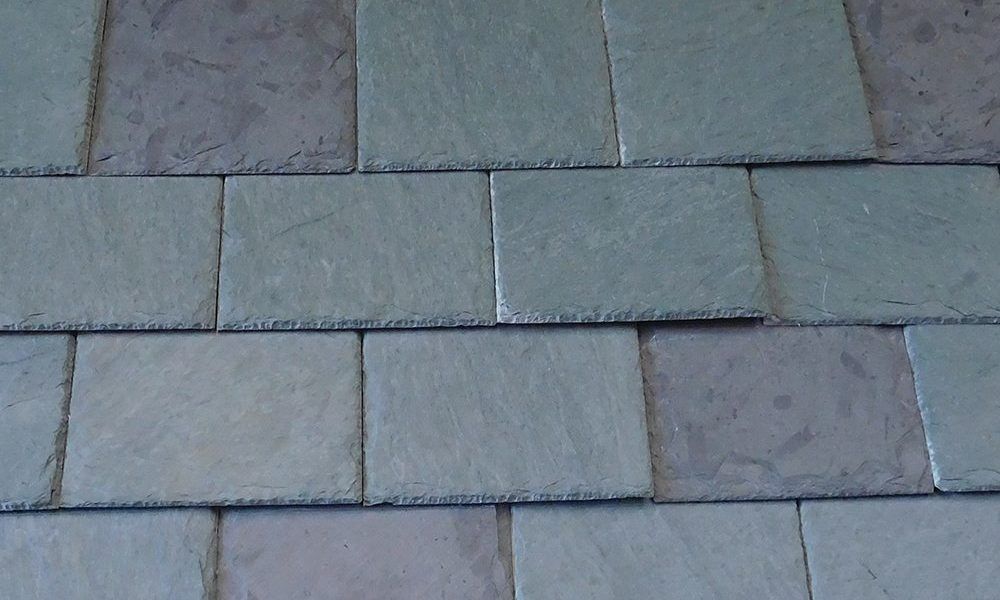
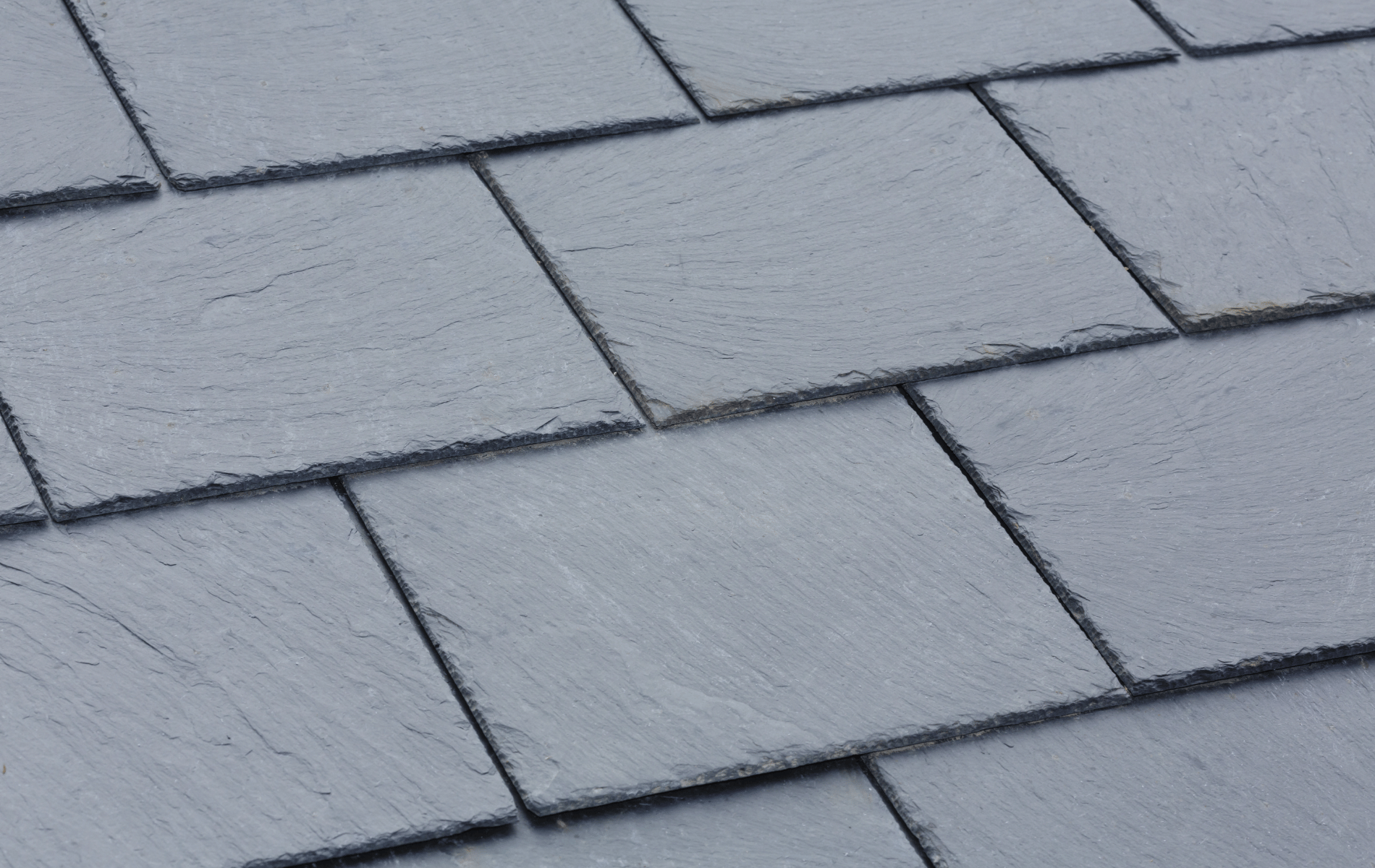
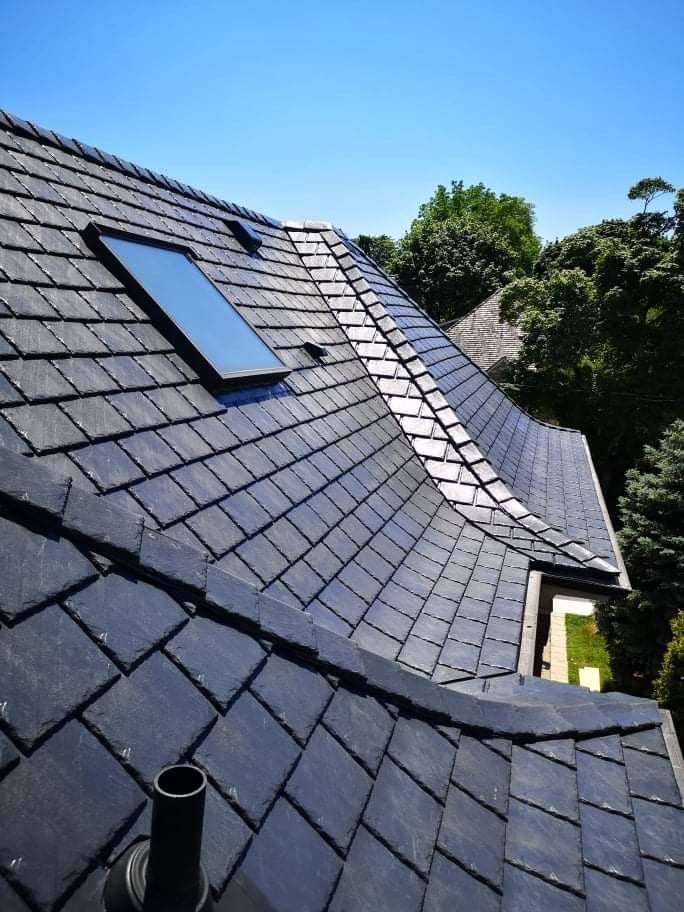
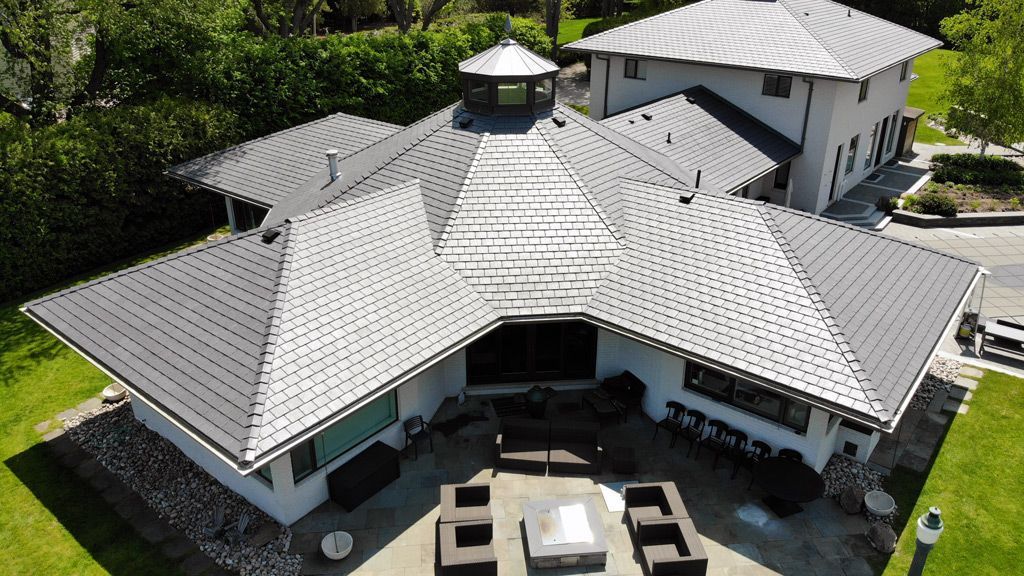
Texture replication: Molds taken from actual slate tiles reproduce split-stone surface texture, edge irregularities, and thickness variations. From ground level, where people view roofs, distinguishing quality synthetic from natural slate is difficult.
Thickness options: Products range from 3/8 inch to 3/4 inch thick, matching natural slate profiles. Thicker options provide enhanced shadow lines and more pronounced three-dimensional appearance.
Color variation: Multiple color blends within each tile and across the roof replicate natural slate's varied appearance. Premium brands offer extensive color options, including black, grey, green, purple, and blended tones, matching different slate quarries.
How Synthetic Slate Is Installed
Overlapping systems: Tiles install with a 3-4 inch headlap (coverage overlap) like natural slate. This creates multi-layered water shedding similar to traditional slate roofing.
Fastening methods: Each tile is secured with two nails or screws through designated zones. Fasteners must penetrate only the portion covered by subsequent courses, never exposed edges. Proper fastening technique prevents water infiltration and ensures wind resistance.
Installation simplicity: Lightweight synthetic materials are easier to handle than heavy natural slate. Contractors cut tiles using standard saws rather than specialized slate-cutting tools. This reduces installation complexity and labor costs compared to natural stone.
Quality residential installation by contractors experienced with synthetic slate ensures proper fastening, flashing integration, and alignment for optimal performance.
Synthetic Slate vs Natural Slate Roofing
Comparing these materials clarifies where synthetic products fit in the roofing market.
Weight Comparison
| Material | Weight per Square (100 sq ft) |
|---|---|
| Synthetic slate | 150–250 lbs |
| Asphalt shingles | 230–430 lbs |
| Natural slate (1/4") | 800–950 lbs |
| Natural slate (3/8") | 1,200–1,600 lbs |
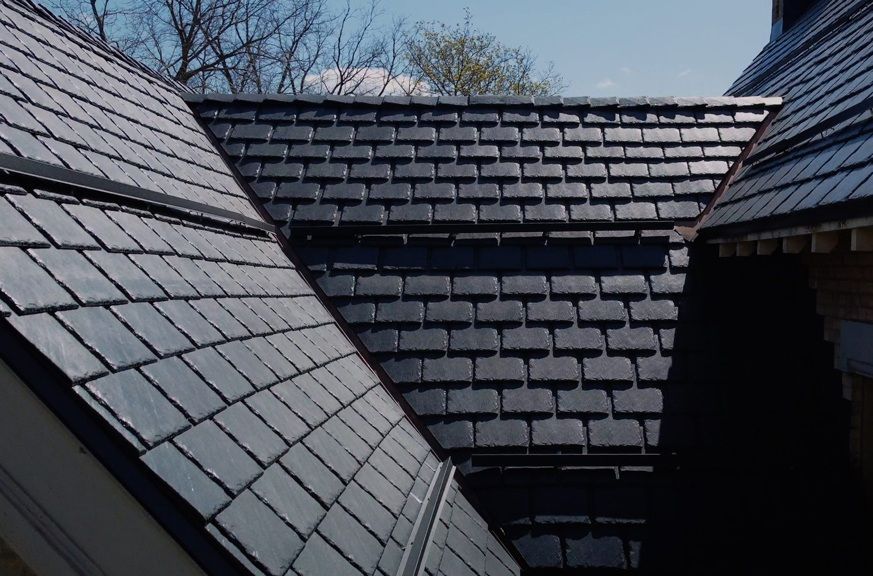
Why weight matters: Vancouver homes built pre-1980 typically have roof framing designed for 15-20 lbs per square foot dead load. Natural slate requires 27-50 lbs per square foot, exceeding design capacity. Synthetic slate at 4-8 lbs per square foot fits within the existing structural capacity.
Cost implications: Avoiding $5,000-25,000 structural reinforcement costs makes synthetic slate economically attractive. The material delivers slate aesthetics without engineering studies, additional framing, or permit complications associated with heavy roofing.
Heritage applications: Character homes in older Vancouver neighborhoods (Strathcona, Mount Pleasant, Fairview) often have aging framing inadequate for natural slate. Synthetic slate provides a historically-appropriate appearance without structural concerns.
Moisture & Freeze-Thaw Performance
Natural slate vulnerabilities: While generally durable, natural slate has variable porosity depending on quarry source and stone quality. Soft slate absorbs more water and can spall (surface flaking) during freeze-thaw cycles.
Synthetic advantages: Engineered polymers are uniformly non-porous across all products. Zero water absorption eliminates freeze-thaw damage entirely. Vancouver's occasional winter freezing has no negative effect on synthetic slate.
Longevity in wet climates: Both materials handle Vancouver's rainfall well. The advantage goes to synthetic for consistent performance without the quality variations that affect natural slate from different quarries or production runs.
Cost & Installation Differences
Material costs:
- Natural slate: $10-20/sq ft material only
- Synthetic slate: $3-6/sq ft material only
Installation labor:
- Natural slate: $10-20/sq ft (specialized skills required)
- Synthetic slate: $6-10/sq ft (standard roofing techniques)
Total installed costs:
- Natural slate: $40,000-100,000+ for 2,000 sq ft (including structural work)
- Synthetic slate: $18,000-42,000 for 2,000 sq ft
Synthetic slate costs roughly half what natural slate costs, making it accessible for mid-to-upper market Vancouver homes rather than exclusively luxury properties.
How Much Does Synthetic Slate Roofing Cost in Vancouver?
Synthetic slate represents premium pricing relative to asphalt but sits below natural slate costs. Understanding project expenses helps set budgets.
Factors That Affect Synthetic Slate Roofing Costs
Installation complexity:
- Chimney flashings
- Skylight integrations
- Custom valley treatments
- Roof penetrations
Product brand & quality:
- Basic synthetic slate: $3-5/sq ft material
- Mid-grade (DaVinci, Brava, EcoStar): $5-8/sq ft material
- Premium with enhanced warranties: $8-12/sq ft material
Roof size & complexity:
- Larger roofs: Some economy of scale on labor
- Steep pitch (8/12+): Premium labor rates for safety equipment
- Multiple valleys, dormers, and hips: Increased material waste and cutting
Comparison context:
- Asphalt shingles: $10,000-18,000
- Synthetic slate: $26,000-58,000
- Natural slate: $40,000-100,000+
Standard installation (moderate complexity):
- Material: $5-8/sq ft
- Labor: $6-9/sq ft
- Underlayment & flashing: $2-4/sq ft
- Total: $13-21/sq ft
- 2,000 sq ft roof: $26,000-42,000
Premium installation (complex roof, top-tier product):
- Material: $8-12/sq ft
- Labor: $8-12/sq ft
- Premium underlayment & copper flashing: $3-5/sq ft
- Total: $19-29/sq ft
- 2,000 sq ft roof: $38,000-58,000
Synthetic slate costs 2-3x more than asphalt but delivers a 40-50 year lifespan (versus 20-25 for asphalt) and a premium appearance.
Tear-off requirements: Most projects require the complete removal of existing roofing. This adds $1-3/sq ft for labor and disposal but allows deck inspection and repair.
Typical Synthetic Slate Roofing Cost Ranges
Complete installed costs for Vancouver:
How Long Does Synthetic Slate Roofing Last in Vancouver?
Realistic lifespan expectations range from 40 to 50 years with proper installation and maintenance. This significantly exceeds asphalt shingles while approaching but not matching natural slate's 75-100+ years.
Manufacturer warranties: Products typically include 50-year to lifetime limited warranties. Read fine print carefully, as coverage is often prorated and doesn't include labor.
Real-world performance: Vancouver's moderate climate favors synthetic slate longevity. Products resist UV degradation through integrated inhibitors, tolerate our limited freeze-thaw cycles, and handle persistent moisture without rot or delamination.
What affects longevity:
- Installation quality: Improper fastening, inadequate underlayment, or poor flashing integration causes premature failure
- Ventilation: Proper attic airflow prevents moisture accumulation and temperature extremes
- Maintenance: Periodic inspections catch minor issues before they escalate
- Product quality: Premium brands with better UV protection and thicker material outlast entry-level products
Comparison value: Synthetic slate lasting 45 years costs $35,000 installed. Asphalt lasting 22 years costs $14,000 but requires two replacements over 45 years, totaling $28,000-32,000 (excluding inflation and disposal fees). The economics favor synthetic slate for long-term ownership
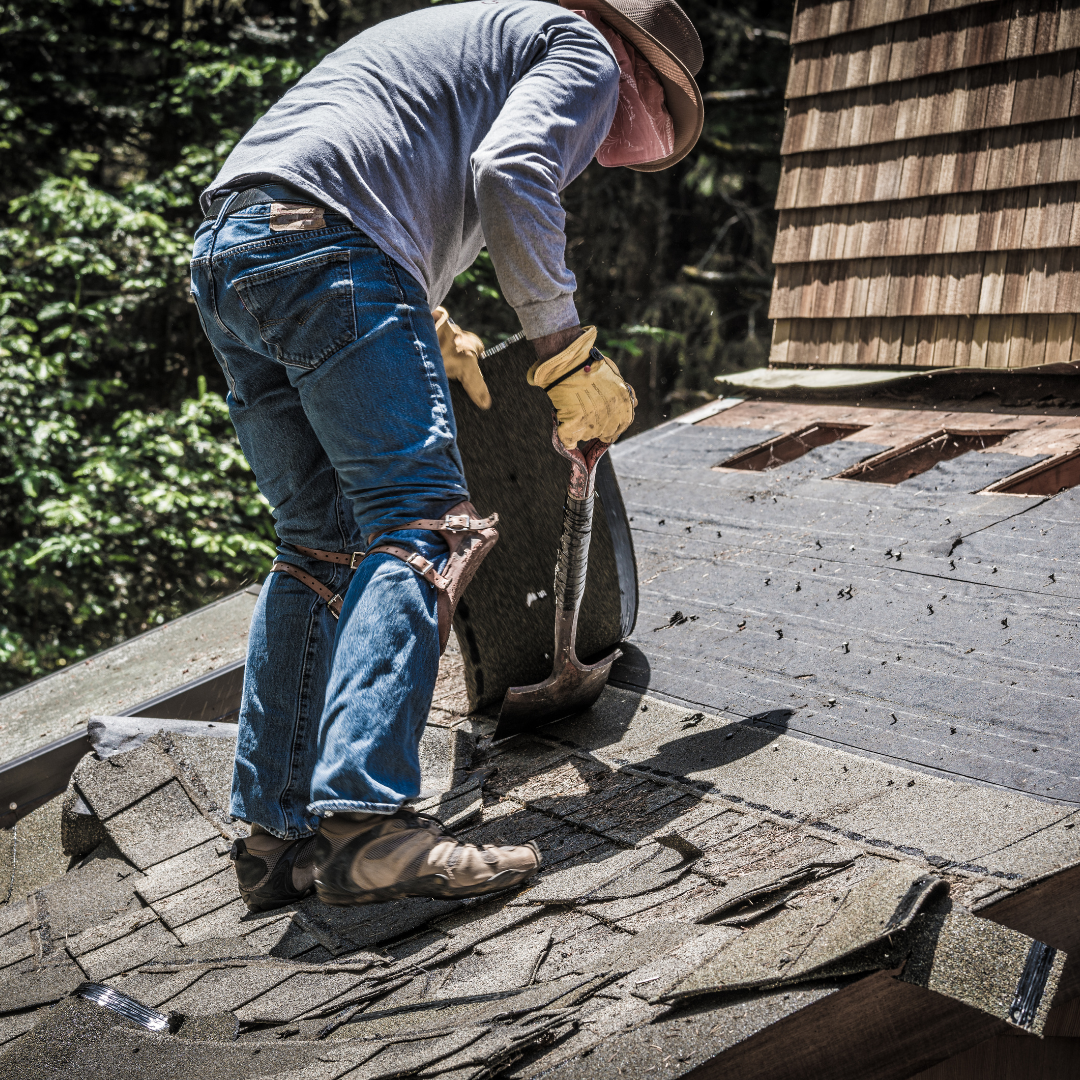
Weight & Structural Benefits of Synthetic Slate Roofing
Weighing 150-250 lbs per square, synthetic slate fits within standard residential roof framing capacity. This creates opportunities denied by heavier premium materials.
Why roof weight matters: Vancouver housing stock includes many pre-1980 homes with 2x6 or 2x8 rafters at 24-inch spacing. These structures support asphalt shingles but not natural slate without reinforcement. Synthetic slate's weight matches or undercuts asphalt, eliminating structural concerns.
Seismic advantages: In Vancouver's earthquake zone (Cascadia Subduction Zone), lighter roofing reduces top-heavy building response during seismic events. Synthetic slate minimizes added dead load while delivering premium aesthetics.
Heritage & character homes: Properties in older neighborhoods (Strathcona, Mount Pleasant, Fairview, Kitsilano) often desire slate aesthetics for architectural authenticity. Synthetic slate satisfies appearance requirements without the structural complications and costs associated with natural stone.
Faster installation: Lighter materials are easier to handle, reducing labor time and safety risks. A typical synthetic slate installation takes 4-6 days versus 7-10 days for natural slate on similar-sized roofs.
Pros & Cons of Synthetic Slate Roofing in Vancouver
Pros
✓ Slate-like appearance - Convincing replica of natural stone from ground level
✓
Lower weight - 150-250 lbs/sq (no structural reinforcement needed)
✓
Better moisture resistance - Uniformly non-porous (no quality variations)
✓
Longer lifespan than asphalt - 40-50 years vs 20-25 years
✓
Impact resistant - Flexible polymer absorbs damage without cracking
✓
Fire resistant - Class A rating (highest available)
✓
Cost-effective premium option - Half the cost of natural slate
✓
Environmental benefit - Many products use 80-95% recycled materials
✓
Easier installation - Standard roofing techniques (not specialized slate skills)
Cons
✗ Higher cost than asphalt - $26,000-58,000 vs $10,000-18,000
✗
Installation quality critical - Improper fastening causes failures
✗
Not identical to natural slate - Close inspection reveals synthetic composition
✗
Shorter lifespan than natural slate - 40-50 years vs 75-100+ years
✗
Potential fading - UV exposure can cause some color shift over decades
✗
Walking damage - Foot traffic can crack tiles if stepped on improperly
Common Myths About Synthetic Slate Roofing
Myth: "It looks fake."
Reality: Quality products from established manufacturers (DaVinci, Brava, EcoStar) replicate natural slate convincingly. From ground level, where people view roofs, distinguishing synthetic from natural is difficult. Close inspection reveals differences, but appearance satisfies most aesthetic requirements.
Myth: "It doesn't last as long as advertised."
Reality: Products reaching 40-50 years in field conditions validate manufacturer claims. Early-generation synthetic slate (1990s) had quality issues, but current products incorporate better UV protection, enhanced polymer blends, and improved manufacturing processes.
Myth: "It's just plastic that will degrade."
Reality: Modern synthetic slate uses engineered polymers with UV inhibitors, impact modifiers, and fire-resistant additives. These aren't simple plastics but sophisticated composites designed for decades of exterior exposure.
Myth: "You can't walk on synthetic slate for maintenance."
Reality: While caution is needed (like all roofing), synthetic slate tolerates foot traffic better than brittle natural slate. Use proper techniques (walk boards, stepping in supported areas) for roof access regardless of material.
Myth: "All synthetic slate products perform equally."
Reality: Significant quality differences exist between manufacturers. Premium brands offer better color retention, thicker material, enhanced warranties, and proven field performance. Product selection matters as much as installation quality.
Is Synthetic Slate Roofing a Good Investment?
Synthetic slate makes sense if you:
- Want a natural slate appearance without excessive weight or cost
- Have a structure that can't support natural slate (most Vancouver homes)
- Plan long-term ownership (20-30+ years to realize value)
- Own character or heritage-style property where aesthetics matter
- Value premium appearance for curb appeal and resale value
- Budget allows $26,000-58,000 for roofing investment
- Prefer proven materials over experimental alternatives
Consider alternatives if:
- Ownership timeline is 10 years or less (won't realize longevity value)
- Asphalt shingles satisfy aesthetic needs
- Budget constraints make premium materials difficult
- Natural slate is feasible and preferred (luxury properties with adequate structure)
The Vancouver value proposition: Synthetic slate delivers natural stone aesthetics at an accessible cost while avoiding structural complications. For character homes, heritage districts, and properties where appearance affects value, the investment makes economic sense over multiple replacement cycles of basic materials.
Synthetic Slate Roofing in Vancouver – FAQs
Is synthetic slate roofing suitable for Vancouver’s climate?
Yes. Synthetic slate performs very well in Vancouver because it is non-porous, resists moisture absorption, and is not affected by moss, rot, or freeze-thaw cycles.
How long does synthetic slate roofing last in Vancouver?
Most synthetic slate roofs in Vancouver last 40–50 years when properly installed and maintained.
How heavy is synthetic slate compared to natural slate?
Synthetic slate weighs 150–250 lbs per square, compared to 800–1,500 lbs per square for natural slate, making it suitable for most Vancouver homes without structural reinforcement.
Does synthetic slate look like real slate?
High-quality synthetic slate closely replicates natural slate in texture, thickness, and color variation, and is difficult to distinguish from the ground.
Does synthetic slate require a lot of maintenance?
No. Synthetic slate requires minimal maintenance, typically limited to periodic inspections and occasional debris or moss removal on heavily shaded roofs.
Is synthetic slate more durable than asphalt shingles?
Yes. Synthetic slate lasts roughly twice as long as asphalt shingles and is more resistant to moisture, impact, and biological growth.
When is synthetic slate a good roofing choice in Vancouver?
Synthetic slate is ideal for long-term owners, character or heritage-style homes, and properties seeking premium appearance without the weight or cost of natural slate.
Next Steps for Synthetic Slate Roofing in Vancouver
Ready to explore synthetic slate? Here's how to proceed:
- Research products - Review DaVinci, Brava, EcoStar, CertainTeed offerings
- Get multiple quotes - Compare proposals from experienced installers
- Verify contractor credentials - Confirm licensing, insurance, manufacturer certifications
- Review warranties - Understand material and workmanship coverage terms
- Plan timing - Spring through fall offers optimal installation conditions
Working with Paragon Roofing BC
Paragon Roofing BC provides guidance on synthetic slate roofing throughout Metro Vancouver. We help property owners evaluate whether this material suits their needs, architectural style, and budget.
Our team discusses product options, provides accurate cost estimates, and connects you with information needed for informed decisions about premium roofing materials.
Resources:
Synthetic slate delivers natural stone elegance without the weight, cost, or structural complications of authentic slate. For Vancouver properties seeking a premium appearance with modern performance, it provides a compelling balance that few materials match.
Pricing is provided for general informational purposes only and is subject to change. Synthetic slate roofing costs in Vancouver vary based on roof size, complexity, product selection, access, and market conditions. All cost ranges are estimates; final pricing is confirmed only after an on-site inspection and a written scope of work.
Here's What Our Existing Clients Think.
Home and business owners we've served across the greater Vancouver area.
Our Google Reviews
Edit Google Reviews Widget
We look forward to helping you.
For all your roofing needs, contact Paragon Roofing BC — call, text, or email us at 604-358-3436
Paragon Res Roof Install #2
We will get back to you as soon as possible.
Please try again later.