Strata Roofing in Vancouver: Budgeting, Planning & Long-Term Care

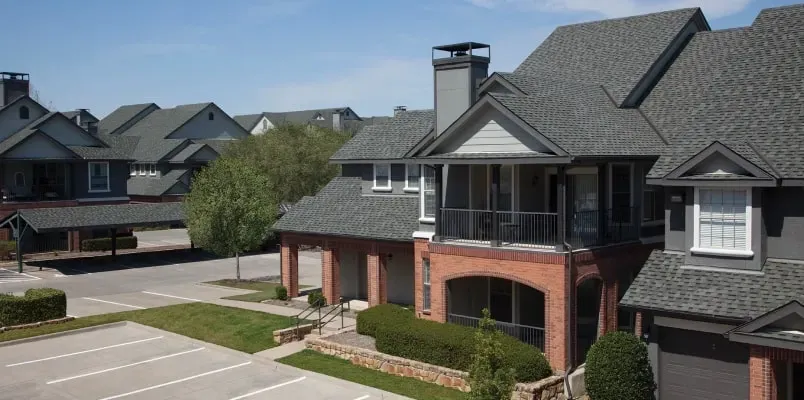
Strata roofing presents unique challenges distinct from single-family residential applications. Multi-unit buildings magnify every roofing problem: a single leak affecting one unit costs $5,000-15,000 in repairs, but simultaneous issues affecting five units total $25,000-75,000 plus resident disputes and potential legal claims. Vancouver's 1,189mm annual rainfall with extended wet periods, October through April, creates persistent moisture exposure, accelerating deterioration and increasing failure risk.
Strata councils bear fiduciary responsibility for protecting common property assets worth hundreds of thousands to millions of dollars. Reactive decision-making (waiting for catastrophic failure before acting) costs 3-5x more than proactive planning through regular maintenance, timely repairs, and strategic replacement. Emergency roof replacement during winter months may force acceptance of suboptimal contractors or materials due to availability constraints. Projects rushed without proper planning often experience cost overruns, extended timelines, and resident conflict.
This comprehensive guide explains strata council roofing responsibilities under BC law, how Vancouver's climate affects multi-unit buildings, common roofing systems and their performance, inspection protocols, repair versus replacement decisions, budgeting and reserve fund planning, long-term maintenance strategies, project execution, minimizing disruption, and contractor selection criteria. Understanding these elements helps councils make informed decisions, protecting property values while managing costs.
Why Strata Roofing Requires a Different Approach in Vancouver
Strata Council Responsibilities for Roofing in Vancouver
The BC Strata Property Act establishes clear obligations governing how councils must approach roofing.
What the strata are responsible for
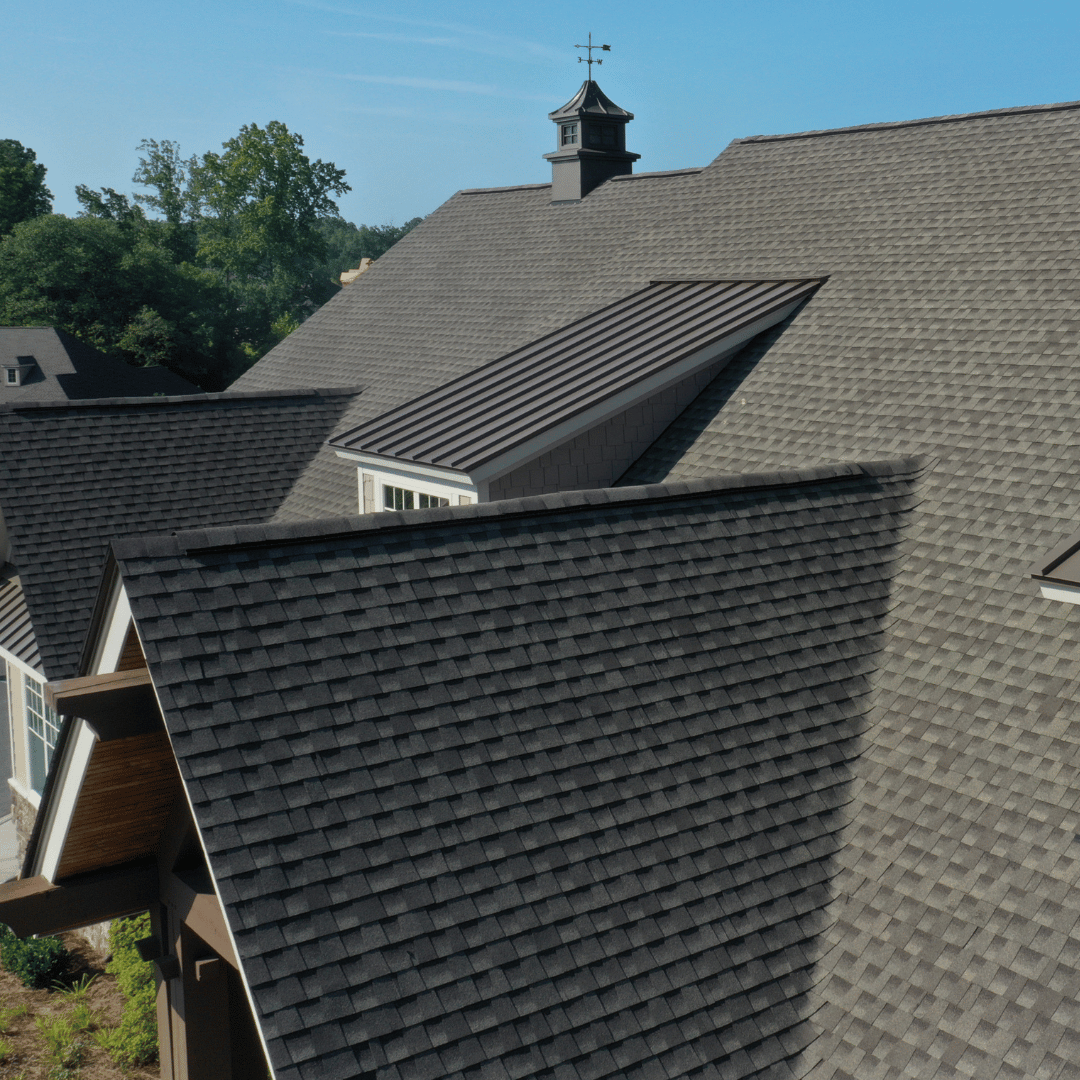
Roofs protecting multiple strata lots constitute common property under Section 1 of the Act. Strata corporations hold exclusive responsibility for repair, maintenance, and replacement regardless of individual owner preferences or financial concerns. This includes all roofing membranes, flashings, drainage systems, deck structures, and related components.
Owner vs strata responsibilities
Confusion sometimes arises at boundaries between individual units and common property. Strata corporations are responsible for:
- All roof membranes and waterproofing
- Flashing at penetrations and transitions
- Drainage systems (drains, scuppers, gutters)
- Structural roof decking
- Parapets and edge details
Individual owners typically hold responsibility for fixtures passing through roofs (individual skylights in townhouse units, private ventilation systems), but the strata maintain weatherproofing around these penetrations.
Legal & fiduciary duties
Section 72 of the BC Strata Property Act mandates corporations repair and maintain common property. This creates a legal obligation, not an optional consideration. Councils exercising reasonable care demonstrate this through:
- Regular professional inspections documenting the roof condition
- Prompt repairs of identified deficiencies
- Appropriate budget allocations via operating funds or reserve contributions
- Following proper approval processes for major work
- Maintaining documentation demonstrating due diligence
Failure to maintain roofs constitutes a breach of fiduciary duty, potentially exposing individual council members to personal liability if owners pursue negligence claims for preventable water damage.
How Vancouver's Climate Impacts Strata Roofs
Understanding our specific weather patterns clarifies why proactive maintenance becomes essential rather than optional.
Constant rain & moisture exposure
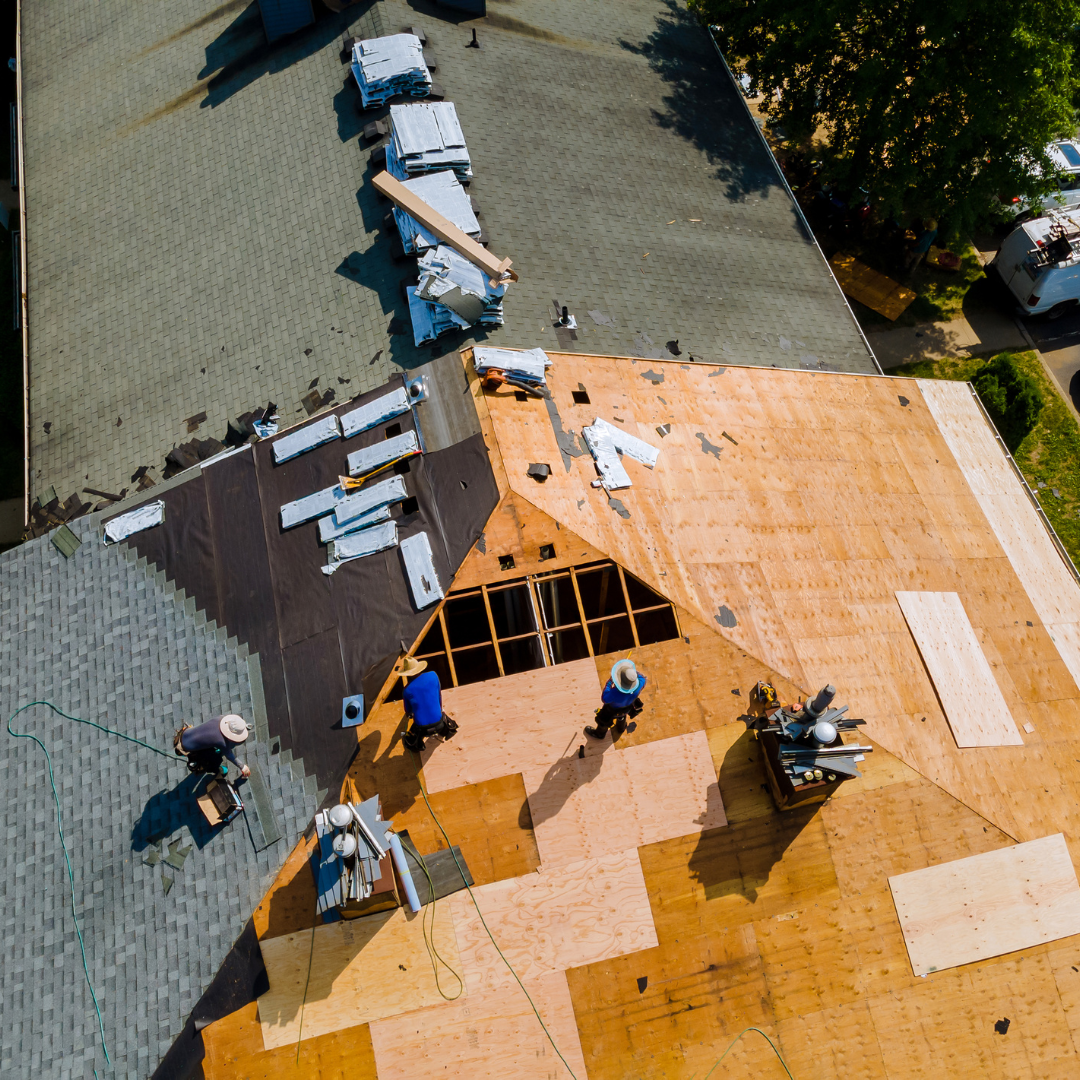
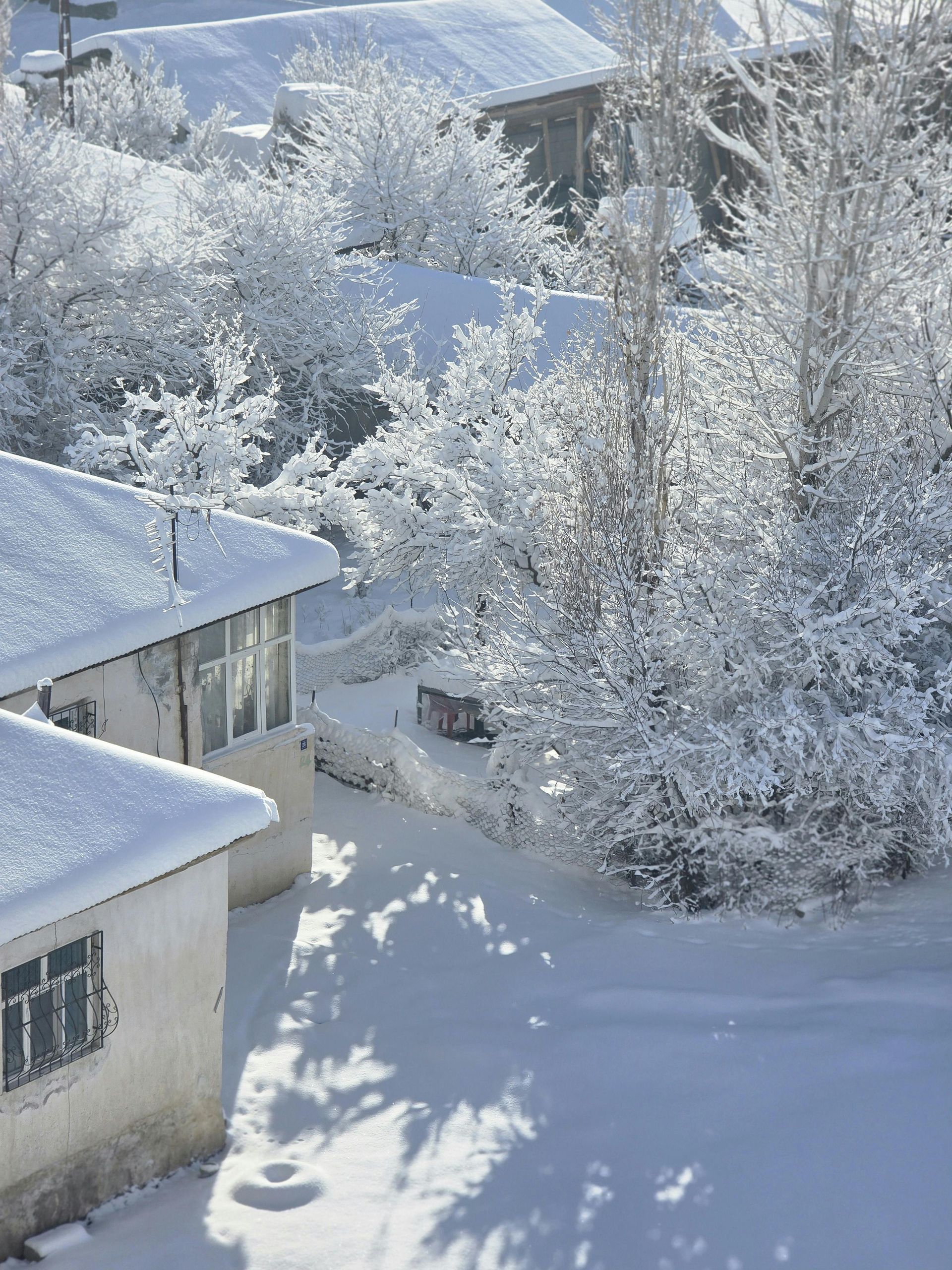
Vancouver's 170 annual precipitation days subject roofing systems to persistent dampness rather than intermittent exposure experienced in continental climates. This constant moisture accelerates:
- Membrane deterioration through UV degradation combined with water exposure
- Seal and adhesive breakdown at seams and penetrations
- Flashing corrosion, particularly with galvanized materials
- Organic growth establishment in debris-prone areas
Materials rated for a 25-year lifespan in dry climates achieve 20-22 years here with proper maintenance, potentially only 15-18 without regular care.
Ponding water & drainage challenges
Flat and low-slope roofs (common on strata buildings) require precise drainage to prevent standing water. Vancouver's heavy rainfall events (occasionally 40-60mm in 24 hours) test drainage capacity. Inadequate slope, undersized drains, or debris blockages create ponding conditions that:
- Accelerate membrane deterioration where water stands for 48+ hours
- Add structural dead load stress (water weighs 8.3 lbs/gallon)
- Create ice hazards during rare freezing events
- Indicate potential building envelope failures requiring investigation
Moss, organic growth & debris
North-facing roof sections and shaded areas develop biological growth within 1-2 years. Properties near parks, forests, or mature landscaping accumulate organic debris (leaves, needles, seed pods) rapidly. Blocked drains cause overflow situations, damaging building facades and creating interior water infiltration.
Roofing Systems Commonly Used on Strata Buildings
Different building configurations suit specific roofing materials and installation methods.
Flat & low-slope roofing systems
Torch-on (SBS modified bitumen): Most common Vancouver strata roofing. Heat-applied multi-layer system provides redundant waterproofing. Proven 25-30-year performance locally. Repairs easily integrate with the existing membrane. Costs $8-14/sq ft installed. Suitable for most flat roof applications from townhouse to high-rise.
TPO (thermoplastic polyolefin): White reflective single-ply membrane heat-welded at seams. Energy efficiency reduces cooling loads. 25-30 years expected lifespan. Lighter weight than torch-on. Costs $7-12/sq ft installed. Growing Vancouver adoption, especially on commercial strata properties.
EPDM (rubber membrane): Black single-ply with tape or adhesive seams. 60+ year proven track record globally. Flexible in cold weather. Easy repairs. Costs $6-12/sq ft installed. Good choice for moderate-complexity roofs without extensive equipment.
Sloped roofing systems for townhomes & low-rise
Asphalt shingles: Architectural products provide a 20-30 year lifespan in Vancouver conditions. Most affordable sloped option. Wide contractor availability. Costs $5-9/sq ft installed. Standard choice for townhouse complexes and low-rise pitched roofs.
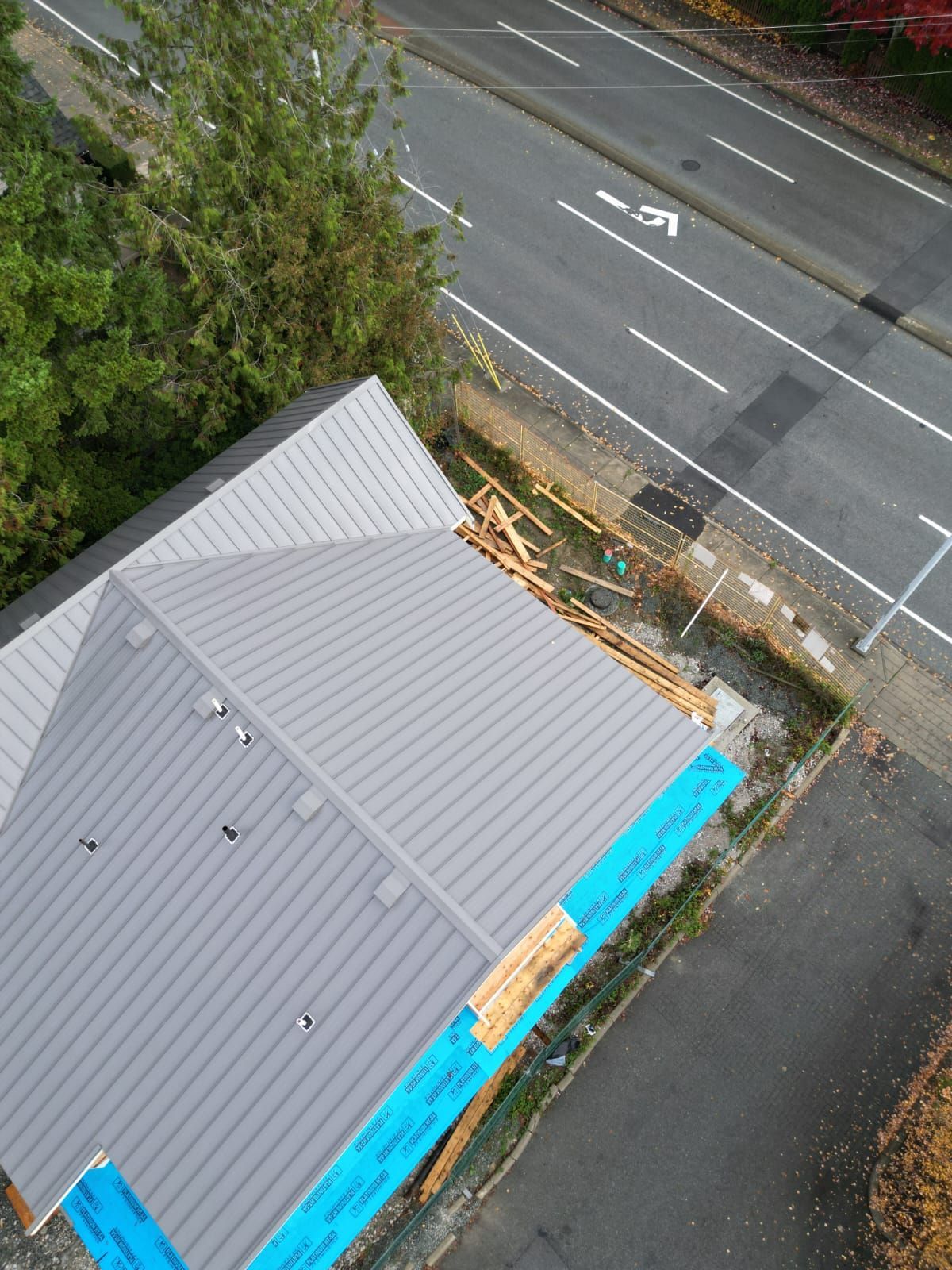
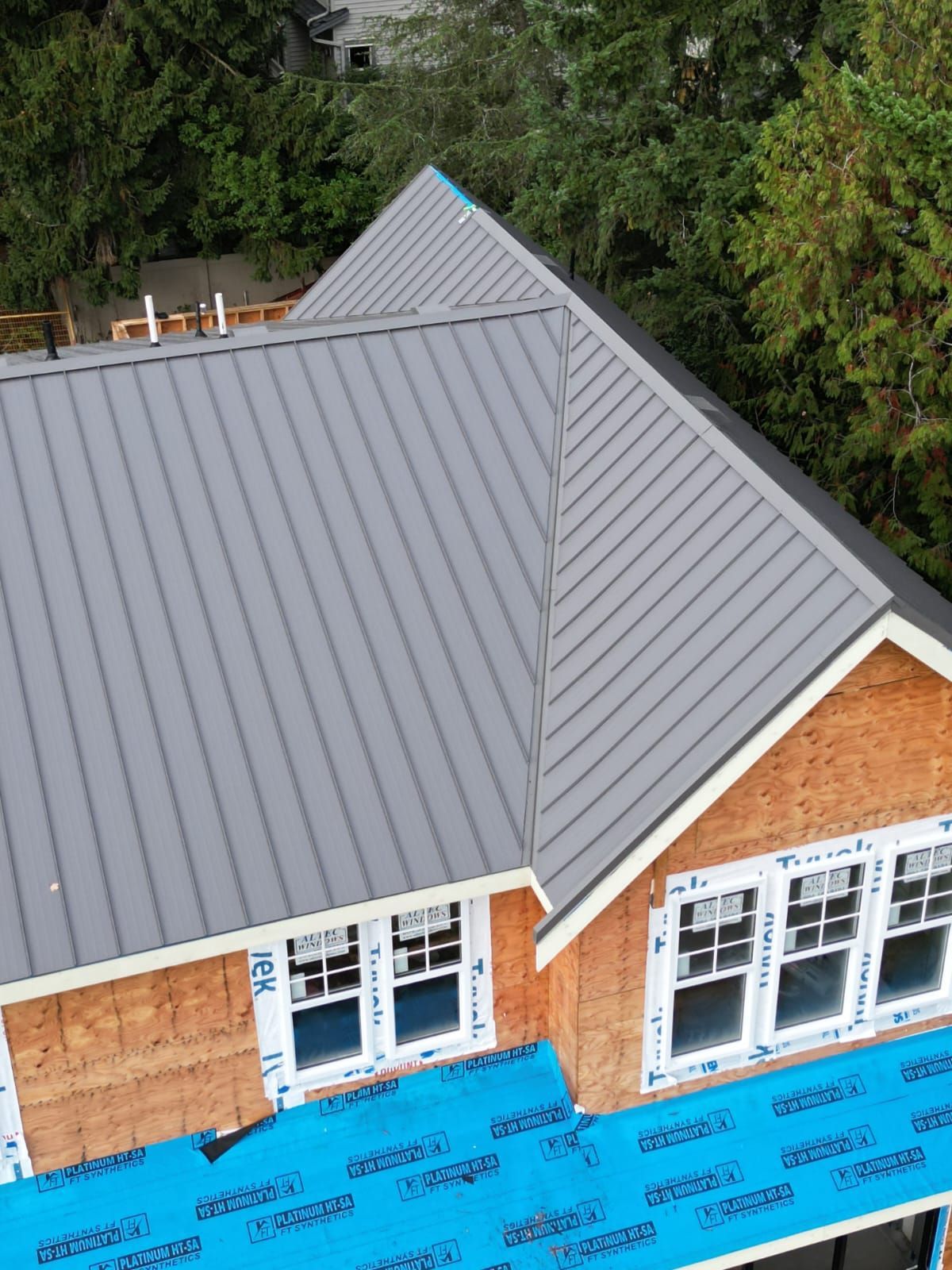
Metal roofing: Standing seam or ribbed panels last 50-70 years. Superior rain performance. Low maintenance. Higher initial cost ($12-20/sq ft) justified through avoiding multiple replacement cycles. Increasingly popular for modern strata designs.
Mixed roofing systems on large complexes
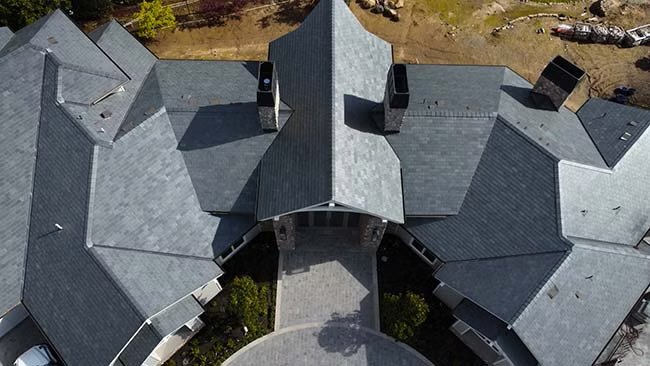
Buildings with podium decks, varying unit types, or multi-level construction often require different systems for specific applications:
- Flat membrane on the main building and common area roofs
- Pitched shingles or metal on townhouse sections
- Specialized systems on amenity deck areas with occupancy below
Coordination ensures compatible flashings and proper water management between different roof sections, preventing leaks at transitions.
Strata Roof Inspections & Condition Assessments
Regular professional evaluation enables proactive planning rather than reactive crisis management.
Why regular inspections are critical
Multi-unit buildings multiply the consequences of roofing failures. A single undetected deficiency affecting multiple units simultaneously creates expensive remediation, resident displacement, insurance claims, and potential litigation. Annual inspections identify developing problems requiring $500-2,000 repairs before they become $15,000-50,000 emergencies.
What professional inspections include
Moisture scans: Infrared thermography or nuclear moisture detection identifies wet insulation and deck areas invisible to visual inspection. Trapped moisture indicates membrane breaches requiring investigation and repair before structural damage develops.
Drainage evaluation: Inspectors verify positive drainage to all drains, check drain and overflow functionality, identify ponding areas indicating inadequate slope, and assess debris accumulation affecting water flow.
Membrane condition assessment
Surface cracking, blistering, delamination, punctures, and seam failures are documented with photos and severity ratings. Flashings at penetrations, parapets, and transitions receive close examination as these detail areas commonly fail before the general field membrane.
Structural evaluation: Soft spots indicating deck deterioration, sagging areas suggesting framing problems, or visible deflection receive attention. These issues often require an engineering assessment to determine if repairs suffice or if comprehensive reconstruction is necessary.
Inspection frequency recommendations
Annual minimum: All strata buildings require professional roof inspection at least once yearly, typically in spring (April-May), assessing winter damage and preparing for dry season repairs, or fall (September-October), evaluating summer performance and preparing for the rainy season.
Bi-annual optimal: Spring and fall inspections provide better protection through more frequent problem detection. Cost difference is minimal ($1,500-3,000 annually vs $800-2,000) while significantly reducing emergency repair risk.
Post-storm inspections: After significant weather events (windstorms, extreme rainfall, rare snow/ice), immediate assessment identifies damage while conditions remain fresh for insurance purposes. Many policies require prompt damage notification.
Aging roof protocols: Roofs approaching end-of-life (18-25+ years depending on system) benefit from quarterly monitoring, catching deterioration progression, and informing replacement timing decisions.
Strata Roofing Costs & Budget Planning in Vancouver
Understanding complete ownership costs enables realistic reserve fund planning and prevents special levy surprises.
Factors impacting costs:
Building size & complexity: Simple rectangular buildings with minimal penetrations cost less per square foot than complex multi-level structures with extensive equipment, multiple roof planes, and elaborate drainage. A 50,000 sq ft roof may cost $8-12/sq ft, while a 15,000 sq ft complex roof costs $12-18/sq ft due to economies of scale and complexity.
Roofing system type: Material selection significantly affects costs. TPO $7-12/sq ft, torch-on $8-14/sq ft, EPDM $6-12/sq ft, architectural shingles $5-9/sq ft, metal $12-20/sq ft.
Access & safety requirements: Ground-level accessible roofs are installed efficiently. Buildings requiring crane access, extensive fall protection systems, or material hoisting add 15-30% to baseline costs. High-rise applications compound complexity through equipment needs and restricted work areas.
Phasing considerations: Occupied buildings often use phased installation, completing sections sequentially rather than exposing the entire roof. This minimizes disruption but extends project duration 25-40% and may add mobilization costs for multiple site visits.
Typical cost ranges (Vancouver 2026):
Routine maintenance (annual programs): $0.15-0.60/sq ft, depending on service level. 30,000 sq ft building pays $4,500-18,000 annually for comprehensive maintenance, including inspections, drain cleaning, minor repairs, and emergency support.
Localized repairs: $2,000-15,000 depending on extent. Penetration flashing failures $1,500-4,000. Section membrane replacement $5,000-20,000. Multiple unit repairs $15,000-50,000.
Complete roof replacement:
- Townhouse complex (20,000 sq ft): $100,000-360,000
- Low-rise building (40,000 sq ft): $240,000-720,000
- Mid-rise building (80,000 sq ft): $480,000-1,440,000
Costs include tear-off, disposal, basic deck repairs, new membrane, flashings, and warranties. Extensive structural work, drainage modifications, or building envelope improvements add additional expenses.
Contingency planning & reserve funds: BC Strata Property Act requires depreciation reports every 5 years (revised from 3 years, July 2024), projecting major expenditures and adequate reserve contributions. Roofing represents one of the largest line items, typically showing:
- Current roof age and condition
- Expected replacement year
- Projected replacement cost with inflation adjustment
- Required annual reserve contributions to achieve adequate funding
Councils should budget 10-15% contingency beyond the depreciation report estimate,s accounting for unforeseen conditions discovered during tear-off (deck rot, structural inadequacies, code compliance requirements).
Roof Repair vs Roof Replacement for Strata Buildings
Determining appropriate intervention prevents wasteful spending on systems requiring replacement while avoiding premature replacement of maintainable roofs.
When strata roof repair is appropriate:
Localized membrane damage: Punctures, splits, or tears affecting small areas (under 10% of the total roof surface) can be repaired economically. Costs typically $2,000-8,000 versus $150,000-500,000+ for complete replacement.
Early-stage deterioration: Surface cracking, minor blistering, or isolated seam failures on roofs under 15 years old respond well to targeted repairs. These interventions extend serviceable life 5-10 years when the base membrane remains sound.
Flashing failures: Penetration flashings, counter flashings, or edge details deteriorating independently of the main membrane warrant repair rather than complete replacement. Costs $500-3,000 per area versus an entire roof replacement.
Weather damage: Storm-related damage (blow-offs, impact damage, debris accumulation) affecting portions of otherwise sound roofs justifies repair. Insurance typically covers sudden weather events but not deferred maintenance.
When full roof replacement is necessary:
End-of-life systems: Membranes exceeding 25 years (torch-on, TPO, EPDM) or 20 years (asphalt shingles) approach material limits. Even with adequate maintenance, base materials exhaust service capacity requires replacement.
Repeated leaks: When repair frequency exceeds 4-6 incidents annually, or different areas fail continuously, systemic problems exist beyond localized repairs. Spending $15,000-30,000 annually on patches for roofs costing $200,000-400,000 to replace becomes economically inefficient.
Widespread deterioration: Cracking, blistering, or delamination affecting 30%+ of the roof area indicates base membrane failure. Repairs provide temporary measures but don't restore structural integrity.
Structural concerns: Deck rot, framing deterioration, or inadequate support discovered during investigations often require comprehensive reconstruction. Attempting overlay installations over compromised decks risks catastrophic failure and liability exposure.
Code compliance requirements: Buildings requiring major upgrades (fire ratings, accessibility improvements, energy efficiency mandates) may trigger requirements to bring roofs to current code standards. This often necessitates complete replacement, achieving compliance rather than patching existing non-conforming systems.
The economic inflection point: Compare 5-year projected repair costs against replacement costs. If repairs will total 40-60% of replacement cost while the system remains near end-of-life, replacement delivers better value through an extended new roof lifespan versus short-term patches on a failing system.
Planning a Strata Roofing Project in Vancouver
Structured approach ensures successful execution, minimizing conflict and unexpected costs.
Obtaining council approval:
Councils typically approve routine roof repairs under operating budget authority. Major replacements may require formal motions depending on bylaws and approval thresholds. Some strata corporations require owner votes for expenditures exceeding $50,000-100,00,0 regardless of project type.
Proposal review process:
- Obtain a professional condition assessment
- Request detailed proposals from 3-5 qualified contractors
- Review proposals against assessment recommendations
- Verify contractor qualifications, insurance, and references
- Prepare a summary comparing options with the council recommendation
- Present to owners if required by bylaws or Act provisions
Owner communication & transparency:
Project announcement (4-6 weeks advance): Notify owners of upcoming work, including scope, timeline, costs, and disruption expectations. Explain the necessity through the condition assessment findings.
Pre-construction meeting (2 weeks before): Property manager hosts information session explaining safety protocols, parking adjustments, noise expectations, and emergency contacts. Contractor representatives answer technical questions.
Progress updates (weekly during construction): Regular communications document milestones, address concerns, and provide completion estimates. Photos showing progress reassure owners that work proceeds appropriately.
Completion notification: Final communication confirms project completion, warranty registration, post-installation maintenance requirements, and how to report any concerns during the warranty period.
Phased roofing projects for large complexes:
Large buildings (50,000+ sq ft) often use phasing, completing work in sections:
Benefits:
- Limits exposure to weather during construction
- Reduces resident disruption intensity
- Spreads costs across multiple budget years if needed
- Allows adjustments based on lessons learned from initial sections
Considerations:
- Extends total project duration 25-50%
- May increase overall cost 10-20% through multiple mobilizations
- Requires careful sequencing, preventing water migration between phases
- Demands precise flashing at phase boundaries
Minimizing Disruption During Strata Roofing Projects
Proactive planning reduces resident complaints and maintains positive council-resident relationships.
Safety planning for occupied buildings:
Fall protection systems: Comprehensive guardrails, safety anchors, and personal protective equipment protect workers. Ground-level barriers prevent unauthorized access beneath active work areas.
Resident safety protocols:
- Restricted access to rooftop amenities, parkades, or common areas near work zones
- Protected pedestrian routes with covered walkways, if necessary
- Clear signage marking restricted areas and alternate routes
- Safety briefings for residents living in units directly below work areas
Emergency procedures: Documented protocols for medical emergencies, fire alarm responses, or severe weather requiring immediate work stoppage and temporary protection measures.
Noise, access & scheduling:
Work hours: Standard operations 7:00 AM to 5:00 PM weekdays. Heavy equipment activities (crane operations, tear-off) are scheduled midday (10:00 AM to 3:00 PM), minimizing impact on early morning and evening quiet periods.
Parking management: Temporary parking restrictions communicated 2+ weeks in advance. Alternative parking arrangements for affected residents. Material deliveries and equipment staging are planned to minimize disruption.
Resident liaison: Designated property manager or contractor representative available for concerns, questions, or emergencies. Contact information is distributed to all residents before work commences.
Emergency preparedness during projects:
Weather monitoring: Contractors track weather forecasts scheduling tear-off during favorable periods. Immediate coverage protocols (tarps, temporary membranes) protect exposed areas if unexpected rain occurs.
Temporary waterproofing: Critical areas receive protection even during partial installation. Buildings are never left completely exposed overnight or during weather events.
Emergency response capability: Contractor maintains 24/7 contact availability and 2a -4 hour response time for emergencies during the construction period. Property managers have direct emergency contact information.
Warranties & Documentation for Strata Roofing
Proper documentation protects investment and supports future decision-making.
Manufacturer vs workmanship warranties:
Manufacturer material warranties: Cover product defects and premature deterioration. Terms vary:
- TPO/EPDM/Torch-on: 15-30 years, depending on product grade
- Asphalt shingles: 25-50 years (often prorated)
- Metal: 30-50 years paint/coating, lifetime material
Most material warranties cover replacement material only, not labor costs. Coverage often requires proper installation by approved contractors and adherence to maintenance requirements.
Workmanship warranties: Cover installation errors and application defects. Quality contractors provide:
- Minimum acceptable: 2 years
- Standard quality: 5-10 years
- Premium service: 10-15 years
Workmanship coverage includes labor and materials for correcting installation deficiencies.
Inspection reports & maintenance records:
As-built documentation: Final project records including roof plans, penetration locations, drainage layouts, material specifications, and warranty certificates. Store permanently in strata records for future reference.
Maintenance logs: Detailed records of all inspections, cleaning, repairs, and treatments. Include dates, contractors, costs, and work performed. This documentation demonstrates warranty compliance and informs future planning.
Depreciation report updates: Major roof work triggers depreciation report amendments reflecting extended lifespan, reset timelines, and adjusted reserve contribution calculations.
Insurance & compliance considerations:
WorkSafeBC documentation: Maintain contractor compliance certificates (clearance letters) protecting strata from liability if worker injuries occur.
Liability insurance certificates: Current certificates naming the strata corporation as additional insured on file before work commences. Verify coverage amounts ($2-5 million minimum) and policy validity periods.
Building permit records: Projects requiring permits retain approval documentation, inspection reports, and occupancy certificates demonstrating code compliance.
How to Choose a Strata Roofing Contractor in Vancouver
Contractor selection significantly impacts project outcomes beyond just installation quality.
Strata-specific experience: Verify contractors have multi-unit building experience, understanding:
- Occupied building protocols minimizing resident disruption
- Strata governance processes and communication requirements
- Phasing strategies for large projects
- Resident liaison and complaint management
- Working with property managers
Request references from similar strata projects with verified contact information. Actually contact references asking about communication, disruption management, and problem resolution.
Safety & compliance standards:
WorkSafeBC verification: Check registration status through the WorkSafeBC website. Request the current clearance letter before work begins. This protects strata from liability if the contractor lacks proper coverage.
Insurance requirements:
- Commercial general liability ($2-5 million)
- Completed operations coverage
- Workers compensation coverage
- Errors and omissions insurance (for design-build projects)
Request current certificates of insurance and verify directly with insurance companies for large projects.
Communication & reporting capabilities:
Quality contractors provide:
- Detailed written proposals with scope, specifications, timeline, and costs
- Regular progress reports during construction
- Photo documentation of conditions and work performed
- Responsive communication addressing concerns promptly
- Clear point of contact for property managers and councils
Poor communication creates conflict even when the installation quality is adequate. Evaluate contractor responsiveness and professionalism during the proposal phase.
Long-term service capability:
Ongoing maintenance support: Contractors offering maintenance programs provide continuity and long-term relationships. They understand building-specific details and can respond efficiently to issues.
Emergency response: Verify 24/7 contact availability and typical response times for emergencies. Established local contractors respond more reliably than distant companies.
Warranty service commitment: Confirm willingness to address warranty items promptly. Some contractors disappear after payment or become difficult to reach when problems arise.
Financial stability: Long-term warranties are worthless if contractors close or declare bankruptcy. Research the company's longevity, financial stability, and reputation for honoring commitments.
Evaluation beyond the lowest price:
Compare total value considering:
- Material quality and specifications
- Warranty terms (material and workmanship)
- Project timeline and phasing approach
- Safety and insurance coverage
- Communication and reporting capabilities
- References and proven track record
Price differences of 15-25% between qualified contractors warrant investigation. Understand what additional value justifies premium pricing or what compromises create lower bids. Extremely low bids (30-40% below others) often indicate inadequate scope understanding, poor materials, or contractors likely to fail or disappear.
Long-Term Roof Maintenance Planning for Strata Buildings
Systematic maintenance extends lifespan, controls costs, and enables predictable budgeting.
Creating multi-year maintenance plans:
Year 1-5 (new or recently replaced): Minimal maintenance requirements. Annual inspections sufficient. Address any installation warranty items. Establish drainage cleaning protocols. Budget $0.10-0.20/sq ft annually.
Year 6-15 (mid-life): Increasing maintenance needs. Bi-annual inspections are recommended. Anticipate minor repairs (penetration seals, localized membrane patches). Drainage maintenance is critical. Budget $0.20-0.40/sq ft annually.
Year 16-25 (aging system): Escalating repair frequency. Consider a comprehensive assessment determining the remaining serviceable life. Repairs may become uneconomical, prompting replacement planning. Budget $0.30-0.60/sq ft annually plus capital replacement reserves.
Aligning with depreciation reports: Professional engineers preparing depreciation reports incorporate maintenance history and inspection findings into condition assessments. Well-maintained roofs often extend projected replacement timelines 3-7 years beyond neglected systems. This timing flexibility allows reserve fund accumulation, preventing special levies.
Benefits of proactive maintenance:
Extended lifespan: Proper maintenance extends membrane life 5-10 years. Roof costing $300,000 lasting 28 years (vs 20 years neglected) saves $37,500 annually in avoided replacement expense (present value calculation).
Predictable budgeting: Operating budget maintenance expenses ($5,000-15,000 annually) integrate smoothly with reserve contributions versus emergency replacements, forcing special levies, creating owner dissatisfaction.
Reduced emergency situations: Planned repairs during business hours cost 40-60% less than after-hours emergency service. Preventing 2-3 emergency callouts annually ($2,000-4,000 each) through a $6,000 maintenance program delivers a positive return, plus avoids resident stress.
Insurance benefits: Documented maintenance programs demonstrate due diligence to insurers, supporting favorable underwriting, premium rates, and claim handling. Claims from deferred maintenance may face coverage challenges.
Strata Roofing FAQs in Vancouver
Who is responsible for the roof in a strata building in BC?
In most cases, the roof is common property and the strata corporation is responsible for its repair, maintenance, and replacement, including membranes, flashings, drainage, and roof decking. Owners may be responsible for certain fixtures passing through the roof, but the strata typically remain responsible for the weatherproofing around penetrations.
Why do strata roofs in Vancouver need more proactive planning?
Vancouver’s long wet season and frequent precipitation keep roofs damp for extended periods, which accelerates deterioration and increases leak risk. In multi-unit buildings, one issue can affect multiple homes, multiplying costs, disruption, and dispute risk.
How often should strata roofs be professionally inspected?
A good baseline is annual professional inspections, with spring + fall (bi-annual) being better for reducing emergency failures. Roofs approaching end-of-life or with prior leak history may benefit from more frequent monitoring, especially after major storms.
What flat roof systems are most common for strata buildings in Vancouver?
Common systems include torch-on (SBS modified bitumen), TPO, and EPDM for flat/low-slope roofs, and architectural asphalt shingles or metal for sloped townhome/low-rise sections. Mixed complexes often use multiple systems and need careful detailing at transitions.
How do strata councils decide between roof repair and full replacement?
Repairs make sense when damage is localized (often under ~10%), the roof is relatively young, and the base system is still sound. Replacement becomes smarter when the roof is near end-of-life, leaks recur in multiple areas, deterioration is widespread (often ~30%+), or deck/structural issues are present.
What does strata roof replacement typically cost in Vancouver?
Costs vary by system, access, and complexity, but replacement budgets often fall into six- or seven-figure totals for larger buildings. Many strata projects also require contingency allowances for hidden deck rot, drainage corrections, and code-related upgrades discovered during tear-off.
How can strata councils reduce conflict and disruption during roofing projects?
Clear communication and structure help most: announce the project early, hold a pre-construction meeting, provide weekly updates, and assign a single resident liaison/contact. Phasing work, planning safe pedestrian routes, and scheduling the noisiest work mid-day also reduce complaints.
Next Steps for Strata Roofing in Vancouver
Councils addressing roofing responsibilities should:
- Commission current assessment - Obtain a professional condition report documenting the roof status and the projected replacement timeline
- Review depreciation report - Verify roofing projections align with actual condition and adjust reserve contributions if needed.
- Establish maintenance program - Implement systematic inspections, repairs, and documentation protocols.
- Plan capital projects - Develop a 3-5 year outlook for major work, coordinating with reserve fund availability.
- Document everything - Maintain comprehensive records demonstrating due diligence and supporting future decisions.
Working with Paragon Roofing BC
Paragon Roofing BC provides comprehensive strata roofing services throughout Metro Vancouver. We understand BC Strata Property Act requirements, council governance challenges, and resident management complexities unique to multi-unit buildings.
Our strata services:
Successful strata roofing requires understanding legal obligations, climate-specific performance, proactive maintenance, realistic budgeting, and professional contractor relationships. Vancouver's challenging conditions make a systematic approach essential for protecting these major common property assets.
Disclaimer: All pricing, cost ranges, and examples shown are provided for general informational purposes only and are not quotes or guarantees. Actual strata roofing costs in Vancouver vary based on roof size and complexity, roof type (flat or sloped), system selection, tear-off requirements, deck condition and required repairs, drainage or slope corrections, access and logistics (including hoisting, cranes, and staging), safety and phasing requirements, permit and inspection needs, warranty requirements, and weather-related scheduling impacts. Final pricing and project timelines can only be confirmed following a professional site inspection and a written scope of work.
Here's What Our Existing Clients Think.
Home and business owners we've served across the greater Vancouver area.
Our Google Reviews
Edit Google Reviews Widget
We look forward to helping you.
For all your roofing needs, contact Paragon Roofing BC — call, text, or email us at 604-358-3436
Paragon Res Roof Install #2
We will get back to you as soon as possible.
Please try again later.