
Skylights in Vancouver: Installation, Repairs & Leak Prevention

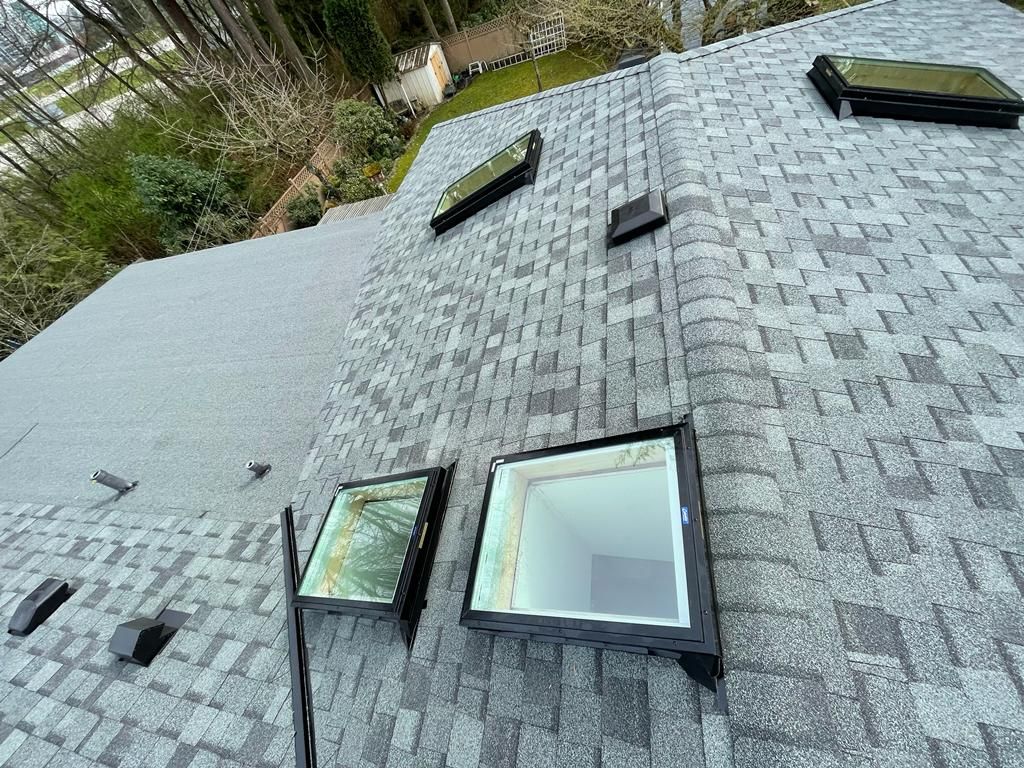
Vancouver receives over 1,150mm of annual rainfall, much of it driven sideways by coastal winds. Skylights represent one of the most vulnerable points on any roof in our climate.
Water doesn't just fall vertically here; it hammers against roof surfaces at angles, testing every seal and flashing detail. Skylight leaks account for nearly 30% of residential roof leak calls in Metro Vancouver.
Proper installation and flashing are the difference between a skylight that performs for decades and one that causes ceiling stains within the first winter. That's why choosing a contractor with specific
skylight repair and installation experience in Vancouver matters.
Why Skylights Require Special Care in Vancouver
How Vancouver's Climate Affects Skylights
Heavy Rain & Wind-Driven Water
Our coastal weather exposes skylight weaknesses fast. Wind-driven rain finds gaps in flashing systems, exploiting vulnerabilities that might never show up in lighter climates.
Common flashing vulnerabilities:
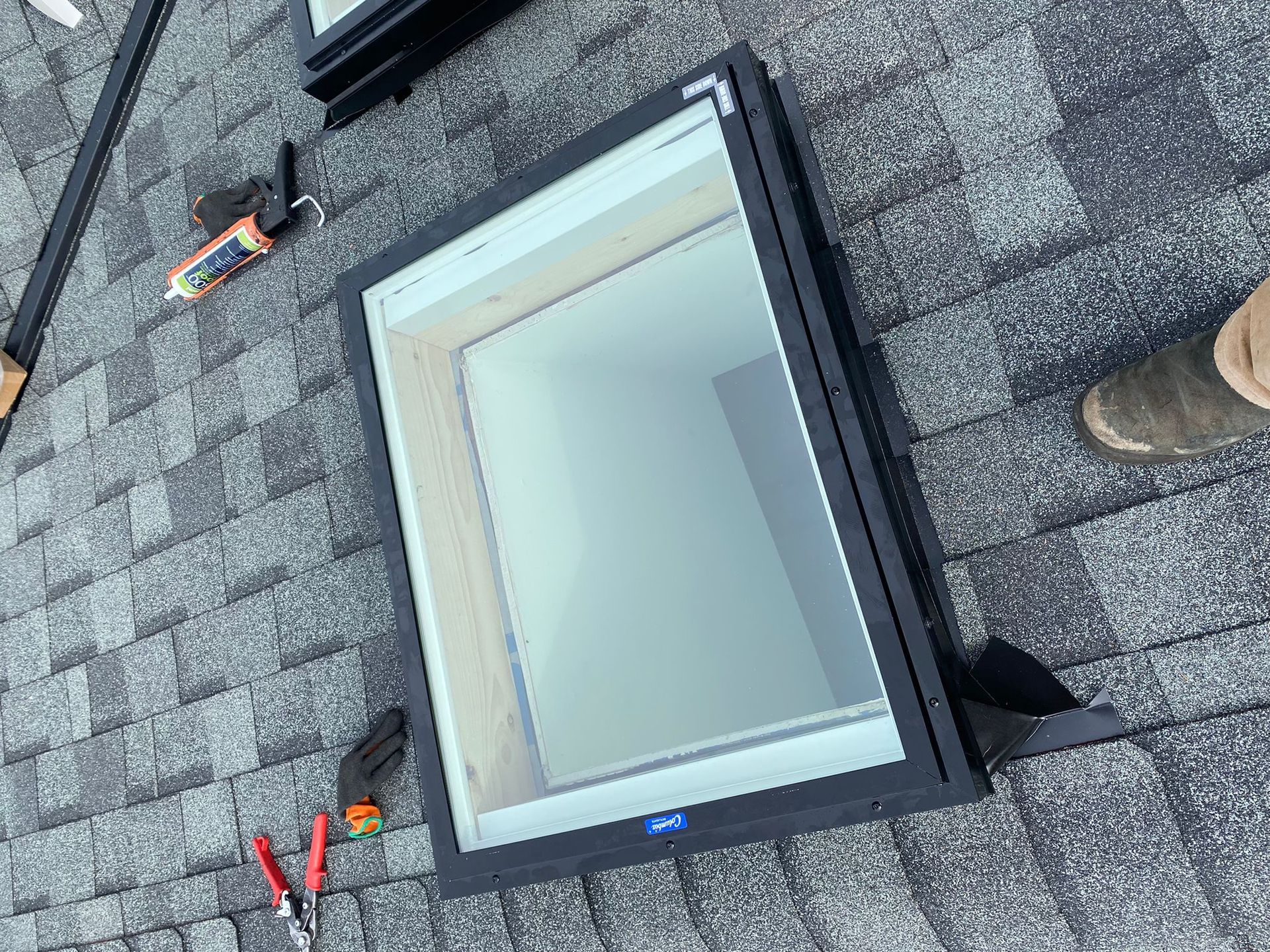
- Step flashing gaps where skylight meets roofing material
- Head flashing lacking proper kick-out details
- Counter-flashing not integrated with underlayment
- Sealant-only installations without mechanical flashing
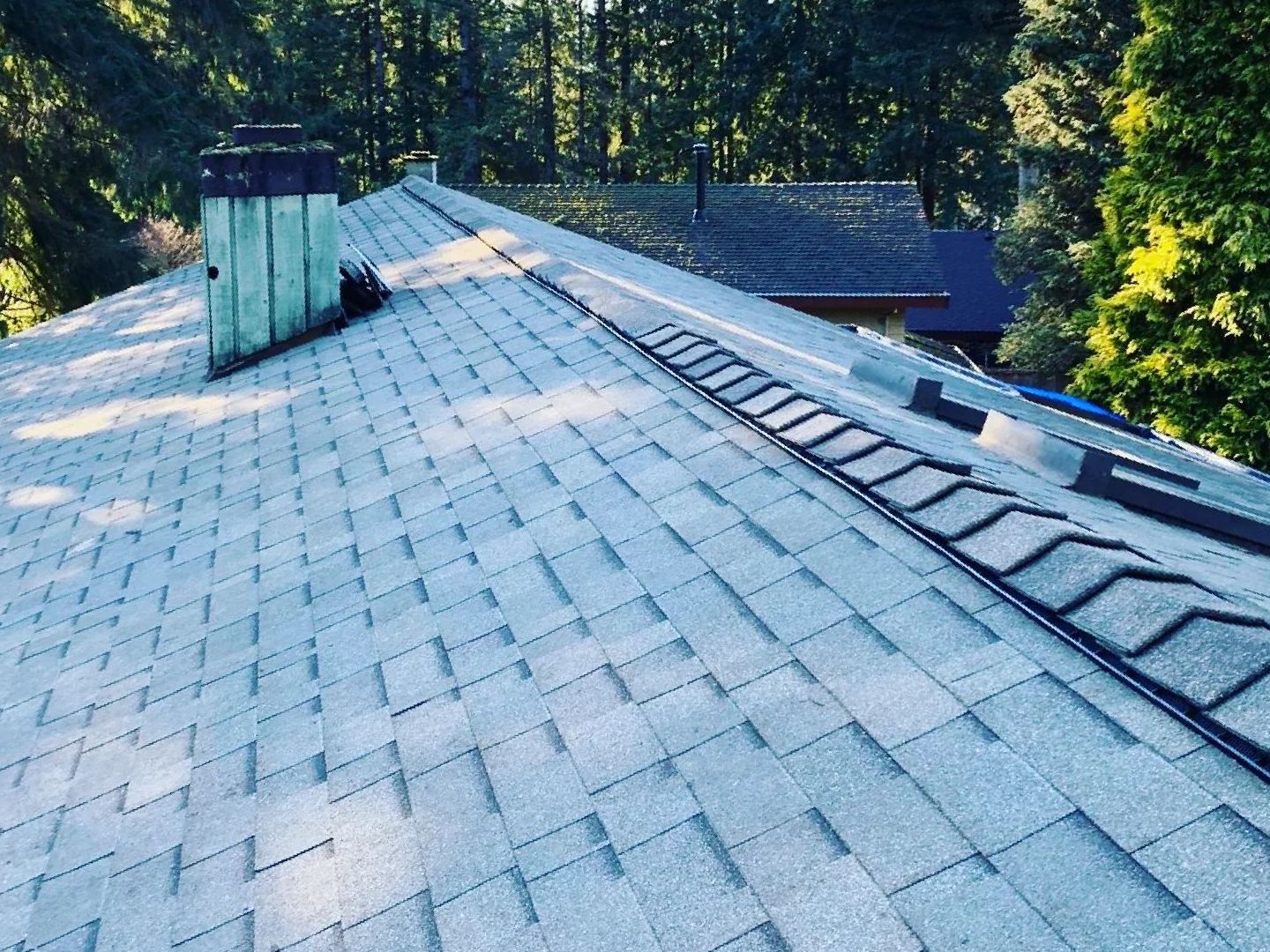
Seal degradation happens faster here. UV exposure during summer months, followed by winter freeze-thaw cycles, breaks down even quality sealants within 5-7 years.
Moisture, Condensation & Heat Loss
Interior condensation appears on many Vancouver skylights during fall and winter. Warm, moist indoor air meets cold glass, creating water droplets that damage ceilings and frames.
Single-pane skylights or units with compromised seals can account for 10-15% of a home's heat loss. From October through April, that represents significant wasted energy.
Seasonal Weather Stress
Winter storms test skylight installations with heavy rain, wind gusts exceeding 70 km/h, and occasional snow loads. The North Shore mountains create localized wind patterns that can be particularly harsh on skylights facing certain directions.
Wind uplift during severe weather can compromise flashing systems on improperly secured skylight curbs.
Common Skylight Types in Vancouver Homes & Buildings
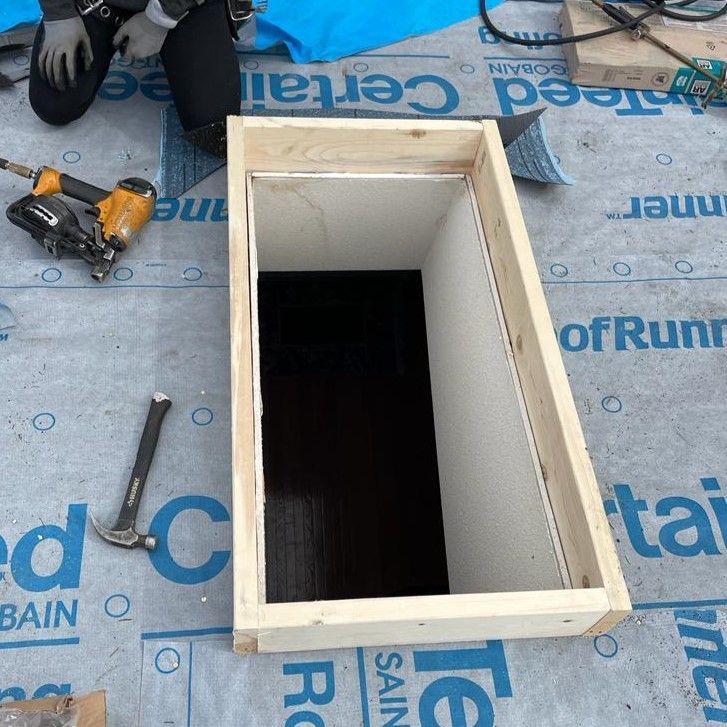
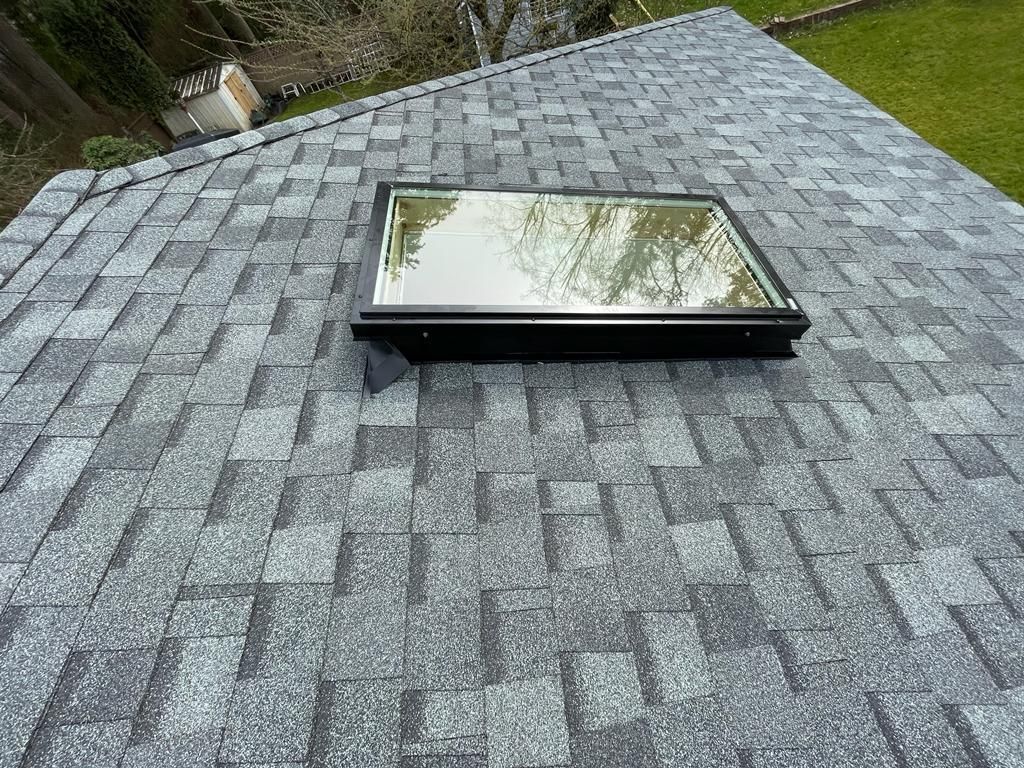
Fixed Skylights
Fixed skylights provide natural light without ventilation. They're popular for living rooms, hallways, and spaces where opening windows aren't needed.
Key characteristics:
- Simpler design, fewer moving parts
- All weatherproofing depends on flashing integrity
- No drainage path for interior condensation
- Glass replacement requires complete removal
Venting Skylights
Venting skylights offer moisture control through active ventilation. In Vancouver's humid climate, this helps manage bathroom and kitchen moisture.
Mechanical models with electric or solar operators are increasingly common. Both types need proper flashing around the operating mechanism, a common failure point during heavy rain.
Tubular / Sun Tunnels
Tubular skylights bring light into interior spaces through smaller roof penetrations. Their compact size means less structural modification and potentially lower leak risk.
They're ideal for Vancouver homes with limited roof space. Bathrooms, closets, and hallways benefit most from this application.
Flat Roof vs Sloped Roof Skylights
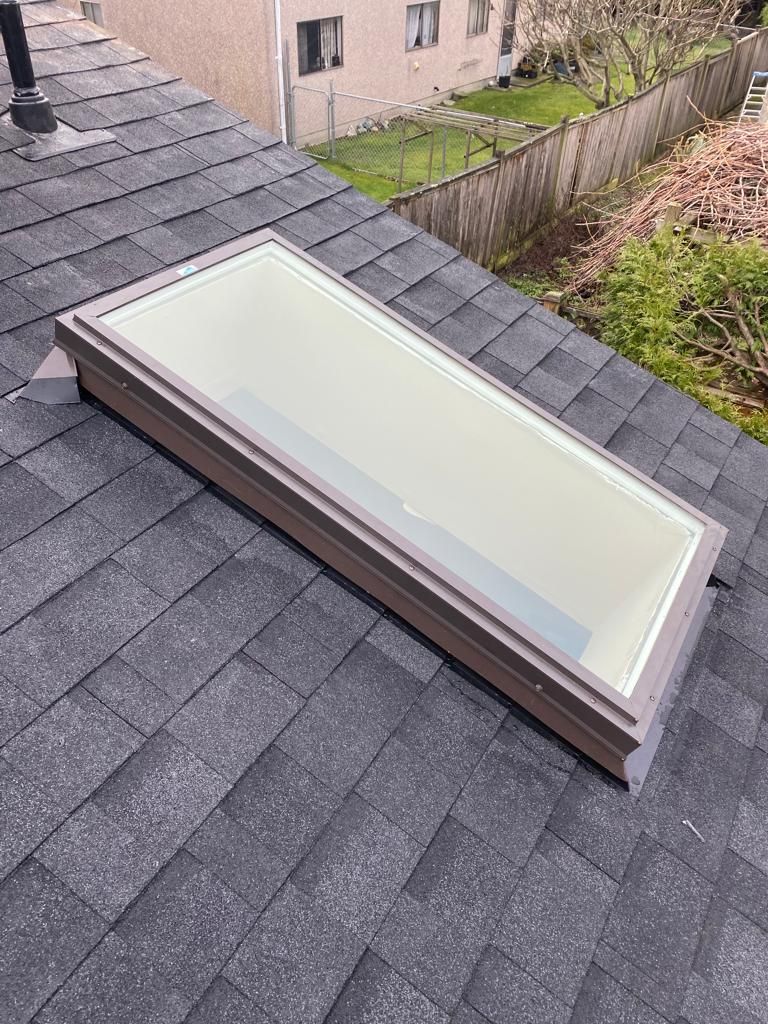
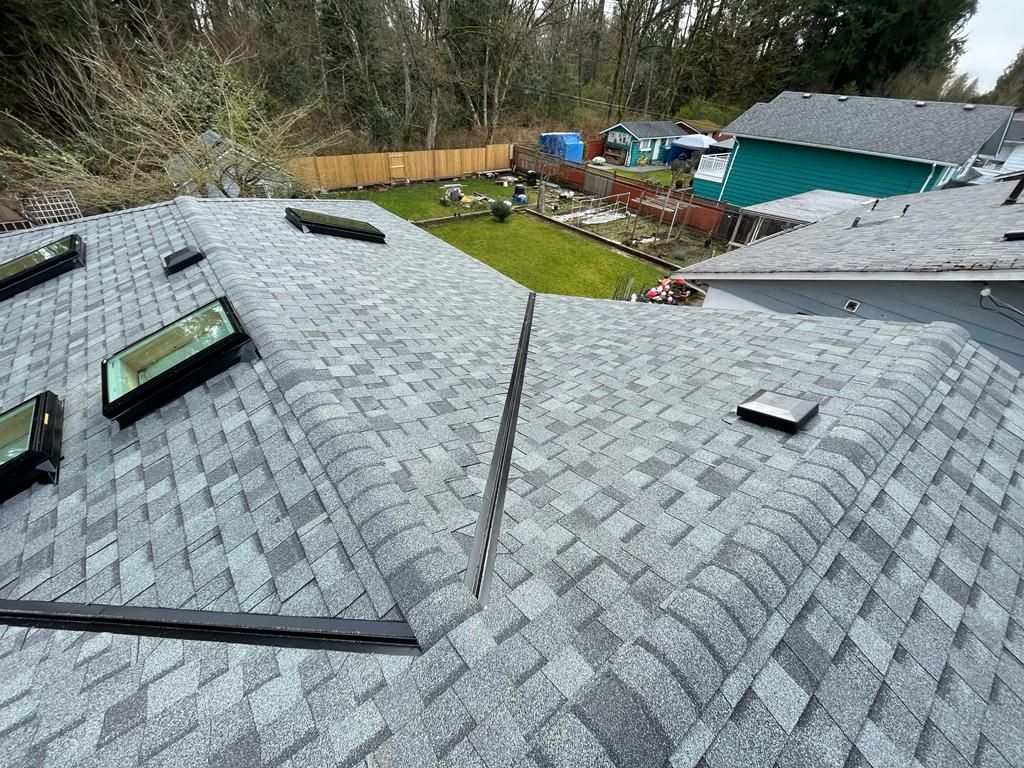
Design differences between flat and sloped applications are substantial. Flat roof skylights require curb-mounted installations with positive drainage, water can't pond around the unit.
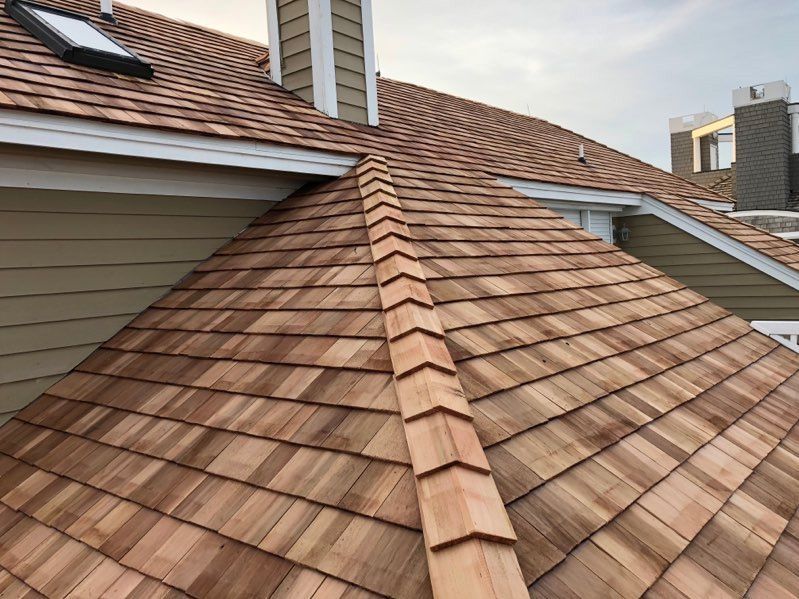
Sloped roof installations benefit from gravity drainage but face different challenges. This connects to your choice of roofing materials, as metal roofing, asphalt shingles, and tile each require specific flashing approaches for both residential roofing and commercial roofing applications.
Skylight Installation in Vancouver — What to Expect
When Skylight Installation Makes Sense
Renovations create natural opportunities for skylight additions. Opening up a kitchen or converting an attic becomes more practical when you can add natural light without sacrificing wall space.
New roof installations represent ideal timing. The roof deck is already exposed, and flashing can be properly integrated. Many homeowners planning residential roof installation projects add skylights as part of the scope.
Energy upgrades often include skylight considerations for reducing daytime lighting costs while improving home comfort.
Skylight Placement & Roof Compatibility
Roof pitch affects performance. Pitches between 4/12 and 8/12 work well for most skylight models.
Orientation considerations:
- North-facing: Consistent light, minimal heat gain
- South-facing: Maximum light and heat
- East-facing: Morning light, moderate heat
- West-facing: Afternoon light, harsh UV exposure
Structural considerations include rafter spacing and ceiling joists. Most skylights require cutting rafters and installing headers.
Proper Flashing & Waterproofing (Critical)
Integrated flashing systems come with quality skylights. Using them correctly is non-negotiable in Vancouver's climate.
Ice and water protection goes beyond minimum code. Experienced installers extend protection around the entire skylight perimeter. This self-adhering membrane provides backup protection.
The layering sequence matters: underlayment first, then skylight flashing integrated with each course, and finally roofing material installed around the flashing.
Installation Timeline & Disruption
Typical duration for a single skylight runs 4-8 hours for experienced crews. Complex installations requiring structural modifications take longer.
Clear weather windows are required since the roof will be open for several hours. This is why
commercial roof installation projects with multiple skylights often get scheduled during drier summer months.
Common Skylight Problems in Vancouver Homes
Skylight Leaks
Flashing failure represents the majority of skylight leak causes. Water follows specific paths, usually at the head (top) of the skylight or where step flashing meets the roof deck.
Seal breakdown occurs as materials age. Rubber gaskets around glass panes become brittle after 15-20 years of UV exposure and temperature cycling.
Condensation & Fogging
Insulation issues around the skylight shaft create cold spots where condensation forms. Many older installations lack adequate insulation or have gaps from settling.
Ventilation problems contribute to condensation. Without adequate air circulation, humid interior air has nowhere to go.
Cracked or Damaged Skylight Units
UV damage accumulates over decades. Acrylic domes yellow and become brittle, while even tempered glass can develop stress cracks from thermal expansion.
Storm impact includes hail damage, falling branches, and wind-blown debris. Areas near Stanley Park or Pacific Spirit Park face higher risk from falling branches during winter storms.
Poor Original Installation
Improper flashing accounts for most premature skylight failures. DIY installations or work by contractors without specific skylight experience often use too much sealant and too little mechanical flashing.
Incompatible roof systems create problems when skylights designed for one roofing type get installed on another. Using the wrong system guarantees leaks.
Skylight Repair Options in Vancouver
Flashing Repairs & Resealing
Flashing repairs represent the most common skylight service call. When ceiling water stains appear around a skylight, the problem is usually flashing-related rather than skylight failure.
Repair involves removing roofing material, inspecting flashing, installing new components, and properly integrating with the existing roof system. This prevents repeat failures and addresses the root cause.
Glass or Dome Replacement
Cracked units need replacement when damage extends beyond cosmetic issues. A single crack compromises structural integrity and allows moisture into the glazing cavity.
Replacing 20-year-old skylight domes before they crack prevents emergency repairs later. This is particularly relevant during
residential roof repair projects.
Condensation & Venting Corrections
Vent upgrades can solve persistent condensation. Replacing a fixed skylight with a venting model allows moisture to escape.
Moisture control improvements include adding insulation around the skylight shaft and ensuring proper vapor barriers.
When Skylight Repair Is No Longer Enough
Structural issues around the skylight opening like rotted framing, water-damaged roof deck, or compromised structural members, require more extensive work.
Repeated failures suggest underlying incompatibility. If you've repaired the same skylight multiple times, replacement makes more economic sense.
Skylight Repair vs Replacement — How to Decide
When Skylight Repair Makes Sense
Isolated flashing issues with otherwise sound skylights are good repair candidates.
Repair is appropriate when:
- Skylight is less than 15 years old
- Glass or dome is in good condition
- Frame shows no structural damage
- Problem is clearly isolated to one component

When Skylight Replacement Is the Better Option
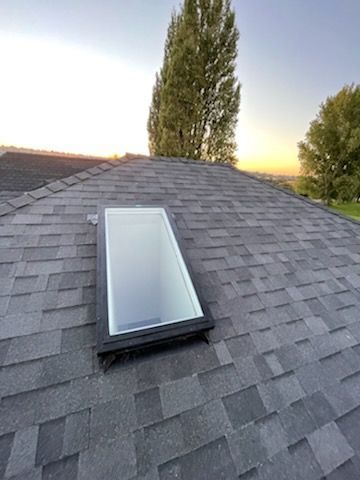
Aging skylights beyond 20 years are often at the end of their service life. Replacement during planned roof work makes sense.
Inefficient glazing costs money every heating season. Single-pane or early double-pane units don't meet current energy standards. Modern skylights with Low-E coatings and argon fills significantly reduce heat loss.
Chronic leaks that return after repairs indicate fundamental problems. Replacement solves the problem permanently.
Skylight Installation & Repair Costs in Vancouver
Factors That Affect Skylight Costs
Key cost factors:
- Skylight type: Tubular units start around $500-800 installed, while venting models range $2,000-4,000
- Roof type and pitch: Steep pitches require additional safety equipment
- Access and safety: Three-story homes cost more than single-story installations
- Flashing complexity: Valley locations and ridge proximities require more detailed work
Typical Cost Ranges
Installation costs in Vancouver:
- Tubular/sun tunnel: $600-1,200
- Fixed skylight (standard): $1,500-3,000
- Venting skylight (standard): $2,000-4,000
- Large or custom units: $3,500-7,000+
Repair costs:
- Flashing repairs: $400-900
- Seal replacement: $300-600
- Glass/dome replacement: $500-1,500
Replacement during residential roof replacement often costs less since scaffolding is already in place.
Ranges reflect typical Vancouver-area pricing as of 2024-2025.
How to Prevent Skylight Leaks in Vancouver
Importance of Proper Flashing Systems
Integrated flashing kits provide manufacturer-engineered solutions. Each component is designed to work with specific skylight models and roof types.
Roof-specific designs matter because water flows differently on various roofing materials. Matching flashing design to roof type is fundamental.
Roof & Skylight Compatibility
Material matching between skylight flashing and roofing prevents galvanic corrosion. Aluminum flashing on copper roofing creates electrochemical reactions causing premature failure.
Drainage design around skylights must prevent water dams. On lower-pitch roofs, improper cricket installation causes water to pond rather than drain away.
Ongoing Maintenance & Inspections
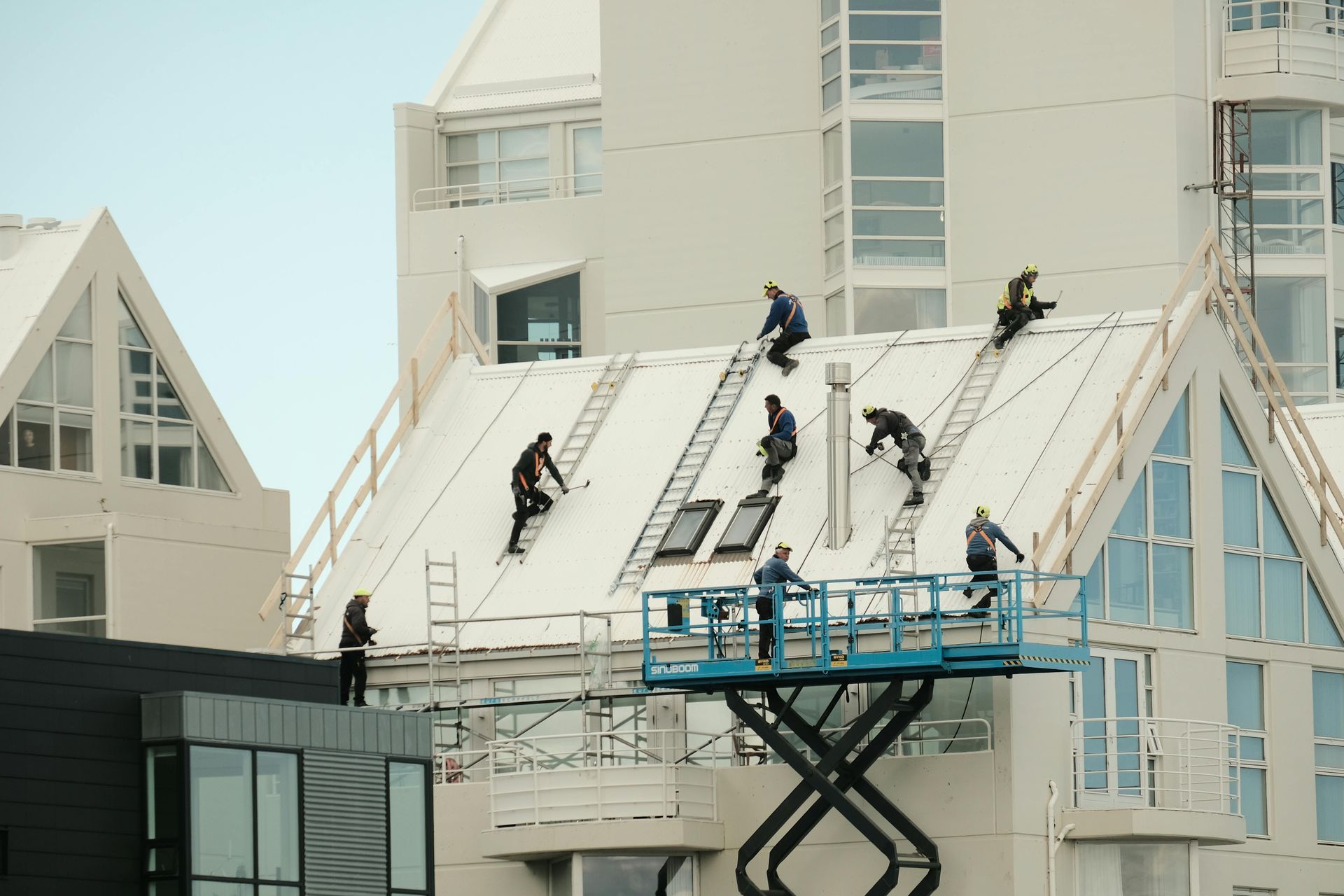
Annual roof inspections should specifically examine skylight flashing, seals, and surrounding roof areas.
Inspection checklist:
- Flashing condition and attachment
- Sealant condition at critical points
- Glass or dome clarity and crack-free condition
- Interior signs of moisture or staining
- Proper water drainage around unit
Regular roof maintenance programs catch problems early, particularly in areas with mature tree canopies that drop debris year-round.
Skylights in Strata & Commercial Buildings
Responsibility & Approval Considerations
Strata versus owner responsibility depends on skylight location and strata bylaws. Common area skylights typically fall under strata responsibility.
Key considerations:
- Review strata bylaws for maintenance responsibilities
- Check depreciation reports for replacement timing
- Secure council approval before modifications
- Coordinate with property managers on access
Common Issues in Multi-Unit Buildings
Shared roof systems create additional complexity. A leak from one unit's skylight can affect neighboring units or common areas.
Interior damage risk extends beyond the unit where the skylight is located. For buildings with multiple skylights, working with contractors experienced in
strata roofing ensures proper coordination.
DIY Skylight Fixes vs Professional Repairs
Why Skylight DIY Repairs Often Fail
Temporary fixes like caulking around skylight perimeters address symptoms rather than causes. A bead of caulk might slow a leak temporarily, but it doesn't fix failed flashing underneath.
Hidden water paths make diagnosis difficult. Water enters at one point but travels along rafters before appearing inside.
Common DIY mistakes:
- Applying sealant over failed flashing
- Missing secondary leak sources
- Damaging skylight seals during repairs
- Creating new leak paths by disturbing roofing materials
When Professional Skylight Service Is Essential
Flashing repairs require removing and reinstalling roofing materials. This needs proper tools, materials knowledge, and experience working with specific roof types.
Structural integration work, anything involving framing or headers, is beyond DIY scope. Professional installers use appropriate safety equipment and carry insurance for the inevitable risks involved.
How to Choose a Skylight Installation & Repair Contractor
Roofing and skylight integration experience matters more than general contracting experience.
Look for contractors who demonstrate:
- Specific skylight installation training and certification
- Portfolio of completed projects in your roof type
- Knowledge of manufacturer specifications and flashing systems
- Proper liability and WorkSafeBC coverage
- Clear warranty terms on both labor and materials
Local climate knowledge separates adequate contractors from excellent ones. Quality contractors stand behind their flashing work for several years, knowing that proper installation prevents callbacks.
For comprehensive projects, working with established contractors familiar with local conditions ensures better outcomes. Whether you need consultation or want to review client experiences, vetting contractors pays off.
Skylights in Vancouver FAQs
Why do skylights leak more often in Vancouver?
Vancouver gets heavy rain and wind-driven water, which hits skylight flashings at angles and exposes small gaps quickly. Most skylight leaks here come from flashing or waterproofing details, not the glass itself.
What are the most common causes of skylight leaks?
The most common causes are:
- Improper or incomplete step/head/counter flashing
- “Sealant-only” installs without mechanical flashing
- Aged or brittle gaskets/seals (often 15–20+ years old)
- Poor integration with underlayment and ice-and-water membrane
How can I tell if it’s a skylight leak or condensation?
- Leak signs: staining that worsens during/after rain, dripping at the frame or drywall, wet insulation around the opening.
- Condensation signs: fogging, droplets on cold glass in winter, moisture that appears even when it’s not raining (often tied to humidity and insulation/ventilation issues).
Should I repair or replace my skylight?
Repair is usually best when the skylight is under ~15 years old and the issue is isolated to flashing or seals. Replacement is often smarter when the unit is 20+ years old, has failed glazing (fogging between panes), cracks/yellowing, or leaks that keep returning after repairs.
What’s the best time to install a skylight in Vancouver?
The safest window is during drier months (late spring to early fall) or as part of a new roof installation/replacement, when the roof system and underlayment can be properly integrated and the roof isn’t repeatedly opened.
How long does skylight installation or repair take?
A typical single skylight installation often takes 4–8 hours for experienced crews (longer if framing changes are needed). Many flashing repairs can be completed in a single visit, depending on roof type, access, and weather.
How much do skylight installs and repairs cost in Vancouver?
Pricing depends on skylight type, roof pitch, access, and flashing complexity. Typical ranges:
- Sun tunnel: ~$600–$1,200 installed
- Fixed skylight: ~$1,500–$3,000 installed
- Venting skylight: ~$2,000–$4,000 installed
- Flashing repair: ~$400–$900
- Costs may be lower when done during a full roof replacement because access/scaffolding is already in place.
What’s the best way to prevent skylight leaks long-term?
Use a skylight-specific manufacturer flashing kit, integrate it correctly with underlayment and ice-and-water protection, and ensure drainage details (like crickets on low slopes) prevent water from pooling near the unit. Annual inspections should include skylight flashing and surrounding roof areas.
Are skylights different on flat roofs vs sloped roofs?
Yes. Flat roofs require curb-mounted skylights and positive drainage so water can’t pond around the unit. Sloped roofs drain more easily, but they rely on correct step/head flashing integration with each roofing course.
Who is responsible for skylights in strata buildings?
It depends on the building’s bylaws and whether the skylight serves a unit or common area. Even when a skylight is “owner-use,” the strata often controls the roof waterproofing around it. Always check bylaws and coordinate approvals before changes.
Next Steps for Skylight Installation & Repair in Vancouver
If you're experiencing skylight leaks, condensation issues, or planning renovations that include new skylights, professional assessment is the logical first step. A thorough inspection identifies current problems and determines whether repair or replacement makes sense.
For homeowners planning broader roofing work, coordinating skylight needs with roof replacement or roof repair makes practical and economic sense.
Whether you need
expert skylight services or guidance on the best approach for your specific situation, professional consultation helps you make informed decisions about protecting your Vancouver home from our challenging climate. Visit our homepage to learn more about our comprehensive roofing services.
Disclaimer: All pricing ranges and timelines shown are provided for general informational purposes only and are not quotes or guarantees. Actual skylight and roof repair costs in Vancouver vary based on roof type and pitch, site access and safety requirements, skylight size and model, flashing complexity, existing roof condition, water damage discovered during removal, weather conditions, and scheduling factors. Final pricing and timelines can only be confirmed after an on-site inspection and a written scope of work.
Here's What Our Existing Clients Think.
Home and business owners we've served across the greater Vancouver area.
Our Google Reviews
Edit Google Reviews Widget
We look forward to helping you.
For all your roofing needs, contact Paragon Roofing BC — call, text, or email us at 604-358-3436
Paragon Res Roof Install #2
We will get back to you as soon as possible.
Please try again later.