
Clay Tile Roofing in Vancouver: Weight, Durability & Climate Considerations

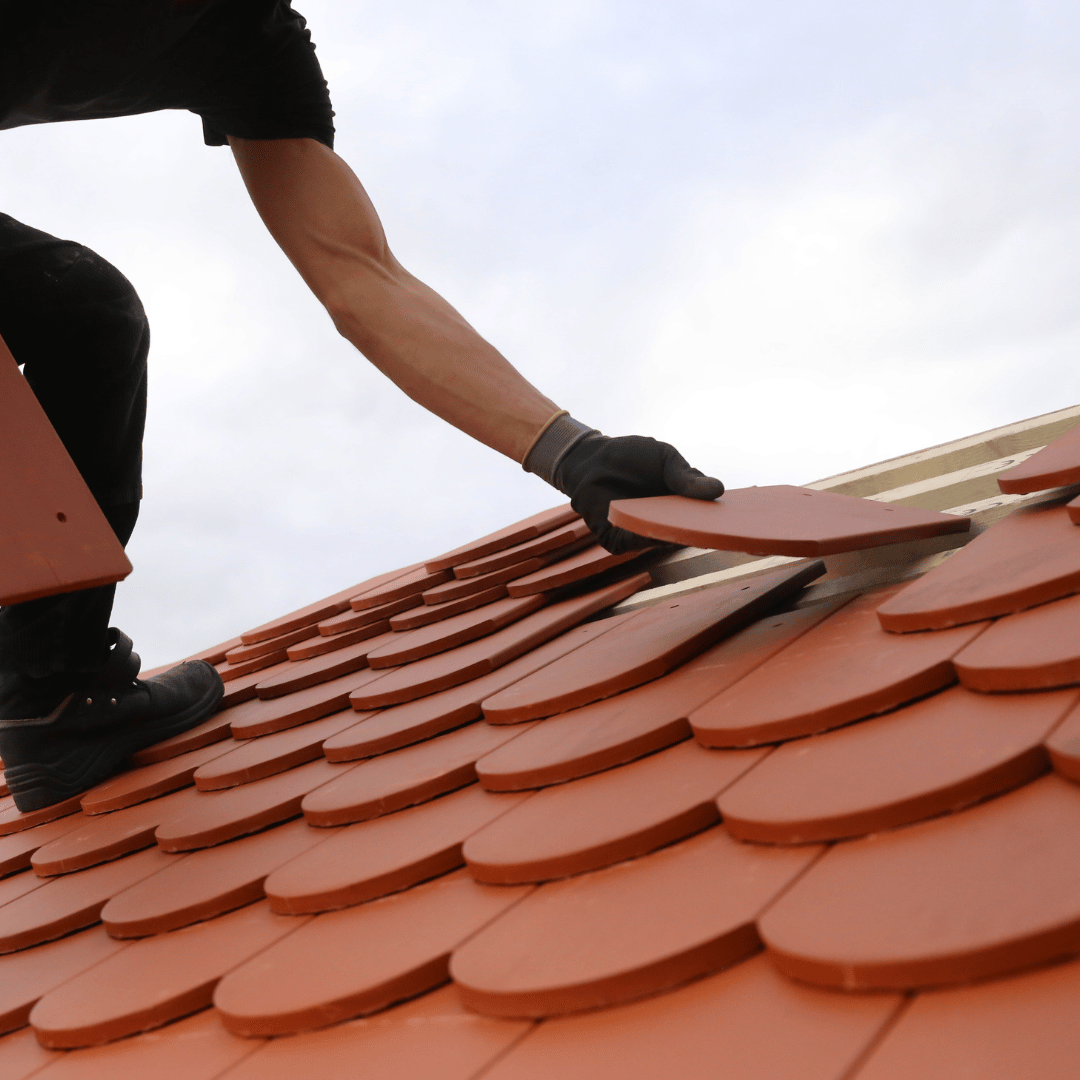
Clay tile roofing conjures images of Mediterranean villas, Spanish colonial estates, and California coastal architecture. The material's timeless beauty, 50-100 year lifespan, and fire resistance make it appealing to luxury homeowners and architects designing distinctive properties.
But in Vancouver, clay tile is rare. The primary reason? Weight. Clay tile weighs 850-1,050 lbs per square (100 sq ft), roughly 2-3 times heavier than asphalt shingles. Most Vancouver homes weren't designed for this load. Add Vancouver's seismic considerations (Cascadia Subduction Zone), and structural engineering becomes complex and expensive.
Yet clay tile roofing performs well in wet climates when properly installed. The non-porous fired clay resists moisture, sheds rain effectively, and doesn't deteriorate from repeated wet-dry cycles. Unlike wood or composite materials, clay won't rot or degrade in our 1,189mm annual rainfall.
Clay tile makes sense for Mediterranean or Spanish-style architecture, luxury custom homes with adequate structural capacity, and select properties where the aesthetic justifies the investment. This guide explains structural requirements, performance in Vancouver's climate, and whether clay tile suits your project.
Is Clay Tile Roofing a Good Fit for Vancouver Homes?
How Clay Tile Roofing Performs in Vancouver's Coastal Climate
Understanding how clay tile handles our specific weather patterns helps evaluate practical suitability.
Heavy Rain & Water Shedding
Overlapping design: Individual tiles overlap with a 3-4 inch headlap, creating multi-layered coverage. Water follows gravity down the slope, never penetrating the layered barrier.
Non-porous material: Fired clay absorbs minimal water (typically 3-6% by weight for quality tiles). This makes clay superior to concrete tile (more porous) and far better than organic materials like cedar.
Performance in downpours: Properties throughout Metro Vancouver experience intense rainfall events. Clay tile's overlapping profile and dense composition handle heavy rain without degradation. The underlayment beneath tiles provides primary waterproofing, while tiles protect the underlayment from UV, impact, and weathering.
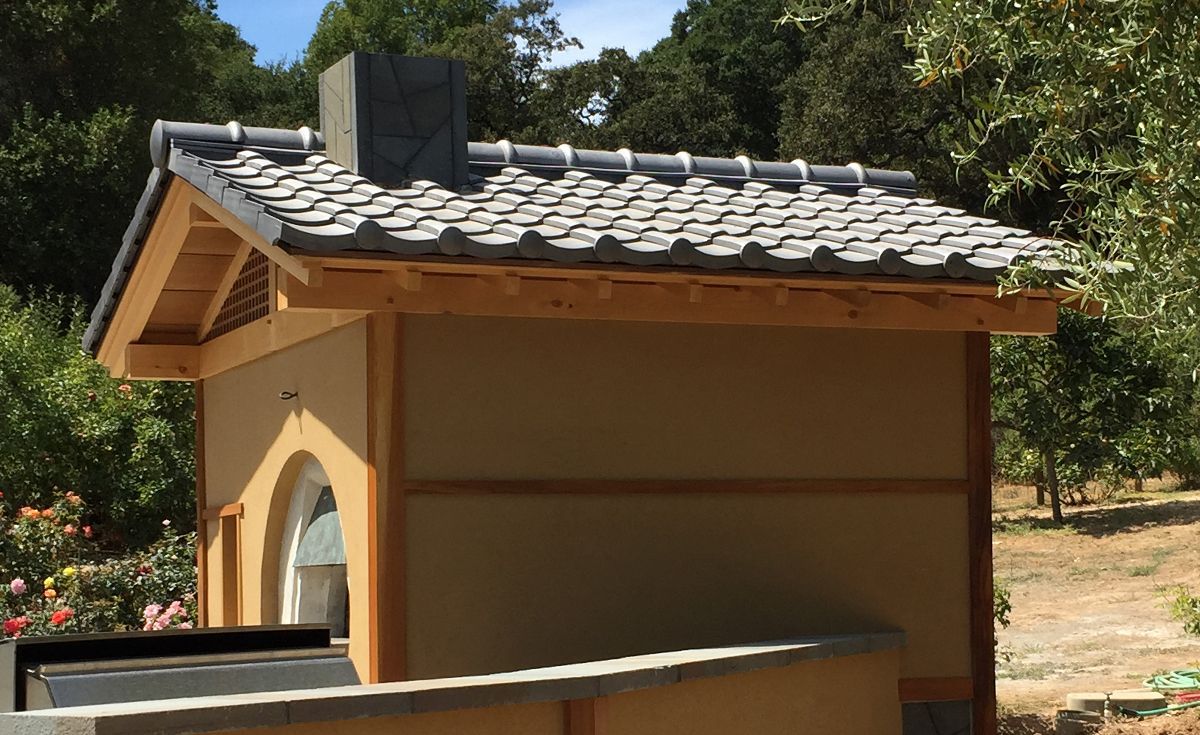
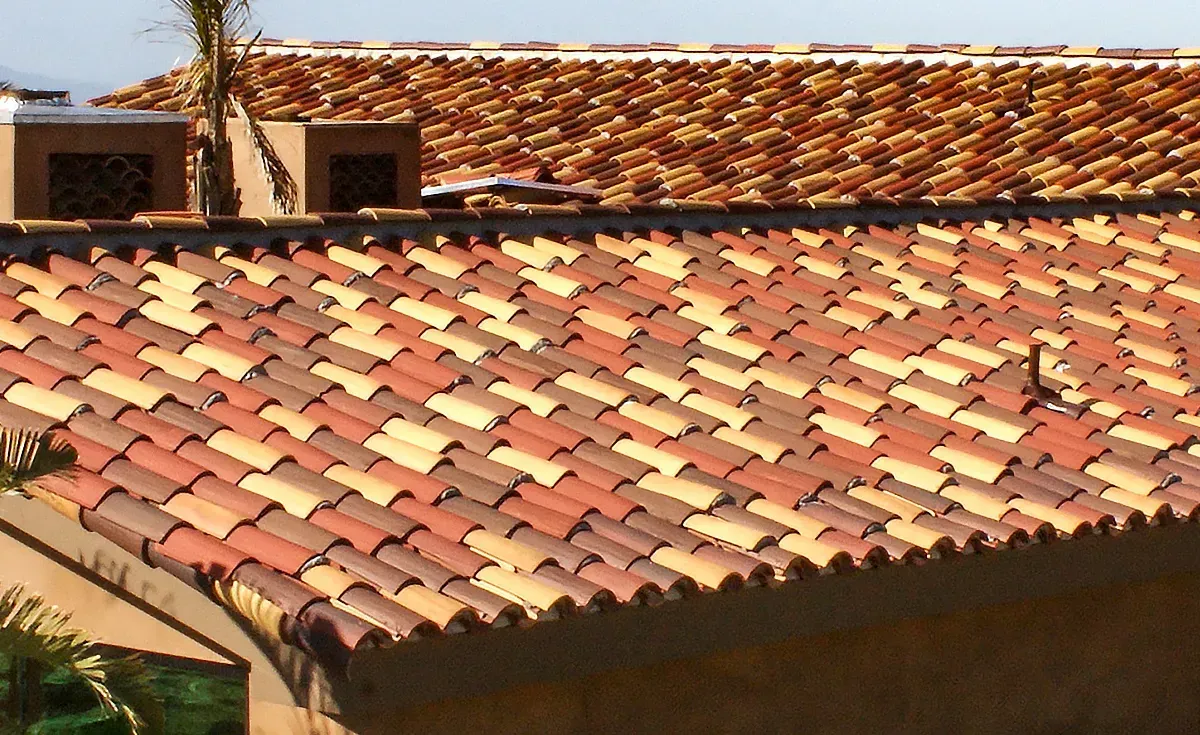
Moisture, Moss & Organic Growth
The Vancouver challenge: North-facing roofs and shaded properties in Dunbar, Kerrisdale, and West Vancouver experience aggressive moss growth. While clay resists organic growth better than asphalt or cedar, it's not immune.
Surface texture matters: Unglazed clay tiles have a natural surface texture that can support moss establishment in heavily shaded conditions. Glazed tiles resist growth more effectively but cost 10-20% more.
Maintenance realities:
- Annual inspections in shaded areas
- Gentle cleaning every 3-5 years
- Professional moss treatment as needed
- Never pressure wash (damages tiles and forces water under overlaps)
Properties with clear solar exposure minimize moss issues. The weight of the clay tile means walking on the roof for cleaning is risky; professional service is recommended.
Wind & Seasonal Storm Performance
Fastening systems: Modern clay tile installation uses corrosion-resistant nails or hurricane clips. Each tile attaches to battens or directly to deck sheathing.
Wind ratings: Properly installed clay tile withstands winds of 110-130 mph, depending on fastening method and tile profile. Vancouver's occasional windstorms (80-90 km/h gusts) are well within performance limits.
Risk of displacement: Improperly installed tiles or corroded fasteners allow tiles to slip or blow off during storms. This makes professional installation by experienced contractors non-negotiable. Cutting corners on installation creates expensive repair needs.
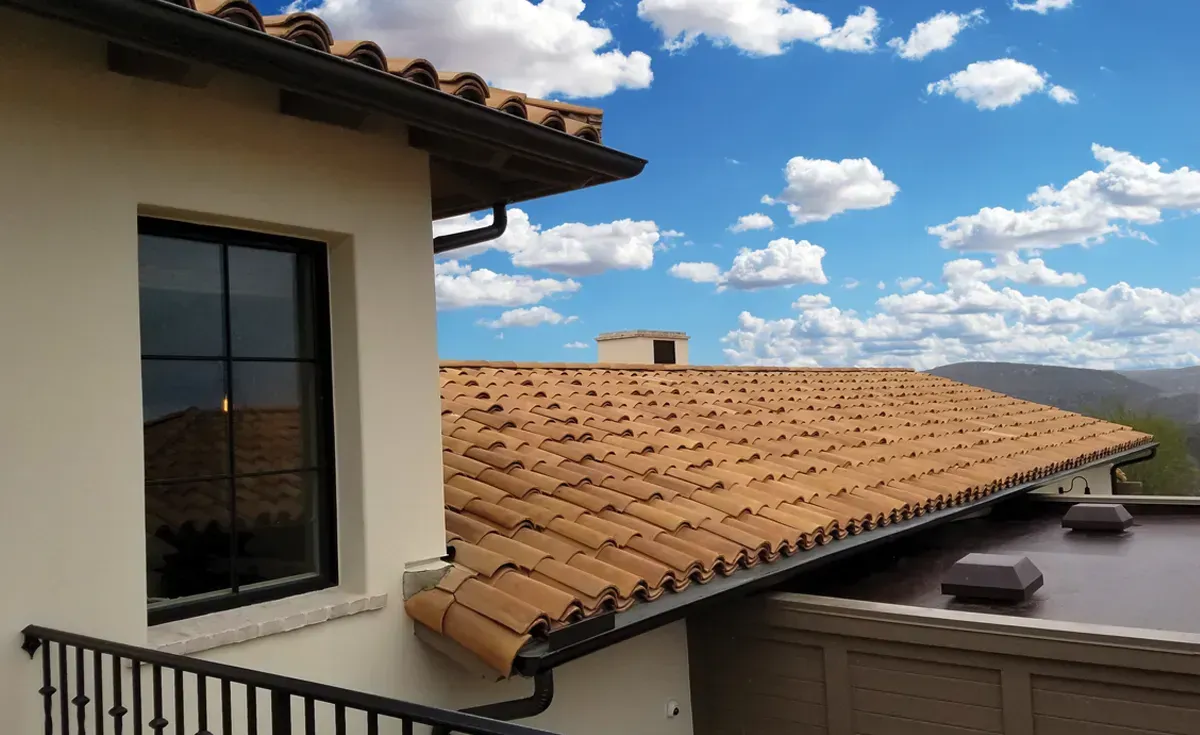
Understanding Clay Tile Roofing Systems
Before evaluating whether clay tile suits your property, understanding the material and installation process provides context.
How Clay Tiles Are Made
Natural clay firing: Tiles form from natural clay (often red terracotta or buff/tan varieties) shaped in molds and fired in kilns at 1,800-2,100°F. This high-temperature firing creates dense, durable material.
Density and durability: The firing process vitrifies the clay, reducing porosity and creating a material that resists water, UV radiation, and biological growth. Quality tiles last 75-100+ years in coastal climates.
Glazed vs unglazed: Unglazed clay develops natural patina over time. Glazed tiles maintain consistent color but cost more and can crack (allowing moisture under the glaze).
Common Clay Tile Profiles
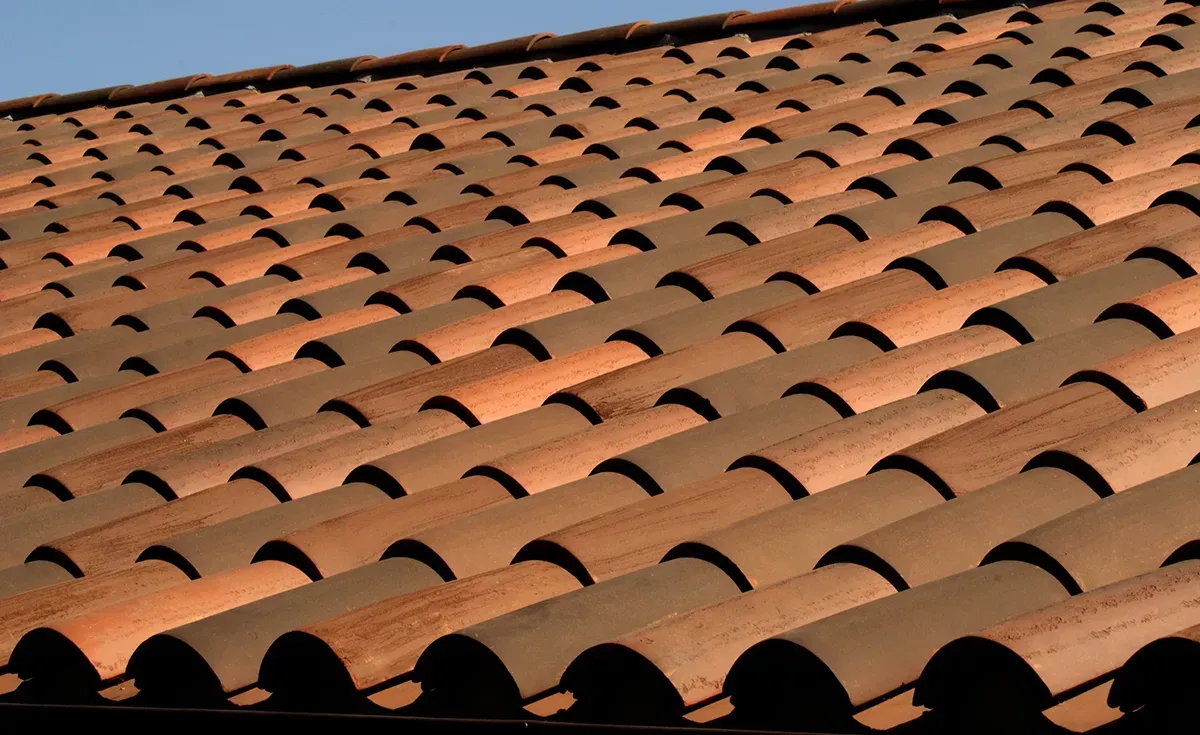
Barrel / Spanish tile:
- Traditional curved "S" profile
- 900-1,050 lbs per square
- Distinctive Mediterranean aesthetic
- Requires a 3:12 minimum slope
Flat tile:
- Low-profile interlocking design
- 850-950 lbs per square
- Suits contemporary and traditional architecture
- Works on 4:12+ slopes
Interlocking systems:
- Modern designs with mechanical connections
- 800-900 lbs per square (lightest clay option)
- Faster installation than traditional profiles
- Better wind resistance from integrated locking
Profile selection affects weight, cost, and architectural appropriateness. Spanish barrel tile suits Mediterranean designs common in parts of West Vancouver and upscale developments, while flat tiles work for varied architectural styles.
How Clay Tile Roofs Are Installed
Batten installation: Horizontal wood or plastic battens attach to deck sheathing. Tiles hook or nail to battens. This creates airspace beneath tiles for ventilation and allows individual tile replacement.
Direct-to-deck: In some climates, tiles nail directly to sheathing. Less common in Vancouver due to ventilation needs in humid conditions.
Underlayment requirements: Synthetic underlayment (not felt paper) provides primary waterproofing. Tiles protect the underlayment but don't seal the roof themselves.
Individual fastening: Each tile secures with two nails or clips. Corrosion-resistant (copper or stainless) fasteners required; galvanized steel fails in 20-30 years.
Complexity: Installing residential clay tile roofing requires specialized skills. Cutting tiles around chimneys, valleys, and penetrations demands experience and proper tools.
Weight & Structural Requirements for Clay Tile Roofing
This section determines whether your property can accommodate clay tile. Most inquiries end here after structural evaluation.
How Heavy Is Clay Tile Roofing?
Weight comparison (per 100 sq ft):
| Material | Weight per Square |
|---|---|
| Asphalt shingles | 230-430 lbs |
| Cedar shake | 250-350 lbs |
| Metal roofing | 100-200 lbs |
| Composite slate | 250-400 lbs |
| Stone-coated steel | 150-200 lbs |
| Flat clay tile | 850-950 lbs |
| Spanish barrel tile | 900-1,050 lbs |
| Mission barrel tile | 1,050-1,400 lbs |
Clay tile weighs 2.5-3x more than asphalt shingles. A 2,000 sq ft roof with Spanish tile adds 18,000-21,000 lbs of dead load to the structure.
Structural Load & Engineering Requirements
Load-bearing capacity: Standard residential roof framing in Vancouver supports 15-20 lbs per square foot dead load. Clay tile requires 27-35 lbs per square foot, exceeding typical design capacity.
Engineering assessment required: Before considering clay tile, hire a structural engineer ($1,000-3,000) to evaluate:
- Existing rafter size, spacing, and condition
- Truss design and capacity
- Wall and foundation adequacy
- Seismic load path evaluation
Typical findings: Homes built pre-1980 often have 2x6 or 2x8 rafters at 24-inch spacing. These are marginal for clay tile without reinforcement. Post-1990 engineered truss systems may or may not have capacity depending on original design assumptions.
Reinforcement costs:
- Sister existing rafters: $3,000-8,000
- Install additional truss members: $5,000-12,000
- Add support walls: $8,000-15,000
- Complete re-framing: $15,000-30,000+
Example: 2,500 sq ft roof needs clay tile. The engineer determines existing 2x6 rafters are inadequate. Sistering with 2x8 lumber adds $6,000-10,000 to the project before purchasing tiles or installation labor.
Clay Tile Roofing & Seismic Considerations
Vancouver sits near the Cascadia Subduction Zone. The "big one" is statistically overdue. Building codes account for seismic loads.
Why weight matters: Heavy roofing increases inertial forces during earthquakes. Top-heavy buildings experience greater lateral movement. Proper engineering ensures connections can handle dynamic loads.
Seismic design requirements:
- Enhanced fastening schedules (more/stronger connections)
- Seismic straps at critical connection points
- Proper blocking and bracing in the roof structure
- Verified load paths to the foundation
Older homes in heritage areas (Strathcona, Fairview, Mount Pleasant) often have unreinforced masonry or aging wood frames. Adding clay tile requires bringing seismic resistance up to current code, which can be expensive.
Clay Tile vs Concrete Tile Roofing in Vancouver
These materials are often confused but have important differences.
| Feature | Clay Tile | Concrete Tile |
|---|---|---|
| Weight | 850-1,050 lbs/sq | 900-1,200 lbs/sq |
| Water absorption | 3-6% | 8-13% |
| Lifespan | 75-100+ years | 50-75 years |
| Color retention | Excellent (through-body) | Fades (surface coating) |
| Cost | $15-25/sq ft | $12-18/sq ft |
| Freeze-thaw resistance | Excellent | Good (quality dependent) |
Moisture performance: Clay's lower water absorption makes it better suited for Vancouver's wet climate. Concrete's higher porosity allows more moisture penetration, accelerating freeze-thaw damage during occasional winter freezing.
Appearance longevity: Clay color is integral to the material. Concrete tiles use surface coatings that can fade in 15-25 years. For long-term appearance, clay outperforms concrete.
Cost tradeoff: Concrete costs 20-30% less upfront but may need replacement sooner. Over 75-100 years, clay's longer lifespan makes total costs similar.
How Much Does Clay Tile Roofing Cost in Vancouver?
Clay tile represents a significant investment. Understanding total project costs, including structural work, prevents surprises.
Factors That Affect Clay Tile Roofing Costs
Tile profile & quality:
- Standard barrel tile: $8-12/sq ft material cost
- Premium profiles: $12-18/sq ft material cost
- Glazed tiles: +15-25% over unglazed
- Custom colors: +10-20%
Roof size & complexity:
- Larger roofs: Some economy of scale
- Steep pitch (8/12+): Premium labor rates
- Multiple valleys, dormers, and hips: Increased material waste and labor
Structural upgrades:
- Engineering assessment: $1,000-3,000
- Minor reinforcement: $3,000-8,000
- Moderate structural work: $8,000-15,000
- Major re-framing: $15,000-30,000+
Structural costs can equal or exceed roofing material costs.
Typical Clay Tile Roofing Cost Ranges
Complete installed costs for Vancouver:
Standard installation (flat tile, moderate complexity):
- Material: $10-15/sq ft
- Labor: $8-12/sq ft
- Underlayment & flashing: $3-5/sq ft
- Total: $21-32/sq ft
- 2,000 sq ft roof: $42,000-64,000
Premium installation (barrel tile, complex roof):
- Material: $15-22/sq ft
- Labor: $10-15/sq ft
- Premium underlayment & copper flashing: $5-8/sq ft
- Total: $30-45/sq ft
- 2,000 sq ft roof: $60,000-90,000
Add structural reinforcement: $5,000-25,000+
Total project: $47,000-115,000 for 2,000 sq ft
Comparison: Asphalt shingle roof replacement costs $10,000-18,000 for the same size. Clay tile costs 3-6x more upfront but lasts 3-4x longer.
How Long Does Clay Tile Roofing Last in Vancouver?
Lifespan is the clay tile's primary value proposition.
Tile lifespan: 75-100+ years for quality fired clay. European buildings have 400-year-old tile roofs still functioning.
Underlayment lifespan: 25-40 years, depending on quality. Synthetic underlayment lasts longer than felt.
The replacement cycle:
- Years 0-30: Original installation
- Years 30-40: Underlayment shows age, minor leaks possible
- Year 40: Strip and relay, remove all tiles, install new underlayment, reinstall tiles
- Years 70-80: Second underlayment replacement
- Year 100+: Third replacement or full roof replacement
What affects longevity:
- Tile quality (firing temperature, clay source)
- Installation quality (proper fastening, adequate overlap)
- Maintenance frequency (regular inspections)
- Foot traffic (avoid walking on tiles, they crack)
- Tree contact (keep branches trimmed)
UV resistance: Clay doesn't degrade from UV exposure. Color is integral to material, not surface coating.
Fire resistance: Class A rating. Non-combustible material provides maximum protection.
What shortens lifespan:
- Soft or low-fired tiles (crack from freeze-thaw)
- Inadequate underlayment (leads to structural rot)
- Deferred maintenance (minor issues escalate)
- Improper repairs (damage surrounding tiles)
Waterproofing Systems Beneath Clay Tile Roofs
Understanding what actually keeps water out prevents misplaced confidence.
Why Tiles Are Not the Waterproofing Layer
Common misconception: "Clay tiles waterproof the roof."
Reality: Tiles shed 95%+ of water but aren't sealed or continuous. Wind-driven rain can work between tiles. Underlayment provides primary waterproofing, and tiles are the protective covering.
This distinction matters for maintenance planning. Underlayment failure means leaks even if every tile remains intact.
Underlayment Options for Vancouver Climate
Synthetic underlayment: 30-50 year lifespan. Products like GAF Deck Armor handle moisture without deteriorating. Recommended for Vancouver.
Traditional felt: 15-25 year lifespan. Degrades from moisture. Not appropriate for 75-100 year tile roofs.
Ice & water shield: Self-sealing membrane for eaves, valleys, and penetrations. Required despite Vancouver's mild climate to prevent ice dam damage during occasional freezing.
Cost impact: Premium underlayment adds $2-4/sq ft vs basic felt but extends the interval between strip-and-relay operations from 25 years to 40-50 years
Flashing & Penetrations
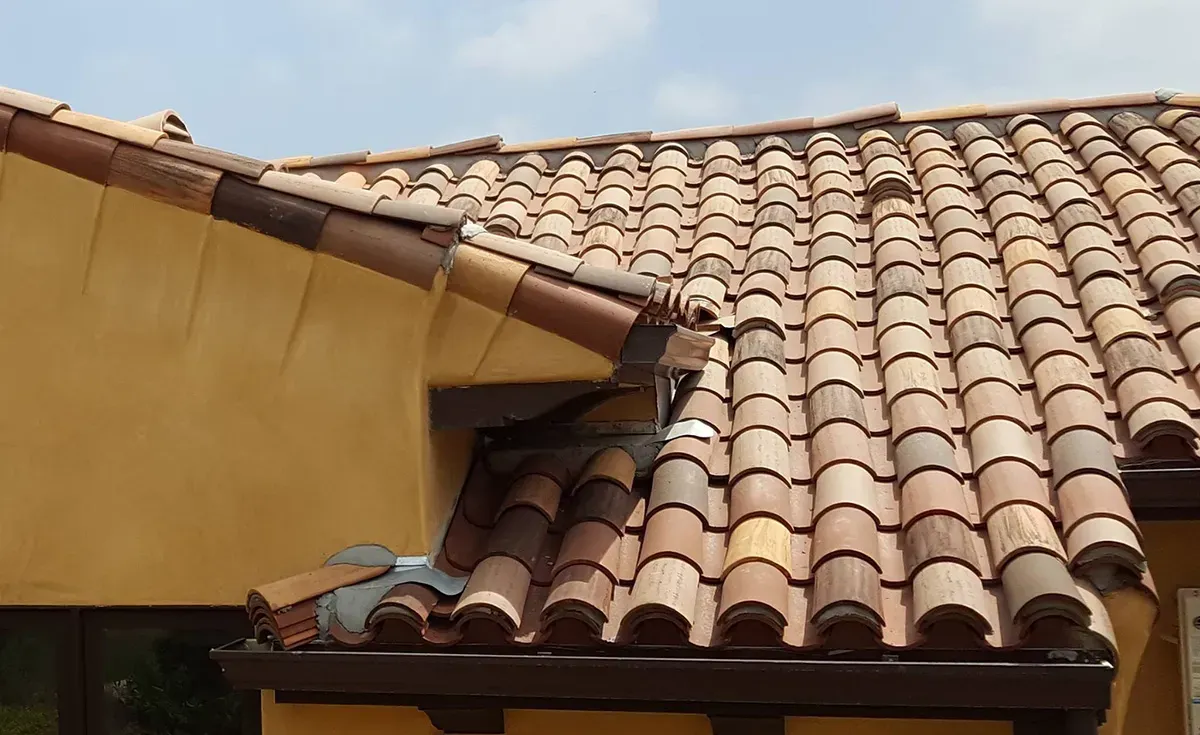
Material requirements: Copper or stainless steel only. Galvanized corrodes in 20-30 years, unacceptable for long-life roofs.
Critical areas:
- Chimney flashings: Step flashing woven with tile coursing
- Skylight installations: Custom curbed details
- Vents and penetrations: Individual tile collars
- Valleys: Open copper valleys or woven tile (labor-intensive)
Investment justification: Copper flashing costs 3-5x more than standard materials but matches tile lifespan. Cutting corners creates expensive repairs within 20-30 years.
Maintaining Clay Tile Roofs in Vancouver
Stone-coated steel requires less maintenance than organic materials but benefits from periodic attention.
Inspection schedule:
- Years 1-25: Annual inspections
- Years 25-50: Biannual professional inspections
- Years 50+: Annual professional with underlayment planning
Key checks:
- Broken or slipped tiles
- Fastener condition (corrosion, pull-through)
- Flashing integrity
- Valley debris accumulation
- Moss growth (shaded areas)
Cleaning methods:
- Soft brushes only
- Low-pressure water (never high pressure)
- Biological growth treatments
- Professional service recommended
Tile replacement: Broken tiles cost $50-150 each to replace professionally. Match existing color and profile. DIY risks damaging adjacent tiles.
Safety: Walking on clay tile can cause cracks easily. Use professionals with proper equipment for roof access.
Common Clay Tile Roofing Issues
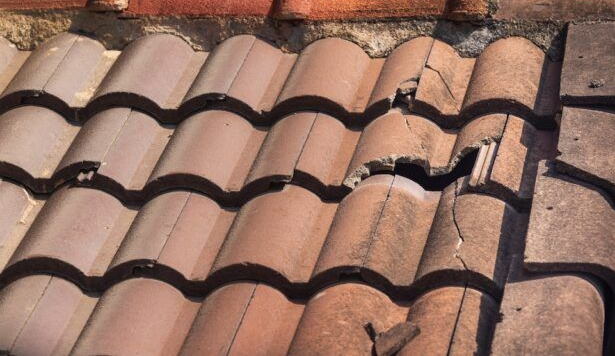
Cracked or broken tiles: Impact damage from hail, branches, debris. Foot traffic damage (tiles are brittle). Proper installation and limited roof access prevent most breakage.
Underlayment failure: Water stains near valleys or penetrations indicate underlayment issues. Early detection prevents structural damage.
Moss-related moisture: Shaded areas accumulate moss that holds moisture. Regular cleaning maintains performance.
Improper repairs: Asphalt cement used to seal cracks (looks terrible, traps moisture). Galvanized nails are corroding. Mismatched replacement tiles. Professional repair preserves roof integrity.
Pros & Cons of Clay Tile Roofing in Vancouver
Pros
✓ Extremely long lifespan - 75-100+ years
✓
Fire resistant - Class A rating, non-combustible
✓
Timeless appearance - Mediterranean, Spanish, and traditional elegance
✓
UV resistant - Color doesn't fade (through-body coloring)
✓
Low water absorption - 3-6% (better than concrete in wet climates)
✓
Energy efficient - Thermal mass moderates temperature swings
✓
Resale value - Premium material elevates property appeal
Cons
✗ Heavyweight - 850-1,050 lbs/sq requires structural reinforcement
✗
High upfront cost - $42,000-115,000 for typical homes
✗
Structural requirements - $5,000-25,000+ engineering and upgrades
✗
Brittle material - Cracks under foot traffic
✗
Installation complexity - Limited qualified contractors
✗
Maintenance access - Walking on the roof is difficult and risky
✗
Seismic concerns - Heavy dead load in earthquake zone
Common Myths About Clay Tile Roofing
Myth: "Tiles waterproof the roof."
Reality: Underlayment provides waterproofing. Tiles protect the underlayment from weather and UV.
Myth: "Clay tile requires no maintenance."
Reality: Annual inspections, debris removal, and eventual underlayment replacement are needed. Less maintenance than organic materials, but not zero.
Myth: "Clay tile always cracks in cold climates."
Reality: Quality hard-fired tiles resist freeze-thaw damage. Vancouver's moderate climate with occasional freezing is well within performance limits. Soft or low-fired tiles (avoid these) can crack.
Myth: "All clay tiles look Mediterranean."
Reality: Flat and interlocking profiles suit contemporary architecture. Spanish barrel tile is one style among many.
Myth: "You can walk on clay tiles like asphalt."
Reality: Clay is brittle. Walking without proper equipment cracks tiles. Limit roof access to professionals.
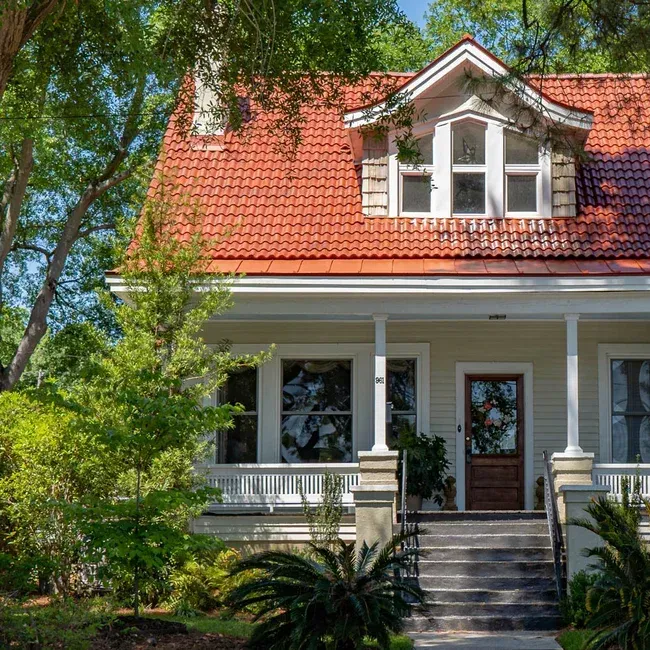
Is Clay Tile Roofing a Good Investment in Vancouver?
Clay tile makes sense if you:
- Own Mediterranean, Spanish, or Mission-style architecture
- Have verified structural capacity or budget for reinforcement
- Plan generational ownership (50+ years)
- Value authentic premium materials over cost
- Understand total lifecycle investment, including underlayment replacements
- Own a luxury property where clay tile affects resale value
Clay tile may not be appropriate if:
- Structural capacity is inadequate, and reinforcement costs are prohibitive
- Ownership timeline is 15-25 years (won't realize longevity value)
- Budget constraints make a $50,000-115,000 roofing investment difficult
- Property style doesn't suit Mediterranean/Spanish aesthetics
- Lighter alternatives (metal, stone-coated steel) would satisfy aesthetic and performance goals
The economics: Clay costs 3-6x more than asphalt upfront. Over 100 years, total costs (initial + 2 underlayment replacements) roughly equal 4 asphalt replacements, but with one structural investment and superior appearance.
Clay Tile Roofing in Vancouver – FAQs
Is clay tile roofing suitable for Vancouver’s climate?
Yes. Fired clay tile performs well in Vancouver’s wet climate because it sheds rain effectively, resists rot, and does not deteriorate from repeated wet-dry cycles.
Why is clay tile roofing uncommon on Vancouver homes?
Clay tile is rare in Vancouver primarily due to its heavy weight (850–1,050 lbs per square), which exceeds the structural capacity of many homes without costly engineering upgrades.
How long does clay tile roofing last in Vancouver?
Clay tiles themselves typically last 75–100+ years, but the waterproof underlayment beneath them usually needs replacement every 30–40 years.
Does clay tile roofing handle heavy rain and storms?
Yes. Properly installed clay tile systems withstand heavy rainfall and winds up to 110–130 mph, well above typical Vancouver storm conditions.
Does moss grow on clay tile roofs in Vancouver?
Moss can grow on unglazed clay tiles in shaded areas, but it does not cause rot and is manageable with periodic professional cleaning.
Do Vancouver homes need structural upgrades for clay tile roofing?
Most homes do. A structural engineer must verify load capacity, and reinforcement costs often range from $5,000 to $25,000+, depending on the building.
When is clay tile roofing a good investment in Vancouver?
Clay tile is best suited for luxury or Mediterranean-style homes, long-term ownership, and properties where architectural appearance justifies the structural and financial investment.
Next Steps for Clay Tile Roofing in Vancouver
If clay tile interests you after understanding the requirements, here's how to proceed:
- Structural evaluation - Hire an engineer to assess load capacity ($1,000-3,000)
- Understand reinforcement needs - Get a detailed estimate for required upgrades
- Budget reality check - Calculate total including structure, materials, labor
- Contractor research - Identify experienced clay tile installers (rare in Vancouver)
- Material selection - Choose profile, color, glazed vs unglazed
Working with Paragon Roofing BC
Paragon Roofing BC can discuss clay tile roofing feasibility for your Vancouver property. We help assess whether your structure accommodates clay tile and connect you with structural engineers for formal evaluations.
For projects where clay tile proves impractical, we provide guidance on concrete tile, stone-coated steel, and other alternatives that deliver similar aesthetics without structural constraints.
Resources:
- Residential roofing services
- All roofing options
- Contact us for consultation
Clay tile delivers timeless beauty and century-long durability. When structural and budget realities align with long-term ownership, it provides generational value that few materials match.
All pricing is for general informational purposes only and is subject to change. Clay tile roofing costs in Vancouver vary based on roof size, tile profile, structural requirements, engineering assessments, access conditions, and material availability. Final pricing is confirmed only after a structural review, on-site inspection, and a written scope of work.
Here's What Our Existing Clients Think.
Home and business owners we've served across the greater Vancouver area.
Our Google Reviews
Edit Google Reviews Widget
We look forward to helping you.
For all your roofing needs, contact Paragon Roofing BC — call, text, or email us at 604-358-3436
Paragon Res Roof Install #2
We will get back to you as soon as possible.
Please try again later.