Natural Slate Roofing in Vancouver: Lifespan, Cost & Structural Needs

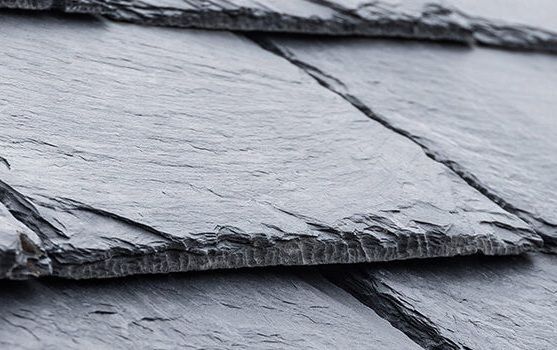
Natural slate holds a legendary reputation, roofs lasting 75-150+ years, timeless elegance that elevates property values, and stone durability that outlasts
generations. But in Vancouver, slate roofing is rare for good reasons.
The reality: Natural slate weighs 800-1,500 lbs per square (100 sq ft), roughly 5-6 times heavier than asphalt shingles. Most Vancouver homes weren't designed for this load. Structural reinforcement costs $5,000-15,000 before purchasing a single slate tile. In a seismically active region like BC, adding massive dead weight at the roof peak creates engineering concerns.
Yet when done correctly, natural slate roofing performs exceptionally in our coastal climate. Non-porous stone sheds Vancouver's heavy rainfall perfectly. The material resists moss better than organic alternatives and doesn't deteriorate from repeated wet-dry cycles.
Slate makes sense for luxury homes, heritage properties requiring historically-appropriate materials, and select strata buildings where the structural system can support the weight. This guide helps you understand whether your property qualifies and what the investment entails.
Is Natural Slate Roofing Practical in Vancouver?
How Natural Slate Performs in Vancouver's Coastal Climate
Vancouver's 1,189mm annual rainfall tests every roofing material. Understanding how slate handles our specific weather conditions clarifies its practical advantages.
Heavy Rain & Water Shedding
Non-porous stone: Slate is a metamorphic rock formed under extreme heat and pressure. The material absorbs essentially zero water, far superior to concrete tile, clay, or wood products.
Overlapping installation: Individual slate tiles overlap with a 3-4 inch headlap, creating a multi-layered barrier. Water follows gravity down the slope, never finding pathways through properly installed slate.
Performance in downpours: Properties near North Shore mountains or waterfront areas in Coal Harbour experience intense rainfall. Slate handles these conditions without degradation. The tiles themselves last centuries, underlayment beneath them becomes the limiting factor (discussed later).
Moisture, Moss & Organic Growth
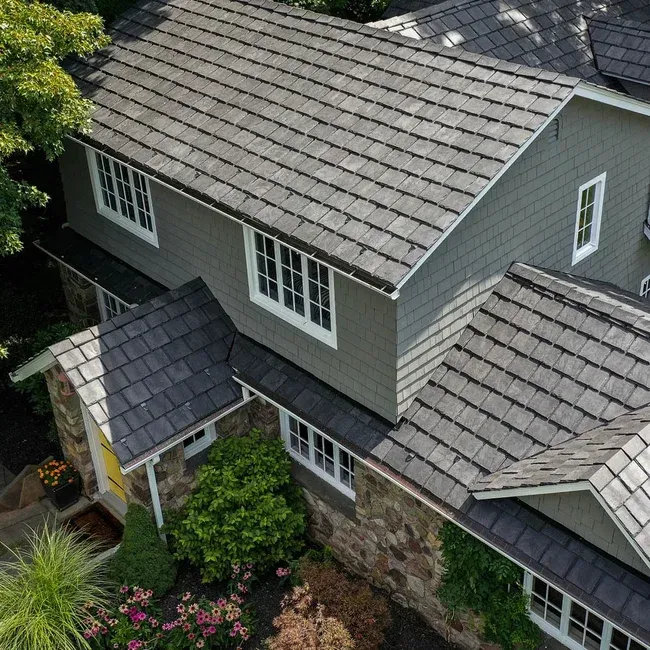
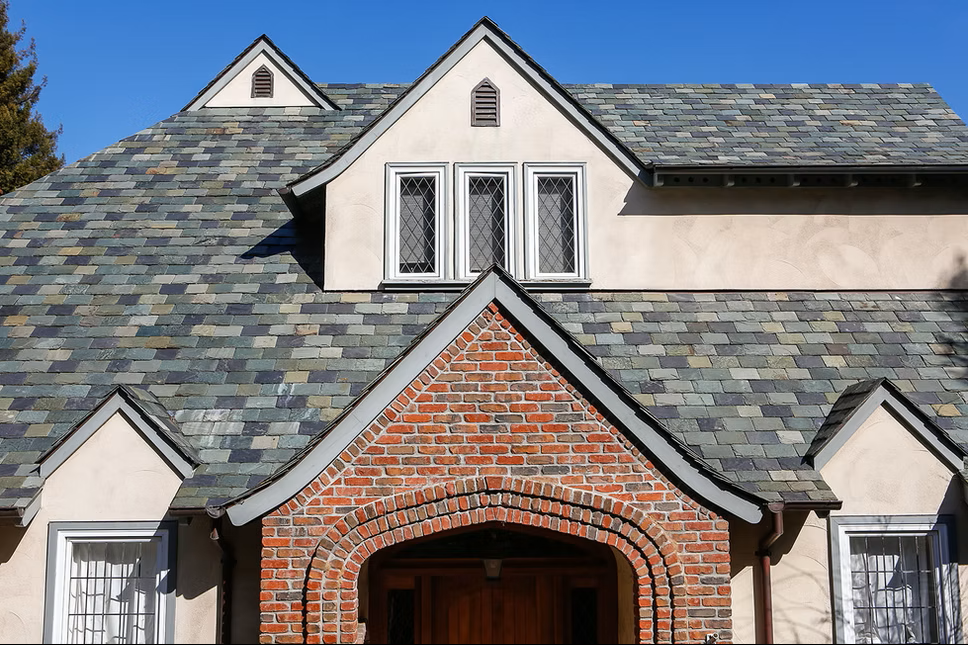
The Vancouver moss challenge: North-facing roofs and shaded properties in neighborhoods like Dunbar, Kerrisdale, and West Vancouver grow moss aggressively. While slate resists growth better than cedar or asphalt, it's not immune.
Maintenance realities:
- Moss establishes in the texture of natural slate surfaces
- Gentler cleaning methods required (never pressure wash)
- Annual or biannual inspections are needed in heavily shaded locations
- Professional cleaning every 3-5 years maintains the appearance
Slate won't rot from moss like cedar shake, but organic growth holds moisture against the surface and creates staining. Properties with clear solar exposure minimize this issue.
Freeze-Thaw & Seasonal Weather
Vancouver's moderate climate means limited freeze-thaw cycles compared to interior BC or prairie provinces. But occasional winter freezing does occur.
Why slate excels: Hard slate varieties resist freeze-thaw damage better than porous materials like concrete tile or soft stone. Water can't penetrate to cause spalling or cracking. This gives slate an advantage over clay tile in coastal climates with occasional freezing.
Seismic considerations: BC sits in an active earthquake zone. The weight of slate at the roof peak affects structural response during seismic events. Proper engineering accounts for this, but it's a real consideration; lighter materials like metal or composite slate reduce seismic loads.
Understanding Natural Slate Roofing Systems
Before evaluating whether slate suits your property, understanding what it is and how it performs provides context.
What Natural Slate Is Made From
Metamorphic stone: Slate forms when shale (sedimentary rock) undergoes intense heat and pressure deep underground. This metamorphism creates aligned mineral crystals that allow the stone to split cleanly into thin, flat sheets.
Geological durability: The metamorphic process creates incredibly dense, non-porous material resistant to water, acids, and biological degradation. This explains why slate roofs installed 100+ years ago still function today; the stone itself is geologically stable.
Types of Natural Slate Used in Roofing
Hard vs soft slate:
- Hard slate: Vermont unfading black, Canadian slate, extremely durable, 100+ year lifespan, resists weathering
- Soft slate: Some Pennsylvania varieties weather more quickly, 40-75 year lifespan, can delaminate over time
For Vancouver's wet climate, specify hard slate varieties. The premium cost pays off through extended service life.
Thickness variations:
- 3/16 inch (standard thin): 700-800 lbs per square, requires less structural support
- 1/4 inch (commercial standard): 800-950 lbs per square, good balance
- 3/8 inch (architectural grade): 1,200-1,600 lbs per square, enhanced texture, and hail resistance
- 3/4 inch+ (estate grade): 2,500-3,000 lbs per square, premium appearance, bullet-resistant
Most Vancouver residential roofing projects use 1/4 to 3/8 inch slate, balancing appearance, durability, and structural feasibility.
How Natural Slate Roofs Are Installed
Individual tiles: Unlike continuous materials, each slate tile installs separately. Proper installation requires skilled tradespeople familiar with traditional techniques.
Fastening methods:
- Copper or stainless steel nails (galvanized steel corrodes and fails)
- Two nails per tile, positioned in specific locations to avoid cracking
- Nails penetrate only the covered portion (never exposed edges)
Installation complexity:
- Sorting tiles by size and thickness
- Laying courses with proper headlap (3-4 inches)
- Cutting tiles to fit valleys, hips, ridges, and penetrations
- Installing specialized flashing for chimneys, skylights, and vents
- Working carefully to avoid breaking brittle tiles during installation
Labor costs reflect this specialized skill, expect $7-12 per square foot just for installation, separate from materials.
Why weight matters:
- Heavier roofing increases inertial forces during shaking
- Top-heavy buildings experience greater lateral movement
- Proper connection details become more critical
- Reinforced masonry or concrete structures handle slate better than wood frame
Engineering solutions:
- Enhanced fastening schedules (more/stronger connections)
- Seismic straps at rafter-wall connections
- Proper blocking and bracing
- Evaluated loading paths to the foundation
Heritage homes in older Vancouver neighborhoods (Strathcona, Gastown, Fairview) often have unreinforced masonry or aging wood frames. Adding slate requires careful structural evaluation and potentially significant upgrades to meet current seismic codes.
Structural Requirements for Natural Slate Roofing in Vancouver
This section is critical. Most slate roofing inquiries end here after a structural evaluation reveals incompatibility.
How Heavy Is Natural Slate Roofing?
Weight comparison (per 100 sq ft):
| Material | Weight per Square |
|---|---|
| Asphalt shingles | 230-430 lbs |
| Cedar shake | 250-350 lbs |
| Metal roofing | 100-200 lbs |
| Composite slate | 250-400 lbs |
| Clay tile | 850-1,000 lbs |
| Natural slate (1/4\") | 800-950 lbs |
| Natural slate (3/8\") | 1,200-1,600 lbs |
| Natural slate (3/4\") | 2,500-3,000 lbs |
Standard residential roof framing in Vancouver supports 15-20 lbs per square foot dead load (roofing material weight). Slate requires 27-50 lbs per square foot, depending on thickness, 2-3 times the typical design capacity.
Structural Assessment & Engineering Requirements
Load-bearing evaluation: Before considering slate, hire a structural engineer to evaluate:
- Existing rafter size, spacing, and condition
- Truss design and load capacity
- Wall bearing capacity
- Foundation adequacy for increased loads
Typical findings: Homes built pre-1970 often have dimensional lumber rafters (2x6, 2x8) at 24-inch spacing, adequate for asphalt but marginal for slate. Modern truss systems may lack the capacity for heavy roofing without modification.
Reinforcement options:
- Sister existing rafters - Add matching lumber alongside existing members ($3,000-8,000)
- Install additional truss members - Strengthen internal web members ($5,000-12,000)
- Add support walls - Install load-bearing walls below critical spans ($8,000-15,000)
- Complete re-framing - Replace inadequate structure ($15,000-30,000+)
The math: 2,000 sq ft roof with 3/8" slate = 24,000-32,000 lbs added dead load. Distributing this across the structure requires proper engineering to prevent sagging, failure, or accelerated deterioration.
Seismic Considerations in BC
Vancouver sits near the Cascadia Subduction Zone. The "big one" is statistically overdue. Building codes account for seismic loads.
How Much Does Natural Slate Roofing Cost in Vancouver?
Slate represents the highest investment in residential roofing. Understanding total project costs, including structural work, prevents surprises.
Factors That Affect Slate Roofing Costs
Slate type & origin:
- Domestic (Vermont, Virginia): $10-20 per sq ft material cost
- Canadian: $8-15 per sq ft material cost
- Imported (Welsh, Spanish): $15-30 per sq ft material cost
- Premium grades: +20-50% over standard grades
Roof size & pitch:
- Larger roofs (3,000+ sq ft): Slight economy of scale on labor
- Steep pitch (10/12+): Premium labor rates, safety equipment required
- Complex roof lines: Multiple valleys, dormers, and hips increase material waste and labor time
Structural upgrades:
- Engineering assessment: $1,000-3,000
- Minor reinforcement: $3,000-8,000
- Moderate structural work: $8,000-15,000
- Major re-framing: $15,000-30,000+
This can double the project cost before accounting for roofing materials and labor.
Installation complexity:
Specialized labor:
- Certified slate installers command premium rates
- Limited number of qualified contractors in Vancouver
- Travel fees if bringing in specialist teams
Typical Natural Slate Roofing Cost Ranges
Complete installed costs for Vancouver:
Standard installation (1/4" slate, moderate complexity):
- Material: $10-15 per sq ft
- Labor: $7-12 per sq ft
- Underlayment & flashing: $3-5 per sq ft
- Total: $20-32 per sq ft
- 2,000 sq ft roof: $40,000-64,000
Premium installation (3/8" slate, complex roof):
- Material: $15-25 per sq ft
- Labor: $10-15 per sq ft
- Premium underlayment & copper flashing: $5-8 per sq ft
- Total: $30-48 per sq ft
- 2,000 sq ft roof: $60,000-96,000
Add structural reinforcement:
- Engineering: $1,000-3,000
- Structural work: $5,000-20,000+
- Total project: $46,000-119,000 for 2,000 sq ft
These figures exclude permits, crane rentals for material delivery (slate is heavy), and disposal of existing roofing.
Long-term value: Slate costing $60,000 installed lasts 100+ years. Asphalt costing $15,000 requires replacement every 20-25 years. Over 100 years, asphalt totals $60,000-75,000 in today's dollars (before inflation), comparable to the total cost with significantly more disruption.
How Long Does Natural Slate Roofing Last in Vancouver?
Lifespan is Slate's primary value proposition. Understanding what affects longevity helps justify the investment.
Expected Lifespan of Natural Slate
Hard slate varieties: 100-150+ years in Vancouver conditions
Commercial slate: 75-100 years
Soft slate: 40-75 years (avoid in wet climates)
Slate roofs installed on Vancouver heritage buildings in the 1920s-1940s still function today, 80-100 years later. The tiles themselves show minimal deterioration. Underlayment and flashing require replacement, but the slate continues performing.
What determines lifespan:
- Slate hardness (geological classification)
- Installation quality (proper fastening, adequate overlap)
- Maintenance frequency (prompt repairs, debris removal)
- Foot traffic (avoid walking on slate, it cracks easily)
Tile Lifespan vs Underlayment Lifespan
Critical distinction: Slate tiles last 100+ years. Underlayment beneath them lasts 20-40 years, depending on quality.
Underlayment replacement cycle:
- Year 0-30: Original installation with synthetic underlayment
- Year 30-40: Signs of underlayment failure, minor leaks, water staining
- Year 40: Strip and relay entire roof, remove all slate, install new underlayment, reinstall salvaged slate
- Year 70-80: Second underlayment replacement
- Year 100+: Third replacement or full roof replacement
The math: Initial slate installation costs $60,000. Two underlayment replacements at Years 40 and 80 cost $25,000-35,000 each (labor-intensive to remove and reinstall slate without breaking tiles). Total 100-year cost: $110,000-130,000 vs $60,000-75,000 for 4-5 asphalt replacements.
The advantage? One-time structural investment, minimal material waste, and generational durability.
Why Slate Is Considered a "Lifetime Roof"
Multi-generation value: Slate installed at age 40 protects your home through retirement, your children's ownership, and potentially your grandchildren's tenure. Property transfers with a permanent roof asset.
Resale impact: Heritage homes, luxury properties, and character neighborhoods throughout Vancouver (Shaughnessy, Kerrisdale, Kitsilano character districts) command premiums for authentic slate roofs. Buyers recognize the value and rarity.
Environmental consideration: One roof installation vs 4-5 replacements = dramatically less landfill waste and embodied energy over the building's lifespan.
Waterproofing Beneath Natural Slate Roofs
Understanding what actually keeps water out prevents misplaced confidence in the slate itself.
Why Slate Tiles Are Not the Waterproofing Layer
Common misconception: "Stone tiles make the roof waterproof."
Reality: Slate tiles shed 95%+ of water but aren't sealed or continuous. Wind-driven rain can work between tiles. Proper slate roofing relies on underlayment as the primary waterproofing layer; tiles are the protective covering.
This distinction matters when evaluating costs and maintenance. Underlayment failure means leaks even if every slate tile remains perfect.
Best Underlayment Systems for Vancouver Climate
Traditional felt: 15-20 year lifespan, deteriorates from moisture. Not recommended for slate's long service life.
Synthetic underlayment: 30-50 year lifespan, handles moisture better, appropriate for Vancouver climate. Products like GAF Deck Armor or similar high-performance membranes.
Ice & water shield: Self-sealing membrane for valleys, eaves, and penetrations. Prevents water infiltration at vulnerable areas. Required in Vancouver despite the moderate climate.
The investment: Premium underlayment adds $2-4 per sq ft vs basic felt, but extends the interval between costly strip-and-relay operations from 20-30 years to 40-50 years.
Flashing & Penetrations
Material requirements: Copper or stainless steel flashing only. Galvanized steel corrodes in 20-30 years, unacceptable for 100-year roofs. Aluminum isn't strong enough for slate applications.
Critical areas:
- Chimney flashings - Step flashing integrated with slate coursing, counter flashing embedded in masonry
- Skylight installations - Curbed details with proper head flashing
- Roof vents and penetrations - Custom slate collars around pipes, exhaust vents
- Valleys - Either open copper valleys or woven slate (labor-intensive)
Cost implications: Copper flashing costs 3-5x more than standard galvanized steel but matches slate's lifespan. Cutting corners here creates expensive repair needs within 20-30 years.
Maintaining Natural Slate Roofs in Vancouver
Slate requires less maintenance than organic materials, but isn't maintenance-free.
Routine Inspections
Inspection frequency:
- Year 1-25: Annual visual inspections
- Year 25-50: Biannual professional inspections
- Year 50+: Annual professional inspections with planning for underlayment replacement
What to check:
- Broken or slipped tiles (storm damage, foot traffic, falling branches)
- Fastener failures (copper nails corroded or pulled through soft slate)
- Flashing condition (copper develops patina but shouldn't show holes or separation)
- Valley accumulation (debris blocking water flow)
- Moss or organic growth (particularly on north-facing slopes)
Safety consideration: Never walk on slate roofs without proper equipment and training. Tiles crack easily under point loads. Inspection from ground level with binoculars, drone photography, or professional access with roof jacks.
Moss & Debris Management
Gentle cleaning methods only:
- Soft brushes (never wire brushes)
- Low-pressure water (never pressure washers, they damage slate edges and force water under tiles)
- Specialized moss treatments for stone surfaces
- Manual debris removal from valleys and gutters
**Why aggressive cleaning fails:**
Slate has a natural surface texture. Power washing can pit the surface, remove the protective weathering layer, and force water behind tiles. Professional cleaners experienced with slate understand appropriate techniques.
Tree management: Properties with mature trees require more frequent maintenance. Keep branches trimmed back 6+ feet from the roof surface. Falling needles and leaves create organic buildup that holds moisture and supports moss growth.
Repairing Broken or Slipped Slates
Why specialized knowledge matters:
- Removing broken slates requires a slate ripper tool, sliding the hooked blade under the tile to cut nails
- Replacement tiles must match the original size, thickness, color, and texture
- Fastening replacement without damaging adjacent tiles requires skill
- Matching the weathered slate appearance after decades of aging is difficult
DIY risks: Improper repairs damage surrounding tiles, create leak pathways, and void insurance coverage. Professional slate roof repair costs $200-500 per tile but preserves roof integrity.
Common Natural Slate Roofing Issues in Vancouver
Broken or slipped slates:
- Impact damage from hail, branches, debris
- Foot traffic damage (slate is brittle; walk carefully with equipment)
- Wind events from improper fastening (corroded nails, wrong placement)
Failing flashing or underlayment:
- Water stains near chimneys or valleys
- Rust stains on exterior walls
- Wet attic insulation, musty odors
- Early detection prevents structural damage
Improper past repairs:
- Asphalt cement sealing (degrades, looks terrible)
- Galvanized nails instead of copper (corrode in 15-25 years)
- Silicone sealant on joints (traps moisture)
- Mismatched replacement tiles
Heritage buyers often discover decades of botched repairs requiring professional restoration.
Natural Slate vs Other Premium Roofing Materials
Comparing slate to alternatives helps clarify where it fits in the premium roofing market
Natural Slate vs Synthetic Slate
| Feature | Natural Slate | Synthetic Slate |
|---|---|---|
| Weight | 800-1,500 lbs/sq | 250-400 lbs/sq |
| Lifespan | 100+ years | 30-50 years |
| Cost | $20-40/sq ft | $9-15/sq ft |
| Structural Needs | Major reinforcement is often required | Fits standard framing |
| Appearance | Authentic stone texture and color | Very good imitation |
| Resale Value | Premium heritage appeal | Modern quality material |
When synthetic makes sense: Homes lacking structural capacity, tighter budgets, modern architecture where authentic materials aren't prioritized.
When natural slate justifies cost: Heritage properties, luxury homes, generational ownership plans, and locations where authenticity affects property value significantly.
Natural Slate vs Clay Tile
Both are premium materials with similar costs and challenges:
Weight comparison: Clay tile (850-1,000 lbs/sq) is slightly lighter than slate but still requires structural evaluation.
Moisture performance: Clay is porous and absorbs some water. Not ideal for Vancouver's constant moisture. Slate's non-porous nature performs better in wet climates.
Aesthetic differences: Clay tile suits Mediterranean, Spanish, and Mission-style architecture. Slate suits Gothic, Tudor, Victorian, and contemporary high-end designs.
Longevity: Quality clay tile lasts 50-100 years vs 100-150+ for slate. Slate edges out clay in wet climates.
Natural Slate vs Stone-Coated Steel
Weight advantage: Stone-coated steel weighs 150-200 lbs/sq ft of slate's weight. No structural reinforcement needed.
Appearance: Modern stone-coated products look decent but don't replicate natural slate's authentic texture and color variation.
Lifespan: 40-60 years for quality steel vs 100+ for slate. Steel offers good value but doesn't match slate's generational durability.
Cost: $10-18 per sq ft installed vs $20-40 for slate. Steel is the practical choice when structural constraints rule out natural slate.
Pros & Cons of Natural Slate Roofing in Vancouver
Balanced evaluation for informed decision-making.
Pros
✓ Extreme longevity - 100-150+ years with proper maintenance
✓
Timeless appearance - Authentic stone beauty that enhances property value
✓
Fire resistant - Class A rating, non-combustible stone
✓
Non-porous - Perfect for Vancouver's wet climate, zero water absorption
✓
Low maintenance - Durable material requires minimal attention
✓
Environmental - One installation vs 4-5 replacements reduces waste
✓
Prestige - Premium material signals quality and permanence
Cons
✗ Extremely heavy - Requires structural reinforcement ($5,000-20,000+)
✗
Very high cost - $40,000-100,000+ for typical homes
✗
Installation complexity - Limited qualified contractors, specialized skills required
✗
Brittle material - Cracks under foot traffic, difficult to walk on safely
✗
Seismic concerns - Adds significant dead load in the earthquake zone
✗
Underlayment limits - Strip-and-relay every 40-50 years despite tile longevity
✗
Repair challenges - Matching weathered slate after decades is difficult
Common Myths About Natural Slate Roofing
Clarifying misconceptions builds realistic expectations.
Myth: "Slate tiles waterproof the roof."
Reality: Underlayment provides waterproofing. Tiles shed water and protect the underlayment, but aren't sealed. Wind-driven rain can penetrate between tiles if the underlayment fails.
Myth: "Slate roofs require no maintenance."
Reality: While low-maintenance compared to organic materials, slate needs periodic inspections, debris removal, moss cleaning, and eventual underlayment replacement. Neglect leads to expensive structural damage.
Myth: "All slate lasts forever."
Reality: Hard slate varieties last 100-150+ years. Soft slate degrades in 40-75 years. Proper material selection matters specify hard slate for Vancouver's wet climate.
Myth: "You can walk on slate roofs like asphalt."
Reality: Slate is brittle and cracks under point loads. Walking without proper equipment damages tiles. Limit roof access and use professionals for any work.
Myth: "Slate is maintenance-free because it's stone."
Reality: The tiles are durable, but fasteners corrode, flashing fails, and underlayment deteriorates. Regular maintenance programs prevent expensive repairs.
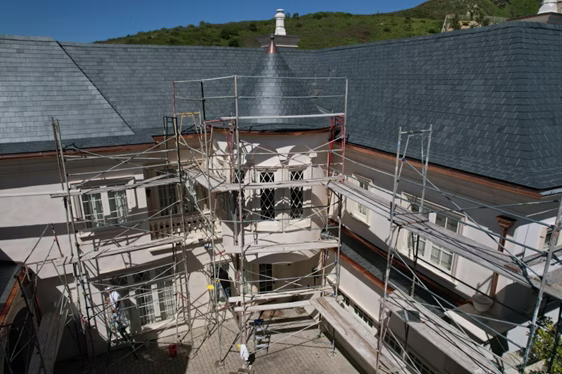
Is Natural Slate Roofing a Smart Investment?
Decision framework based on property characteristics and ownership plans.
Slate makes sense if you:
- Own a heritage or character home requiring historically-appropriate materials
- Have verified structural capacity or budget for reinforcement ($5,000-20,000)
- Plan generational ownership (30+ years minimum, ideally 50-100+ years)
- Value authenticity and premium materials over cost considerations
- Understand the total lifecycle investment, including underlayment replacements
- Own property in neighborhoods where slate affects resale value (Shaughnessy, heritage districts)
Slate may not be appropriate if:
- Structural capacity is inadequate, and reinforcement costs are prohibitive
- Ownership timeline is 10-20 years (won't realize the longevity value)
- Budget constraints make a $40,000-100,000+ roofing investment difficult
- Property style doesn't suit traditional slate aesthetics
- Synthetic slate or stone-coated steel would satisfy aesthetic goals at a lower cost
The economic reality: Slate costs 2-4x more than premium asphalt upfront. Over 100 years, total costs (initial + 2-3 underlayment replacements) roughly equal 4-5 asphalt replacements, but with one structural investment and minimal landfill waste.
Non-economic factors, prestige, authenticity, and heritage preservation, often drive the decision as much as pure financial calculations.
Natural Slate Roofing in Vancouver – FAQs
Is natural slate roofing practical for Vancouver homes?
Sometimes. Natural slate can perform extremely well in Vancouver’s wet climate, but it’s only practical if the home can handle the very heavy roof load and the budget supports specialized installation and structural work.
How long does a natural slate roof last in Vancouver?
With hard slate and correct installation, natural slate commonly lasts 75–150+ years. However, the underlayment and flashing beneath the slate may need replacement sooner, which can require a “strip-and-relay” process.
Does slate handle Vancouver rain and moisture better than other materials?
Yes. Slate is non-porous stone that doesn’t rot, swell, or degrade from Vancouver’s frequent rain, and it generally resists moisture-related wear better than asphalt or cedar.
Can moss grow on slate roofs in Vancouver?
Yes, especially on north-facing or heavily shaded roofs. Slate won’t rot from moss, but growth can stain the surface and hold moisture, so periodic inspections and gentle cleaning may be needed.
What structural issues make slate difficult in Vancouver?
Slate weighs roughly 800–1,500 lbs per square (100 sq ft), far heavier than asphalt. Many Vancouver homes require a structural engineer review and potentially reinforcement to safely support the added dead load.
How do earthquakes affect slate roofing decisions in BC?
Because Vancouver is in a seismic region, adding major roof weight can increase structural forces during shaking. A qualified engineer should confirm the home’s seismic load path and connections if slate is being considered.
What does natural slate roofing cost in Vancouver?
Natural slate is a premium system with higher costs due to materials, specialized labour, copper/stainless flashing, and possible crane access and structural upgrades. Final pricing depends heavily on roof design and engineering requirements.
Next Steps for Natural Slate Roofing in Vancouver
If slate interests you after understanding the requirements, here's how to proceed:
Assessment Process
- Structural evaluation - Hire a structural engineer to assess load capacity ($1,000-3,000)
- Understand reinforcement needs - Get a detailed estimate for required upgrades
- Budget reality check - Calculate total project cost, including structure, materials, and labor
- Contractor research - Identify certified slate installers (limited in Vancouver)
- Material selection - Specify hard slate varieties appropriate for a coastal climate
Working with Paragon Roofing BC
Paragon Roofing BC can discuss natural slate roofing feasibility for your Vancouver property. We help property owners understand whether their structure accommodates slate and connect them with structural engineers for formal assessments.
For projects where natural slate proves impractical, we provide guidance on synthetic slate and other premium alternatives that deliver similar aesthetics without structural constraints.
Resources:
- Residential roofing services
- All roofing options
- Contact us for consultation
Natural slate represents the pinnacle of roofing materials, with unmatched longevity, timeless beauty, and authentic quality. When structural and budget realities align with ownership timelines, it delivers generational value few materials can match.
All pricing is for general informational purposes only and is subject to change. Natural slate roofing costs in Vancouver vary based on slate type and thickness, roof size and complexity, required underlayment/flashing specifications, access and logistics (including crane needs), and any structural engineering or reinforcement. Final pricing is confirmed only after an on-site inspection, structural review, and a written scope of work.
Here's What Our Existing Clients Think.
Home and business owners we've served across the greater Vancouver area.
Our Google Reviews
Edit Google Reviews Widget
We look forward to helping you.
For all your roofing needs, contact Paragon Roofing BC — call, text, or email us at 604-358-3436
Paragon Res Roof Install #2
We will get back to you as soon as possible.
Please try again later.