Composite Roofing in Vancouver: Durability, Style & Maintenance

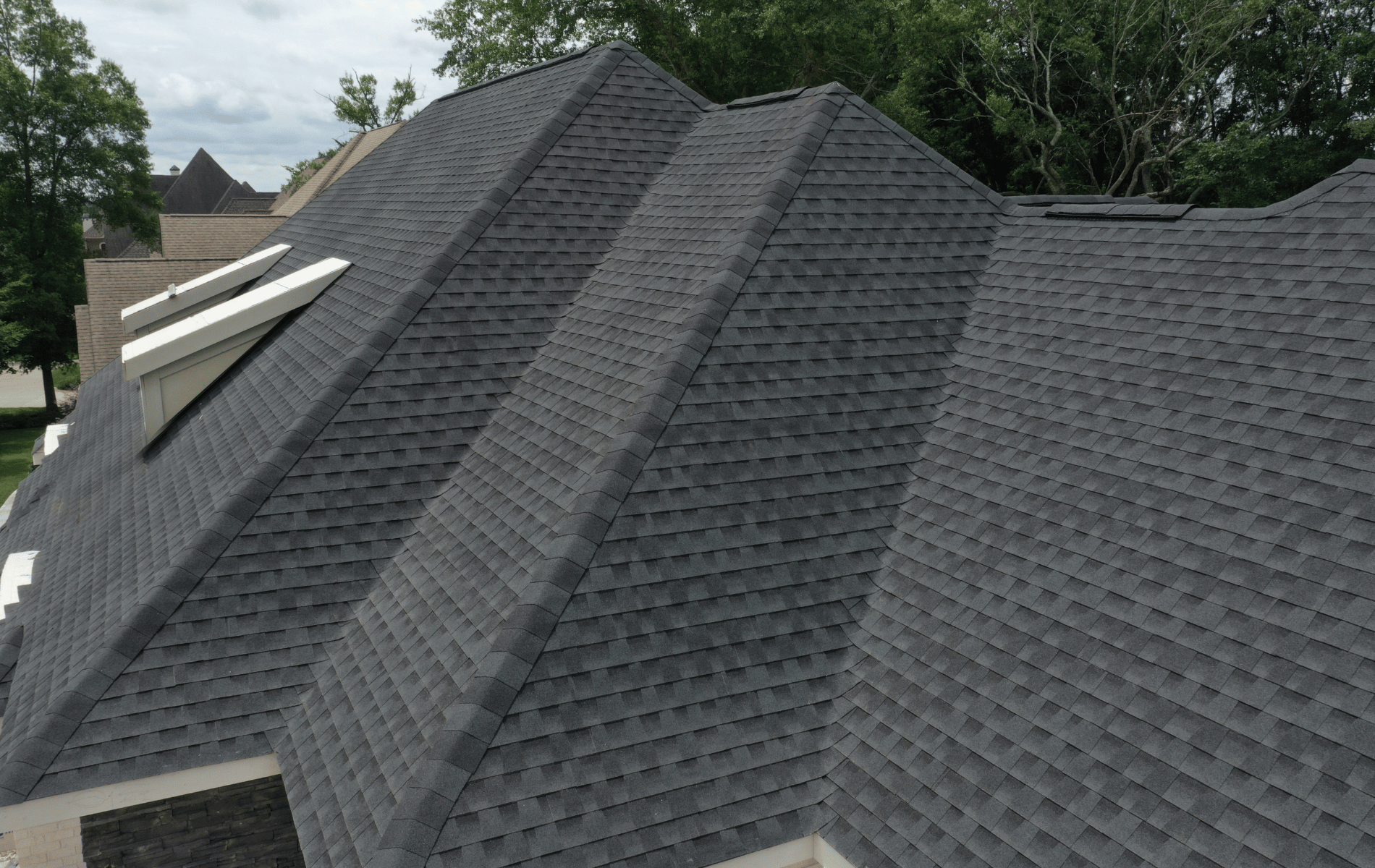
Vancouver receives over 1,189mm of annual rainfall each year. This creates ongoing challenges with moss, algae, and moisture damage that property owners in Kitsilano, Mount Pleasant, and North Vancouver know too well.
Traditional materials have significant drawbacks in our climate:
- Cedar shake looks beautiful, but it rots in constant moisture
- Natural slate weighs too much for most structures
- Asphalt shingles need frequent replacement
Composite roofing offers a modern solution. These engineered products deliver the appearance of premium materials without the moisture problems. You get the cedar aesthetic for heritage homes in Kerrisdale without biannual treatments, or slate elegance for character properties in Shaughnessy without structural reinforcement.
The material resists moss and algae better than wood alternatives. Properties near Stanley Park or under mature trees in Dunbar benefit from composite roofing's non-porous surfaces that shed water effectively. For homeowners tired of constant moss removal or wind damage repairs, composite roofing represents a practical upgrade.
Whether managing a strata building in Burnaby or renovating a home in Richmond, composite roofing balances curb appeal, coastal durability, and manageable maintenance.
Why Composite Roofing Is a Popular Choice in Vancouver
How Composite Roofing Performs in Vancouver's Coastal Climate
Vancouver's climate presents specific roofing challenges. Understanding how composite materials handle our weather patterns makes the difference between a 30-year roof and premature failure.
Rain & Moisture Resistance
We see precipitation roughly 170 days per year, concentrated from October through March. Roofs rarely dry completely during these months.
Key advantages of composite materials:
- Non-porous polymer blends don't absorb water like cedar
- Water sheets off the surface rather than soaking in
- Interlocking designs shed water away from vulnerable areas
- No rot, swelling, or dimensional changes from wet-dry cycles
Properties near the North Shore mountains or waterfront homes in Coal Harbour face heavy rainfall. Composite materials maintain integrity through repeated exposure without the degradation that affects organic materials.
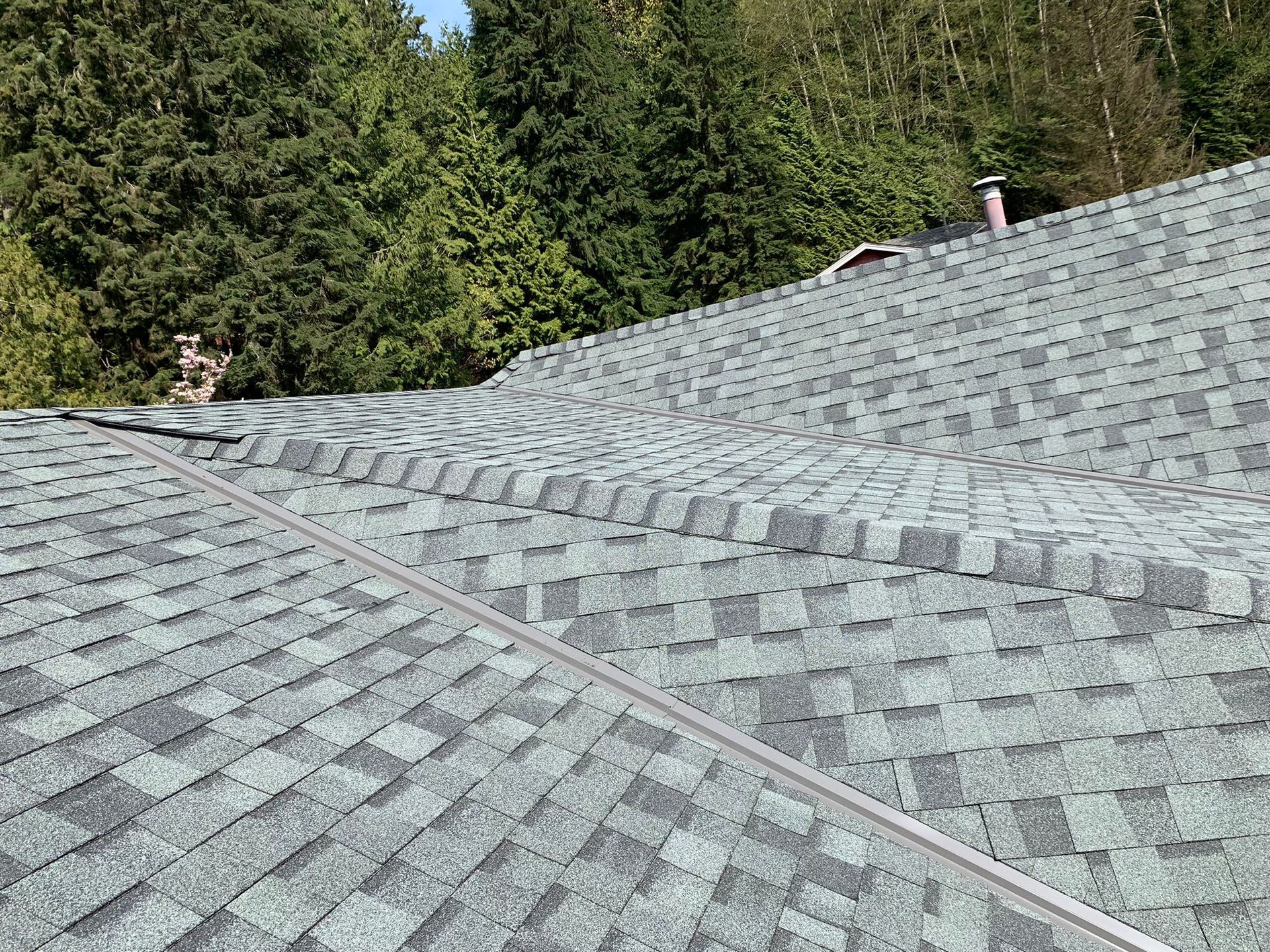
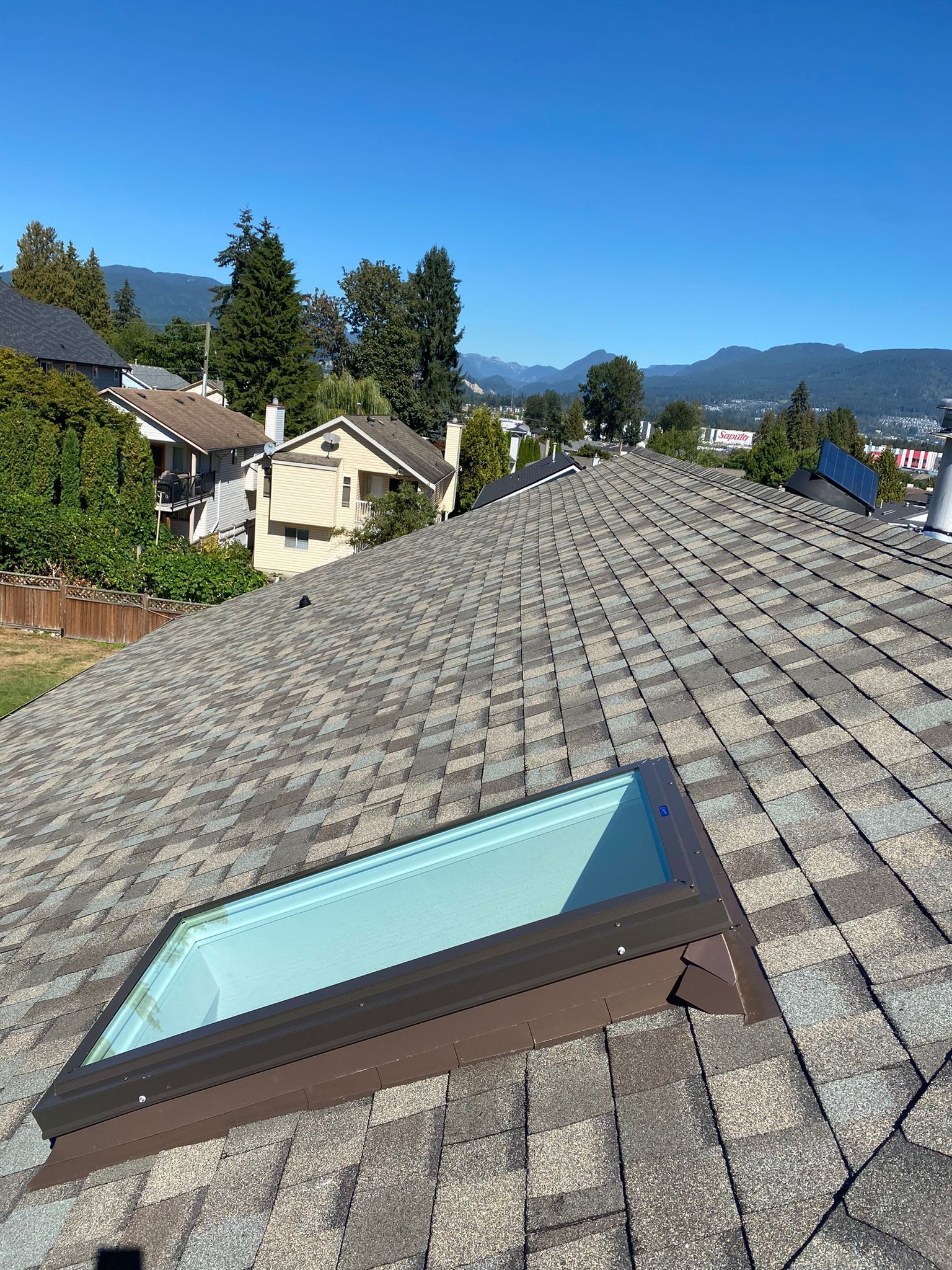
Moss, Algae & Organic Growth Resistance
Green tint on north-facing roofs is common in Vancouver. Moss thrives in our damp climate and accelerates deterioration.
Composite roofing offers natural resistance:
- Synthetic materials lack the organic matter moss needs
- Smooth surfaces make it harder for spores to establish
- Less texture means fewer trapped leaves and debris
- Growth rate is slower and less aggressive than on cedar or asphalt
Homes in shaded Dunbar neighborhoods or forested West Vancouver areas still need inspections. But growth is less severe, translating to less frequent
maintenance and lower costs.
Wind & Seasonal Storm Performance
November through February brings windstorms with gusts occasionally exceeding 90 km/h. Burrard Inlet funnels wind into waterfront neighborhoods, while exposed areas in South Surrey and Burnaby face direct Pacific weather.
Wind Resistance Features:
- Interlocking systems connect each piece to adjacent units
- Unified surface resists wind uplift
- Most products are rated for winds up to 130 mph (210 km/h)
- Lightweight reduces stress on fasteners during high winds
The flexibility of polymer materials absorbs impacts without fracturing. When branches fall or ice breaks free, composite shingles survive better than brittle natural slate, avoiding immediate repair needs.
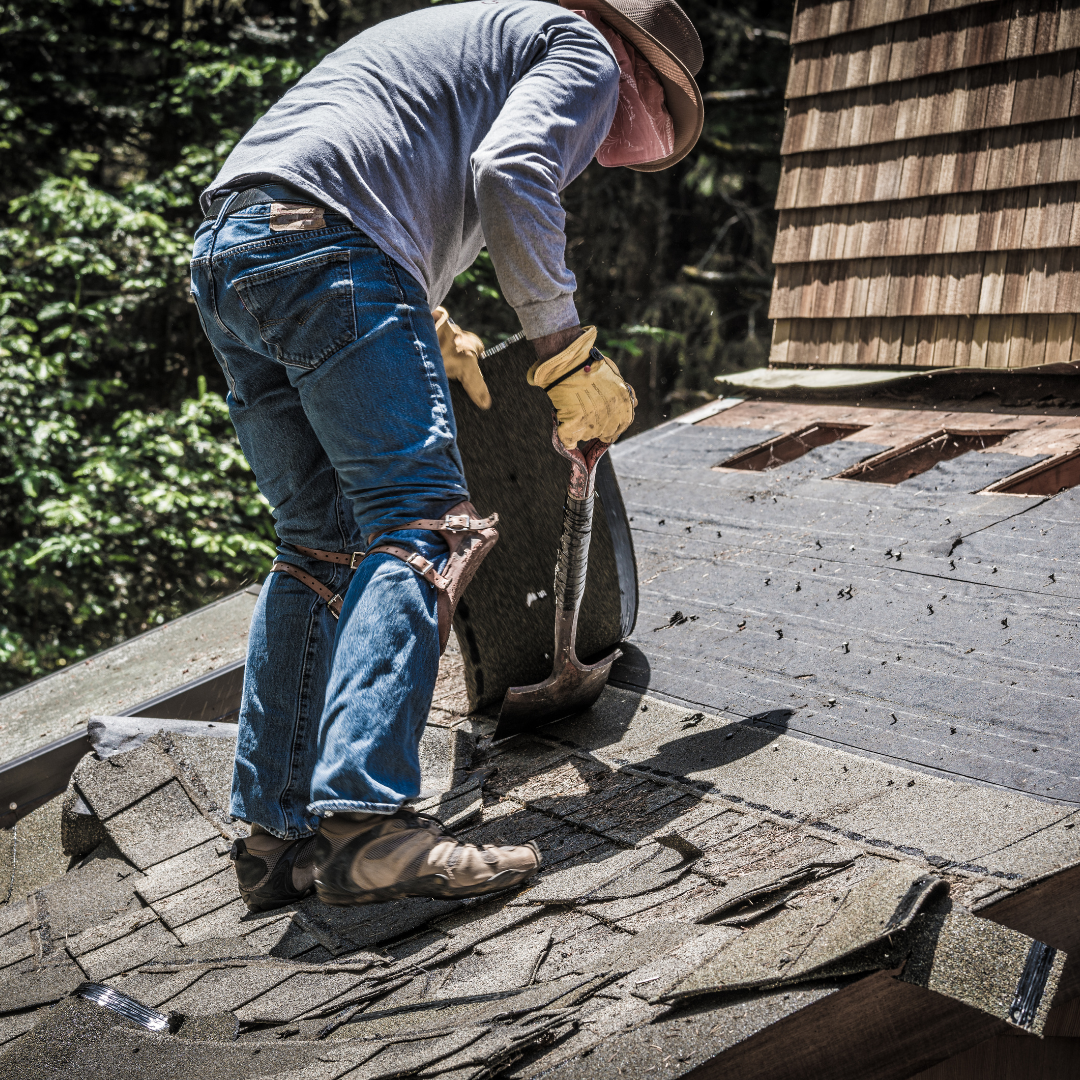
What Is Composite Roofing?
Composite roofing encompasses engineered products designed to replicate traditional materials while improving performance. These products cost more than asphalt shingles because they're engineered differently.
Materials Used in Composite Roofing
Composite roofing blends synthetic polymers with other materials for enhanced strength and weather resistance.
Core components:
- Recycled plastics (HDPE or polypropylene) for flexibility and impact resistance
- Rubber compounds for elasticity through temperature changes
- Fiberglass reinforcement for dimensional stability
- UV inhibitors to prevent color fading
- Pigments mixed throughout (not surface-coated)
Recycled content varies by manufacturer. Some brands incorporate up to 95% post-consumer materials, making them suitable for environmentally-conscious projects without compromising performance.
Composite Roofing Profiles & Styles
Slate-Style Composite
Replicates natural quarried slate with irregular edges and varied thickness. Perfect for heritage homes in Strathcona or character properties in Mount Pleasant without the weight concerns.
Shake-Style Composite
Mimics rough-hewn cedar texture with grain patterns and staggered edges. Works well for Craftsman homes and West Coast contemporary designs without fire risk or maintenance requirements.
Shingle-Style Composite
Similar to architectural asphalt but with enhanced depth. Suits contemporary homes at a price point between standard asphalt and premium slate or shake styles.
Profile choice affects both appearance and performance. Shake-style profiles shed water more aggressively than flat designs, while slate-style interlocking edges resist wind uplift better.
How Composite Roofs Are Installed
Installation follows similar procedures to traditional roofing with product-specific requirements:
- Deck preparation - Sound sheathing (plywood or OSB required)
- Underlayment - Waterproof membrane (synthetic preferred in Vancouver)
- Fastening - Manufacturer-specified nails, placement, and penetration depth
- Flashing - Careful integration at chimneys, skylights, and walls
- Accessories - Ridge caps, hip treatments, and valley systems
The dimensional depth of shake and slate profiles makes proper flashing more complex than flat asphalt installations. Installation typically takes slightly longer but remains faster than natural slate or clay tile work.
Lifespan Comparison:
- Standard asphalt: 15-20 years
- Architectural asphalt: 20-25 years
- Composite roofing: 30-50 years
Cost analysis over 40 years:
- Asphalt ($6/sq ft): Replace twice = $12/sq ft + 2 tear-offs
- Composite ($12/sq ft): Replace once = $12/sq ft + 1 tear-off
The per-year cost is similar, but composite avoids multiple re-roofing disruptions.
Additional advantages:
- Better moss and algae resistance
- Superior wind and impact ratings (often Class 4)
- More convincing premium appearance
- Potential insurance discounts
The choice depends on the ownership timeline. Planning to sell within 5-10 years? Asphalt makes economic sense. Settling in long-term or owning a property where appearance affects value? Composite justifies the investment.
Composite Roofing vs Traditional Roofing Materials in Vancouver
Understanding how composite compares to alternatives helps clarify its value position: more durable than asphalt, lighter than slate, and lower maintenance than cedar.
Composite vs Cedar Shake Roofing
| Feature | Cedar Shake | Composite Shake |
|---|---|---|
| Moisture Resistance | Absorbs water, promotes rot | Non-porous, sheds water |
| Fire Rating | Class B-C (even treated) | Class A |
| Maintenance | Treatment every 2-3 years | Basic cleaning only |
| Lifespan | 15-20 years | 30-50 years |
| Cost (Installed) | $15-20/sq ft | $12-18/sq ft |
The moisture difference matters most. Cedar remains damp for extended periods in Vancouver, creating rot and insect problems. Properties in shaded West Vancouver or beneath Kerrisdale's mature trees face particularly aggressive degradation.
Composite shake eliminates treatment costs, frequent repairs, and premature replacement. Over 30 years, a composite costs substantially less when factoring in all maintenance and replacement expenses.
Composite vs Natural Slate
Weight: The decisive factor for most homes.
- Natural slate: 800-1,200 lbs per square foot
- Composite slate: 250-400 lbs per square
Most Vancouver residential structures weren't designed for slate loads. Adding real slate often requires $5,000-15,000 in structural reinforcement engineering studies, additional framing, and upgraded connections.
Cost comparison:
- Natural slate: $20-40/sq ft installed
- Composite slate: $9-15/sq ft installed
Composite delivers a similar visual impact at less than half the cost. While real slate lasts 75-100 years, composite's 30-50 year lifespan suffices for most ownership periods.
Impact resistance: Natural slate is brittle and cracks from hail or falling branches. Composite absorbs impacts without breaking, reducing repair frequency and making maintenance safer.
Composite vs Asphalt Shingles
How Much Does Composite Roofing Cost in Vancouver?
Understanding cost variables helps property owners budget accurately and evaluate contractor quotes.
Factors That Affect Composite Roofing Costs
Primary cost drivers:
- Roof size & pitch - Larger and steeper roofs require more materials and labor
- Product quality - Premium brands cost more but offer better warranties and performance
- Installation complexity - Multiple planes, dormers, skylights, and valleys increase labor time
- Tear-off vs overlay - Full removal adds $2-4/sq ft but is required for warranties
- Underlayment & ventilation - Quality materials protect your investment
Properties with limited access or steep slopes requiring safety equipment add costs. Each complexity increases the labor component beyond basic square footage calculations.
Typical Composite Roofing Cost Ranges
Current Vancouver market prices (installed, including labor, materials, underlayment, and tear-off):
Basic composite shingle: $8-12/sq ft
- Entry-level options with straightforward profiles
- Better longevity than asphalt shingles
- Works for rental properties or budget-focused projects
Mid-grade composite shake or slate: $12-18/sq ft
- Realistic profiles from reputable manufacturers
- 30-40 year lifespan expectations
- Most single-family home projects fall here
Premium composite systems: $18-25/sq ft
- Most realistic textures and thickest materials
- Longest warranties with enhanced ratings
- High-value neighborhoods and heritage homes
Example: 2,000 sq ft roof
- Basic composite: $16,000-24,000
- Mid-grade: $24,000-36,000
- Premium: $36,000-50,000
Verify quotes include all components: tear-off, underlayment, ventilation, flashing, and permits.
How Long Does Composite Roofing Last in Vancouver?
Realistic lifespan expectations help justify the investment. Understanding what affects longevity in our climate provides accurate projections rather than marketing claims.
Manufacturer Warranties vs Real-World Performance
Warranties range from 30 years to "lifetime," but fine print reveals limitations:
- Most warranties are prorated (coverage decreases over time)
- Labor typically isn't included
- Regular maintenance documentation is required
- By year 20, many warranties only cover 50% of material costs
More reliable indicators than warranty length:
- ASTM testing for wind, impact, and fire resistance
- UL listings and ICC-ES reports
- Third-party testing data
- Product track record in coastal climates
Quality certifications matter more than promotional warranty periods when evaluating long-term performance.
Expected Lifespan in Vancouver Conditions
Realistic expectation: 30-45 years with proper installation and maintenance.
Lower end (30-35 years):
- North-facing roofs that rarely dry out
- Heavily shaded locations with aggressive moss
- Exposed sites are taking direct wind and rain
- Deferred maintenance allows issues to escalate
- Entry-level composite products
Upper end (40-45 years):
- South-facing roof planes with good sun exposure
- Less shaded properties
- Premium products from established manufacturers
- Professional certified installation
- Regular maintenance addressing minor issues early
Comparison to other materials in Vancouver:
- Asphalt shingles: 15-25 years
- Cedar shake: 15-20 years (with aggressive maintenance)
- Natural slate: 75-100 years
- Metal roofing: 40-60+ years
A composite roof installed at age 45 will likely last through retirement without replacement.
What Can Shorten Composite Roof Lifespan
Poor Installation
The #1 cause of premature failure. Issues include:
- Improper fastener placement
- Inadequate ventilation
- Incorrect underlayment
- Flashing that doesn't follow manufacturer specs
Dimensional profiles require more precision than flat asphalt. Verify your installer has specific composite experience, not just general roofing knowledge.
Inadequate Ventilation
Trapped heat and moisture cook materials from below. Proper intake at eaves plus exhaust at the ridge protects both the roof structure and materials. Our humidity levels make moisture control particularly important.
Deferred Inspections
Small problems escalate when ignored:
- Flashing leaks during heavy rain
- Lifted shingles after windstorms
- Localized moss growth in valleys
Annual or biannual inspections catch issues when fixes are inexpensive.
Aggressive Cleaning Methods
Power washing damages composite surfaces. Use gentle cleaning or professional moss treatment services instead.
Improper Foot Traffic
Walking without proper technique cracks or deforms shingles. Use walk boards to distribute weight and step only where the deck provides support.
Proper Composite Roof Installation in Vancouver
Installation quality determines whether composite roofing delivers its promised performance. Here's what a good composite installation looks like.
Key Installation Requirements
Deck preparation:
- Sound sheathing with no rot or delamination
- Solid plywood or OSB (not spaced boards)
- Secure fastening to prevent movement
Underlayment:
- Synthetic underlayment (better than felt in a wet climate)
- Ice and water shield at eaves, valleys, and penetrations
- Proper drip edge installation
Fastening:
- Manufacturer-specified nails and placement
- Correct penetration depth (not overdriven)
- Precise alignment for interlocking systems
Why Certified Installation Matters
Warranty protection: Many manufacturers void enhanced warranties without certified installers.
Product-specific knowledge: Dimensional profiles need different techniques than flat asphalt. Fastener placement, cutting tools, and nail gun settings affect performance.
Quality verification: Request photos of previous composite projects and contact references. Check licensing, insurance, and workers' compensation coverage before signing contracts.
Pros & Cons of Composite Roofing in Vancouver
The good, the bad, and the practical reality of composite roofing.
Pros
✓ Low maintenance - No treatments needed, just basic cleaning and occasional inspections
✓ Moisture resistant - Non-porous materials shed water without rot or swelling
✓ Lighter than slate/tile - No structural reinforcement needed ($5,000-15,000 savings)
✓ Attractive appearance - Convincingly replicates slate, shake, or architectural shingles
✓ Longer lifespan - 30-50 years vs 15-25 for asphalt (fewer replacements)
✓ Superior ratings - Better wind (110+ mph) and impact (Class 4) performance
✓ Fire resistant - Class A ratings reduce insurance premiums
Cons
✗ Higher upfront cost - $8-18/sq ft vs $4-7/sq ft for asphalt
✗ Installation quality critical - Dimensional profiles need precision; inexperienced contractors create problems
✗ Product quality varies - Entry-level composite may not
outperform premium asphalt significantly
✗ Limited repair options - Color matching after years of weathering can be difficult
✗ Not identical to natural materials - Close inspection reveals synthetic composition
The decision depends on priorities. Value longevity and low maintenance? Composite justifies the premium. Focused on initial cost or selling within 5-10 years? Asphalt makes more sense.
Is Composite Roofing Worth It in Vancouver?
The investment depends on comparing lifecycle costs and aligning material selection with ownership plans.
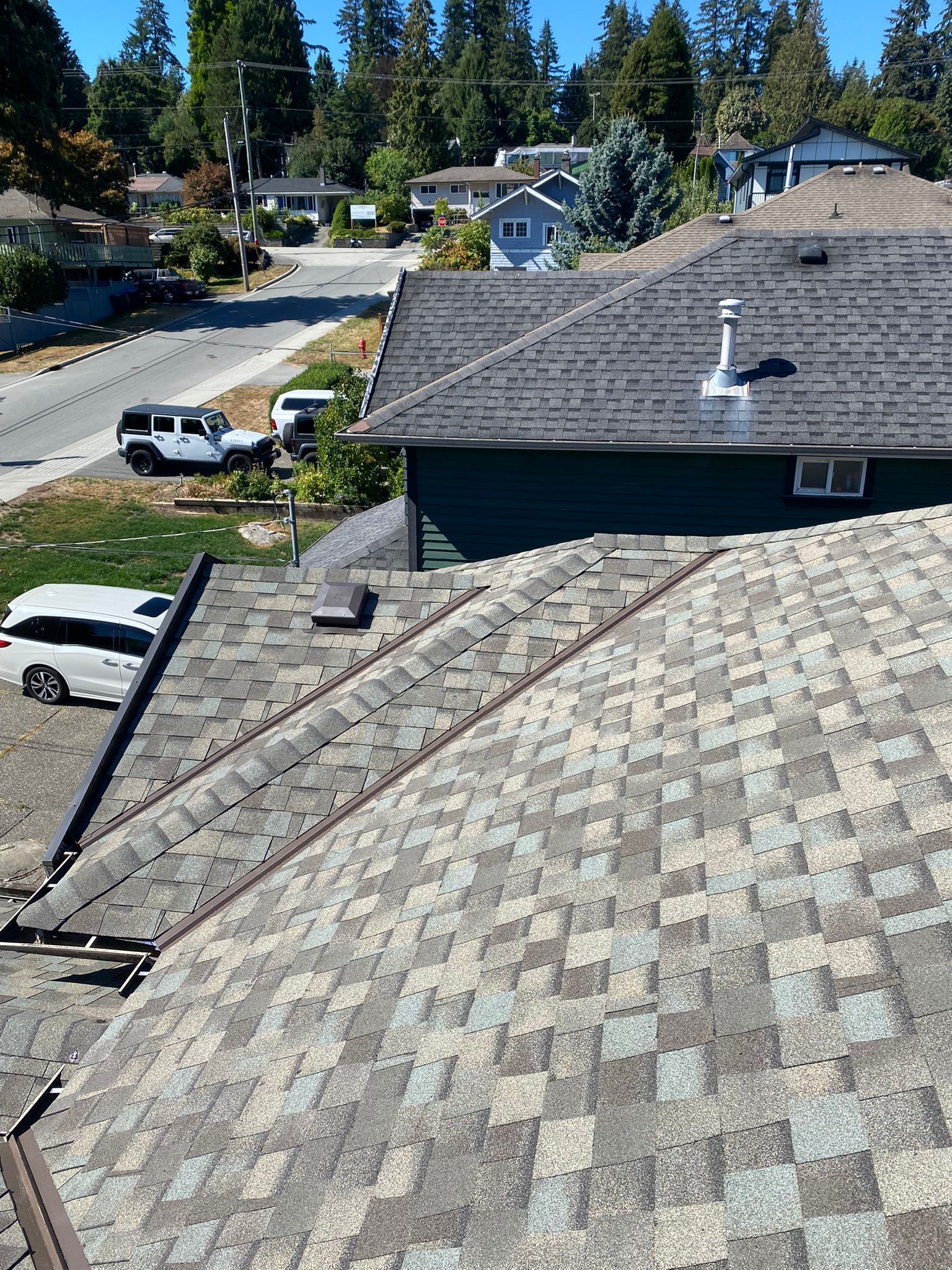
Decision Checklist
Consider composite roofing if you:
- Want slate or shake aesthetics without weather/weight issues
- Prefer minimal maintenance over 30-40 years
- Plan long-term ownership (15+ years)
- Have structural limitations for heavy materials
- Value one-time installation over multiple replacements
- Own property where appearance affects resale value
Choose asphalt shingles if you:
- Have budget constraints and need lower upfront costs
- Plan to sell within 5-10 years
- Prioritize initial savings over lifetime value
The Math
Over 40 years:
- Asphalt: $14,000 × 2 replacements = $28,000 + 2 tear-offs
- Composite: $24,000 × 1 replacement = $24,000 + 1 tear-off
Break-even occurs around 25-30 years. Long-term ownership makes the composite more economical while providing better performance and less disruption.
Composite Roofing in Vancouver – FAQs
Is composite roofing a good choice for Vancouver’s wet climate?
Yes. Composite roofing is non-porous, so it doesn’t absorb moisture, rot, or swell. It sheds rain effectively and performs well during Vancouver’s long, damp seasons where cedar and asphalt struggle.
How long does composite roofing last in Vancouver?
Most composite roofs last 30–50 years when properly installed. In Vancouver conditions, realistic expectations are 30–45 years, depending on sun exposure, shade, and maintenance.
Does composite roofing resist moss and algae?
Better than cedar or asphalt. Composite materials lack organic content, making it harder for moss to establish. Shaded roofs may still develop some growth, but maintenance is far less frequent than with wood roofing.
Can composite roofing handle Vancouver windstorms?
Yes. Most composite roofing systems are rated for winds up to 130 mph (210 km/h). Interlocking designs distribute wind loads across the roof, reducing blow-off risk during winter storms.
How does composite roofing compare to natural slate or cedar shake?
Composite delivers a similar appearance at half the weight and cost of natural slate and with far less maintenance than cedar shake. It avoids structural reinforcement, rot, and fire risk while maintaining strong curb appeal.
Is composite roofing lighter than premium materials?
Yes. Composite roofing typically weighs 250–400 lbs per square, compared to 800–1,200 lbs for natural slate. Most Vancouver homes can support composite without structural upgrades.
When does composite roofing make the most sense in Vancouver?
Composite roofing is ideal for long-term homeowners, shaded properties, heritage-style homes, and anyone wanting premium looks with low maintenance and fewer roof replacements over time.
Next Steps for Composite Roofing in Vancouver
Ready to explore composite roofing? Here's how to move forward:
Planning Your Project
- Property assessment - Document roof condition, features, and complexity
- Product research - Review manufacturer options and color choices
- Find certified contractors - Verify composite experience and manufacturer certifications
- Get multiple quotes - Compare detailed proposals including all components
- Verify credentials - Check licensing, insurance, and workers' compensation
- Review warranties - Understand coverage terms and maintenance requirements
- Plan timing - Spring through fall offers optimal installation conditions
Working with Paragon Roofing BC
Paragon Roofing BC provides experienced guidance for composite roofing throughout the Lower Mainland. We help property owners select appropriate materials and ensure installations meet manufacturer specifications for warranty coverage.
Schedule a consultation to discuss whether composite roofing suits your property's conditions and goals. Get accurate information about costs, product options, and requirements specific to your home.
Additional resources:
- All roofing services
- Residential roofing
- Contact us for project consultation
Taking time to understand composite roofing and working with experienced professionals ensures informed decisions that protect your property and deliver value over the roof's service life.
Pricing is for general reference only and may vary. Composite roofing costs in Vancouver depend on product quality, roof size and complexity, pitch, tear-off requirements, underlayment, ventilation upgrades, and installer experience. Final pricing can only be confirmed after an on-site inspection and a written scope of work.
Here's What Our Existing Clients Think.
Home and business owners we've served across the greater Vancouver area.
Our Google Reviews
Edit Google Reviews Widget
We look forward to helping you.
For all your roofing needs, contact Paragon Roofing BC — call, text, or email us at 604-358-3436
Paragon Res Roof Install #2
We will get back to you as soon as possible.
Please try again later.