
Burnaby commercial HVAC curb flashing repair guide
Burnaby commercial HVAC curb flashing repair guide

TL;DR:
- HVAC curb flashing is a waterproof seal that prevents water leaks at rooftop units in Burnaby’s commercial buildings. Its failure, often caused by sealant deterioration, membrane separation, vibration, or ponding water, leads to most roof leaks in the area. Proper inspection, detailed repairs, and regular maintenance are essential to prevent costly damage and ensure roof integrity.
HVAC curb flashing is the waterproof seal between a rooftop mechanical unit and the roof membrane below it, and its failure is the leading cause of commercial roof leaks in Burnaby. Flashing failures account for an estimated 70%+ of commercial roof leak calls in BC’s wet climate. That number should get your attention if you manage a flat-roofed commercial building here. Burnaby commercial HVAC curb flashing repair is not a minor maintenance task. It directly protects your building envelope, your tenants, and your energy costs.
What causes HVAC curb flashing failures on commercial roofs in Burnaby?
Flashing failures rarely happen overnight. They build up over months or years, and Burnaby’s climate accelerates every one of the common failure modes.
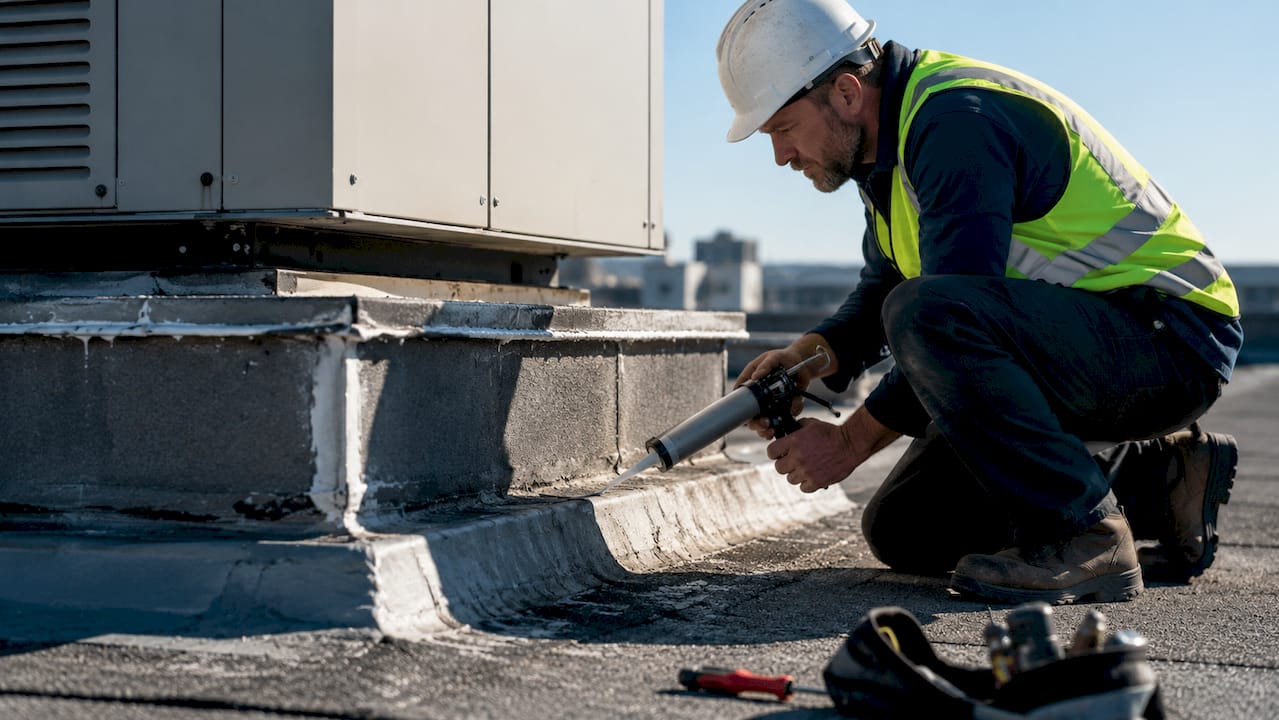
Sealant degradation is the most frequent culprit. Sealants around curb perimeters shrink, crack, and pull away from the membrane as temperatures cycle between wet winters and dry summers. Once the sealant opens up, water tracks under the flashing and into the roof assembly before you see a single stain on the ceiling.
Membrane tie-in separation is the next big one. HVAC curbs sit on top of the roof membrane, and the flashing must bond directly to that membrane. When the membrane type, whether EPDM, TPO, or SBS modified bitumen, is not compatible with the flashing material or adhesive used, the bond fails prematurely. Mixing incompatible materials is one of the most common mistakes made during rushed curb installations.
Vibration from HVAC units loosens fasteners over time, compromising flashing seals even when the membrane looks intact. This is a failure mode that catches a lot of facility managers off guard because the roof surface looks fine from a distance.
Ponding water near HVAC curbs is another frequent cause. Flat commercial roofs in Burnaby often have inadequate slope around mechanical equipment, and water pools behind the curb after every rainstorm. That standing water puts constant hydrostatic pressure on the flashing seam.
Common signs of flashing failure to watch for:
- Water stains on ceiling tiles directly below the HVAC unit
- Bubbling or lifting membrane at the curb base
- Visible cracks or gaps in sealant around the curb perimeter
- Rust staining on the curb metal itself
- Soft or spongy roof deck when you press near the curb
Pro Tip: If you see rust streaks running down the curb sides, the fasteners have already been compromised by vibration. Do not wait for a ceiling stain to confirm the leak.
How do you inspect HVAC curb flashing on a commercial roof?
The NRCA recommends biannual inspections with priority on curb perimeter flashings, and Burnaby’s rainfall patterns make that schedule the minimum, not the ideal. After any major storm or wind event, a quick visual check is worth the time.
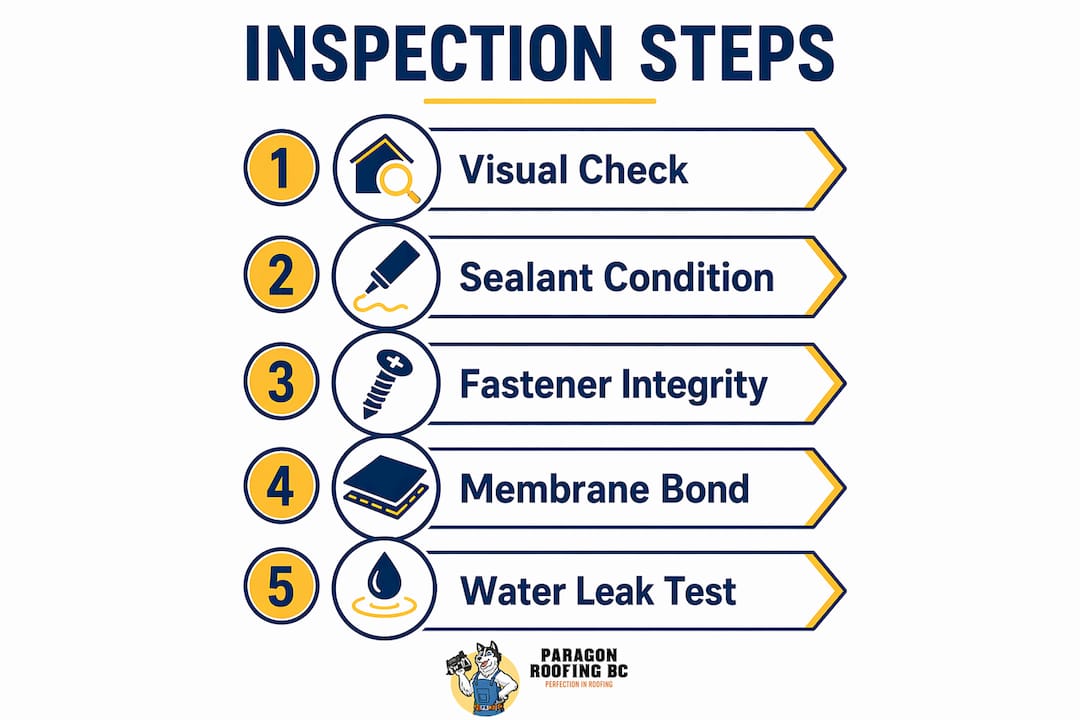
Facility managers often misdiagnose membrane problems when leaks actually originate at curb or flashing transitions. A specialist roofing inspection removes that guesswork. Here is what a proper inspection covers:
- Counterflashing: Check that the metal cap overlapping the base flashing is tight, sealed, and not pulling away from the curb wall.
- Sealants: Look for cracking, shrinkage, or gaps at every seam. Run your finger along the sealant bead. If it flexes or lifts, it has failed.
- Fasteners: Physically tug on the curb flashing. Any movement means fasteners have loosened from vibration.
- Membrane tie-in: Check the first 12 inches of membrane around the curb base for bubbling, lifting, or discolouration.
- Drainage: Look for standing water marks or debris dams behind the curb after rain.
One important distinction: not every drip near an HVAC unit is a flashing leak. Condensate from the unit’s drain pan can mimic a roof leak on the ceiling below. A qualified Burnaby roof inspection will trace the water path and confirm the source before any repair work begins.
| Inspection item | What to look for | Action if failed |
|---|---|---|
| Counterflashing | Gaps, lifting, or missing sealant | Reseal or replace counterflashing |
| Sealant bead | Cracking, shrinkage, or separation | Strip and reapply with compatible sealant |
| Fasteners | Movement or rust on curb body | Refasten and seal penetrations |
| Membrane tie-in | Bubbling or lifting at curb base | Full flashing strip and rebuild |
| Roof drainage | Ponding water marks behind curb | Add tapered insulation to correct slope |
Pro Tip: Schedule one inspection in october before the heavy rain season starts, and one in april after the freeze-thaw cycle ends. Those two windows catch the most damage before it escalates.
Step-by-step guide to professional curb flashing repair and replacement
A proper repair is not a patch job. Layering new material over failed flashing causes repeated failure. Every durable repair starts from the substrate up.
- Strip to sound material. The roofer removes all failed sealant, flashing layers, and membrane tie-in material down to the roof deck or insulation board. Any wet insulation gets replaced at this stage.
- Prepare the substrate. The curb base and surrounding deck are cleaned, dried, and primed with a product compatible with the existing membrane type, whether that is EPDM, TPO, or SBS.
- Rebuild the base flashing. New base flashing is installed and integrated into the roof membrane. Flashing must be built to a minimum height of eight inches to keep water from tracking over the top during heavy rain.
- Apply membrane tie-in. The new flashing bonds to the existing roof membrane using manufacturer-approved adhesive or heat-welding for TPO systems. This step is where compatibility between materials matters most.
- Install counterflashing. The metal cap flashing goes on the same day as the base flashing. Leaving the base exposed overnight invites water infiltration before the job is complete.
- Seal all penetrations. Every fastener hole, seam, and transition point gets sealed with a compatible sealant. The roofer checks for gaps by hand before leaving the site.
Typical curb flashing repair in BC runs $500–$1,200 per unit, with full new installations ranging $1,000–$3,000. Most repairs are completed in a single visit without moving the HVAC unit.
Full curb replacement becomes necessary when the curb frame itself is rusted through, when the roof deck below has rotted, or when the existing curb height does not meet current code requirements. Partial flashing repair works well when the curb structure is sound and only the flashing and sealant have failed.
Pro Tip: Ask your roofer to confirm the flashing height before they close up. Eight inches is the minimum. On Burnaby roofs with any drainage issues, going to ten or twelve inches gives you real protection.
Best practices for maintaining HVAC curb flashing and preventing future leaks
Good maintenance costs far less than emergency repairs. Early detection of flashing issues significantly reduces repair costs. Minor sealant degradation can escalate to major interior damage within a few years in BC’s climate.
These practices keep curb flashings performing between inspections:
- Inspect twice yearly. Follow the NRCA biannual schedule as a minimum. Add a check after any windstorm above 60 km/h or after heavy snowfall.
- Coordinate roofing and HVAC contractors. Proper coordination between roofing and mechanical contractors ensures flashing compatibility with roof membranes and prevents premature sealant failure. Never let an HVAC technician modify flashing without a roofer present.
- Use only compatible materials. Every sealant, adhesive, and flashing material must be approved by the roof membrane manufacturer. Using off-spec materials voids your membrane warranty.
- Install walk pads. Foot traffic from HVAC service technicians is a leading cause of membrane damage near curbs. Rubber walk pads protect the membrane and reduce the chance of accidental flashing damage during routine service visits.
- Address drainage around curbs. If water consistently ponds behind a curb, add tapered insulation to redirect flow toward roof drains. Fixing the slope is a permanent solution. Re-sealing over a drainage problem is a temporary one.
- Document every repair and inspection. Keep dated records with photos. This protects your warranty, supports insurance claims, and gives the next roofer a clear history of the roof.
Treating rooftop curbs as commodities leads to 15–25% of total mechanical reroof budgets being consumed by field modifications and custom flashings. Specifying curbs and flashings correctly from the start avoids those costs entirely.
Key takeaways
Burnaby commercial HVAC curb flashing repair requires stripping failed material to the substrate, rebuilding to a minimum eight-inch height, and completing counterflashing the same day to prevent water infiltration.
| Point | Details |
|---|---|
| Flashing is the primary leak source | Over 70% of commercial roof leak calls in BC trace back to flashing failure, not the membrane. |
| Strip before you rebuild | Patching over failed flashing causes repeated leaks. Remove all failed layers to sound substrate first. |
| Eight-inch minimum height | Base flashing must reach at least eight inches up the curb wall to prevent water tracking over the top. |
| Inspect twice yearly | Schedule inspections in october and april to catch damage before Burnaby’s wet season and after freeze-thaw. |
| Coordinate contractors | Roofing and HVAC contractors must work together to keep flashing compatible with the roof membrane. |
What I’ve learned about HVAC curb leaks in Burnaby commercial buildings
Hey, it’s Harman here. After years of inspecting commercial roofs across Burnaby, the single most frustrating pattern I see is facility managers calling their HVAC technician first when water shows up near a rooftop unit. The HVAC tech checks the unit, finds nothing wrong, and leaves. The leak continues. Then the call comes to us, usually after the ceiling tiles have already been replaced once.
Most “HVAC leaks” are actually failed curb flashing or condensate drain issues. The HVAC unit itself is rarely the problem. The problem is the seal between the curb and the roof. That seal is a roofing issue, and it needs a roofer to fix it properly.
The other thing I want property managers to understand is the cost of waiting. A $600 sealant repair today can turn into a $4,000 deck replacement in two years if water sits in the insulation through a Burnaby winter. The math is not complicated. What makes it complicated is that the damage is invisible until it is not.
I also push back hard on the idea that any roofer can handle curb flashing work. Membrane compatibility is genuinely technical. An SBS-compatible sealant applied to a TPO membrane will fail within one season. You need someone who knows the specific membrane on your roof and works with compatible materials every time. That is not a sales pitch. It is just how the chemistry works.
If you manage multiple commercial properties in Burnaby, get a commercial roofing service on a maintenance agreement. It is the most cost-effective way to stay ahead of flashing failures before they become interior damage claims.
— Harman
Paragonroofingbc’s HVAC curb flashing services in Burnaby
Paragonroofingbc works with commercial property owners and facility managers across Burnaby to repair and replace HVAC curb flashings on flat and low-slope roofs. Every repair starts with an onsite assessment and a fixed quote before any work begins.

The team coordinates directly with HVAC contractors to keep flashing compatible with your existing membrane, whether that is EPDM, TPO, or SBS. All installations follow manufacturer specifications to protect your roof warranty. Paragonroofingbc handles commercial roof leak detection and full curb flashing rebuilds, and offers scheduled maintenance programmes for property managers who want to stay ahead of repairs. Contact Paragonroofingbc to book an inspection or get a repair quote for your Burnaby commercial property. You can also learn more about the full range of commercial roofing in Vancouver and surrounding areas.
FAQ
What is HVAC curb flashing on a commercial roof?
HVAC curb flashing is the waterproof seal installed between a rooftop mechanical unit’s curb frame and the roof membrane below. It prevents water from entering the building at the penetration point where the unit meets the roof surface.
How much does curb flashing repair cost in Burnaby?
Curb flashing repair typically runs $500–$1,200 per unit in BC, with full new installations ranging $1,000–$3,000. Most repairs are completed in a single visit without removing the HVAC unit.
How often should HVAC curb flashing be inspected?
The NRCA recommends biannual inspections, with Burnaby’s wet climate making october and april the ideal windows. Add an inspection after any major windstorm or heavy snowfall.
Can an HVAC technician repair curb flashing?
No. Curb flashing repair requires a qualified roofer with knowledge of membrane compatibility and flashing installation techniques. HVAC technicians are trained for mechanical systems, not roofing assemblies, and improper flashing work voids roof warranties.
What happens if curb flashing failure is left unrepaired?
Water infiltration at a failed curb flashing saturates roof insulation and can damage the roof deck within one to two wet seasons. Interior ceiling damage, mould growth, and structural repairs follow, all of which cost significantly more than the original flashing repair.
Recommended
Our Roofing Blog


Have more questions about roofing?
Check out our FAQs or give us a call today to speak to an expert roofer in Vancouver Lower Mainland, BC. We're here to help our neighbours make educated decisions about their roof. For our team, we value helping clients save money while making their roofs last.