Energy efficient roofing explained for BC property owners
Energy efficient roofing explained for BC property owners
TL;DR:
- Energy efficient roofing reduces a building’s energy use by reflecting solar radiation and resisting heat flow. Proper roof performance in BC also requires enhanced insulation, ventilation, and air sealing to maximize savings and prevent moisture issues. Selecting durable materials like TPO, PVC, or metal, paired with full system upgrades, offers the best long-term energy and cost benefits.
Energy efficient roofing is defined as a roofing system engineered to reduce a building’s energy consumption by reflecting solar radiation, resisting unwanted heat flow through insulation, and working in concert with your HVAC to lower both cooling and heating demands. In the industry, you will often hear the term “cool roofing” used alongside this concept. Cool roofing refers specifically to roof surfaces with high solar reflectance and thermal emittance, and it forms one pillar of a broader energy efficient roofing strategy. For property owners and managers in Metro Vancouver and the Lower Mainland, understanding how these systems work together is the difference between a roof that quietly costs you money every month and one that genuinely pays its way.
What is cool roofing and how does it save energy?
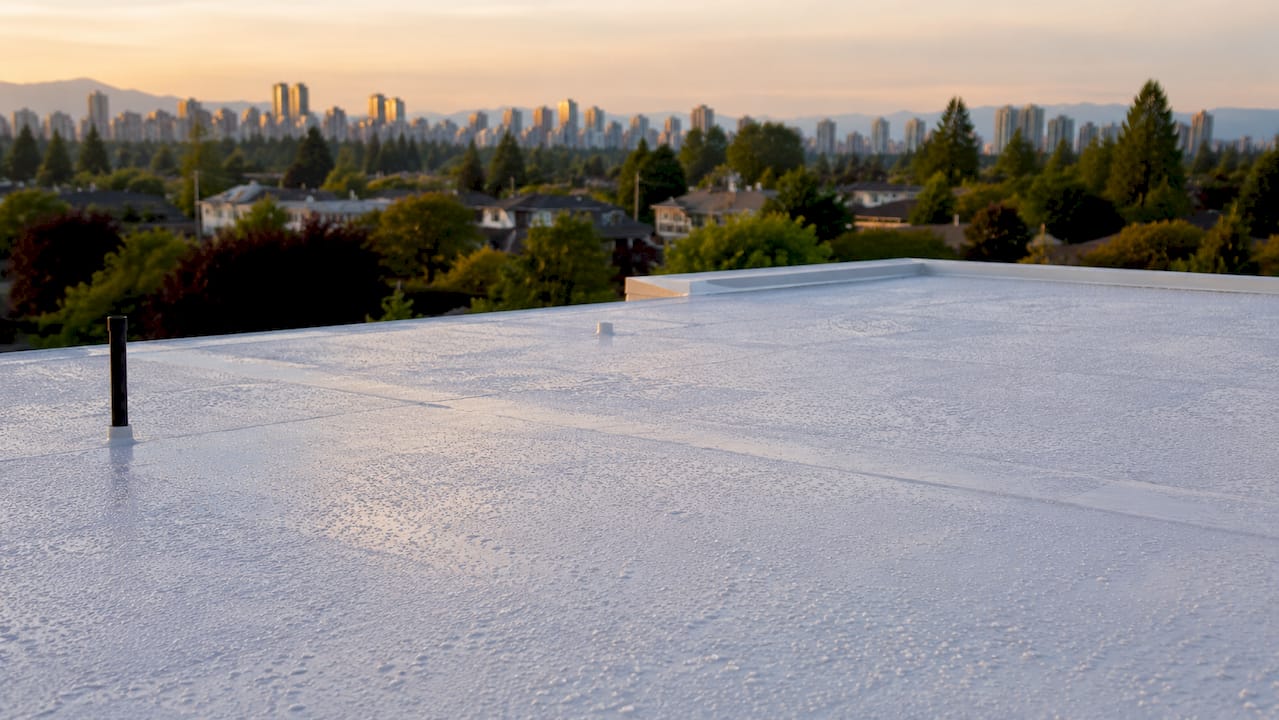
Cool roofing is a reflective roofing approach that keeps roof surfaces significantly cooler than conventional materials by bouncing sunlight away rather than absorbing it. A standard dark roof on a sunny day can reach temperatures above 65°C. By contrast, cool roofs stay cooler by over 28°C compared to conventional roofs under the same conditions. That temperature gap directly reduces the heat radiating down into your building, which means your air conditioning runs less and your energy bills drop.
The two properties that define a cool roof are solar reflectance and thermal emittance. Solar reflectance measures how much sunlight the surface bounces away, while thermal emittance measures how efficiently the surface releases any heat it does absorb. A roof with high scores on both metrics performs far better than one that only looks light in colour. Selecting cool roofing products based on these measurable properties, rather than appearance alone, is the right way to evaluate your options.
Here is what cool roofing delivers in practice for a BC commercial or multi-family property:
- Reduced cooling demand: Less heat entering the building means your HVAC works less hard during warm stretches in July and August.
- Extended roof lifespan: Lower surface temperatures reduce thermal cycling stress on membranes and shingles, which is especially relevant given the freeze-thaw conditions we see in the Lower Mainland every winter.
- Reduced urban heat island effect: Reflective roofs contribute to cooler surrounding air temperatures, which benefits the whole neighbourhood.
- Potential rebate eligibility: Products with verified reflectance and emittance ratings may qualify for BC Hydro or FortisBC energy efficiency incentives.
One honest caveat for BC properties: in a heating-dominated climate like ours, a cool roof that reflects winter sun can slightly increase heating costs. Energy savings depend on climate, insulation levels, and your HVAC system, so a net benefit analysis matters before you commit.
Pro Tip: Ask your contractor for the Solar Reflectance Index (SRI) rating of any proposed cool roof product, not just the colour swatch. An SRI above 78 for low-slope roofs is the benchmark most energy programmes use.
How do insulation and ventilation improve roof performance in BC?
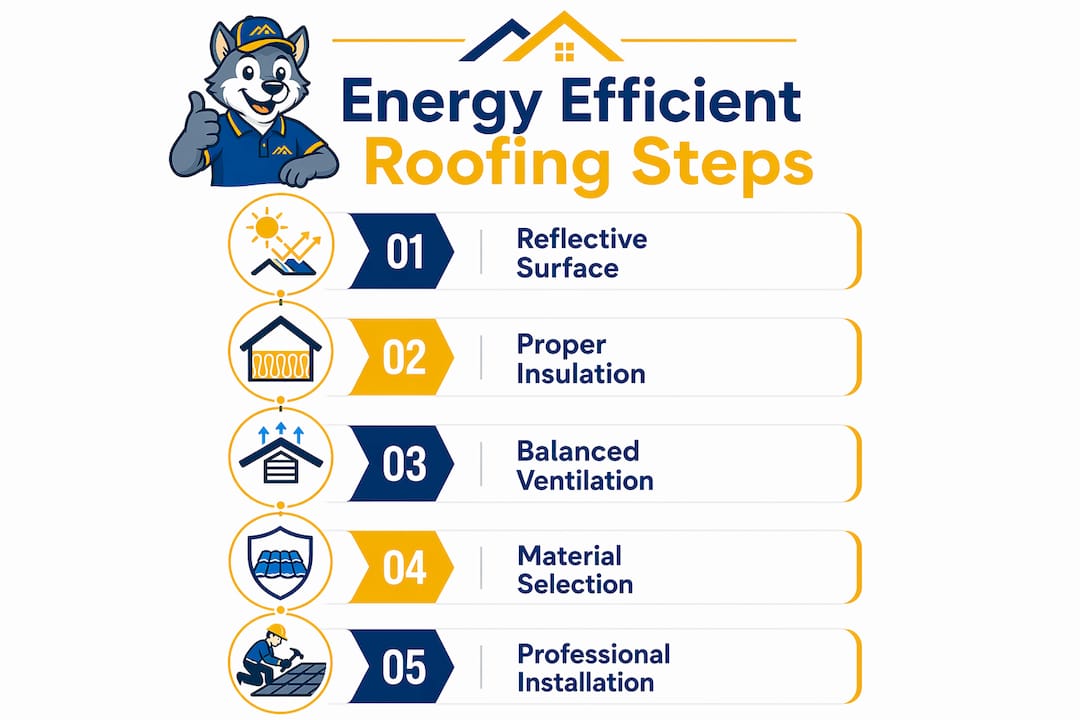
Cool roofing handles the surface layer, but insulation and ventilation handle everything underneath. Think of your roof and attic as a system, not a stack of separate components. Attic ventilation and insulation are two halves of the same system, and both must be paired with proper air sealing to perform in BC’s cold, wet climate. Skipping any one of these three elements undermines the other two.
Here is how a properly sequenced attic upgrade works:
- Air seal first. Before adding insulation or improving ventilation, seal every penetration, junction box, and gap between the conditioned space and the attic. Warm, moist air escaping into a cold attic is the root cause of condensation, mould, and ice dams along eaves. In Burnaby and North Vancouver, where we see heavy rainfall and cold snaps in the same week, this step is non-negotiable.
- Install adequate insulation. BC’s energy code targets for attic insulation have increased in recent years. Aim for at least R-40 in most Lower Mainland applications, and R-50 or higher in areas with greater snow load like Coquitlam or Maple Ridge. Insulation limits heat flow in both directions, keeping warmth inside in winter and heat out in summer.
- Balance your ventilation. A balanced soffit and ridge ventilation system draws cool outside air in at the eaves and exhausts warm, moist attic air at the ridge. This reduces summer attic temperatures and prevents winter moisture build-up that degrades insulation and shortens shingle life.
- Verify the whole assembly. After installation, check that insulation baffles keep soffit vents clear and that ridge vents are unobstructed. A blocked soffit defeats the entire ventilation strategy.
Proper attic management also prevents ice dams, which are a real problem on Lower Mainland roofs during cold snaps followed by rain. When attic heat escapes unevenly, snow melts and refreezes at the eaves, forcing water under shingles. Good insulation and ventilation eliminate the temperature differential that causes this.
Pro Tip: If you manage a flat or low-slope commercial roof, the same principle applies through continuous insulation boards above the deck. Thermal bridging through steel joists can undermine your R-value by 30 to 40 per cent if you rely on cavity insulation alone.
What types of energy efficient roofing materials work best in Vancouver?
Choosing the right material for a Lower Mainland property means matching energy performance to our specific weather: 1,100 to 1,500 mm of annual rainfall in Metro Vancouver, freeze-thaw cycles from October through March, coastal wind exposure, and occasional heavy snow loads east of the city. Not every energy saving roofing material performs equally well under those conditions.
The table below compares the most common energy efficient roof options for BC properties:
| Material | Solar reflectance | Thermal emittance | Typical R-value contribution | Durability in BC conditions | Relative cost |
|---|---|---|---|---|---|
| White TPO membrane | 0.70 to 0.80 | 0.90+ | Low (requires added insulation board) | Excellent on flat/low-slope | Moderate |
| PVC membrane | 0.65 to 0.75 | 0.90+ | Low (requires added insulation board) | Excellent, good chemical resistance | Moderate to high |
| Reflective metal roofing | 0.60 to 0.70 | 0.85+ | Low (requires added insulation) | Excellent, 40 to 60 year lifespan | High upfront, low lifecycle |
| Cool-coloured asphalt shingles | 0.25 to 0.40 | 0.85 to 0.90 | Moderate with attic insulation | Good, 20 to 30 years | Low to moderate |
| Green roof assembly | Near zero reflectance | N/A | High (soil and plant layer) | Good with proper waterproofing | High |
| Reflective roof coatings | 0.55 to 0.80 | 0.85+ | None (surface treatment only) | Moderate, requires reapplication | Low |
TPO and PVC single-ply membranes are the workhorses of commercial energy efficient roofing in Vancouver. They handle ponding water well, which matters on flat roofs that see our volume of rainfall. Metal roofing excels on steep-slope residential and light commercial applications, and its long-term energy savings justify the higher upfront cost over a 40-year building lifecycle. Green roofs add insulation value and manage stormwater, which is increasingly relevant given Metro Vancouver’s stormwater utility fees, but they require structural assessment and ongoing maintenance.
Reflective coatings applied over an existing membrane can be a cost-effective upgrade, but they address only the surface layer. Without insulation upgrades underneath, the energy efficient roofing system performs well below its potential.
How to select and install energy efficient roofing to maximise benefits
Getting the most out of an energy efficient roof in BC requires more than picking a product from a catalogue. The decision starts with an honest assessment of what you already have.
Before selecting any new roofing system, evaluate these factors:
- Existing insulation levels: If your attic or roof deck insulation is below current BC Building Code minimums, adding a reflective surface without upgrading insulation will deliver only a fraction of the possible savings.
- Current HVAC performance: Maximum energy efficiency comes from cool roofing combined with proper insulation and HVAC efficiency, not from surface properties alone. A leaky air handler or undersized heat pump limits what any roof upgrade can achieve.
- Roof assembly condition: A roof nearing end of life is the right time for a full assembly upgrade, including new insulation board, vapour control layer, and membrane. Retrofitting a reflective coating onto a failing substrate wastes money.
- Rebate eligibility: BC Hydro’s PowerSmart programme and FortisBC incentives both require documented product specifications. Understanding measurable product properties before purchase is what unlocks rebate access.
- Contractor experience with BC conditions: Installation quality determines whether your roof assembly performs as designed. Improper seaming on a TPO membrane or inadequate insulation fastening in a wind-exposed location will compromise both energy performance and weather resistance.
The cost of energy efficient roofing varies widely. A reflective coating on an existing flat roof might run $3 to $6 per square foot. A full TPO re-roof with continuous insulation board typically ranges from $12 to $22 per square foot in Metro Vancouver, depending on access, existing deck condition, and insulation thickness. Metal roofing on a steep-slope residential property sits between $15 and $30 per square foot installed. These are real numbers from projects we have completed across the Lower Mainland, not estimates from a national cost database.
Pro Tip: Request a written breakdown showing the R-value of each insulation layer in your proposed roof assembly, not just a total. This lets you verify compliance with BC Building Code and identify where thermal bridging might reduce real-world performance.
Key takeaways
Energy efficient roofing delivers measurable savings only when reflective surfaces, adequate insulation, balanced ventilation, and HVAC performance are treated as one integrated system rather than independent upgrades.
| Point | Details |
|---|---|
| Cool roofing is one component | High solar reflectance and thermal emittance reduce surface temperature, but insulation and ventilation determine total energy savings. |
| Air sealing comes before insulation | Sealing attic penetrations before adding insulation prevents moisture damage and ice dams in BC’s wet climate. |
| Material choice must match BC conditions | TPO, PVC, and metal roofing outperform reflective coatings as long-term solutions for Lower Mainland rainfall and freeze-thaw cycles. |
| Rebates require documented specs | BC Hydro and FortisBC incentives depend on verified solar reflectance and emittance ratings, so collect product data sheets before purchase. |
| Full assembly upgrades deliver best ROI | Combining a new membrane with continuous insulation board and balanced ventilation maximises both energy savings and roof lifespan. |
What I have learned about energy efficient roofing after years on BC rooftops
Hey, it’s Harman here. After inspecting and installing roofs from Tsawwassen to Squamish, the pattern I see most often is property managers who invest in a reflective membrane or a cool-coloured shingle and then wonder why their energy bills barely moved. The roof looks great on paper. The SRI rating checks out. But the attic underneath has R-20 insulation from 1992, no air sealing around the pot lights, and soffit vents half-blocked by old insulation batts.
The honest truth is that a cool roof on a poorly insulated building is like putting a sunshade on a car with all the windows open. The surface does its job, but the heat finds another way in. I have seen this on flat commercial roofs in Richmond and on steep-slope houses in Port Moody alike.
What actually works is treating the roof replacement as a system upgrade. When we pull off an old membrane on a flat commercial roof, that is the moment to add 3 to 4 inches of polyisocyanurate board, re-detail the vapour barrier, and verify the drainage slope before the new TPO goes down. The cost difference between doing it right and doing it cheap is usually 15 to 20 per cent on the total project. The energy savings and avoided moisture repairs over the next 20 years make that premium look very small.
For residential properties, the attic insulation and roofing relationship is where most of the money is left on the table. If you are planning a shingle replacement, book an attic inspection at the same time. You will almost always find opportunities that cost far less to address during a re-roof than as a separate project later.
— Harman
Get an energy efficient roof built for BC weather with Paragonroofingbc
Paragonroofingbc specialises in roof installation in Vancouver and across the Lower Mainland, with hands-on experience in cool roof membranes, continuous insulation assemblies, and balanced attic ventilation systems designed for BC’s rainfall and freeze-thaw conditions.
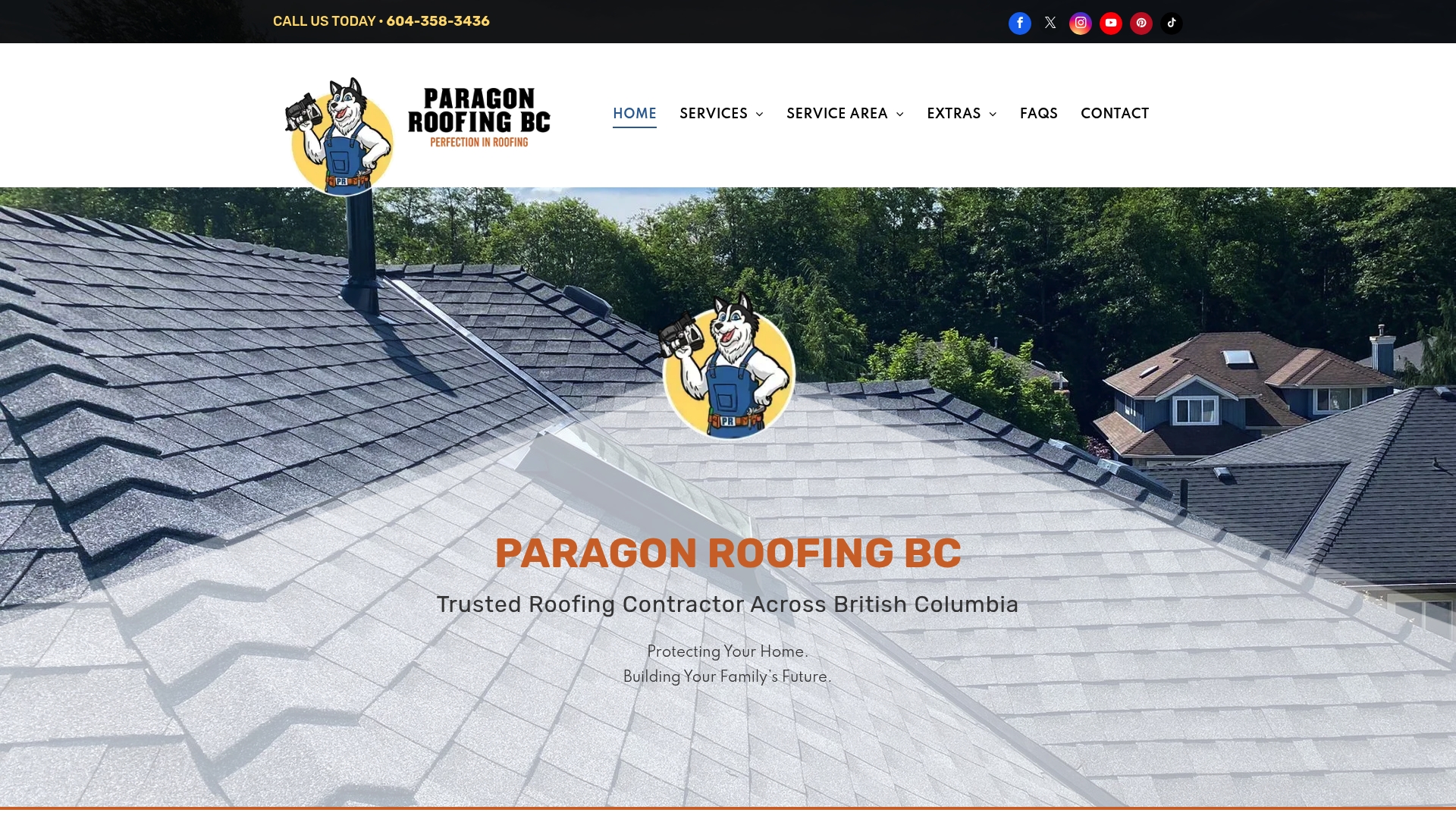
Before any installation, Paragonroofingbc uses drone roof inspections to assess your existing roof condition, identify insulation gaps, and document the full assembly. This means your upgrade is based on what your roof actually needs, not a generic specification. Whether you manage a commercial flat roof in Burnaby, a multi-family building in Surrey, or a residential property in Delta, the team at Paragonroofingbc can design and install a system that reduces your energy costs and holds up to everything BC weather delivers. Reach out for a free inspection and a straight-talking quote.
FAQ
What is cool roofing and how is it different from standard roofing?
Cool roofing uses materials with high solar reflectance and thermal emittance to keep roof surfaces significantly cooler than conventional dark roofs. Standard roofs absorb most solar energy and transfer it into the building; cool roofs reflect it away, reducing cooling demand.
Is energy efficient roofing worth it for BC properties?
Yes, when the full roof assembly is upgraded together. Energy savings vary with climate, insulation levels, and HVAC efficiency, so a reflective membrane paired with adequate insulation and air sealing delivers the strongest return in BC’s mixed heating and cooling climate.
What are the best energy saving roofing materials for flat commercial roofs?
White TPO and PVC single-ply membranes are the most widely used options for flat commercial roofs in Metro Vancouver. Both offer solar reflectance above 0.65, excellent resistance to ponding water, and long service lives when properly installed over continuous insulation board.
How much does energy efficient roofing cost in Metro Vancouver?
Costs range from roughly $3 to $6 per square foot for a reflective coating on an existing flat roof, up to $12 to $22 per square foot for a full TPO re-roof with insulation board. Metal roofing on steep-slope properties typically runs $15 to $30 per square foot installed.
Can I install cool roofing without upgrading my attic insulation?
You can, but the energy savings will be limited. Proper energy performance requires the roof surface, insulation, and ventilation to work together. Installing a reflective surface over inadequate insulation leaves most of the potential savings unrealised and may not qualify for available rebates.
Recommended
Our Roofing Blog
Have more questions about roofing?
Check out our FAQs or give us a call today to speak to an expert roofer in Vancouver Lower Mainland, BC. We're here to help our neighbours make educated decisions about their roof. For our team, we value helping clients save money while making their roofs last.