Roof Replacement in Richmond BC — The Complete 2026 Homeowner’s Guide
What Richmond homeowners actually need to know about replacing a roof on Lulu Island — honest costs, material choices that survive 1,885 mm of annual rain, neighbourhood-specific advice from Steveston to Brighouse, and the exact process our team follows on every project.
Key Takeaways
- Richmond’s 1,885 mm of annual rainfall and flat delta terrain create unique roofing demands — material choice, ventilation, and underlayment matter more here than in most BC cities.
- Most Richmond homeowners pay $8,500–$22,000 for architectural asphalt shingles or $25,000–$45,000+ for metal roofing on a standard 1,600–2,200 sq ft roof.
- Architectural asphalt shingles remain the top choice for value, while metal roofing is growing fast among homeowners who want 40–60 year longevity and zero moss maintenance.
- Richmond’s housing stock spans 1960s ranch bungalows through 2020s custom builds — older homes in Steveston and Seafair frequently need full deck replacement alongside new roofing.
- A properly installed roof replacement in Richmond takes 1–3 days for shingles and 3–5 days for metal, with dry-weather scheduling critical between October and March.
- Financing options make premium materials accessible — the lifecycle cost of metal roofing often beats two asphalt shingle cycles over 40 years.
Table of Contents
- Roof Replacement in Richmond: The Real Situation
- Why Richmond is Different — Climate, Soil & Housing Stock
- Roofing Materials That Work in Richmond’s Climate
- Richmond Neighbourhood Breakdown
- Your Three Main Options — Honest Pros & Cons
- Full Comparison Table
- Real Costs in Richmond for 2026
- The Roof Replacement Process — Step by Step
- Maintenance by Material Type
- Which Option Is Right for Your Richmond Home?
- Frequently Asked Questions
1. Roof Replacement in Richmond: The Real Situation
Richmond sits on a river delta, barely above sea level, soaking up nearly 1,900 millimetres of rain every year. That is not a detail you can afford to ignore when your roof starts failing.
We’ve completed over 120 roof replacements across Richmond since 2009, and the pattern we see is consistent: homeowners delay too long, damage spreads from the shingles into the deck and sometimes into the attic framing, and what could have been a $12,000 shingle swap becomes a $20,000+ structural project. The flat terrain on Lulu Island means water doesn’t drain aggressively off roofs the way it does on hillside homes in North Vancouver or Burnaby — it pools at transitions, sits in valleys, and finds every weak point in your flashing and underlayment.
On the assessments we conduct across Richmond, roughly 40% of roofs over 18 years old show some degree of deck deterioration. Not surface damage — actual plywood softening from prolonged moisture contact. That number is higher than what we find in drier cities like Langley or Abbotsford, and it’s a direct result of Richmond’s maritime microclimate.
2. Why Richmond Is Different — Climate, Soil & Housing Stock
Richmond isn’t Vancouver. It isn’t Surrey. And the differences matter for your roof.
First, the climate. Richmond’s Köppen classification is Cfb — marine west coast. Summers are dry and mild, averaging 22°C in July. Winters are wet and grey, with November alone dumping approximately 288 mm of rain over 19 rainy days. The temperature rarely drops below freezing, which means less ice-dam risk than the North Shore but significantly more sustained moisture contact. Moss thrives here. Algae thrives here. And both of them accelerate shingle degradation if left unchecked.
Second, the soil. Richmond is built on Fraser River silt deposits — the land west of No. 3 Road sits on a clay cap roughly 3 metres deep with sand below. This means homes settle differently than those on bedrock. We’ve seen roof issues caused not by weather but by subtle foundation movement that opens gaps in flashing and ridge caps. It’s something we always check during our initial assessment.
Third, the housing stock. Richmond’s residential boom started in the 1960s after the Oak Street Bridge opened in 1957. The neighbourhoods of Seafair, Broadmoor, and parts of Steveston are dominated by homes built between 1960 and 1985 — many still on their original or second roof. These homes typically feature 4/12 to 6/12 pitch gable roofs with limited soffit ventilation, a design that was standard for the era but inadequate for Richmond’s moisture load. Then you have the 1990s–2010s construction boom in areas like West Cambie, City Centre, and McLennan, where many homes are two-storey builds with more complex rooflines that require careful flashing work during replacement.
3. Roofing Materials That Work in Richmond’s Climate
Not every material that works in Calgary or Toronto is right for Richmond. Here’s what actually performs in sustained coastal rain.
Architectural Asphalt Shingles
This is still what goes on 70–75% of the roofs we replace in Richmond, and for good reason. Modern architectural asphalt shingles from manufacturers like CertainTeed , Malarkey , and IKO have improved dramatically in the last decade. The Malarkey Vista AR, for instance, uses rubberized SBS-modified asphalt and a Scotchgard algae-resistance coating — both of which matter enormously in Richmond’s wet climate.
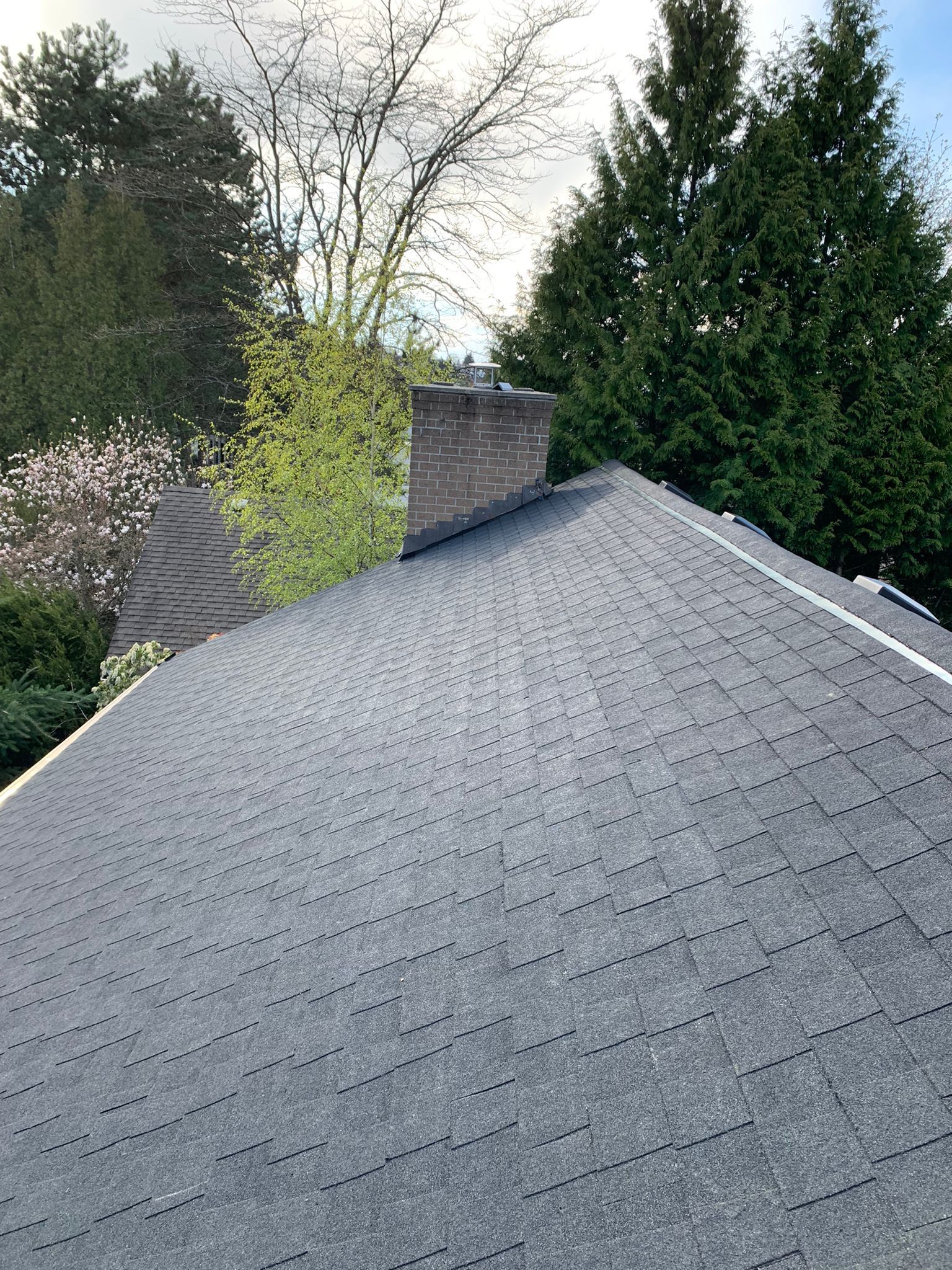
Lifespan in Richmond: 18–25 years with proper maintenance. That’s slightly less than the manufacturer-rated 30 years you’ll see on the packaging, because Richmond’s moisture load is relentless. The shingles survive. The system under them — underlayment, ice-and-water shield, flashing — is what determines whether you hit 18 or 25.
Metal Roofing
Metal roofing is the fastest-growing segment in Richmond right now. We’ve installed more standing seam and metal shingle systems in 2025–2026 than in the previous five years combined. The reason is simple: homeowners are tired of replacing every 20 years.
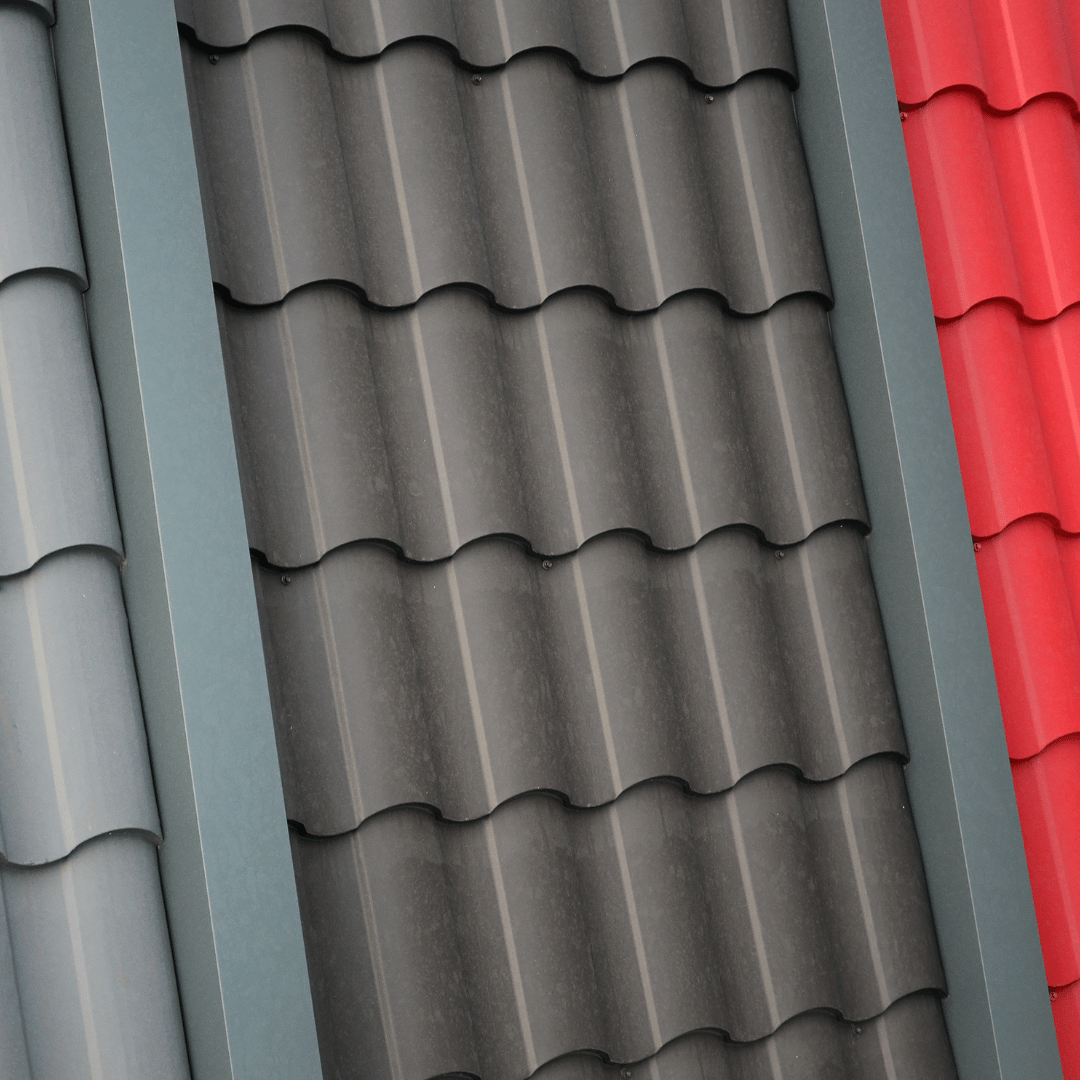
A properly installed metal roof in Richmond will last 40–60 years. Moss can’t grip the surface. Water sheds instantly. And the PVDF (Kynar) coatings on premium panels resist fading and chalking for decades, even in Richmond’s UV-and-rain cycle. The tradeoff is cost — expect to pay roughly 2–2.5 times what you’d pay for asphalt. But over a 50-year window, metal often costs less because you avoid a second full replacement.
Composite & Premium Options
Composite roofing materials — engineered to look like slate, cedar, or tile without the weight or maintenance — are gaining traction in Richmond’s upscale neighbourhoods like Broadmoor and Terra Nova. Synthetic slate tiles, for example, deliver the aesthetic of natural slate at a fraction of the weight, which matters on Richmond’s delta soils where structural load is a consideration.
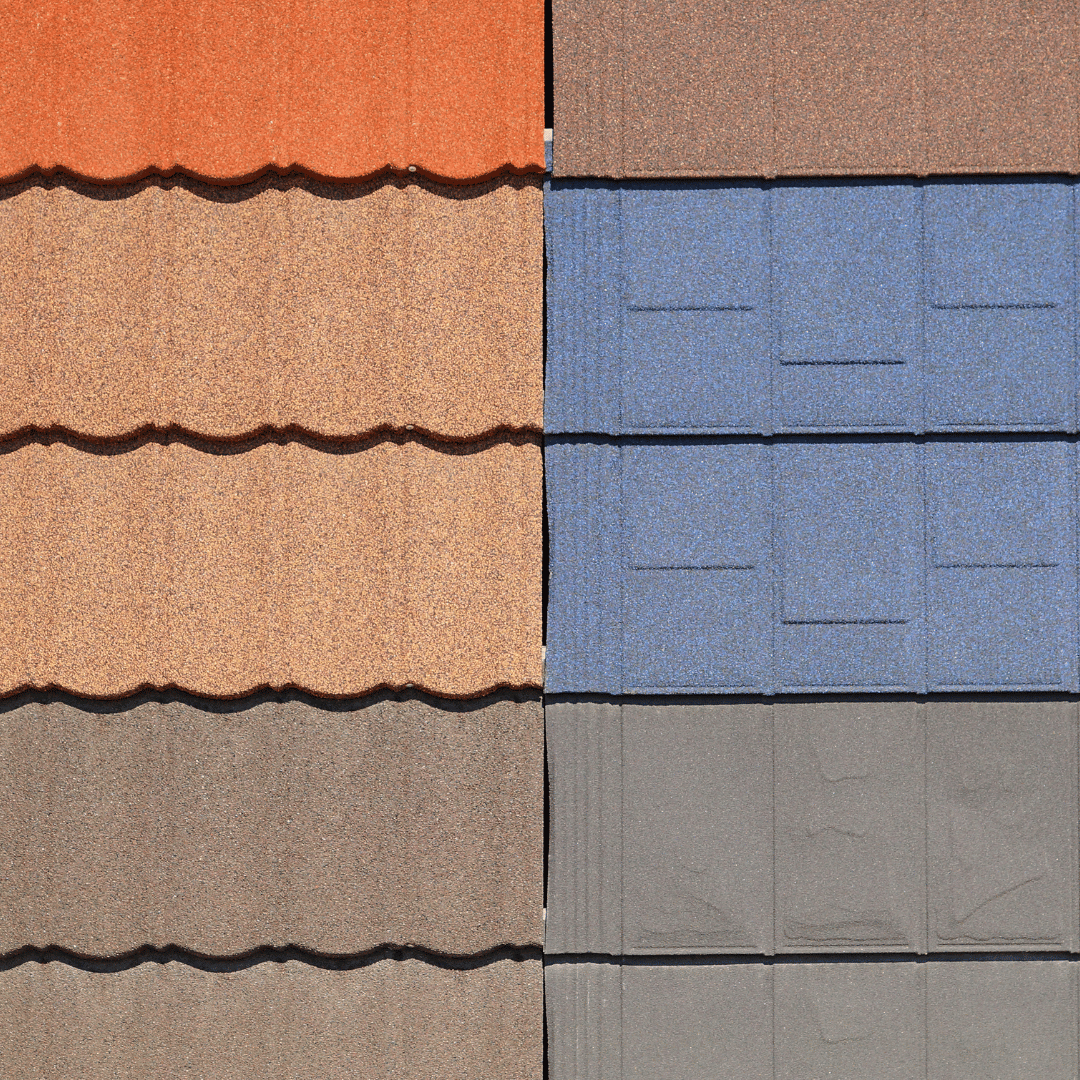
For homes where cedar shake is being replaced, Enviroshake and similar composite products offer the West Coast look without the 3–5 year retreatment cycle that cedar demands in Richmond’s humidity. Clay tile and stone-coated steel are niche options we install occasionally in Richmond, typically on Mediterranean or contemporary custom homes along the waterfront.
4. Richmond Neighbourhood Breakdown
Every Richmond neighbourhood has its own roofing personality. Here’s what we see on the ground.
Steveston
1960s–1990s homes, many with original cedar shakes. High salt-air exposure near the waterfront accelerates fastener corrosion. Cedar-to-asphalt conversions are extremely common here. Expect deck replacement on 30–40% of projects.
Broadmoor & Seafair
Established 1960s–1970s ranch-style and split-level homes. Low-pitch roofs with limited ventilation are the norm. These neighbourhoods see the highest rate of moss damage in our Richmond projects. Premium materials perform best here.
Brighouse & City Centre
Mix of older single-family and newer townhouse complexes along No. 3 Road. Strata roofing projects are increasingly common. Access can be tight on row-housing, which affects scheduling and cost.
Terra Nova & Thompson
Newer builds (2000s–2020s) with complex rooflines, multiple dormers, and steeper pitches. Materials are often still in good shape, but flashing failures and ventilation gaps are the primary issues we address during replacement.
West Cambie & Lansdowne
1990s–2010s housing with significant townhouse density. Near the Canada Line, these homes tend to have simpler rooflines. Most common project: second-cycle asphalt replacement on homes now hitting 20–25 years.
East Richmond & Hamilton
Larger lots, some agricultural, with exposure to open wind from the river. We see more wind-driven rain damage here than anywhere else in Richmond. Proper drip edge and starter strip installation is critical in this area.
5. Your Three Main Options — Honest Pros & Cons
Option 1: Architectural Asphalt Shingles
Best for: Homeowners who want proven performance at a reasonable price point, plan to stay 10–20 years, or are selling within 5 years and need maximum curb appeal per dollar.
The pros are real: lower upfront cost ($8,500–$22,000 for most Richmond homes), fast installation (1–3 days), huge colour selection, and easy future repairs. The cons are equally real: shorter lifespan than metal, ongoing moss management required in Richmond, and you will eventually replace them again.
Option 2: Metal Roofing (Standing Seam or Metal Shingles)
Best for: Homeowners who plan to stay long-term, want zero-moss maintenance, or value lifecycle cost over initial price.
Metal is the premium play. You pay $25,000–$45,000+ upfront, but you get 40–60 year performance, Class 4 impact resistance, and a roof that genuinely sheds Richmond’s rain like nothing else. The cons: higher initial cost, fewer contractors who install it properly (get someone certified), and noise concerns during heavy rain — though modern underlayment and insulation eliminate most of that.
Option 3: Composite / Synthetic / Premium
Best for: Homeowners replacing cedar shakes, wanting a premium aesthetic, or building custom homes where appearance is a primary driver.
Composite tiles , synthetic slate , and natural slate deliver outstanding aesthetics and 30–75 year lifespans. Price ranges widely: $18,000–$55,000+ depending on material. Weight is lower than natural stone, which matters in Richmond. The tradeoff is that repairs require material-specific expertise, and some composite products are relatively new with limited long-term field data in BC’s climate.
6. Full Material Comparison Table
| Factor | Asphalt Shingles | Metal Roofing | Composite / Premium |
|---|---|---|---|
| Cost (1,800 sq ft roof) | $8,500 – $22,000 | $25,000 – $45,000+ | $18,000 – $55,000+ |
| Lifespan in Richmond | 18 – 25 years | 40 – 60 years | 30 – 50 years |
| Moss Resistance | Moderate (needs treatment) | Excellent (non-porous) | Good to Excellent |
| Wind Rating | Up to 210 km/h | Up to 250 km/h | Up to 220 km/h |
| Installation Time | 1 – 3 days | 3 – 5 days | 2 – 5 days |
| Maintenance Required | Annual inspection + moss | Minimal | Low to Moderate |
| Weight (per sq ft) | 2.5 – 4 lbs | 1.0 – 1.5 lbs | 1.5 – 9 lbs (varies) |
| Curb Appeal | Good | Contemporary/Modern | Excellent/Premium |
| Warranty | 25 – 50 years (varies) | 40 – lifetime | 30 – 50 years |
| Resale Value Impact | Good | Very Good | Excellent |
Need help choosing? Our team will walk through every option during your free consultation. We bring material samples to your home so you can see colours and textures against your siding in natural light.
7. Real Costs in Richmond — 2026 Breakdown
These are ranges we’re quoting right now on Richmond projects. Your actual cost depends on roof size, complexity, access, number of tear-off layers, and deck condition. Richmond’s flat terrain generally keeps access costs lower than hillside cities like North Vancouver.
Asphalt Shingles
$8,500 – $22,000Standard 1,600–2,200 sq ft Richmond home. Includes tear-off, disposal, ice & water shield, synthetic underlayment, and architectural shingles. Deck repairs extra.
Metal Roofing
$25,000 – $45,000+Standing seam or metal shingle system. Includes full tear-off, strapping or batten system, premium underlayment, all flashing and trim. 40–60 year performance.
Composite / Premium
$18,000 – $55,000+Synthetic slate, Enviroshake, stone-coated steel, or natural materials. Price varies significantly by material and roof complexity. Premium aesthetics and durability.
What drives cost up in Richmond specifically: Multiple tear-off layers (we find 2–3 layers on many 1970s–1980s homes), extensive deck rot from moisture intrusion, complex rooflines with multiple valleys and dormers, and chimney or skylight flashing replacement. Deck repair on Richmond homes averages $2,000–$6,000 when needed, depending on extent.
We offer flexible financing to make premium materials accessible. Ask about our options during your consultation.
8. The Roof Replacement Process — Step by Step
Here’s exactly what happens when we replace a roof in Richmond. No surprises.
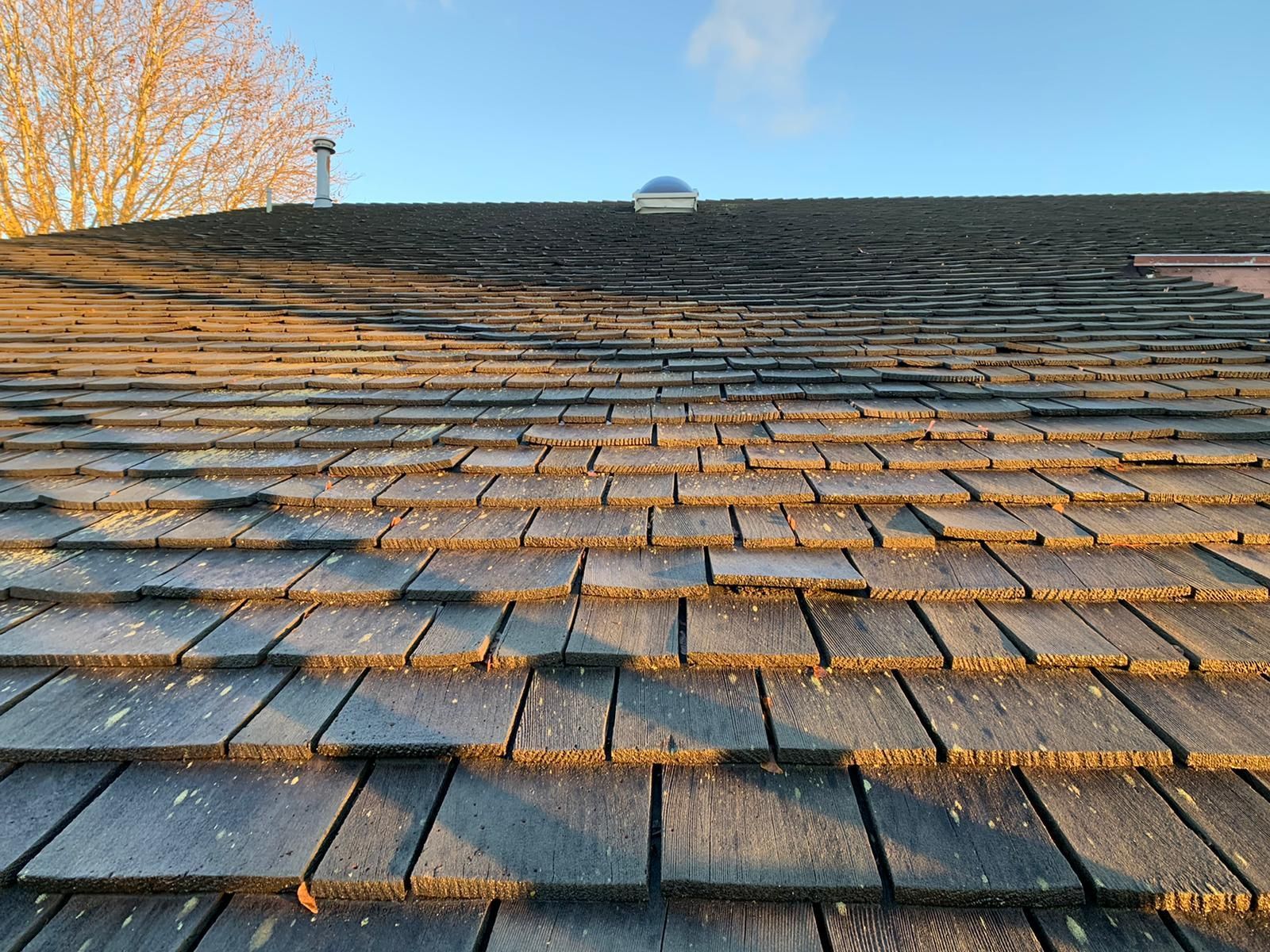
Free Inspection & Assessment
We climb the roof (or use drone imaging for steep/complex structures), inspect every component, photograph problem areas, and check your attic for ventilation and moisture issues. This takes 45–90 minutes in Richmond. We provide a detailed written report with photos — no charge, no obligation. Book yours here.
Material Selection & Detailed Estimate
Based on your budget, longevity goals, and aesthetic preferences, we recommend the best material for your specific Richmond home. You receive an itemized written estimate — every line item visible, no hidden costs. We bring material samples to your home. We also discuss warranty options across all manufacturer tiers.
Scheduling & Preparation
We schedule your project around Richmond’s weather windows. Our team delivers materials to your property 1–2 days before start, sets up tarps and protection around landscaping and walkways, and prepares the dumpster location.
Tear-Off & Deck Inspection
We strip every layer down to the plywood deck. This is non-negotiable — we never roof over existing layers in Richmond because hidden moisture damage is too common. Once exposed, we inspect every sheet of plywood, replace any soft or delaminated sections, and ensure your deck is solid.
Underlayment, Flashing & Material Installation
We install ice-and-water shield at all eaves, valleys, and penetrations. Full synthetic underlayment covers the entire deck. New drip edge goes on at eaves and rakes. Then we install your chosen material following manufacturer specifications and BC Building Code requirements. Every flashing detail — walls, chimneys, vents, skylights — gets precision attention.
Final Inspection, Cleanup & Documentation
Magnetic nail sweep of your entire property. Full debris cleanup. Final quality walkthrough with you. We register your manufacturer warranty , provide before/after photos, and give you a documentation package with material specifications and maintenance instructions specific to Richmond’s climate.
9. Maintenance by Material Type in Richmond’s Climate
Installing a great roof is half the job. Maintaining it in Richmond’s wet conditions is the other half.
Asphalt Shingles: Annual inspection and maintenance is essential in Richmond. We recommend moss treatment every 12–18 months, gutter cleaning twice yearly (November and March), and a professional check of all flashing and sealant points. Keep trees trimmed 2 metres back from the roof edge — debris accumulation in Richmond’s fall season can trap moisture and accelerate shingle failure.
Metal Roofing: Minimal maintenance. Annual visual inspection, gutter cleaning, and occasional rinse to remove pollen or debris. No moss treatment needed. Metal is essentially Richmond-proof when installed correctly with proper underlayment and ventilation.
Composite & Premium: Most composite materials require little more than annual inspection and occasional cleaning. Cedar shakes are the exception — they demand retreatment every 3–5 years in Richmond’s humidity, plus annual moss management, which is why many homeowners convert to asphalt or composite during replacement.
Ready to Replace Your Richmond Roof?
Get a free, no-obligation inspection and detailed written estimate from our certified team. We’ve completed over 120 roofing projects across Richmond’s neighbourhoods.
604-358-343610. Which Option Is Right for Your Richmond Home?
Here’s a simple framework. If you’re selling within 5 years and want maximum return, architectural asphalt shingles are your play — they deliver the best curb appeal per dollar spent. If you’re staying for 15+ years and hate the idea of doing this again, metal is the smart money. And if your home is a custom build or you’re replacing cedar shakes with something that captures that West Coast look without the upkeep, composite and synthetic options are worth the premium.
Regardless of material, here’s what to look for in a Richmond roofing contractor :
Verify they hold active manufacturer certifications — not just “preferred” status, but installer certification that unlocks enhanced warranty coverage. Ask for at least three Richmond-specific references from the past 12 months. Confirm they carry adequate liability and WorkSafeBC coverage. And get everything in writing — scope, materials, timeline, payment schedule, warranty details. If a contractor can’t or won’t provide this, walk away.
We hold CertainTeed ShingleMaster™ certification, Malarkey Certified Installer status, and IKO PRO4 certification — the highest installer tiers these manufacturers offer. This means your warranty is backed by both our workmanship guarantee and the manufacturer’s full system warranty. Check our verified reviews from Richmond homeowners who’ve been through the process.
Frequently Asked Questions
Q How much does a roof replacement cost in Richmond BC in 2026?
Most Richmond homeowners pay between $8,500 and $22,000 for asphalt shingle replacement on a standard 1,600–2,200 sq ft roof. Metal roofing runs $25,000 to $45,000+. Final cost depends on material choice, roof complexity, tear-off layers, and any deck repairs needed. Richmond’s flat terrain keeps access costs lower than hillside cities.
Q What is the best roofing material for Richmond BC homes?
Architectural asphalt shingles are the most popular and cost-effective option for Richmond’s marine climate. They handle the 1,885 mm of annual rainfall well when installed with proper ice-and-water shield and ventilation. Metal roofing is growing fast for homeowners seeking 40–60 year longevity and zero moss issues. Composite options suit premium builds.
Q How long does a roof replacement take in Richmond?
A standard residential asphalt shingle replacement takes 1–3 days for most Richmond homes. Metal roofing takes 3–5 days. Complex roofs with multiple layers, extensive deck rot, or steep pitches may take longer. We schedule around Richmond’s weather windows to ensure dry installation conditions.
Q How often should you replace your roof in Richmond BC?
In Richmond’s coastal climate, asphalt shingle roofs typically last 15–25 years, cedar shakes 20–30 years with diligent maintenance, and metal roofs 40–60+ years. Richmond’s heavy rainfall and sustained moisture accelerate wear compared to drier Canadian regions. We recommend professional inspections starting at year 15.
Q Does Richmond BC get enough rain to damage roofs faster?
Yes. Richmond receives approximately 1,885 mm of rainfall annually, with November alone averaging 288 mm over 19 rainy days. This sustained moisture drives moss growth, accelerates shingle granule loss, and causes deck rot when ventilation or underlayment is inadequate. Proper installation makes the difference between a roof that lasts 15 years and one that lasts 25.
Q Can you replace a roof during winter in Richmond?
Yes. Richmond’s winters are mild compared to most of Canada, rarely dropping below freezing. Asphalt shingles can be installed above 4°C with hand-sealing. Our team monitors weather windows and uses tarping protocols to keep your home protected throughout the process. Winter installation is common and safe in Richmond’s maritime climate.
Q What are the signs I need a new roof on my Richmond home?
Watch for curling or missing shingles, granules accumulating in gutters, daylight visible through the attic, sagging roof sections, moss colonies thicker than 25 mm, water stains on interior ceilings, and a roof age exceeding 20 years. If you notice three or more of these issues simultaneously, replacement usually makes more sense than repair. Book a free assessment to be sure.
Q Does Paragon Roofing BC offer financing for Richmond roof replacements?
Yes. We offer flexible financing options for Richmond homeowners through our financing program. This makes premium materials like metal or composite roofing accessible without the full upfront cost. The lifecycle savings on premium materials often justify the investment — contact us at 604-358-3436 for current options.
604-358-3436 | Richmond Roofing Services | Contact Us | Reviews | Paragon Roofing BC
© 2026 Paragon Roofing BC. All rights reserved.